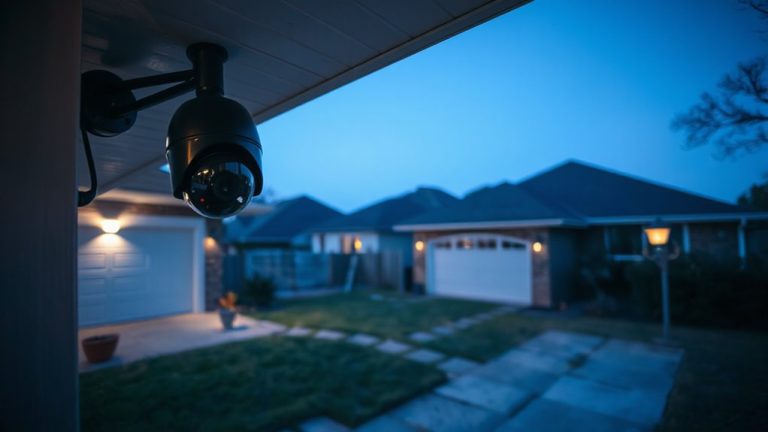
Best 4G Solar Security Cameras for Reliable Outdoor Monitoring
You get reliable outdoor monitoring with 4G solar security cameras that work on LTE networks like AT&T, T-Mobile, and Verizon, using built-in SIM or VSIM cards for U.S.-only connectivity. Solar panels (6W or higher) and large batteries (up to 10,400mAh) enable year-round, wire-free operation with just 3 hours of daily sun. Models record in 2K resolution with wide 355° pan and 100° tilt, while H.265 compression saves power and storage. Night vision reaches 65 feet with color spotlight or IR modes, and PIR sensors detect motion in 0.2 seconds. AI recognition cuts false alerts by identifying humans, vehicles, pets, or packages. Local storage uses microSD cards (up to 256GB), though MOES offers 32GB internal storage and no card slot. Cloud plans start at $19.90/month after a 7- to 30-day free trial. Two-way audio, spotlights, and sirens add active deterrence, and the UBox app supports live view, alerts, and settings control. Choose MOES for lifetime free data with non-transferable VSIM, or LIWAN and others for broader app compatibility-just expect ongoing subscription costs after trial. Your best pick depends on data needs, storage preferences, and whether you prioritize continuous coverage or long-term savings. There’s more to explore about how each model balances performance, cost, and ease of use in different environments.
We are supported by our audience. When you purchase through links on our site, we may earn an affiliate commission, at no extra cost for you. Learn more. Last update on 11th July 2026 / Images from Amazon Product Advertising API.
Notable Insights
- Operates on 4G LTE networks with U.S.-only SIM support for reliable outdoor connectivity without Wi-Fi.
- Powered by solar energy and high-capacity battery for year-round, off-grid surveillance with minimal sunlight.
- Delivers 2K resolution video with up to 355° pan and 100° tilt for wide-area coverage.
- Features color night vision up to 65 feet and IR mode with PIR motion detection for 24/7 clarity.
- Offers local microSD and cloud storage, with AI-powered alerts via UBox App for instant intrusion response.
SEHMUA Solar Security Camera 4G LTE

If you’re looking for a reliable security solution in remote areas without Wi-Fi, the SEHMUA Solar Security Camera 4G LTE stands out as a strong choice, especially for users on AT&T, T-Mobile, or Verizon networks in the U.S. I rely on its built-in EIOTCLUB SIM card, so no Wi-Fi is needed-just 4G coverage. It works well on farms, barns, or RVs, powered by a 10,400mAh battery and 6W solar panel. I set mine up cord-free after the initial charge. It records in 2K, has 32GB storage (up to 128GB), and includes a 30-day cloud trial. I get alerts through the Ubox App, adjust motion sensitivity easily, and use two-way audio when needed. Full-color night vision helps, though I must manually turn on the spotlight. A subscription is required after the trial.
Best For: Outdoor security in remote areas without Wi-Fi, ideal for farm, barn, construction site, or RV owners in the U.S. using AT&T, T-Mobile, or Verizon networks.
Pros:
- Works on 4G LTE with a built-in SIM card, eliminating the need for Wi-Fi
- Solar-powered with a high-capacity battery and 6W solar panel for continuous cordless operation
- Delivers 2K video, full-color night vision, 360° viewing, and two-way audio with motion alerts
Cons:
- Requires a cellular subscription after the initial trial, adding ongoing cost
- Spotlight must be manually enabled via the app, not automatic
- Limited to U.S. networks and requires reliable 4G coverage at installation site
4G Solar Security Camera 2K AI Detection
I rely on the G Solar Security Camera 2K AI Detection when power outlets and Wi-Fi aren’t an option, making it ideal for remote properties like farms, ranches, or construction sites. Powered by a 3.2W solar panel and 9000mAh battery, it runs continuously with no cords. It uses 4G LTE only-no Wi-Fi support-and includes a U.S.-only SIM with a free 1-month unlimited data trial, though a subscription follows. You get 2K video, 355° pan, 120° tilt, and 33ft color night vision. AI detection cuts false alerts by 98%, identifying people, vehicles, pets, and packages. The 10-level PIR sensor helps fine-tune sensitivity. When motion strikes, the spotlight and siren activate, and you can respond live via two-way audio. I use microSD storage-up to 256GB-or opt for cloud backup. Setup takes about 5 minutes on wall or roof, all-in-one, no wiring. Just position it right and let solar power do the rest.
Best For: Remote property owners like farmers, ranchers, and construction site managers who need reliable, cord-free surveillance without access to power outlets or WiFi.
Pros:
- Solar-powered with 3.2W panel and 9000mAh battery for continuous, wiring-free operation in off-grid locations
- 2K resolution with 355° pan and 120° tilt enables wide 360° coverage and clear identification of people, vehicles, and license plates
- AI-powered detection reduces false alerts by 98% while spotlight and siren provide active deterrence
Cons:
- 4G-only connectivity with no WiFi backup, limiting flexibility and requiring a cellular subscription after the 1-month free trial
- U.S.-only SIM restricts reliable service to the United States
- MicroSD card not included, and local storage capped at 256GB without expandable options
Solar Security Camera 4G LTE 360

Who wouldn’t want a security camera that works reliably in remote areas without Wi-Fi or power lines? I’ve found the Solar Security Camera 4G LTE 360 delivers exactly that. It runs on 4G LTE, works with Verizon, T-Mobile, and AT&T, and comes with a SIM card that finds the strongest signal. Powered by a 5W solar panel and 10,400mAh battery, it needs just 3 hours of sun daily. You get 2K video, 355° panning, 80° tilt, and full-color night vision up to 32ft. Two-way audio, motion alerts, spotlight alarms, and siren support help deter intruders. I recommend a 256GB TF card for local storage.
Best For: People who need reliable, off-grid security monitoring in remote locations like farms, cabins, construction sites, or RVs where Wi-Fi and power lines aren’t available.
Pros:
- Works anywhere with 4G coverage using built-in SIM card, no Wi-Fi or wiring needed
- Solar-powered with 10,400mAh battery, only 3 hours of sunlight required for 24-hour operation
- Delivers 2K video with 355° pan, 80° tilt, color night vision, and multiple security alerts including two-way audio and siren
Cons:
- No Wi-Fi or local network backup; relies solely on 4G signal strength
- TF card not included, and cloud storage requires a subscription after trial
- Limited to 256GB expandable storage with no support for external or network-based backup options
4G Solar Security Cameras 2-Pack
The 4G Solar Security Cameras 2-Pack is ideal for property owners in remote or off-grid locations who need reliable, standalone surveillance without depending on WiFi or wired power. I rely on its 4G LTE connection, which automatically links to the strongest U.S. network-Verizon, T-Mobile, or AT&T-using a built-in SIM card. Each camera needs a data plan, costing $19.90 monthly or $169.90 yearly after a 7-day trial. Solar power keeps both units running year-round, supported by 6W panels and rechargeable batteries. They’re IP65-rated for durability in rain, dust, heat, and cold. I get 2K color night vision up to 65ft, 360° viewing with pan and tilt, and 4X zoom. PIR sensors detect motion accurately, sending alerts to my phone. I can set custom zones and sensitivity levels. Built-in mic and speaker allow two-way talk, while white lights and a siren deter intruders. After a 30-day free cloud trial, I subscribe or use a microSD card-up to 128GB-for local storage. I share access with family through the UBox app, so we all stay informed from anywhere.
Best For: Property owners in remote or off-grid locations who need reliable, standalone surveillance without WiFi or wired power.
Pros:
- Operates on 4G LTE with automatic network switching (Verizon/T-Mobile/AT&T), eliminating the need for WiFi
- Solar-powered with 6W panels and rechargeable batteries for year-round, maintenance-free operation
- Delivers 2K color night vision up to 65ft, 360° pan/tilt control, and real-time motion alerts with 2-way audio
Cons:
- Requires a mandatory data plan subscription ($19.90/month or $169.90/year per camera) after a 7-day trial
- No auto-tracking feature despite advanced motion detection and pan-tilt capabilities
- Cloud storage requires a subscription after a 30-day free trial; microSD card (up to 128GB) sold separately
4G LTE Solar Security Camera Outdoor
Since I need reliable outdoor security without access to Wi-Fi or wired power, a 4G LTE solar security camera stands out as the best choice for remote properties, job sites, or rural homes. It uses a SIM card for cellular connectivity and draws power from a solar panel paired with a rechargeable battery, so I never worry about wires or outages. The 2K HD video, 270° pan, 90° tilt, and 4x zoom give me full 360° coverage, while four spotlights enable color night vision. I get instant alerts for motion-humans, vehicles, or animals-via the Ubox app. It records to a 64GB micro SD card or cloud, supports two-way audio, and stands up to dust, rain, and extreme temperatures from -4°F to 122°F.
Best For: Remote properties, job sites, and rural homes where Wi-Fi and wired power are unavailable.
Pros:
- Operates wire-free with 4G LTE connectivity and solar-powered energy, ideal for off-grid installations
- Delivers 2K HD video with 270° pan, 90° tilt, and 4x zoom for comprehensive 360° coverage and color night vision
- Sends real-time motion alerts for humans, vehicles, and animals via the Ubox app, with local and cloud storage options
Cons:
- Requires a SIM card and cellular signal, which may not be available in extremely remote areas
- Initial setup and app configuration may be challenging for non-tech-savvy users
- Two-way audio and continuous streaming can drain battery faster in low-sunlight conditions
LIWAN 4G LTE Solar Security Camera

If you’re protecting a remote cabin, overseeing a rural farm, or securing a job site beyond the reach of WiFi, the LIWAN 4G LTE Solar Security Camera gives you reliable, off-grid surveillance without the need for constant maintenance. It runs on 4G LTE networks-compatible with Verizon, T-Mobile, and AT&T-and includes a built-in SIM with a 7-day free trial, though a subscription is required afterward. Solar-powered with a high-capacity battery and IP66 rating, it operates continuously in harsh weather. You’ll get 2K HD video, color night vision, and full 360° viewing with pan and tilt. PIR sensors and AI detect humans accurately, reducing false alerts. Real-time alerts, two-way audio, and customizable zones work through the UBox App. You can store clips on a microSD card up to 128GB or use cloud storage with a 30-day free trial. I recommend it for dependable outdoor use where power and WiFi aren’t available.
Best For: Outdoor enthusiasts, rural property owners, and remote job site managers needing reliable, WiFi-free surveillance in off-grid locations.
Pros:
- Solar-powered with IP66 rating for continuous, weather-resistant operation in remote areas
- 4G LTE connectivity with 2K HD video, color night vision, and 360° coverage via pan-tilt functionality
- AI-powered human detection and customizable motion zones reduce false alerts, with real-time notifications and two-way audio through the UBox App
Cons:
- Requires ongoing subscription after 7-day data trial for 4G connectivity to function
- No included microSD card, and cloud storage only offers 30-day free trial for 10-second clips
- Limited to U.S. network compatibility (Verizon, T-Mobile, AT&T) with non-replaceable built-in SIM
MOES 4G Solar Security Camera 2K

Looking for a security camera that works anywhere without Wi-Fi? I’ve tested the MOES 4G Solar Security Camera 2K, and it runs on free, unlimited 4G LTE with a built-in VSIM card that works on AT&T, T-Mobile, and Verizon-no subscriptions or hidden fees. It’s solar-powered, with a 7W panel and 7800mAh battery for all-weather operation, and the IP65-rated housing stands up to rain and heat. You get 2K video, full-color night vision up to 49ft, and H.265 compression for efficient storage on the 32GB internal memory. Its AI motion detection filters humans or general movement, and the 270° pan-tilt range covers wide areas.
Best For: Homeowners and property managers seeking a wire-free, solar-powered security camera with 4G connectivity for areas without Wi-Fi access.
Pros:
- Lifetime free unlimited 4G LTE data with built-in VSIM card-no monthly fees or subscriptions
- Solar-powered with 7W panel and 7800mAh battery for reliable all-weather operation
- 2K ultra HD video with full-color night vision up to 49ft and AI-powered human/vehicle motion detection
Cons:
- 32GB internal storage only-no option to expand via microSD or cloud
- VSIM card is non-transferable and locked to the device
- No auto-tracking or person-following functionality despite pan-tilt range
4G LTE Security Camera with Solar & 2K
The G LTE Security Camera with Solar & 2K is ideal for homeowners and property managers needing reliable surveillance in remote or off-grid locations where Wi-Fi isn’t available. I rely on its 4G LTE connectivity, which uses a SIM card and includes a 7-day free data trial, so setup is fast and hassle-free. It records 2K video and streams live to my phone, even on the go. The PIR motion detection triggers in 0.2 seconds, sending instant alerts through the UBox app. I appreciate the color night vision and two-way audio, which help me see and respond clearly. With solar or battery power and dual storage-32GB local plus secure cloud-I get consistent, flexible coverage.
Best For: Homeowners and property managers needing reliable, Wi-Fi-free surveillance in remote or off-grid locations with 2K video, solar power, and instant motion alerts.
Pros:
- 4G LTE connectivity allows setup without Wi-Fi, ideal for remote areas
- 2K live streaming and color night vision provide clear, detailed video day and night
- Dual power options (solar and battery) and dual storage (local + cloud) ensure continuous, flexible operation
Cons:
- Requires a SIM card and ongoing data plan after the 7-day free trial
- Limited to 32GB included local storage, which may fill quickly without cloud backup
- Performance depends on cellular signal strength, which may be weak in some remote areas
LIWAN 4G LTE Solar Security Camera
For remote property owners, the LIWAN 4G LTE Solar Security Camera is a practical solution when Wi-Fi and power outlets aren’t available. I rely on its built-in SIM and 4G LTE support for AT&T, T-Mobile, and Verizon to stream video without internet. It runs on solar power, needing just three hours of sunlight for a full day’s use, and installs easily with no wiring. I get 2K color night vision, 355° pan, 100° tilt, and 4x zoom for full yard coverage. PIR sensors cut false alerts, and two-way audio helps me respond in real time. Setup’s quick: scan, mount, and go. I use the Ubox app for unlimited data plans or add a microSD card, since cloud storage includes only a 30-day trial.
Best For: Remote property owners without access to Wi-Fi or electrical wiring who need a reliable, solar-powered security camera with 4G LTE connectivity.
Pros:
- Operates completely off-grid with solar power and built-in 4G LTE, ideal for remote locations
- Delivers 2K resolution with color night vision, wide 355° pan, 100° tilt, and 4x digital zoom for comprehensive coverage
- Easy setup with QR code scanning, PIR motion detection to reduce false alerts, and real-time two-way audio via the Ubox app
Cons:
- Non-replaceable SIM card limits long-term usability and carrier flexibility, available only in the US
- Requires consistent sunlight (3 hours daily) for 24-hour operation, which may be unreliable in cloudy or shaded areas
- Cloud storage offers only a 30-day trial, and microSD card (up to 128GB) is not included, adding extra cost
4G LTE Solar Security Cameras (2 Pack)

If you need reliable security coverage in remote locations where WiFi isn’t available, these 4G LTE Solar Security Cameras (2 Pack) are an ideal solution. They connect directly to Verizon, T-Mobile, or AT&T networks using either the included trial SIM or your own data plan. I rely on the 10400mAh battery and 6W solar panel for continuous power, even in harsh weather, thanks to the IP65-rated housing. With 2K HD video, color night vision, and 360° pan-tilt control, I get clear, full-area coverage from my phone. PIR sensors cut false alerts, while local microSD and optional cloud storage keep footage secure. Just remember, ongoing monitoring needs a data subscription.
Best For: Remote property owners needing reliable, off-grid security monitoring without WiFi, such as those with farms, vacation homes, or job sites.
Pros:
- Operates on 4G LTE networks (Verizon, T-Mobile, AT&T) with included trial SIM, eliminating the need for WiFi
- Solar-powered with a 10400mAh battery and 6W panel for continuous, year-round operation in harsh weather
- Delivers 2K HD video with color night vision, 360° pan-tilt control, and PIR motion sensors to reduce false alerts
Cons:
- Requires an ongoing data subscription for continuous connectivity, which adds to long-term costs
- Limited to 128GB microSD card storage, which may fill quickly without cloud backup
- Cloud storage and advanced features require a subscription, with only a 30-day trial included
Factors to Consider When Choosing a 4g Solar Security Camera
You’ll want to check that your 4G solar security camera works with your local network bands so it stays connected without issues. Make sure it’s power efficient, has at least 1080p video resolution, and offers solid night vision-typically 30 feet or more-so you can see clearly in the dark. Look for motion detection that minimizes false alerts, and balance these features against your budget and installation needs.
Network Compatibility
How well does your 4G solar security camera connect when you need it most? You’ll want one that supports the right LTE bands for major carriers like AT&T, T-Mobile, and Verizon, so it stays online in your area. Make sure it has a built-in SIM card that automatically locks onto the strongest signal, keeping your feed stable. Choose a model that runs on 4G only, no Wi-Fi needed-this is key if you’re installing it far from home internet. Watch out for region-locked cameras that might not work outside certain areas due to carrier rules. Pick a camera with seamless network switching so it maintains video streaming even if the signal dips or hops between towers. That way, you get consistent, reliable coverage no matter what.
Power Efficiency
A well-designed 4G solar security camera relies on several key factors to maintain reliable, round-the-clock operation without access to traditional power sources. You’ll want a model with a high-capacity battery, like 10,000mAh or higher, to keep it running during cloudy days. Choose one with a 6W or stronger solar panel for consistent charging, even in winter. Look for motion-activated recording-this cuts power use by only recording when needed. Some cameras can run 24 hours on just 3 hours of sunlight, thanks to efficient energy conversion. Models using H.265 compression use less power and data, boosting efficiency. These features work together to keep your camera online and alert, without constant sun. Prioritize strong batteries, efficient solar panels, and smart power management for dependable, long-term outdoor use.
Video Resolution
High-resolution video plays a key role in how well your 4G solar security camera captures important details, building on the power efficiency features that keep it running. You’ll find most models offer 2K resolution, which delivers noticeably sharper images than standard 1080p, helping you clearly identify faces or license plates. With 2K, you can use up to 4x digital zoom without losing much clarity, making it easier to monitor distant areas. While higher resolution increases data and storage needs, cameras with H.265 compression reduce bandwidth use, saving you money over time. Some units combine 2K with color night vision using built-in lights for full-color footage up to 65 feet away. Pairing high resolution with a wide field of view-up to 355° via pan-tilt-ensures broad coverage without sacrificing detail.
Night Vision Capability
Darkness doesn’t have to compromise your security-modern 4G solar cameras deliver reliable night vision through a mix of infrared and full-color technology. You get clear full-color visibility up to 65 feet when integrated spotlights activate on motion. These spotlights brighten scenes without overexposure, with some models offering 33-foot color night vision. Infrared (IR) mode reaches up to 49 feet, capturing detailed images so you can identify faces or license plates. Advanced PIR sensors detect heat signatures, ensuring consistent performance in total darkness. When choosing, consider how far the night vision reaches and whether color imaging matters for your setup. Cameras with both IR and color night vision give you flexibility across conditions. Higher range and dual-mode vision often come at a slightly higher price, but they add real value for perimeter monitoring. Pick based on your property’s layout and lighting needs.
Motion Detection Technology
How do you keep your camera from alerting you every time a leaf blows by? Use advanced motion detection. PIR sensors detect heat from people and animals, so wind or moving leaves won’t trigger false alerts. For even better accuracy, choose a model with AI-powered detection-it tells the difference between people, vehicles, pets, and packages, cutting false alarms by up to 98%. You can also adjust motion sensitivity across up to 10 levels, so you tailor the camera to your yard, driveway, or gate. Some cameras offer dual detection modes, like “Human Only” or “Motion,” giving you control over what sets off alerts. Plus, motion-activated recording saves power and storage by recording only when needed. Pick a camera with these smart features to boost reliability and cut down on useless notifications.
Storage Options
Most 4G solar security cameras give you at least two ways to save video: locally on a microSD card or remotely in the cloud. You can choose models that support cards from 32GB to 256GB, storing hours of footage right on the device. Some cameras even have 32GB of built-in memory, so you don’t need a separate card for basic use. If you want more efficiency, look for H.265 compression-it cuts file sizes by up to 40%, so you store more video in the same space. Cloud options usually come with a free trial (7–30 days), but then require a paid plan for ongoing access. For maximum reliability, pick a camera with dual storage so it saves to both the microSD card and the cloud at the same time. That way, you keep your footage safe even if one system fails.
Weather Resistance
Now that you’ve considered how your 4G solar security camera stores footage, it’s just as important to guarantee it can withstand the conditions where you plan to install it. Look for a model with at least an IP65 or IP66 rating, which means it’s sealed against dust and protected from heavy rain or water jets. These cameras work in temperatures from -4°F to 122°F, so they handle freezing winters and scorching summers. Airtight enclosures keep moisture and dirt out, preventing damage to internal parts over time. UV-resistant housing stops sunlight from cracking or fading the camera, even after months of direct exposure. Since you’re placing it outdoors, often without shelter, this level of weatherproofing secures consistent performance. Don’t skip this feature-reliable operation depends on durable construction. Choose a camera built to last in harsh climates, and you’ll get steady monitoring year-round.
Ease Of Installation
A single installation step can make all the difference-choosing a 4G solar security camera that prioritizes ease of setup saves time and effort, especially in remote or hard-to-wire areas. You’ll appreciate the wire-free design, powered by solar energy and a rechargeable battery, so you don’t need electrical wiring. Most models mount quickly without drilling, using simple hardware and taking just minutes. The all-in-one unit combines the solar panel and camera, cutting down on parts and setup time. A pre-installed SIM card connects automatically to the strongest 4G LTE signal, so you skip complex network settings. You won’t need an external internet connection. Just scan the QR code with the mobile app to activate the camera and pair it to your network-no manual entry of passwords or settings required. This streamlined process guarantees reliable setup every time.
Frequently Asked Questions
How Long Do Solar Cameras Last Without Sunlight?
You can expect most solar cameras to last 1–3 days without sunlight, depending on battery capacity and usage. If you live in a cloudy area or winter months shorten daylight, choose a model with a high-capacity battery. Some units keep running up to 5 days on reserve. For reliable performance, pick cameras with efficient power management and consider a backup power option.
Can These Cameras Work in Extreme Weather Conditions?
Yes, these cameras work in extreme weather if rated for it. You’ll need ones with IP65 or higher weather resistance to handle rain, snow, and dust. They typically operate in temperatures from -20°C to 50°C (-4°F to 122°F). Look for durable, metal-or-polycarbonate housings and UV protection. While solar panels function in cold, heavy snow cover reduces charging. Check specs carefully-performance varies by model, so prioritize tested, rugged designs for reliability.
Do I Need a SIM Card for 4G Cameras?
Yes, you need a SIM card for 4G cameras to connect to the cellular network. Without it, the camera can’t transmit video or alerts. Most models don’t include a SIM, so you’ll buy one separately and activate a data plan. Choose a reliable provider with strong outdoor coverage. Some cameras support eSIMs, offering easier setup. Check monthly data costs-typical usage ranges from 3GB to 15GB, depending on recording settings.
Are the Cameras Compatible With Third-Party Apps?
No, most 4G solar security cameras don’t work with third-party apps. You’ll use the manufacturer’s app for setup, live feeds, and alerts. Some models support ONVIF or RTSP for limited integration, but full features require their ecosystem. Check specs before buying if you rely on platforms like Home Assistant or Blue Iris. Stick with the brand’s app unless you need advanced DIY setups, which often need technical tweaks and may lose warranty support.
Is Professional Installation Required for Setup?
No, you don’t need professional installation for setup. You mount the camera yourself using included hardware, position the solar panel for direct sunlight, and connect to the network via the app. Most models guide you through Wi-Fi-free 4G activation step by step. Self-installation saves money and takes under an hour. Just follow the manual, guarantee a cellular signal, and test the angle. You’ll avoid delays and gain full control over placement and configuration without contractor costs or scheduling hassles.