Best Doorbell Cameras That Keep Your Home Secure in 2025
You’ll want a 2K-resolution doorbell camera with a wide 160°+ field of view, like the Google Nest Doorbell 2K or eufy C31, for sharp detail and full coverage. Wired models offer reliability, while dual-power options provide backup. AI detection reduces false alerts, and local storage avoids monthly fees. Expect to pay more for advanced features like facial recognition, which often require subscriptions. The top models balance image quality, smart alerts, and power flexibility to keep your home secure. Further insights reveal how each system compares in real-world performance and value.
We are supported by our audience. When you purchase through links on our site, we may earn an affiliate commission, at no extra cost for you. Learn more. Last update on 19th July 2026 / Images from Amazon Product Advertising API.
Notable Insights
- High-resolution 2K video with HDR delivers clear facial details and enhances visibility in bright or low-light conditions.
- Wide 160° to 180° field of view eliminates blind spots and captures full-body images at the doorstep.
- Advanced AI detects people, packages, and vehicles while reducing false alerts through on-device or cloud processing.
- Local storage options and end-to-end encryption protect privacy and prevent unauthorized access to video footage.
- Hardwired power with backup battery support ensures reliable 24/7 operation and prevents tampering.
Google Nest Doorbell 2K Video (2025)

If you prioritize high-resolution video and smart integration with Google’s ecosystem, the Google Nest Doorbell 2K Video (2025) stands out as a top choice for secure, reliable home monitoring. I get sharp 2K HDR footage and a wide 166° view, day or night. Gemini powers smart alerts-like “Person with flowers”-and lets me search video by voice. Face learning recognizes frequent visitors. It needs a wired setup with a compatible transformer and a Google Home app. A Premium subscription activates full features, but includes a one-month trial.
Best For: Homeowners seeking a high-resolution, intelligently integrated doorbell camera within the Google ecosystem with advanced AI-powered features.
Pros:
- Delivers crisp 2K HDR video with a wide 166° field of view and reliable night vision
- Powered by Gemini AI for smart alerts, voice search through video history, and face learning
- Wired design ensures continuous operation without battery maintenance
Cons:
- Requires a compatible doorbell transformer and professional installation in some cases
- Full features require a Google Home Premium subscription after the one-month trial
- Works only with the Google Home app, not the Nest app, limiting ecosystem flexibility
Google Nest Doorbell Wired (3rd Gen)
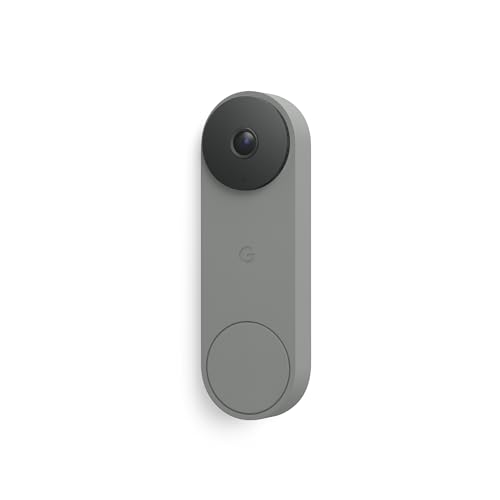
The Google Nest Doorbell Wired (3rd Gen) stands out for homeowners who prioritize high-resolution video and seamless integration with Google’s ecosystem. I rely on its 2K HDR video, night vision, and 166° field of view for clear, wide-ranging footage day and night. It uses Gemini AI for smart alerts-like spotting packages or recognizing familiar faces-with a Google Home Premium subscription. Two-way audio and live view work smoothly in the Google Home app, which you’ll need since it doesn’t support the Nest app. It runs continuously on hardwired power, so no battery changes. Just make sure your doorbell transformer meets the 16-24VAC requirement.
Best For: Homeowners seeking a high-resolution, hardwired doorbell with advanced AI-powered alerts and seamless integration into the Google Home ecosystem.
Pros:
- Crisp 2K HDR video with night vision and a wide 166° field of view for superior footage in any lighting
- Powered by Gemini AI for intelligent detection, facial recognition, and voice-activated video searches with Google Home Premium
- Continuous hardwired power eliminates battery maintenance and ensures uninterrupted operation
Cons:
- Requires a compatible 16-24VAC doorbell transformer, which may necessitate system upgrades
- Google Home Premium subscription needed for advanced AI features like facial recognition and descriptive alerts
- Exclusively uses the Google Home app, with no support for the Nest app, limiting legacy user flexibility
Ring Video Wired Doorbell (Newest Model)

Though I prioritize strong video quality and seamless smart home integration, I find the Ring Video Wired Doorbell (Newest Model) best suits homeowners with existing doorbell wiring who want reliable, continuous power and consistent performance. I appreciate its 1080p HD video, night vision, and two-way talk, all backed by real-time alerts. Its advanced motion detection uses AI to describe activity and offers customizable privacy zones. It connects to Ring Chime and Alexa devices, enabling hands-free video checks. A Ring Protect plan activates event history and timeline rewind features. Installation is straightforward with the included toolkit, but requires 2.4 GHz Wi-Fi.
Best For: Homeowners with existing doorbell wiring who want a reliable, hardwired smart doorbell with strong video quality and seamless smart home integration.
Pros:
- Crisp 1080p HD video with sharp night vision and two-way talk for clear communication
- Advanced AI-powered motion detection with customizable alerts and privacy zones
- Seamless integration with Ring Chime and Alexa devices for hands-free monitoring and alerts
Cons:
- Requires existing doorbell wiring and 2.4 GHz Wi-Fi, limiting compatibility for some homes
- Ring Protect subscription needed for full features like event history and timeline rewind
- No support for 5 GHz Wi-Fi networks, which may affect connectivity in dual-band environments
eufy Security Video Doorbell Camera C31

Since I value both flexibility and long-term savings in home security, the eufy Security Video Doorbell Camera C31 stands out as a strong choice for users who want reliable performance without ongoing subscription costs. It captures sharp 2K FHD video with a 4:3 aspect ratio and full head-to-toe view, plus clear night vision. I appreciate the dual power options-battery or hardwired-though hardwiring enables 24/7 recording and pre-roll. Local microSD storage means no cloud fees, and human detection reduces false alerts. It works with Alexa and Google, but requires HomeBase or MiniBase for full functionality.
Best For: Homeowners seeking a reliable, subscription-free video doorbell with flexible power options and strong privacy-focused local storage.
Pros:
- 2K FHD video with a 4:3 aspect ratio and head-to-toe viewing delivers sharp, full-body images day and night
- Dual power options (battery or hardwired) offer installation flexibility, with hardwiring enabling 24/7 recording and pre-roll
- Local microSD storage and on-device human detection eliminate monthly fees while reducing false alerts
Cons:
- Requires eufy HomeBase S380 or MiniBase Chime (sold separately) for full functionality, adding to upfront cost
- Hardwired setup requires bypassing existing chime and turning off power at the breaker for maintenance
- No included microSD card or cloud subscription options may inconvenience users wanting plug-and-play setup
eufy Security Video Doorbell E340 2K HD

You’ll want the eufy Security Video Doorbell E340 2K HD if you prefer a subscription-free setup with reliable local storage, a feature few models offer without added fees. I use its dual cameras for full head-to-toe coverage, one facing forward and another downward. The 2K HD video is sharp, and color night vision works well up to 16ft, even in low light. It runs on battery or wired power, but you’ll need the battery in both modes. I store all footage locally through HomeBase, no cloud costs. It connects to chimes, Alexa, and Google Assistant, supports two-way talk, motion alerts, and Delivery Guard.
Best For: Homeowners seeking a subscription-free video doorbell with local storage, dual-camera coverage, and flexible power options.
Pros:
- Dual-camera system provides head-to-toe visibility with a downward-facing camera for enhanced security
- 2K HD resolution and color night vision deliver clear footage up to 16ft in low-light conditions
- Supports both battery and wired power with local data storage via HomeBase, eliminating cloud subscription fees
Cons:
- Requires a compatible HomeBase unit for local storage, adding to the initial setup cost
- Battery must be installed even in wired mode, limiting true hardwired operation
- Limited smart features compared to cloud-dependent competitors without additional ecosystem devices
2025 Wireless Video Doorbell Camera with AI Detection
The 2025 Wireless Video Doorbell Camera with AI Detection stands out for homeowners and renters who want reliable, long-range connectivity and smart visitor recognition without mandatory subscriptions. I appreciate its dual-band Wi-Fi and Wi-Fi HaLow support, offering stable signals up to 3,280 feet with strong obstacle penetration. Its 6.8 × 6.2 × 14.4-inch chime-like design includes solar-assisted power-extending battery life between USB charges-and two mounting options. HDR video, clear night vision, and two-way audio guarantee visibility and communication. AI detects and categorizes visitors, triggers 15-second recordings, and sends real-time alerts. I find 90-day free cloud storage and local microSD support (up to 128GB) practical. I can share access with up to four family members via mobile app, and its tamper alarm adds security.
Best For: Homeowners and renters seeking a subscription-free, long-range wireless video doorbell with advanced AI detection and easy installation.
Pros:
- Dual-band Wi-Fi and Wi-Fi HaLow provide exceptional 3,280 ft range with superior signal penetration through walls and obstacles
- AI-powered visitor recognition categorizes people, triggers smart alerts, and records 15-second clips without requiring a subscription
- Flexible power and storage options with solar-assisted battery, USB charging, 90-day free cloud storage, and local microSD support up to 128GB
Cons:
- Solar charging only extends battery life and does not eliminate the need for periodic USB charging
- MicroSD card not included, which may increase initial setup cost
- Supports only 2.4GHz and 5GHz Wi-Fi bands, potentially limiting compatibility with newer Wi-Fi 6/6E routers despite HaLow support
Google Nest Doorbell (Wired, 3rd Gen)

When it comes to home security in 2025, the Google Nest Doorbell (Wired, 3rd Gen) stands out most for those already invested in the Google ecosystem and seeking advanced AI capabilities. I get sharp 2K HDR video and a wide 166° view, plus clear night vision. Gemini AI helps me identify visitors and answer questions like “Who let the dogs out?” with video summaries. I need a Google Home Premium subscription for facial recognition and detailed alerts, starting at the Standard tier. It requires a wired connection and compatible transformer. Video is encrypted, and a green LED shows when it’s recording.
Best For: Homeowners deeply integrated into the Google ecosystem who want AI-powered insights, crisp 2K video, and advanced smart alerts with Gemini AI.
Pros:
- Delivers 2K HDR video with a wide 166° field of view and reliable night vision for superior visibility
- Leverages Gemini AI to provide intelligent alerts, video summaries, and natural language queries like “Who let the dogs out?”
- Offers facial recognition and enhanced notifications with Google Home Premium, plus end-to-end video encryption and a visual recording indicator for privacy
Cons:
- Requires a Google Home Premium subscription for key features like facial recognition and advanced AI summaries
- Needs a compatible wired doorbell transformer and chime setup, excluding some older systems
- Limited app compatibility-only works with the Google Home app, not the Nest app, which may confuse existing Nest users
No Drill Mount for Blink Doorbell

A no-drill mount makes the Blink Doorbell an ideal choice for renters or anyone hesitant to alter their doorframe, and it’s compatible with both the 2023 and 2025 models. I use strong adhesive tape for installation, though screws are an option if you prefer permanent placement. The mount’s weather-resistant build holds up against rain, dust, and sun, and dust. Its anti-theft design keeps the camera secure, deterring tampering. Plus, its sleek look fits most homes. I find it reliable, easy to set up, and effective for long-term outdoor use without any drilling.
Best For: Renters or homeowners seeking a secure, no-drill installation option for their Blink Doorbell (2023 or 2025 model) without sacrificing durability or aesthetics.
Pros:
- No-drill installation using strong adhesive tape, making it ideal for temporary or permanent placement
- Weather-resistant and tamper-proof design ensures reliable outdoor performance in rain, sun, and dust
- Sleek, low-profile look that blends with various home exteriors while providing anti-theft security
Cons:
- Adhesive may fail over time in extreme weather conditions or on uneven surfaces
- Limited to Blink Doorbell models from 2023 and 2025, not compatible with older versions
- Less secure than hardwired mounts when using tape only, potentially vulnerable to theft if not properly mounted
Arlo Video Doorbell 2K Wireless 2-Way Audio

Looking for sharp video and flexible power options in a doordefender camera? I’ve tested the Arlo Video Doordefender 2K (2nd Gen), and it delivers crisp 2K resolution with a wide 180-degree view, plus night vision and a built-in spotlight. It works wired or wirelessly, suits any setup, and connects easily via 2.4GHz Wi-Fi. I get reliable motion alerts through the Arlo app, talk through 2-way audio, and activate the remote siren if needed. The IP65 rating guarantees weather resistance. While U.S. support only may limit some, the Arlo Secure plan adds 60-day storage and custom detection. It pairs well with other Arlo devices.
Best For: Homeowners seeking a high-resolution, weather-resistant video doorbell with flexible power options and seamless smart home integration.
Pros:
- Crisp 2K video with a wide 180-degree field of view and reliable night vision
- Works on both wired and wireless setups with easy 2.4GHz Wi-Fi installation
- Offers advanced features like 2-way audio, remote siren, and compatibility with other Arlo devices
Cons:
- Limited customer support availability to U.S. residents only
- Requires a subscription for extended video storage and advanced detection features
- Operates only on 2.4GHz Wi-Fi, which may limit compatibility with some networks
Tapo 2K+ Smart Video Doorbell (D225)

The Tapo 2K+ Smart Video Doorbell (D225) stands out for homeowners who value flexibility in power and installation, offering both wired and battery-powered options without sacrificing performance. I appreciate that it runs on 8–24V for constant power or a 10,000mAh battery lasting up to 8 months. Its 2K resolution and 180° field of view deliver sharp, full-body video with no blind spots. AI detection for people, vehicles, and packages reduces false alerts. Two-way audio, quick responses, and Alexa/Google compatibility add convenience. I recommend a microSD card for local storage, though Tapo Care offers cloud backup. Night vision and encryption keep data and footage secure.
Best For: Homeowners seeking a flexible, high-quality smart doorbell with reliable power options, advanced AI detection, and seamless smart home integration.
Pros:
- Supports both wired and battery-powered installation with up to 8 months of battery life and 24/7 recording capability
- Delivers sharp 2K video with a 180° field of view, full-color night vision, and customizable motion alerts using AI detection
- Offers local and cloud storage options, two-way audio with quick responses, and compatibility with Alexa and Google
Cons:
- No 5GHz Wi-Fi support, limited to 2.4GHz band which may affect performance in congested networks
- MicroSD card and chime power adapter sold separately, adding to total cost
- Optional Tapo Care subscription required for cloud storage and extended video history
Factors to Consider When Choosing a Doorbell Camera 2025
You’ll want to check the video resolution first-1080p is standard, but 2K or higher gives you clearer facial details and better zoom. Make sure the field of view covers your porch and pathways, ideally between 150° and 180°, so nothing slips out of sight. Consider power options, compatibility with your smart home system, and how well the night vision performs in real-world conditions, not just lab specs.
Video Resolution Quality
Sharp image detail starts with resolution, and in 2025, 2K (2048×1556 pixels) has become the smart standard for doorbell cameras. You’ll get noticeably clearer images than 1080p, making it easier to identify faces or spot details at a distance. Pairing 2K with HDR improves contrast, so you see clearer shadows and highlights in tricky lighting. Keep in mind, higher resolution means larger video files-expect to use more bandwidth and storage, especially with frequent recordings. If your internet is slow or your cloud plan is limited, this matters. Night vision also benefits from 2K, especially when combined with smart light processing for clean, detailed footage in near darkness. While 4K exists, 2K strikes the best balance between quality and efficiency for most homes. You’re not overloading your network, yet you still gain real security value. Look for 2K as a baseline when comparing models.
Field Of View
At least 160° of field of view gives you broader coverage, capturing more of the space in front of your door-including side pathways and porch edges-so you won’t miss activity just outside the frame. You’ll benefit from wider angles up to 180°, which reduce blind spots and let you see visitors from head to toe, improving identification. When paired with high-resolution video, ultra-wide views maintain clear edges without distortion. Some models use dual cameras to combine forward and downward views, giving you full doorstep visibility. A narrow field may force careful placement and can overlook off-center motion, while wider angles boost motion detection across a larger area. Look for at least 160° to guarantee reliable monitoring, especially if your porch is wide or entryways are offset. This range balances coverage and image quality effectively.
Power Source Options
While some doorbell cameras rely solely on existing wiring, others operate independently on battery power, giving you flexibility based on your home’s setup and energy needs. Wired models run continuously using 16–24VAC transformers, but need proper voltage-some require over 10V for reliable operation. Battery-powered options install easily without tools, lasting months per charge depending on use and weather. Dual-power systems combine the best of both: they stay active 24/7 when hardwired and switch to battery during outages. Solar-assisted models extend battery life with daily sun exposure, though they still need occasional USB charging or panel removal. Think about your door’s wiring access, local weather, and how often you want to maintain the device. Each power type has trade-offs in convenience, reliability, and setup effort-choose based on your home’s needs and your tolerance for upkeep.
Smart Home Compatibility
When choosing a doorbell camera, how well it connects with your existing smart home system can make a big difference in daily use. You’ll want a model that supports major platforms like Alexa, Google, or Apple HomeKit so you can use voice commands and automate routines. Make sure it works with your Wi-Fi band-either 2.4 GHz or 5 GHz-for reliable connectivity. Some cameras need a hub to access full features or link with other devices, so check that upfront. Look for AI-powered detection that identifies people, vehicles, packages, or animals to reduce false alerts. A good mobile app should let you share access with family and connect to broader security systems. These choices affect convenience, response speed, and long-term value-so prioritize compatibility that fits your setup now and scales as your system grows.
Night Vision Performance
How well can you see who’s at your door after dark?
Night vision performance matters when choosing a doorbell camera. Most models use infrared (IR) to deliver clear monochrome video in total darkness, often down to 0 lux, with visibility up to 16 feet-depending on sensor quality and IR LED strength. Some cameras now offer color night vision by using ambient light and advanced processing, preserving details like clothing or package colors. Look for models with HDR support, larger sensors, and noise reduction to maintain clarity and contrast in low light. Built-in spotlights or adaptive lighting can boost image quality by reducing shadows and motion blur. While IR is standard, higher-end systems give you sharper, more detailed nighttime footage. Always check specs for real-world performance, not just advertised range.
Motion Detection Accuracy
You’ll want motion detection that reliably identifies what’s happening at your door, and modern doorbell cameras use several key technologies to get it right. AI-powered systems can tell people, vehicles, packages, and animals apart, cutting down on false alerts from shadows or swaying trees. Higher video resolution, like 2K or above, gives the AI sharper images to analyze, improving accuracy. A wide field of view-160° or more-covers more area, so you won’t miss activity near the edges. Dual-light setups and color night vision help maintain detail in low light, outperforming basic infrared. Cameras with on-device AI process motion locally, so detection stays fast and works even if your internet drops. Look for models that combine these features for the most reliable performance. Avoid relying solely on cloud processing, as it can delay alerts and reduce consistency.
Storage Solutions Available
Smart motion detection means little if the footage you need isn’t stored securely or available when you need it, so understanding storage options is a key step in choosing the right doorbell camera for 2025. You can rely on local storage with microSD cards up to 512GB, keeping video without monthly fees and allowing long retention. Wired models support 24/7 recording to local storage, capturing events even before someone rings. Many systems include encrypted cloud storage, often with a 90-day free trial, followed by paid plans for 30 to 60 days of event history. Cloud plans add AI search and timeline rewind for easier playback. If you want backup and flexibility, pick a model with dual storage-microSD and cloud. That way, you protect footage if one system fails. Plan for ongoing costs with cloud subscriptions, or choose local-only storage to avoid them.
Installation Ease And Flexibility
Choosing the right doorbell camera means considering how easily it installs and adapts to your home’s setup. If your home has existing doorbell wiring with a 16–24VAC transformer, hardwired models offer reliable power, though you might need an electrician or system upgrade. Battery-powered options skip the wiring, letting you install them almost anywhere, but you’ll recharge or replace batteries every 3–6 months. For the best of both, dual-power models work with battery, hardwiring, or both, giving you long-term flexibility. Some mounts use strong adhesives or screw-free designs, so you can install without drilling-perfect for renters. Most cameras use 2.4GHz Wi-Fi, but models with dual-band support, including 5GHz, reduce interference and boost connection stability during setup. Pick based on your home’s wiring, internet, and how often you want maintenance.
Frequently Asked Questions
Can I Install a Doorbell Camera Myself?
Yes, you can install a doorbell camera yourself if you have basic tools and follow the instructions. Most models use wire or adhesive mounting, connect to your Wi-Fi, and sync with an app in minutes. You’ll need a charged phone, steady ladder, and screwdriver. Check voltage compatibility and drill carefully. Wired setups take longer than battery-powered ones. Always test motion zones and chime connection after setup.
Do Doorbell Cameras Work With Smart Home Systems?
Yes, you can connect most doorbell cameras to smart home systems like Alexa, Google Assistant, or Apple HomeKit. You’ll control them using voice commands or apps, get real-time alerts, and sync with other devices like lights or locks. Some models work seamlessly, while others need a hub. Always check compatibility before buying, as it affects setup speed, features, and long-term convenience in your security plan.
Are Doorbell Cameras Vulnerable to Hacking?
Yes, doorbell cameras can be vulnerable to hacking if you don’t secure them properly. Hackers might access footage or disable alerts if passwords are weak or software is outdated. You should enable two-factor authentication, update firmware regularly, and choose models with end-to-end encryption. Stick to reputable brands that provide consistent security updates, and avoid using public Wi-Fi to access your camera’s app for better protection.
How Long Do Battery-Powered Models Last?
You’ll typically get six to twelve months from battery-powered models on a single charge, depending on usage and weather. If your visits are frequent or temperatures drop, expect shorter life. You can extend it by adjusting motion settings or using solar chargers. Recharging takes a few hours, and some models offer removable batteries for convenience. Check specs for battery ratings and plan for annual replacements to maintain reliability.
Can I Access Recordings Without a Subscription?
You can access some recordings without a subscription, but only if the camera has local storage via microSD or onboard memory. Models like the Eufy Video Doorbell Dual offer this feature. Without local storage, cloud recordings require a paid plan. Free tiers usually provide short event clips or 24-hour rolling storage. Always check the brand’s policy, as access limits affect how much you see and retain. Plan for long-term costs if you rely on cloud backups.