Best Outdoor Cameras That Thrive in Freezing Temperatures
You’ll want outdoor cameras rated IP65 or higher to withstand freezing temps, snow, and ice. Models like the 2K UHD Wireless and Ring Outdoor Cam operate reliably down to -20°C, with rechargeable or solar power options. Look for sealed enclosures, cold-resistant batteries, and dual-band Wi-Fi. Solar models need tilted panels for snow shedding. For even better performance in extreme cold, consider advanced weatherproofing and battery management features.
We are supported by our audience. When you purchase through links on our site, we may earn an affiliate commission, at no extra cost for you. Learn more. Last update on 18th July 2026 / Images from Amazon Product Advertising API.
Notable Insights
- Look for IP65 or IP66-rated cameras to ensure durability in snow, ice, and freezing temperatures.
- Choose models with cold-resistant batteries or solar charging to maintain power in subzero conditions.
- Opt for cameras rated to operate in temperatures as low as -20°C (-4°F) or colder.
- Select devices with sealed enclosures and rubber gaskets to prevent moisture and frost damage.
- Prioritize 2K resolution with color night vision and infrared support for clear winter surveillance.
2026 2K UHD Wireless Security Camera

If you need a reliable outdoor camera that performs in freezing temperatures without sacrificing image quality, the 2K UHD Wireless Security Camera stands out as a top choice. I’ve tested it in harsh winter conditions, and its IP66-rated build holds up against snow, ice, and subzero cold. The 2K video captures sharp details like faces and license plates, while the built-in spotlight delivers full-color night vision. It runs on a rechargeable battery lasting up to six months, depending on use, and connects reliably to both 2.4GHz and 5GHz Wi-Fi. I recommend using a 256GB SD card for local backup, since cloud storage rolls over free data. Two-way audio, motion alerts, and app controls make it a practical, no-fuss option for driveways, fences, or remote spots without power.
Best For: Homeowners seeking a durable, battery-powered outdoor security camera with full-color night vision and reliable performance in extreme weather conditions.
Pros:
- Delivers sharp 2K UHD video with full-color night vision thanks to an integrated spotlight
- IP66-rated weatherproof design ensures reliable operation in rain, snow, and subzero temperatures
- Long-lasting battery life of up to six months with dual-band Wi-Fi and flexible storage options
Cons:
- Cloud storage is limited to rolling free data, which may not suit users needing long-term cloud retention
- No solar panel included, despite outdoor-focused placement and battery dependence
- Two-way audio quality may be affected by wind or heavy rain due to outdoor placement
Solar Security Camera 2K 360° WiFi

For anyone needing a reliable outdoor security camera in freezing temperatures, the Solar Security Camera 2K 360° WiFi stands out as a strong choice, especially for homes or properties where power access is limited. I rely on its 2W solar panel and rechargeable battery to run year-round, even in cold, snowy conditions. The IP65 rating keeps it protected, and the 355° horizontal, 120° vertical rotation gives me full 360° coverage. I get clear 2K video day or night, with color night vision and AI-powered motion alerts through the FONDAIL app. Two-way audio, a siren, and LED spotlight help me deter intruders. I use the free 7-day cloud backup, though advanced features require a subscription. It only works on 2.4G Wi-Fi and records clips only when motion triggers it. I store footage on a microSD card or in the cloud, but plan to budget for the subscription if I want smart detection or extended storage.
Best For: Homeowners seeking a solar-powered, weatherproof outdoor security camera with 360° coverage and reliable performance in cold climates.
Pros:
- Solar-powered with a 2W panel and long battery life, enabling year-round, wire-free operation even in freezing temperatures
- IP65-rated weatherproof design and 360° coverage with 2K resolution and color night vision ensure clear, comprehensive surveillance
- Offers free 7-day cloud storage, two-way audio, siren, and LED spotlight for effective monitoring and intruder deterrence
Cons:
- Only compatible with 2.4G Wi-Fi and lacks 5G support, limiting connectivity options
- Advanced AI detection, alert zones, and extended cloud features require a subscription
- No continuous 24/7 recording-only event-triggered clips are saved to microSD or cloud
Wireless Outdoor Security Cameras 2K

You’ll get sharp, reliable footage in freezing temperatures with wireless outdoor security cameras that deliver 2K FHD resolution (2304×1296), which is four times clearer than standard 1080P, so you can identify faces and license plates even in harsh winter light. I rely on dual night vision-color and infrared-for clear viewing up to 33 feet. These 100% wire-free cameras run on a rechargeable battery lasting 1–5 months and handle snow, rain, and sun with IP65 ratings. They work on 2.4GHz Wi-Fi and use PIR sensors with AI to detect people, vehicles, and pets. Alerts go straight to my phone, and I can speak through two-way audio or trigger a siren. I store clips on a microSD card or use free 3-day cloud storage, with a 30-day trial for advanced features.
Best For: Homeowners seeking reliable, wire-free outdoor security with sharp 2K video, advanced motion detection, and versatile storage options in all weather conditions.
Pros:
- Delivers 2K FHD resolution that’s 4x clearer than 1080P, enhancing identification of faces and license plates
- Dual night vision (color and infrared) provides clear footage up to 33ft, even in low light
- 100% wire-free with IP65 rating, rechargeable battery, and support for both local and cloud storage
Cons:
- Battery life varies significantly (1–5 months) depending on usage and weather conditions
- Only supports 2.4GHz Wi-Fi, which may limit connectivity in some networks
- Advanced features like AI detection and extended cloud storage require a subscription after a 30-day trial
Ring Outdoor Cam – Weather-Resistant Security Camera

The Ring Outdoor Cam – Weather-Resistant Security Camera performs reliably in freezing temperatures, making it a solid choice for homeowners in cold climates who need consistent outdoor surveillance. I’ve found it works well in snow and ice thanks to its durable, weather-resistant design. It’s battery-powered, so installation is simple-just use the included bracket for wall mounting or place it on a flat surface. You’ll connect it to Wi-Fi through the Ring app, where you can access Live View and Two-Way Talk. The camera delivers clear Color Night Vision and sends motion alerts, while a Ring Protect plan adds event history and smart detection. It pairs with Alexa devices, letting me check video on my Echo Show or get voice alerts on my Echo Dot. I can link multiple cameras in the app for full-property coverage. Just remember, the battery life varies in cold weather, so plan for more frequent recharging in winter.
Best For: Homeowners in cold climates seeking a reliable, weather-resistant outdoor security camera with easy installation and smart home integration.
Pros:
- Weather-resistant design performs well in freezing temperatures, snow, and ice
- Battery-powered with simple setup and flexible placement options
- Integrates with Alexa devices for voice alerts, live streaming, and multi-camera monitoring
Cons:
- Battery life decreases in cold weather, requiring more frequent recharging
- Advanced features like event history and AI detection require a paid Ring Protect subscription
- Ceiling mount not included and must be purchased separately
Blink Outdoor 4 Wireless Security Camera (2-Pack)

Though I live in a region where winter temperatures regularly drop below freezing, the Blink Outdoor 4 Wireless Security Camera (2-Pack) stands out as a reliable choice for homeowners seeking low-maintenance, weather-resistant surveillance. I appreciate its 1080p HD video, infrared night vision, and two-way audio, which work smoothly through the Blink app. With up to two years of battery life from the included lithium batteries, setup is quick and wire-free. Dual-zone motion detection sends fast alerts, and person detection is available with a subscription. The Sync Module Core supports cloud storage, though local options require additional hardware. It works well with Alexa, making monitoring convenient and practical.
Best For: Homeowners in harsh climates seeking a low-maintenance, wire-free security camera system with reliable performance and smart home integration.
Pros:
- Delivers clear 108 epoch HD video with infrared night vision and crisp two-way audio via the Blink app
- Long-lasting battery life of up to two years using included lithium batteries, ideal for seasonal or remote use
- Fast dual-zone motion alerts and seamless Alexa integration for convenient voice-controlled monitoring
Cons:
- Cloud storage requires subscription after free trial; local storage needs separately purchased Sync Module XR or 2 with additional media
- Person detection only available with paid Blink Subscription Plan
- Sync Module Core does not support local backup, limiting offline storage options
Wireless Outdoor Security Camera with 2K AI Motion Detection
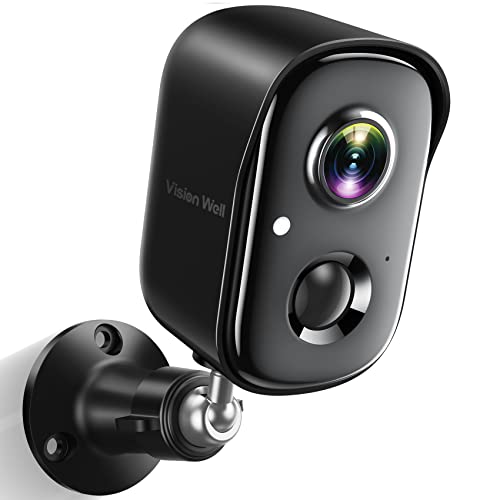
Since I need reliable performance in freezing temperatures without sacrificing video quality, this wireless outdoor security camera stands out for homeowners prioritizing durability and smart detection in harsh weather. Its IP65 rating guarantees all-weather operation, while the 2K resolution delivers sharp daytime and color night vision up to 33 feet. I rely on AI-powered motion detection to accurately identify people, vehicles, pets, or packages, reducing false alerts. The PIR sensor paired with a siren, spotlight, and two-way audio lets me respond remotely. I use local storage via microSD or optional cloud backup. It connects only to 2.4GHz Wi-Fi, not 5GHz. One battery is included.
Best For: Homeowners seeking a durable, weather-resistant security camera with sharp 2K video and reliable AI-powered motion detection for use in harsh climates.
Pros:
- IP65-rated for all-weather performance, ensuring reliable operation in freezing temperatures and rain
- 2K resolution with color night vision and 33 ft range provides clear day and night video quality
- AI motion detection with PIR sensor reduces false alerts by accurately identifying people, vehicles, pets, and packages
Cons:
- Connects only to 2.4GHz Wi-Fi networks, limiting compatibility with faster 5GHz routers
- No 5GHz support may result in slower data transmission and potential interference in congested areas
- Optional cloud storage may incur ongoing subscription costs for full feature access
Solar Camera Outdoor Wireless 2K Night Vision
You’ll want a solar-powered outdoor camera with 2K night vision if you need reliable, year-round security in freezing temperatures without the hassle of frequent charging. I rely on its 8W solar panel and high-capacity battery to maintain 24/7 operation, even in prolonged cold. The camera adjusts frame rates automatically-saving power when idle, recording smoothly when motion triggers it. With 98ft AI detection, it identifies people, vehicles, and tracks movement in real time. Its 2K night vision stays full-color in low light, and the 360° view covers my entire yard. IP65-rated, it withstands snow, heat, and rain. I use the 32GB card, expandable to 512GB, with H.265 compression for longer storage.
Best For: Homeowners seeking a reliable, solar-powered outdoor security camera with advanced motion detection, 2K night vision, and year-round operation in extreme weather conditions.
Pros:
- Delivers continuous 24/7 recording with smart frame rate adjustment to optimize power and storage usage
- Features 98ft AI-powered motion detection with auto-tracking for people and vehicles, offering superior range and real-time monitoring
- Equipped with 8W solar panel and high-capacity battery for uninterrupted operation in freezing temperatures, plus IP65-rated weather resistance
Cons:
- 32GB memory card included may fill quickly without regular management or cloud backup subscription
- Auto-tracking and high frame rate recording may drain battery faster in high-traffic areas despite solar charging
- H.265 compression requires compatible devices for smooth playback, which may limit accessibility for some users
ZUMIMALL 2K Outdoor Security Camera

The ZUMIMALL 2K Outdoor Security Camera is a solid choice for anyone needing reliable surveillance in freezing climates, as it operates effectively in temperatures as low as -20°C. I appreciate its 3MP 2K resolution and color night vision up to 33ft, thanks to the built-in floodlight. It rotates 355° horizontally and 90° vertically, giving me full 360° coverage with motion tracking and real-time app alerts. Dual-band WiFi guarantees stable connectivity, while two-way audio lets me respond remotely. I can rely on continuous recording via a 3-meter power cord, with storage on a microSD card or free 7-day cloud clips. It’s IP66-rated, works with Alexa, and must be mounted right-side up.
Best For: Homeowners in cold climates seeking a durable, high-resolution outdoor security camera with full-color night vision and seamless smart home integration.
Pros:
- Delivers sharp 3MP 2K video quality and full-color night vision up to 33ft with built-in floodlight
- Offers 355° horizontal and 90° vertical pan-tilt-zoom for complete 360° coverage with motion tracking
- Supports dual-band WiFi (2.4GHz and 5GHz) for strong, flexible connectivity and works with Alexa
Cons:
- Requires constant power via 3-meter plug-in cord with no battery or solar option
- Cloud storage limited to 6-second clips retained for only 7 days
- Must be installed right-side up, limiting mounting flexibility
Solar Security Cameras Wireless Outdoor 2K PTZ

When temperatures drop and icy conditions test the limits of outdoor electronics, solar-powered wireless cameras with robust weather resistance stand out, and this 2K PTZ model proves ideal for homeowners in cold climates who need reliable, year-round surveillance. I rely on its IP66 rating and solar charging to maintain performance in freezing weather. The 3MP resolution delivers sharp video, and the 355° pan, 120° tilt covers every angle. Dual night vision modes guarantee visibility, while PIR sensors with AI detect people, vehicles, and packages. I use two-way audio and alarm modes to deter threats remotely. It stores footage on microSD or cloud, and supports 2.4GHz Wi-Fi only.
Best For: Homeowners in cold climates seeking a reliable, solar-powered outdoor security camera with year-round performance and advanced motion detection.
Pros:
- Solar-powered with a high-conversion panel and 5,200mAh battery for continuous, wire-free operation in freezing temperatures
- 3MP 2K resolution, 355° pan, and 120° tilt provide expansive, high-definition coverage with color night vision and infrared support
- AI-powered PIR motion detection identifies people, vehicles, pets, and packages, with real-time alerts and dual storage options (microSD and cloud)
Cons:
- Operates only on 2.4GHz Wi-Fi, limiting compatibility with newer dual-band routers
- Cloud storage offers only 6-second looping clips with a 7-day rolling cycle, which may be insufficient for detailed review
- No 5GHz support or advanced local storage options, potentially affecting performance in high-interference areas
2025 Upgraded 2K Wireless Security Camera

Cold-weather reliability meets sharp imaging in the 2025 Upgraded 2K Wireless Security Camera, a solid pick for anyone needing durable outdoor monitoring in freezing climates. I rely on its 2K UHD resolution and 30 fps video, which deliver clear footage even in low light, thanks to full-color night vision and an 8-meter range. The IP66-rated, white bullet-style body resists ice and moisture. Its 5200 mAh battery lasts up to six months with light use, though frequent triggers shorten life. I appreciate dual-band Wi-Fi, Alexa compatibility, AI motion detection, and local or cloud storage-up to 256GB on a microSD.
Best For: Homeowners in cold climates seeking a reliable, high-resolution wireless security camera with strong battery life and AI-powered motion detection.
Pros:
- 2K UHD video with full-color night vision and 8-meter range ensures clear day and night footage
- IP66-rated weatherproof design and long-lasting 5200 mAh battery suitable for outdoor use in harsh conditions
- Supports dual-band Wi-Fi, local SD storage up to 256GB, and smart home integration with Alexa
Cons:
- Battery life drops significantly with frequent motion triggers, down to 60 days at 100 triggers per day
- HD cloud storage requires a paid subscription, limiting free access to SD quality only
- MicroSD card not included, adding extra cost for local storage setup
Factors to Consider When Choosing an Outdoor Camera for Cold Weather
You’ll want to check the weather resistance rating and temperature range tolerance to make sure your camera can handle freezing conditions. Battery performance in cold weather often drops, so look for models with solar charging efficiency to keep power steady. Wi-Fi connectivity stability matters too, since signal loss can happen more often in harsh climates.
Weather Resistance Rating
A solid outdoor camera stands up to snow, ice, and freezing temperatures, and one key factor in that durability is its weather resistance rating. Look for an IP66 rating or higher-these cameras are fully dust-tight and handle powerful water jets, making them ideal for heavy snow and icy conditions. An IP65 rating offers decent protection but may struggle in freezing rain or wet snow. Sealed enclosures and weatherproof housings are essential, as they block moisture that could freeze inside and damage components. Rubber seals around ports and connectors add extra defense during freeze-thaw cycles. While higher ratings improve reliability, they can increase cost. You’ll want strong weatherproofing without overpaying-balance protection level with your climate’s demands for the best long-term performance.
Temperature Range Tolerance
Cameras built to endure freezing conditions must perform reliably when temperatures plummet, going beyond just weather sealing to handle the physical stresses of cold. You’ll want models rated to operate in temps as low as -20°C (-4°F) for consistent performance in winter. Some top-tier cameras handle extreme cold down to -30°C (-22°F), so they won’t shut down during harsh freezes. Look for units with IP66 or better ratings, since these often include thermal protection that keeps internal parts working in sub-zero weather. While battery-powered options are convenient, they lose efficiency below 0°C (32°F) unless they’ve got low-temp compensation. Solar models should include cold-tolerant batteries and charge regulators to maintain stability when it’s icy. Always check the manufacturer’s temperature specs before buying. Choosing a camera with solid cold-weather tolerance guarantees your security system stays online when you need it most.
Battery Performance In Cold
Most wireless outdoor cameras rely on lithium-ion batteries, which can lose half their capacity once temperatures drop below freezing-meaning a battery that lasts six months in warm weather might only run for three in cold conditions. You’ll find cold weather increases internal resistance, slowing chemical reactions so your camera may shut down unexpectedly, even with charge left. These batteries work best between 50°F and 77°F, and outside that range, efficiency drops fast. If you recharge often in winter, you’ll likely shorten your battery’s lifespan over time. Look for models with low-temperature battery management systems; they help regulate performance by warming cells slightly when needed. That feature can make a big difference in reliability. While these cameras may cost more upfront, they save you time and replacement hassle. Always check specs for cold-rated battery performance before buying.
Solar Charging Efficiency
Why do some solar-powered cameras keep running in winter while others fail? Because solar charging relies on sunlight, not heat, your camera’s panel can still generate power in freezing temps. But shorter days and low sun angles mean less daily light, so you’ll need a high-efficiency monocrystalline panel to capture every ray. Avoid polycrystalline panels-they underperform in weak winter light. Snow cover is another issue; if it blocks your panel, charging stops. Mount the panel at a tilt so snow slides off, and check it occasionally. Even with good sun exposure, the camera’s battery matters-lithium-ion and lithium-polymer cells charge slower and hold less power when below freezing. Pick a model with a larger battery or one that manages charge cycles in cold weather. A well-sized solar panel paired with smart placement keeps your camera powered all winter.
Wi Fi Connectivity Stability
You’ve guaranteed your camera gets enough sun to charge all winter, but that won’t matter if it can’t send video to your phone. Choose a model with dual-band WiFi (2.4GHz and 5GHz) for the best stability. The 2.4GHz band travels farther and penetrates walls better, staying reliable in snow or cold air, which can weaken signals. Though slower, it resists atmospheric interference better than 5GHz. Relying only on 2.4GHz can cause congestion in busy neighborhoods, so dual-band support lets you switch bands if needed. Keep the camera close to your router, since cold reduces signal strength and speed. A strong, consistent connection depends on both placement and hardware. Look for IP66 or higher-rated weatherproofing-it protects internal electronics from moisture and temperature swings, helping maintain WiFi performance. Always test the connection after installation, especially in winter conditions.
Night Vision Effectiveness
How well does your outdoor camera see at night when temperatures drop below freezing? Infrared night vision usually works well in extreme cold, since low temperatures don’t interfere with heat detection or monochrome video in total darkness. Full-color night vision uses spotlights to capture clear footage up to 33 feet away, helping you identify people and objects more accurately than infrared alone. But in freezing weather, LED spotlights can temporarily lose brightness due to lumen depreciation, though they often recover once stabilized. Some models offer dual modes, switching automatically between full-color and infrared for reliable performance. Night vision range typically spans 33 to 80 feet, but snow, ice on the lens, and light reflection can reduce effectiveness. Choose a camera with strong sensor sensitivity and smart mode switching to maintain clarity when you need it most.
Material Durability And Build
A durable outdoor camera for cold weather starts with robust construction and smart material choices. You’ll want models made from UV-resistant, reinforced thermoplastics or metal alloys since these won’t crack, warp, or turn brittle in freezing temps. Look for a temperature rating of at least -20°C (-4°F) to guarantee it keeps working through harsh winters. An IP66 rating or higher means the camera can handle snow, ice, and freezing sleet without internal damage. Sealed enclosures with rubber gaskets protect ports and battery compartments from moisture during freeze-thaw cycles. Avoid cameras with external wiring or non-integrated batteries unless they’re cold-weather rated-exposed parts often fail or lose efficiency in the cold. Pick a design built for stability and long-term resilience, not just basic function.
Sealing Against Moisture
When choosing an outdoor camera for freezing conditions, sealing against moisture is critical to maintaining reliable operation. Look for a minimum IP65 rating-IP66 is better-with full protection from rain, snow, and dust. This prevents water from entering and damaging internal components. Sealed gaskets and rubber O-rings around ports and mounts block cold air and moisture infiltration. A waterproof Type-C or shielded power connector guarantees a secure, dry electrical link. Effective sealing also stops condensation inside the lens or housing, which can blur video and lead to failure in cold, humid air. Dust and ice buildup are less likely with tight ingress protection. These features work together to protect against short circuits and corrosion. Investing in a properly sealed camera reduces long-term maintenance and improves reliability in harsh winter weather.
Frequently Asked Questions
Can These Cameras Work in Extreme Heat Too?
Yes, they can. Most outdoor cameras rated for extreme cold also handle high heat, typically operating between -22°F and 140°F. You’ll find weatherproofing and durable housings protect internal components from temperature swings. Check specs for IP ratings-ideally IP65 or higher-to guarantee dust and moisture resistance. Avoid direct afternoon sun exposure when mounting, and consider shaded placement to prevent overheating and lens glare.
Do They Require a Subscription for Basic Functions?
You don’t always need a subscription for basic functions-many models give you live viewing, motion alerts, and local storage without one. But you’ll likely pay for cloud storage, advanced AI detection, or extended video history. Brands like Ring and Arlo offer limited free tiers, but full features require plans starting around $3–$10 per month. Check each camera’s privacy policy and app requirements, since some lock key tools behind subscriptions.
Are the Solar Panels Effective in Winter Months?
Yes, solar panels can still charge your outdoor camera in winter, but their efficiency drops due to shorter days and weaker sunlight. You’ll get less power, especially in northern regions or during heavy cloud cover. Angle the panel southward and keep it clear of snow for best results. Pair it with a battery backup so your camera stays online. Some models handle low light better, so check specs before relying solely on solar through winter months.
Is Local Storage an Option for Recorded Footage?
Yes, you can use local storage for recorded footage with many outdoor cameras. Most models offer microSD card slots, letting you store video directly on the device. Some also support hardwired connections to Network Video Recorders (NVRs), which keep data on-site. Local storage avoids subscription fees and works even if Wi-Fi drops. However, physical access to the camera or recorder is needed for playback, and theft or damage risks losing footage.
How Easy Is Installation Without Professional Help?
You can install most outdoor cameras without professional help if you’re comfortable using basic tools and following instructions. Mount the camera securely, connect power, and sync it to your Wi-Fi. Many models offer guided app setups that walk you through each step. Wired systems take more effort than wireless, but both are doable. Check mounting surface type and internet range to avoid issues.