Top-Rated Z Wave Smart Locks for Ultimate Home Security
You get top-tier home security with Z-Wave smart locks like the Schlage Camelot and Yale Assure Lock 2, both meeting Grade 2 BHMA standards and tested for 250,000 cycles. They use S2 encryption, work with hubs like Ring or SmartThings, and offer remote access, auto-lock, and up to 250 user codes. Battery life lasts about a year, with low-battery alerts and backup key options. Choose based on finish, installation ease, and integration needs-your ideal model balances durability, smart features, and compatibility. More details follow to help you decide confidently.
We are supported by our audience. When you purchase through links on our site, we may earn an affiliate commission, at no extra cost for you. Learn more. Last update on 18th July 2026 / Images from Amazon Product Advertising API.
Notable Insights
- Top-rated Z-Wave smart locks feature Grade 2 BHMA certification for superior durability and forced entry resistance.
- Models support up to 250 user codes and offer remote access management via smart home apps.
- Z-Wave 700 Long Range ensures strong, energy-efficient connectivity with full home coverage and SmartStart compatibility.
- Built-in motorized deadbolts and SmartKey technology provide tamper resistance and reliable physical security.
- Keypads are backlit, support keyless entry, and include low-battery alerts to prevent lockouts.
Kwikset HomeConnect Z-Wave Smart Lock Matte Black

If you’re looking for a reliable smart lock that works seamlessly within a Z-Wave setup, the Kwikset HomeConnect Z-Wave Smart Lock in Matte Black is a solid choice-especially if you already use Ring Alarm. I appreciate its Z-Wave 700 Long Range and SmartStart, which simplify pairing and guarantee strong signal coverage. The touchscreen supports 250 user codes, and Auto-Lock is customizable. S2 encryption and SmartKey tech boost security, while Grade 2 BHMA certification confirms durability. It runs on four included AAs, lasting about a year. Installation is DIY-friendly, fitting most standard doors. Just remember: you’ll need a Z-Wave or Ring Alarm hub-sold separately.
Best For: Smart home users with a Z-Wave or Ring Alarm ecosystem who want a secure, easy-to-install keyless entry solution with strong integration and encryption.
Pros:
- Supports up to 250 user codes and features customizable Auto-Lock for added convenience
- Equipped with Z-Wave 700 Long Range and SmartStart for reliable, simple hub pairing and whole-home coverage
- Enhanced security with S2 encryption, Kwikset SmartKey technology, and Grade 2 BHMA certification
Cons:
- Requires a separate Z-Wave or Ring Alarm hub, not included with purchase
- Limited to Z-Wave integration, lacking native Wi-Fi or broader smart home platform support
- Battery replacement needed approximately every year, though batteries are included
Kwikset HomeConnect Smart Lock with Keypad

The Kwikset HomeConnect Smart Lock with Keypad is a strong choice for homeowners seeking reliable, Z-Wave Long Range-enabled security without sacrificing ease of use or installation. I appreciate its back-lit keypad, metal build, and BHMA Grade 2 certification, which offer solid protection. It supports 250 user codes, SmartKey re-keying, and S2 encryption for strong digital and physical security. Using 4 AA batteries, it delivers about 12 months of power and includes low-battery alerts. I like the auto-lock feature with five time options. It fits standard doors and installs in minutes with just a screwdriver, but you’ll need a separate Z-Wave hub.
Best For: Homeowners seeking a durable, Z-Wave Long Range-enabled smart lock with easy DIY installation and strong physical and digital security features.
Pros:
- Back-lit keypad and BHMA Grade 2 certified metal construction provide reliable security and visibility in low light
- Supports up to 250 user codes and SmartKey re-keying for flexible access control and enhanced physical security
- Z-Wave 700 Long Range with S2 encryption and SmartStart enables secure, hub-based smart home integration
Cons:
- Requires a separate Z-Wave hub for full smart functionality, increasing overall cost
- Auto-lock intervals are limited to predefined time options with no custom timing
- Exterior and interior use recommendation may raise concerns about weather resistance in extreme climates
Kwikset HomeConnect Smart Lock (Z-Wave)

I choose the Kwikset HomeConnect Smart Lock (Z-Wave) when I need reliable, keyless access with strong integration into my existing smart home system, especially since it uses Z-Wave 700 Long Range for solid whole-home coverage without signal dropouts. I appreciate the touchscreen keypad for fast entry, and the S2 encryption keeps my data secure. It supports up to 250 user codes, which works well for families or guests. I set it to auto-lock in 3-minute intervals, adding convenience and security. It runs on four AA batteries-lasting about a year-and includes SmartStart for easy setup with hubs like Ring Alarm, though the hub isn’t included.
Best For: Smart home users seeking reliable, keyless entry with strong Z-Wave integration and advanced security features.
Pros:
- Utilizes Z-Wave 700 Long Range for dependable, whole-home signal coverage
- Supports up to 250 user codes and includes S2 encryption for enhanced security
- Features SmartStart for easy hub pairing and auto-lock scheduling for convenience
Cons:
- Requires a separate Z-Wave hub, which is not included
- Limited to Z-Wave ecosystem, reducing compatibility with non-Z-Wave systems
- Auto-lock intervals are fixed and cannot be customized beyond preset options
Kwikset HomeConnect Z-Wave Touchscreen Lock (Matte Black)
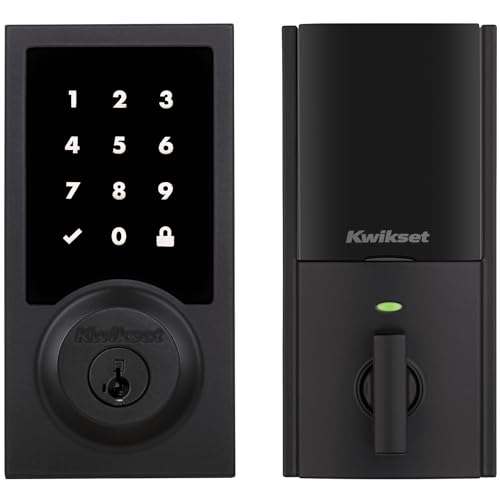
For homeowners who want a reliable, no-fuss smart lock that works seamlessly with Ring or Samsung SmartThings, the Kwikset HomeConnect Z-Wave Touchscreen Lock in Matte Black stands out as a solid pick. I appreciate its Z-Wave 700 long-range connectivity, which delivers strong signal coverage and supports SmartStart for easy setup. It’s Grade 2 BHMA certified, uses S2 encryption and SmartKey Security, and withstands tampering better than most. The backlit touchscreen holds 250 user codes, and I can set auto-lock from 30 seconds to 10 minutes. It runs on four included AA batteries, lasts over a year, and installs in minutes. I need a Ring or SmartThings hub, sold separately, for full control, but setup is DIY-friendly.
Best For: Homeowners seeking a secure, easy-to-install smart lock with strong Z-Wave integration for use with Ring Alarm or Samsung SmartThings systems.
Pros:
- Z-Wave 700 long-range connectivity ensures reliable whole-home coverage and supports SmartStart for hassle-free pairing
- Grade 2 BHMA certification with S2 encryption and Kwikset SmartKey Security offers robust protection against forced entry and hacking
- Supports up to 250 user codes, backlit touchscreen, and customizable auto-lock settings for convenient, keyless access
Cons:
- Requires a separate Z-Wave hub such as Ring Alarm or SmartThings, increasing total cost
- Limited to Z-Wave ecosystem, lacking native Wi-Fi or broader smart home platform support
- Matte Black finish may show fingerprints and require frequent cleaning for a pristine look
Yale Assure Lock Deadbolt Z-Wave (YRD226-ZW2-619)

Yale’s Assure Lock Deadbolt Z-Wave (YRD226-ZW2-619) stands out if you want reliable, app-free smart access without overhauling your door. I rely on its Z-Wave connectivity to work with hubs like SmartThings or Ring Alarm, so I can lock or open remotely and use voice commands through Alexa. The backlit keypad lets me enter without fumbling, and the BHMA Grade 2 motorized deadbolt is solid. I appreciate that it uses standard AA batteries, which last long, and I never worry about being locked out-two physical keys and low-battery alerts keep me covered. Installation took me under 15 minutes with just a screwdriver, and it fits most standard doors.
Best For: Homeowners seeking a reliable, Z-Wave–enabled smart deadbolt that integrates with existing smart home hubs without requiring a proprietary app.
Pros:
- Easy installation with just a screwdriver and no additional door modifications needed
- Works seamlessly with Z-Wave hubs for remote access, voice control, and automation
- Includes both keyless entry and physical keys with long-lasting AA batteries and low-battery alerts
Cons:
- Requires a separate Z-Wave hub for full smart functionality, not included
- No built-in Wi-Fi connectivity, limiting direct app control
- Satin nickel finish may show fingerprints and require frequent cleaning
Yale Assure Lock 2 Smart Deadbolt (YRD410-F-ZW3-619)

When seamless integration with Z-Wave home security systems matters most, the Yale Assure Lock 2 Smart Deadbolt (YRD410-F-ZW3-619) stands out as a reliable choice for homeowners seeking automated access control without sacrificing durability or convenience. I appreciate its fingerprint scanner, back-lit keypad, and app control via iOS or Android, which offer flexible entry options. It works with Samsung SmartThings and Hubitat, supports remote access, auto-lock, and real-time alerts. I recommend pairing it with a Z-Wave hub for full functionality. It includes a Z-Wave module, 4 AAs, and DoorSense. Weighing 4.27 pounds, it’s solid, lasting up to 12 months on one set.
Best For: Homeowners seeking a durable, Z-Wave–integrated smart deadbolt with biometric access and remote control for seamless smart home automation.
Pros:
- Supports fingerprint scanning, keypad, and app-based access with Z-Wave and Bluetooth connectivity
- Integrates with Samsung SmartThings, Hubitat, and other Z-Wave systems for remote locking, unlocking, and real-time notifications
- Includes DoorSense technology and auto-lock feature for enhanced security and peace of mind
Cons:
- Requires a separate Z-Wave hub for full functionality, not included by default
- Mixed customer reviews with an average rating of 3.9 out of 5 stars
- Limited to Z-Wave ecosystem, reducing flexibility for non-Z-Wave smart home setups
Yale Assure Lock 2 Deadbolt (YRD410-ZW2-BSP)
I rely on smart home security that works seamlessly across platforms, and the Yale Assure Lock 2 Deadbolt (YRD410-ZW2-BSP) stands out for those using Z-Wave ecosystems like Samsung SmartThings, Ring Alarm, or Alarm.com. It’s compatible with major hubs including ADT, Wink, and Alarm.com, but you’ll need a hub for remote access. I use the keypad and app to open it, and the optional Auto-Unlock feature lets me enter hands-free. Auto-Lock turns on when DoorSense confirms the door’s closed. I create unlimited access codes for guests, all trackable in the Yale Access app. It includes a backup key, fits standard doors, and works in the U.S. and Canada only.
Best For: Smart home users in the U.S. and Canada seeking a Z-Wave–enabled deadbolt that integrates with platforms like Samsung SmartThings, Ring Alarm, and Alarm.com for key-free, remote-accessible security.
Pros:
- Integrates with major Z-Wave hubs for broad smart home compatibility
- Offers multiple access options including keypad, app, and hands-free Auto-Unlock
- Supports unlimited trackable access codes for family, guests, and service providers
Cons:
- Requires a compatible hub for remote access, not standalone
- Limited to use in the U.S. and Canada only
- Auto-Unlock feature requires Apple Watch or compatible smartphone for full functionality
Kwikset HomeConnect Smart Lock (Z-Wave)

If you’re building a Z-Wave smart home with reliable, long-range connectivity and strong security, the Kwikset HomeConnect Smart Lock (Z-Wave) is an excellent choice. It uses Z-Wave 700 Long Range for full-home coverage and S2 encryption to block hacking. SmartStart simplifies setup with compatible hubs, and it works with Ring Alarm for remote access. The touchscreen keypad supports 250 user codes, and auto-lock secures your door on a schedule. I appreciate the 12-month battery life, included batteries, and tool-free installation. It’s Grade 2 certified and features SmartKey Security for rekeying in seconds. A hub is required but sold separately.
Best For: Homeowners seeking a secure, Z-Wave-integrated smart lock with long-range connectivity, robust encryption, and seamless compatibility with systems like Ring Alarm.
Pros:
- Z-Wave 700 Long Range and S2 encryption ensure reliable whole-home coverage and advanced protection against hacking
- Supports up to 250 user codes and features tool-free installation with SmartStart for quick, DIY setup
- Grade 2 BHMA certification and Kwikset SmartKey Security provide superior durability and easy rekeying for enhanced physical security
Cons:
- Requires a separate Z-Wave hub, increasing overall cost and complexity for first-time users
- Auto-lock only offers fixed time intervals, limiting customization for specific routines
- Limited to door thicknesses between 1-3/8 to 2 inches, which may exclude some specialty doors
Schlage Camelot Smart Deadbolt Z-Wave Plus
The Schlage Camelot Smart Deadbolt Z-Wave Plus stands out for homeowners who want reliable, key-free access without sacrificing security or compatibility. I’ve found it works seamlessly with Z-Wave systems like Samsung SmartThings and Ring Alarm, letting me lock or open remotely. It pairs with Alexa when I use a compatible hub, adding voice control. Installation was easy-just a screwdriver-and Snap ‘n Stay made alignment a breeze. It fits standard doors and supports 30 access codes, which is great for families or guests. The satin nickel finish resists smudges, and the built-in alarm adds extra protection.
Best For: Homeowners seeking a reliable, Z-Wave Plus–enabled smart deadbolt that integrates seamlessly with major smart home systems and supports voice control, remote access, and multiple user codes.
Pros:
- Easy installation with Snap ‘n Stay technology and fits standard door sizes without additional tools
- Integrates with Samsung SmartThings, Ring Alarm, and Alexa for remote and voice control
- Supports up to 30 unique access codes and includes a built-in alarm for enhanced security
Cons:
- Requires a separate Z-Wave hub and voice assistant device for full functionality
- No built-in Wi-Fi connectivity, limiting direct app access without a hub
- Higher price point compared to basic smart locks without Z-Wave Plus
Yale Assure Lock 2 Touch Deadbolt (YRD430)
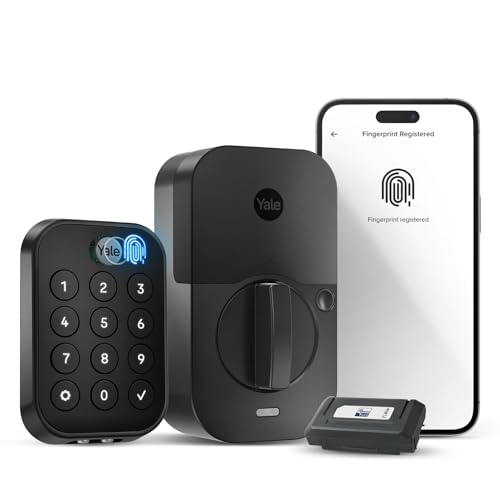
When seamless integration with existing smart home systems matters most, the Yale Assure Lock 2 Touch Deadbolt (YRD430) stands out, especially for users invested in Z-Wave technology. I rely on its Z-Wave (ZW3) connectivity to work smoothly with platforms like Samsung SmartThings and Hubitat, though you’ll need a compatible hub for remote access. I appreciate the touchscreen keypad, app control, and Auto-Unlock feature, which make daily entry key-free. It supports unlimited user codes, lets me grant temporary access, and sends real-time alerts. Auto-Lock boosts security by closing the door behind me.
Best For: Smart home enthusiasts who prioritize seamless Z-Wave integration and key-free convenience with remote access and automation capabilities.
Pros:
- Offers key-free access via touchscreen, app control, voice assistants, and Auto-Unlock for effortless entry
- Seamlessly integrates with Z-Wave hubs like Samsung SmartThings and Hubitat for advanced automation and remote management
- Enables unlimited customizable user codes with temporary access sharing and real-time entry notifications
Cons:
- Requires a separate Z-Wave hub for full remote functionality, increasing overall cost
- Auto-Unlock and app features depend on smartphone connectivity, which may affect reliability
- Higher price point compared to standalone smart locks without Z-Wave capabilities
Factors to Consider When Choosing a Z Wave Smart Lock
You’ll want to check that your Z Wave smart lock works with your current smart home system, since compatibility affects automation and remote access. Look for locks with solid security certifications, good battery life, and easy installation to avoid costly电工 calls or frequent recharging. Managing user access should be simple, so pick a model that lets you set unique codes or temporary keys without a hassle.
Smart Home Compatibility
Although smart home compatibility might seem straightforward, confirming that your Z-Wave lock works with your current ecosystem is essential for seamless operation, so start by checking whether your hub supports Z-Wave 700 or Z-Wave Plus, as these versions deliver stronger signal range and better device responsiveness. You’ll want a lock with SmartStart technology-it lets you add the device to your network automatically, skipping manual pairing. Make sure your hub supports the latest Z-Wave protocols, since older models may not work with Long Range features. Always verify that your lock includes S2 encryption to keep connections secure. You should also confirm that your smart home app allows remote control, so you can check lock status, view access logs, and get instant notifications whenever someone locks or opens the door.
Security Certification Levels
Smart home compatibility sets the foundation for how well your Z-Wave lock integrates with other devices, but it doesn’t guarantee the lock itself can withstand forced entry or last over years of daily use. You should look for BHMA certification, which confirms a lock has passed independent lab testing for strength, durability, and security. Choose at least a Grade 2 model, as these are up to 2.5 times stronger than Grade 3 locks and tested for 250,000 cycles. Grade 1 is the highest rating, designed for high-traffic or high-security settings, with stricter benchmarks for latch and strike plate performance. Certification covers resistance to forced entry, wear, and finish quality, giving you verified protection. ANSI and BHMA conduct these tests, so you’re not relying on manufacturer claims. A certified lock may cost more, but it delivers proven reliability and long-term security you can trust. Prioritize certified models for real-world performance.
User Access Management
How do you manage who enters your home and when? You can control access easily with Z Wave smart locks that support up to 250 unique user codes, so everyone from family to dog walkers has their own keyless entry. You’ll use a dedicated programming code to add, edit, or delete users, keeping admin control secure. Need to let a guest in temporarily? Some models offer unlimited temporary codes with trackable logs, so you see exactly when someone entered. You can also set auto-lock times-from 30 seconds to 10 minutes-ensuring your door never stays open by accident. With remote access via a smart home app, you can manage codes and permissions from anywhere. These features give you clear, flexible control over who gets in and when, making access management reliable and hassle-free.
Battery Life Performance
Most Z Wave smart locks run on four AA alkaline batteries and deliver at least a year of power under normal conditions, but actual performance depends on several key factors. You’ll see shorter battery life if you use your lock frequently or enable power-heavy features like backlighting and auto-lock. Cold temperatures can also reduce battery efficiency. Look for models with low-battery alerts that notify you through your smart home app or keypad, so you’re never locked out unexpectedly. Many locks keep working even at low power, giving you time to replace batteries. Z-Wave 700 series chips help, as they’re designed for better energy efficiency and longer battery life. Choosing a model with optimized power use means fewer battery changes and more reliable daily operation, saving you time and hassle over the long term.
Installation Ease And Fit
You’ve already considered battery life, but how easily a Z-Wave smart lock installs and fits your door matters just as much for long-term satisfaction. Most models fit doors 1-3/8 to 2-1/4 inches thick, matching standard home door setups. Adjustable backsets, usually 2-3/8 to 2-3/4 inches, let the this lock align with your current bore hole without DIY modifications. Look for tool-free installation with snap-on parts and pre-aligned components-it cuts setup time and often needs just a screwdriver. Many locks are designed for DIYers, so you won’t need a locksmith or rewiring. Since they replace your existing deadbolt, you avoid new door cutouts, protecting your door’s finish. Check your door’s thickness and backset before buying to guarantee a smooth install. A well-fitting lock operates reliably and avoids wear over time.
Auto Lock Customization
While convenience and security often compete in home automation, auto-lock customization in Z-Wave smart locks strikes a practical balance. You can set the lock to secure the door automatically after 30 seconds, 1 minute, 3 minutes, 5 minutes, or even 10 minutes, depending on your needs. Shorter intervals improve security by reducing the time the door stays unsecured, which is helpful if you tend to forget to lock up. Longer delays offer convenience when you’re carrying groceries or letting pets in and out. You’ll adjust these settings through your smart home hub or app, letting you change the timing remotely or create schedules. This flexibility means you don’t have to choose between safety and practicality. Look for models that allow multiple profiles, so family members can have personalized auto-lock preferences without compromising overall home security.
Frequently Asked Questions
Can I Install a Z-Wave Smart Lock Myself?
Yes, you can install a Z-Wave smart lock yourself if you’re comfortable with basic tools and follow the manufacturer’s instructions. Most models replace your existing deadbolt and take about 30 to 60 minutes. Just make certain your door’s thickness and prep work match the lock’s requirements. Double-check power sources and Z-Wave compatibility with your hub to avoid connection issues.
Do Z-Wave Smart Locks Work Without Wi-Fi?
You don’t need Wi-Fi for Z-Wave smart locks to work-they use a dedicated low-frequency radio signal that connects directly to a compatible hub or controller. You control the lock through the hub, which can link to your home network. This setup is reliable, works even if your internet goes down, and reduces Wi-Fi congestion. Just make sure your hub supports Z-Wave and is within range for best performance.
Are Z-Wave Locks Vulnerable to Signal Jamming?
Yes, Z-Wave locks can be vulnerable to signal jamming, but it’s rare and requires close proximity. You can reduce risks by using locks with built-in anti-jamming features and enabling local control so the lock still works without the hub. Pair your lock with a monitored security system, which alerts you to interference. Though jamming is possible, real-world cases are infrequent and Z-Wave’s low frequency makes it harder to disrupt than Wi-Fi.
How Often Do Smart Lock Batteries Need Replacement?
You typically replace smart lock batteries every 6 to 12 months, depending on usage and model. High-traffic homes or frequent use of features like auto-locking drain power faster. Most locks alert you with low-battery warnings weeks in advance. Alkaline batteries last longer than rechargeables, and extreme temperatures can reduce lifespan. Check manufacturer specs for exact recommendations, and keep spares on hand to avoid lockouts.
Can Multiple Users Have Unique Access Codes?
Yes, you can set up multiple users with unique access codes on most Z-Wave smart locks. You assign each person a personalized code, which lets you track who enters and when. Some models support up to 30 codes, making them ideal for families or frequent guests. You can deactivate codes anytime for added security. This feature enhances control without requiring extra hardware or subscriptions.