DIY Guide to Installing Wireless Alarm Sensors on Sliding Glass Doors and Patios
Choose a wireless magnetic contact sensor or glass break detector compatible with your alarm system, checking frequency and encryption. Mount the sensor on the fixed frame and magnet on the sliding door, aligning within 1/4 inch when closed. Use high-strength adhesive on clean, non-porous surfaces to avoid drilling. Test the connection, verify signal strength above 75%, and replace batteries every 1–3 years. Proper placement and regular checks keep your patio secure and reduce false alerts-there’s more to optimizing your setup effectively.
Notable Insights
- Choose sensors compatible with your alarm system, ensuring matching frequency and encryption for reliable communication.
- Mount the sensor on the fixed frame and the magnet on the moving door, aligning within 1/4 inch when closed.
- Use high-bond adhesive strips on clean, non-porous surfaces to install without drilling into glass or frames.
- Test the sensor by slowly opening the door to confirm immediate alarm trigger and strong signal to the control panel.
- Replace batteries every 1–3 years and realign components if detection fails or false alarms occur.
Choose the Right Wireless Alarm Sensor for Sliding Doors
What makes a wireless alarm sensor effective for sliding doors? It starts with selecting the right sensor types, like magnetic contact or glass break detectors, based on your door’s layout and security needs. Magnetic sensors work well when the door frame allows clean alignment, while glass break sensors add protection without visible hardware. Always perform a compatibility check with your existing alarm system to guarantee seamless communication and avoid signal interference. Some systems use specific frequencies or encryption, so verify specs before buying. Consider battery life, weather resistance, and ease of installation. Wireless options offer flexibility, but poor placement reduces effectiveness. Plan sensor location early, keeping wiring-free convenience in mind. Budget models start around $15, but reliable brands may cost $25–$40 each. Choose durability and proven performance over price alone. For added peace of mind, consider models reviewed in the best motion sensor alarms roundup to ensure reliable detection performance.
Position Sensors to Detect Even Slight Movement
While precise placement won’t turn a low-quality sensor into a high-performing one, it can make the difference between reliable detection and frequent gaps in security. You need accurate sensor alignment to guarantee the magnet and sensor are within 1/4 inch when the door is closed. Even slight misalignment can compromise gap detection, allowing intruders to nudge the door open undetected. Position sensors work by monitoring the distance between two components-if that gap changes, the alarm triggers. For sliding doors, mount the sensor on the fixed frame and the magnet on the moving panel. Test movement with gentle pressure to confirm response. High-sensitivity models offer better performance, though they may cost $5–$10 more. Proper alignment during setup improves reliability, reduces false alarms, and guarantees consistent detection.
Install Without Drilling or Wires
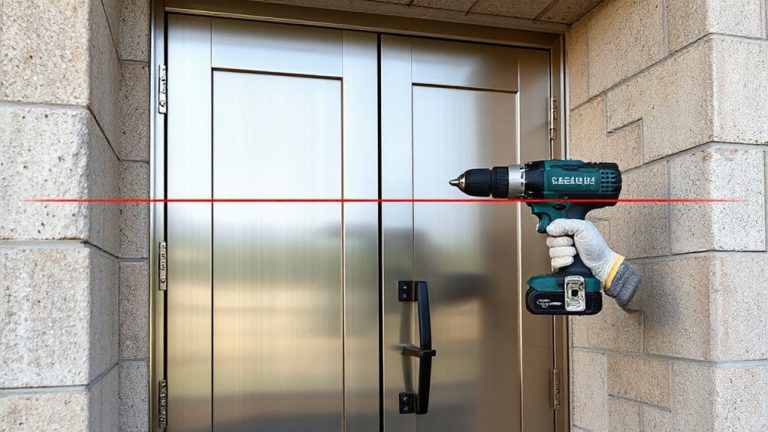
How do you secure your home without altering its structure? You use wireless alarm sensors with strong adhesive backing instead of drilling. These sensors attach quickly to sliding glass doors and patio frames, preserving your home’s finish and rental agreement, if applicable. Adhesive strength matters-choose products tested to stay put for years, not just months. Look for tape rated for at least 50 pounds per square inch of holding power. Surface compatibility is just as important: clean, dry, non-porous surfaces like glass or finished metal work best. Avoid porous wood or dusty frames unless prepped properly. These no-drill systems cost $10–$25 per sensor and take minutes to install. They’re reliable when applied right and easy to reposition. Check manufacturer guidelines for temperature and material limits to guarantee long-term performance. For garage applications, consider models that include garage door alarm sensors for enhanced home protection.
Test for Reliable Door Monitoring
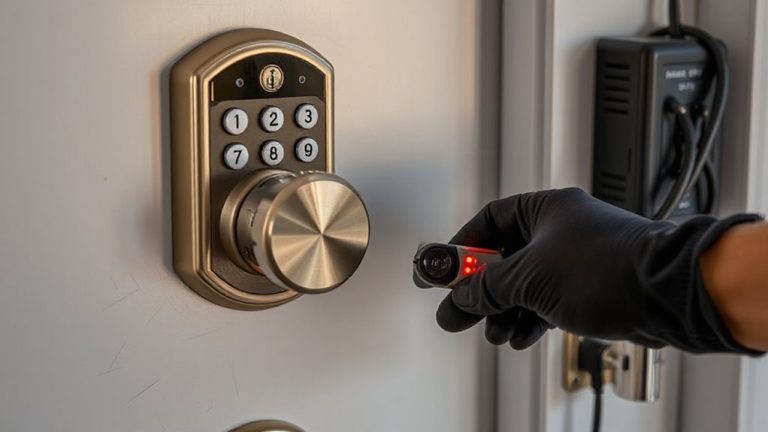
Ever wonder whether your sensor actually detects a breach? Test it by opening the door slowly and confirming the alarm system registers the change within seconds. Check signal strength in your control panel’s diagnostics-aim for a strong, stable reading. Weak signals may result from interference sources like thick walls, metal frames, or large appliances nearby. Perform tests at different times of day to account for variable wireless traffic in your home. Move potential interference sources if readings fluctuate. A reliable setup shows consistent performance across multiple trials. Don’t rely on a single test-repeat five times to confirm accuracy. Make sure the sensor and magnet align properly when closed. If signal strength drops below 75%, consider relocating the sensor or adding a signal repeater. Document your results to track performance over time and support future troubleshooting.
Troubleshoot Common Sensor Issues
Why isn’t your sensor triggering when it should? First, check for proper sensor calibration-it’s essential the magnet and sensor align within 1/4 inch when the door is closed. Misalignment is a common cause of missed triggers. You can adjust the positioning by loosening the mounting screws and repositioning either component. If alignment looks correct but the sensor still fails, test the connection using your system’s diagnostic mode. Another frequent issue is low battery power, so perform a battery replacement even if the sensor seems active. Most wireless sensors run on CR123 or AA batteries lasting 1–3 years. Use high-quality lithium batteries for longer performance. Reset the sensor after battery replacement to guarantee pairing. Keep a log of maintenance dates to track performance. Regular checks improve reliability and overall security effectiveness. For optimal coverage, consider pairing your sensors with the best motion detectors for every home.
On a final note
You’ve chosen the right sensor, placed it correctly, and tested the system. Wireless sensors offer reliable patio protection without drilling. They’re easy to install and affordable, but check battery life regularly. Position magnets tightly to detect even small door gaps. Most issues come from misalignment, not signal problems. With proper setup, your sliding door stays secure and monitoring stays consistent-just confirm function monthly for best results.