The Role of Door and Window Sensors in Preventing Break-Ins at Ground-Level Entry Points
You’re most vulnerable at ground-level doors and windows-they’re easy to reach and often poorly secured. Door and window sensors detect break-ins instantly using magnetic contact, triggering alarms and sending alerts to your phone and monitoring center within seconds. They work fast, often stopping intruders before they enter. Top models last up to five years on one battery, handle weather, and sync with smart home systems like Alexa. Proper installation and monthly testing reduce false alarms. Strong, affordable options start around $20, with mid-range systems offering tamper resistance and real-time updates-smart upgrades that make a real difference if you want stronger protection.
Notable Insights
- Ground-level doors and windows are common break-in points, making sensor protection critical for early intrusion detection.
- Door and window sensors use magnetic contacts to trigger alarms instantly when openings are forced.
- Real-time alerts to phones and monitoring centers enhance response during break-in attempts at vulnerable ground-floor entries.
- Weather-resistant, tamper-proof sensors with long battery life ensure reliable protection for lower-level access points.
- Integration with smart home systems enables seamless monitoring, immediate notifications, and faster intrusion response.
Why Burglars Target Ground-Floor Doors and Windows
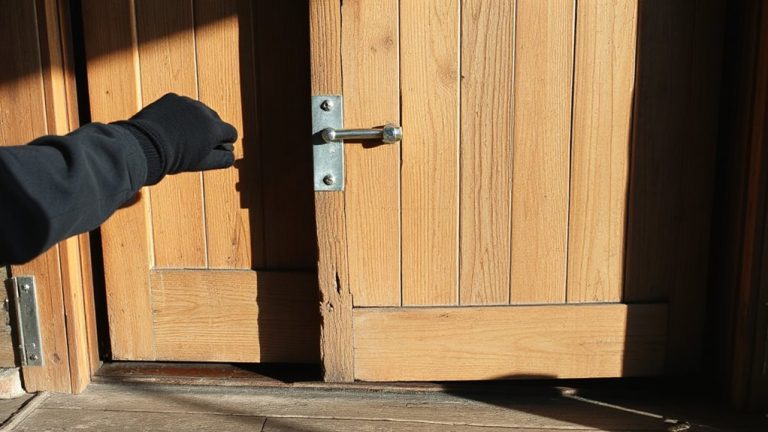
Ground-floor doors and windows are common entry points for burglars because they’re easily accessible and often less protected than upper levels. You might not realize how much vulnerable access these openings provide, especially if they lack strong locks or alarms. Criminals look for weak spots, and ground-level entries offer quick entry with minimal effort. They also allow for an easy escape if someone approaches. Most break-ins happen in under a minute, and ground floors give intruders speed and concealment. Without proper security, you’re at higher risk. Simple upgrades like reinforced frames and deadbolts help, but many overlook these fixes. Data shows homes without visible deterrents are targeted more often. You don’t need expensive systems-start with strengthening access points. Prioritize doors and windows facing alleys or shrubs, where concealment is easier. Preventing vulnerable access and cutting off easy escape routes reduces your odds markedly.
How Door and Window Sensors Stop Break-Ins Instantly
While no security system can guarantee 100% protection, installing door and window sensors considerably reduces the chance of a successful break-in by providing immediate detection. You get alerted the moment a door or window opens unexpectedly, cutting valuable seconds off response time. Modern sensors use magnetic contact technology-when the circuit breaks, it triggers the alarm. Proper sensor calibration is key; incorrect alignment may lead to false alarms or missed intrusions, so check alignment every few months. High-quality sensors are designed to minimize false alarms by distinguishing between normal vibrations and forced entry. They’re affordable, easy to install, and work with most security systems. Look for models with tamper detection and battery alerts. When paired with routine testing, these sensors deliver reliable, real-time defense that deters intruders before they fully enter your home.
What Happens When a Sensor Detects an Intruder
The instant a sensor detects an open door or window during armed mode, your security system springs into action. It triggers an alarm and sends alerts to your phone and the monitoring center. Most systems allow you to verify the event quickly, helping reduce false alarms. Regular sensor maintenance guarantees reliable performance-dust, loose mounts, or dead batteries can cause issues.
| Response Step | Purpose |
|---|---|
| Sound alarm | Deter intruders and alert nearby people |
| Send alert | Notify you and monitoring services immediately |
| Verify event | Reduce false alarms with real-time checks |
Ignoring sensor maintenance increases the risk of undetected failures. Systems with self-diagnostic features help by alerting you to weak signals or power issues. This immediate, automated response improves reaction time, giving authorities a better chance to intervene. Always test sensors monthly and replace batteries as needed. Motion detection technology can complement door and window sensors by activating lights when movement is detected near best motion sensors for lights.
Sync Sensors With Your Smart Home for Instant Alerts
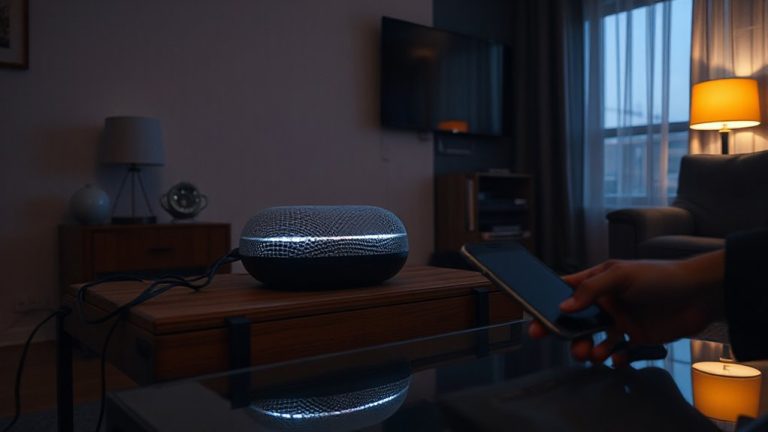
Why wait until an intruder is inside when you can know the moment a door or window opens? Syncing your sensors with a smart home system enables instant alerts through smart integration, so you’re notified the second a breach occurs. Real time monitoring means you get updates on your phone, tablet or smart display, no matter where you are. Most systems send a push notification within seconds, letting you respond quickly-whether you’re across town or on vacation. Look for sensors compatible with major platforms like Google Home, Alexa or Apple HomeKit to guarantee seamless connectivity. While some setups require a hub, others connect directly via Wi-Fi. Monthly monitoring fees can add cost, but self-monitoring options reduce expenses. With smart integration and real time monitoring, you gain faster response times and greater control, making it easier to verify threats and contact authorities if needed. A reliable smart home setup can also include advanced motion sensors for Home Assistant to enhance perimeter security.
Best Sensors for Doors and Windows on Lower Floors
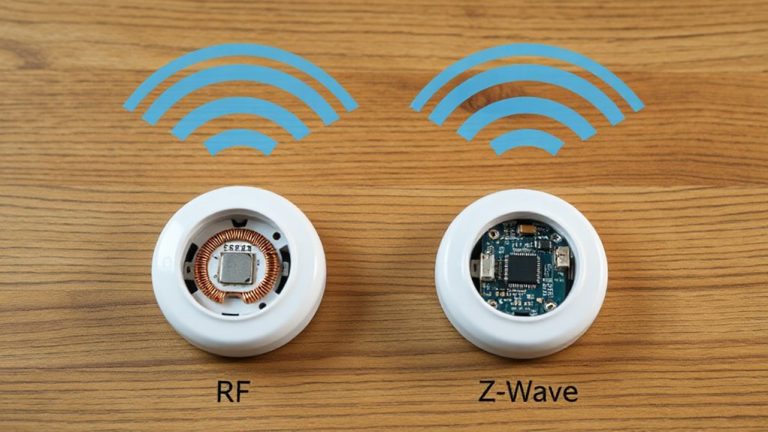
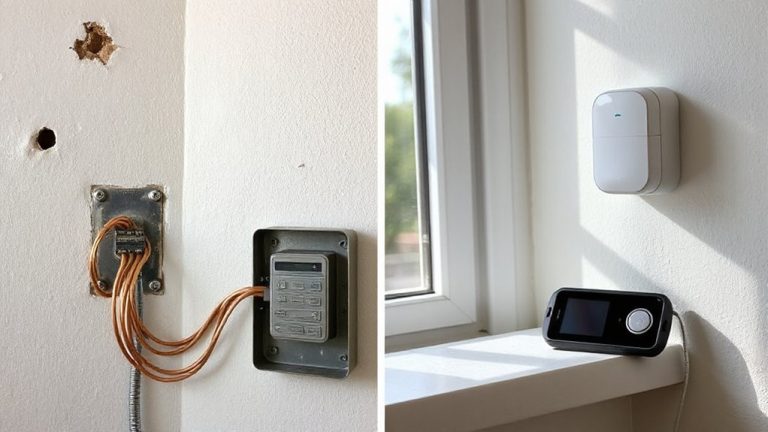
Lower-floor doors and windows are top targets for intruders, so choosing the right sensors for these vulnerable entry points is critical. Look for models with strong sensor durability to withstand daily wear and environmental shifts, especially in humid or sunny areas. Many top-rated magnetic contact sensors use weather-resistant casings and long-lasting batteries, lasting up to five years. Installation ease matters too-peel-and-stick designs let you set them up in minutes without tools, though screw mounts offer more tamper resistance. Wired options provide reliability but require professional setup. For best results, pick sensors with a narrow gap tolerance (under 1 inch) to guarantee accurate triggering. Mid-range models, priced $20–$40 each, often balance performance and cost. Test them monthly and replace batteries promptly to maintain effectiveness. Prioritize quality construction and simple maintenance for lasting protection. A reliable option for securing garage entries is installing a garage door alarm sensor.
How Sensors Scare Off Intruders in Seconds
Every second counts when an intruder tests a window or door, and modern sensors can trigger alarms within 10 to 30 seconds of unauthorized access. That rapid response sparks immediate intruder hesitation, giving would-be burglars far less time to act. Studies show most intruders prefer quick, quiet entries, so sudden alarms disrupt their plans. This ties directly into deterrence psychology-noise, lights, and the risk of being seen make break-ins too risky. Many give up within seconds, especially if they hear a loud siren or see a security system alert. Sensors don’t just detect-they prevent. Hardwired models offer reliability, while wireless ones ease installation. Look for ones with smartphone alerts and low battery warnings. Though initial costs range $20–$60 per sensor, they’re a smart investment. Simple setup and consistent monitoring maximize protection at ground-level entry points.
On a final note
You reduce break-in risks by installing door and window sensors on ground-level entry points, where most intrusions start. These sensors detect opening attempts and trigger instant alerts. When synced with a smart home system, you get real-time notifications, even when away. Top-rated models offer reliable connectivity, long battery life, and easy installation. Though initial costs range $20–$60 per sensor, the investment enhances overall home security effectively.