Comparing RF and Z-Wave Communication in Wireless Door and Window Sensors
You’re better off with Z-Wave for door and window sensors if you want reliable, secure performance. Z-Wave uses a mesh network, so signals hop between devices, extending range up to 300 feet and reducing dropouts. It resists interference better than RF, which relies on crowded 315/433 MHz bands and direct line-of-sight. Z-Wave also offers two-way communication, smart home integration, and stronger security. RF is cheaper but less flexible and prone to failure. The full picture reveals even more key trade-offs.
Notable Insights
- RF sensors use 315 MHz or 433 MHz bands, while Z-Wave operates on 908–916 MHz for better interference resistance.
- Z-Wave supports two-way communication and mesh networking, unlike one-way, standalone RF sensor signals.
- RF signals are prone to interference and blockage, requiring line of sight for reliable operation.
- Z-Wave devices act as repeaters in a mesh network, extending range up to 300 ft and improving reliability.
- Z-Wave ensures cross-brand compatibility and integration with smart home platforms, unlike proprietary RF systems.
RF vs Z-Wave: Key Differences in Door Sensors
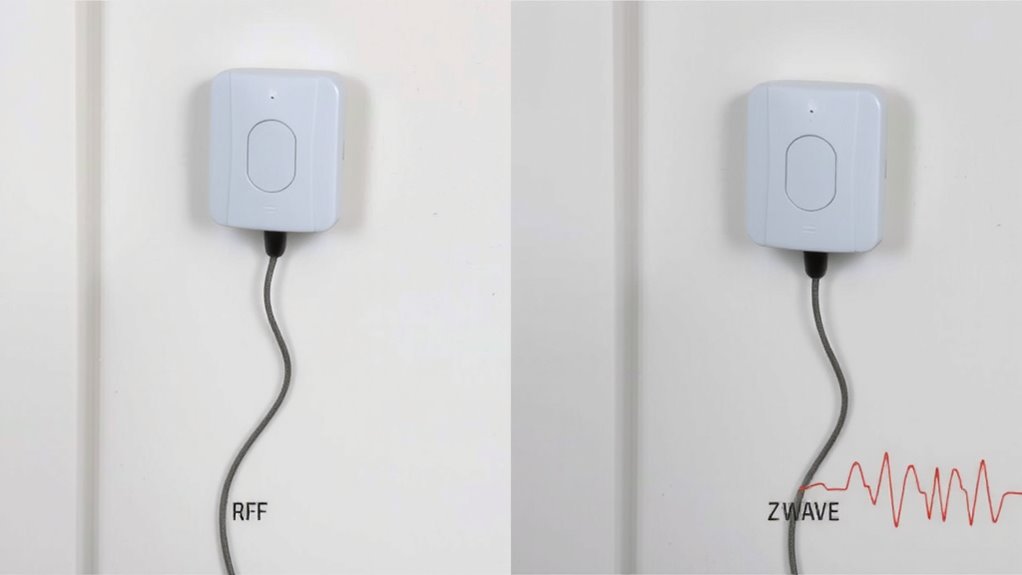
While both RF and Z-Wave door sensors serve the same basic purpose-detecting when a door opens or closes-they differ in how they communicate and integrate into your system. You’ll find RF sensors use a range of frequency bands, often 315 MHz or 433 MHz, which lets them work with many proprietary systems but can cause interference. Z-Wave sticks to the 908–916 MHz band, reducing overlap with Wi-Fi and offering better signal strength in crowded environments. Unlike basic RF, Z-Wave supports two-way communication, so you get confirmation your sensor’s message was received. RF devices are usually cheaper and simpler to install but lack mesh networking. Z-Wave sensors route signals through other devices, boosting reliability. If you want broader smart home integration and stronger signal strength over distance, Z-Wave’s structured protocol gives you more control.
How RF Sensors Work: and Their Limits
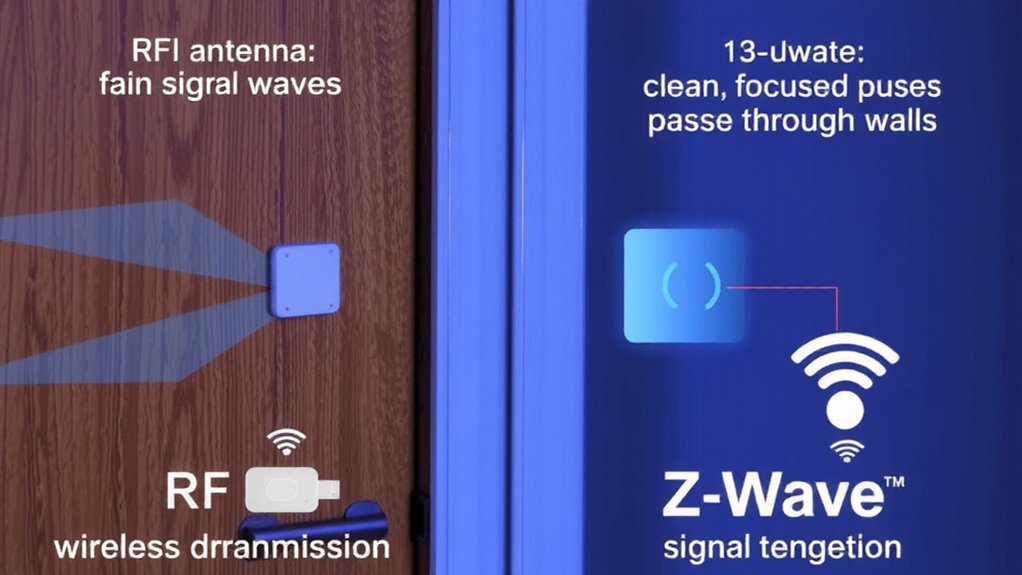
Radio frequency (RF) sensors operate by sending wireless signals between a sensor and a receiver, typically in a security panel or smart hub. You rely on consistent signal strength for dependable operation, but walls, metal objects, and distance can weaken it. Unlike mesh systems, RF uses a direct line between devices, so if the path is blocked, your sensor might not respond. Common interference types-like Wi-Fi networks, microwaves, and other electronics-can disrupt communication, causing delays or missed alerts. Most operate on 315 MHz or 433 MHz bands, which are unregulated and crowded. That increases exposure to interference types from nearby devices. While RF is cost-effective and simple to install, its range is limited, usually under 100 feet indoors. For best results, place sensors within clear line of sight and avoid high-traffic electronic zones. Monitor signal strength during setup to prevent connectivity gaps.
Z-Wave’s Mesh Network: Better Range, Smarter Signals
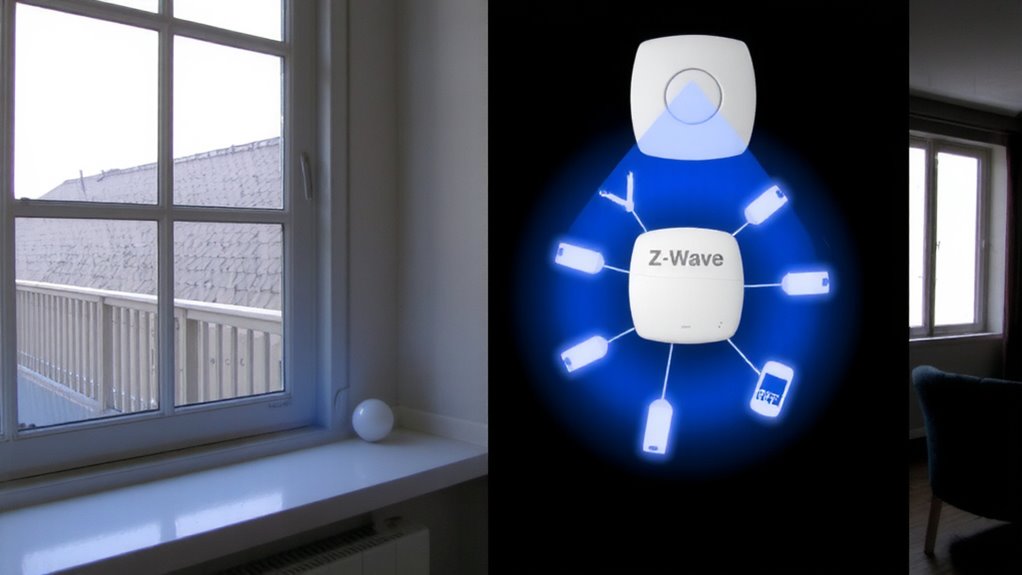
Because your smart home devices need to communicate reliably, Z-Wave’s mesh network design helps overcome the range limits found in traditional RF systems. Instead of relying on direct line-of-sight, your sensors use signal hopping-passing data from one device to another until it reaches the hub. This means even distant windows or doors stay connected. Plus, network redundancy guarantees communication continues even if one path fails. Each compatible device boosts coverage, creating a resilient layout. Top Z-Wave smart locks for your home can also act as signal repeaters to enhance overall network performance. Here’s how Z-Wave compares across key aspects:
| Feature | Z-Wave | RF (Typical) |
|---|---|---|
| Range (open space) | Up to 300 ft | Up to 100 ft |
| Signal Hopping | Yes | No |
| Network Redundancy | Yes | No |
You gain broader, smarter coverage with fewer dead zones.
Smart Home Compatibility: What Works With What
Z-Wave’s reliable mesh network gives you stronger signal coverage, but how well it connects to your existing smart home systems matters just as much. You’ll find Z-Wave supports broad brand interoperability, so devices from different manufacturers usually work together seamlessly. This means you can mix sensors, hubs, and controllers from trusted brands without compatibility headaches. Device pairing is typically simple, often requiring just a few steps through your smart hub’s app. In contrast, RF sensors usually lock you into one brand, limiting flexibility. If you already use Amazon Alexa, Google Home, or Apple HomeKit, check which ecosystem supports Z-Wave natively-many do. While Z-Wave requires a compatible hub, the setup cost is often worth it for long-term expansion. Stick with Z-Wave for easier integration, future upgrades, and smoother device pairing across brands.
Signal Security: Which Is Less Vulnerable to Interference?
While both RF and Z-Wave technologies transmit data wirelessly, they handle signal interference differently, and your choice can impact sensor reliability over time. RF sensors often operate on fixed frequencies, making them more prone to signal jamming from nearby electronics. Z-Wave uses frequency hopping, automatically switching channels to avoid interference and maintain connection. This built-in adaptability reduces downtime and boosts security. Below is a comparison of key signal security features:
| Feature | RF Sensors | Z-Wave Sensors |
|---|---|---|
| Interference Risk | Moderate to High | Low |
| Signal Jamming Defense | Minimal | Strong |
| Frequency Hopping | No | Yes |
| Channel Flexibility | Fixed Channel | Dynamic Channel Switch |
Z-Wave’s use of frequency hopping gives it a clear edge in resisting interference and signal jamming.
Which One Fits Your Home: RF or Z-Wave?
How do you decide which wireless technology works best for your home? If you want simple setup and low cost, RF sensors might suit you, though they offer limited integration. Installation complexity is low since most RF devices pair directly with a hub or alarm system. However, they can’t form mesh networks, which may affect range. For a more robust smart home setup, Z-Wave is a better fit. It supports mesh networking, improving signal reach, and integrates seamlessly with smart hubs. Z-Wave also boasts better power efficiency, meaning longer battery life-some sensors last up to two years. Though installation complexity is slightly higher due to network configuration, the trade-off is reliability and scalability. Choose RF for basic needs and Z-Wave if you plan to expand your system later.
On a final note
You should choose RF sensors if you want a simple, affordable option for basic monitoring, but expect limited range and no smart home integration. Z-Wave offers stronger security, better range through mesh networking, and works with major smart systems, though it costs more. For most smart homes, Z-Wave is the better long-term choice.