Installing Reinforced Steel Gates With Tamper-Proof Locks for Maximum Security
You’re installing reinforced steel gates with tamper-proof locks to maximize security, and for good reason. Steel resists impact and weather better than wood or vinyl, while tamper-proof locks made of hardened steel block drilling and prying. Choose swing gates for flat areas or slide gates for slopes, both pairing well with automation. Install posts deep in concrete and use certified locks like Schlage or Yale. Keep everything aligned and maintained-your next steps reveal smarter, long-term protection.
Notable Insights
- Use reinforced steel gates for superior strength, durability, and resistance to forced entry and extreme weather.
- Install tamper-proof locks made of hardened steel or boron alloy to resist drilling, cutting, and撬 attacks.
- Choose slide gates for sloped driveways or limited space; swing gates suit level ground with ample clearance.
- Set gate posts in concrete below the frost line to ensure long-term stability and resistance to impact.
- Perform monthly maintenance including lubrication, bolt tightening, rust inspection, and lock function testing.
Why Steel Gates Block Break-Ins Better Than Wood Or Vinyl
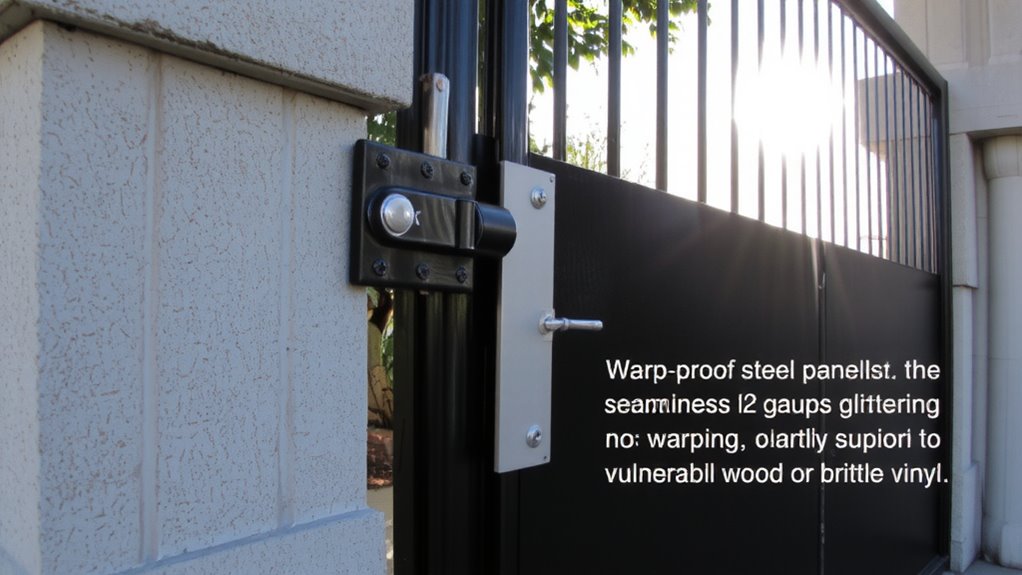
Strength matters when it comes to stopping intruders, and steel gates have it where it counts. You’re far better protected with steel than wood or vinyl because of its superior material strength. Steel resists impact, bending, and forced entry far better than softer, more brittle materials. Unlike wood that can splinter or warp over time, or vinyl that cracks under pressure, steel holds firm. This durability advantage means it lasts longer and performs better during an attempted break-in. Steel gates also maintain integrity in extreme weather, reducing long-term maintenance costs. While steel may cost more upfront-typically 20–30% more than wood-it saves money over time due to minimal repairs. You’ll want galvanized or powder-coated steel to prevent rust. Overall, choosing steel improves both immediate security and long-term reliability, giving you a smarter, more effective barrier against unauthorized access.
Stop Break-Ins: How Tamper-Proof Locks Defeat撬 Attempts
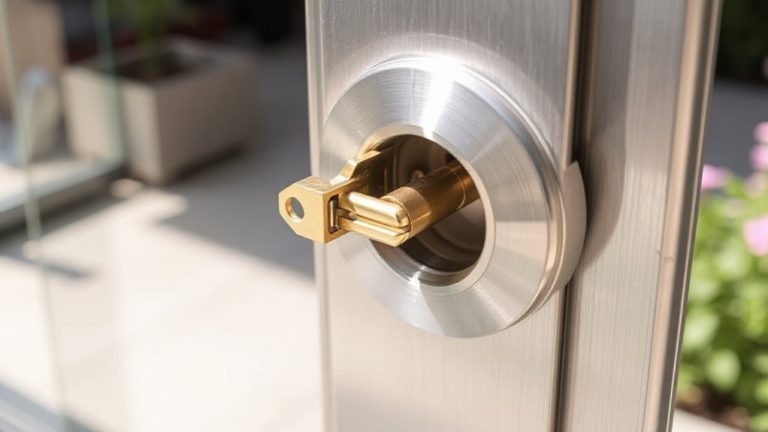
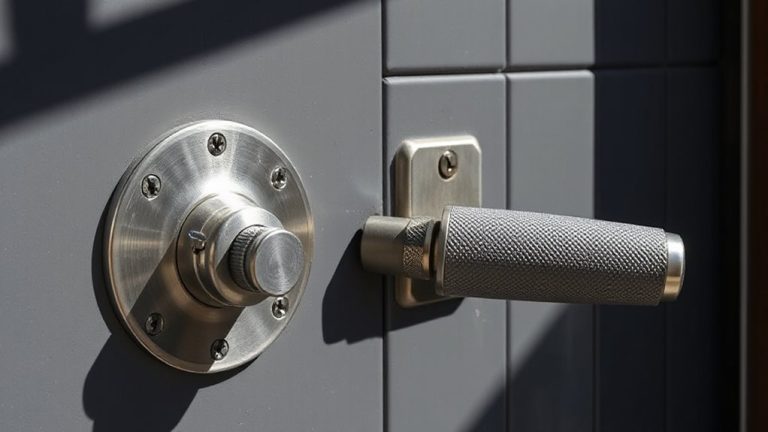
While some locks may look tough, tamper-proof models are built to resist common break-in methods like撬, making them a smarter choice for securing steel gates. You’ll want locks with high-grade key materials, such as hardened steel or boron alloy, because they resist cutting and drilling far better than standard metals. These locks are designed with anti-pry shields and internal mechanisms that disrupt撬 attempts before damage occurs. Lock resistance is tested against real-world force, so choose models with third-party certifications to guarantee reliability. A solid lock alone isn’t enough-pair it with reinforced strike plates and proper installation depth to prevent frame splitting. Though tamper-proof locks cost more upfront, usually $50–$150, the added security reduces long-term risks. Make sure to verify local standards and consult a locksmith when unsure. For keyless convenience and advanced access control, consider installing a keypad deadbolt with tamper-proof features.
Swing Vs. Slide: Pick The Right Reinforced Gate For Your Driveway
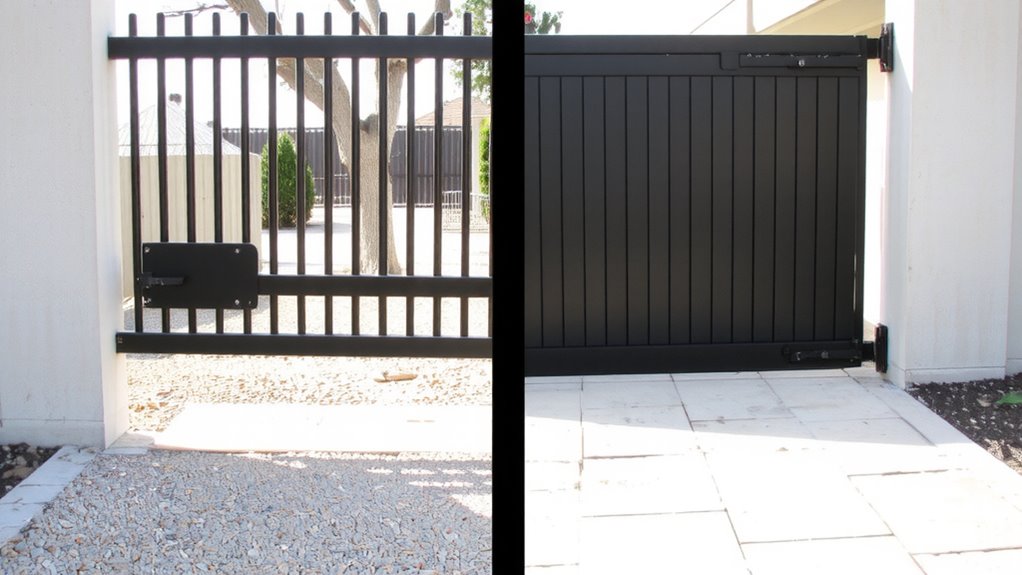
When choosing between swing and slide gates for your driveway, you’ll need to weigh space, terrain, and security needs carefully. Swing gates require clearance to open inward or outward, making them ideal for wide driveways with level ground. They’re generally easier and less expensive to automate, making gate automation more affordable. However, uneven terrain or tight spaces can limit their function. Slide gates move horizontally along a track, needing less operational space and working well on slopes. They offer smoother gate automation integration and stronger access control due to fewer moving hinges. Slide systems cost more upfront and require consistent track maintenance. Both types support high-level security when paired with reinforced steel and tamper-proof locks. Consider your driveway layout and automation goals before deciding-each has clear pros and cons based on your property’s design and access control priorities.
Top 5 Tamper-Proof Locks For Steel Security Gates
Five top-rated tamper-proof locks stand out for securing steel gates, each offering reliable protection against forced entry and manipulation. You’ll want the Schlage B660, a grade 1 deadbolt with pick-resistant design, or the Sargent Lock 100-Series, known for rugged durability and commercial use. For better convenience, the Yale Assure Lock 2 supports smart integration, letting you control access via phone or voice assistants. If you prefer biometric access, the Supra C500 offers fingerprint recognition, which reduces key reliance and speeds entry. The Lockey M880 is a mechanical keyless option-no batteries, no wiring-and ideal for areas with power instability. Each lock balances security, ease of use, and pricing between $60 and $300. Consider long-term maintenance, local climate, and whether smart integration or biometric access suits your household’s access patterns best.
How To Install A Steel Security Gate (In 5 Steps)
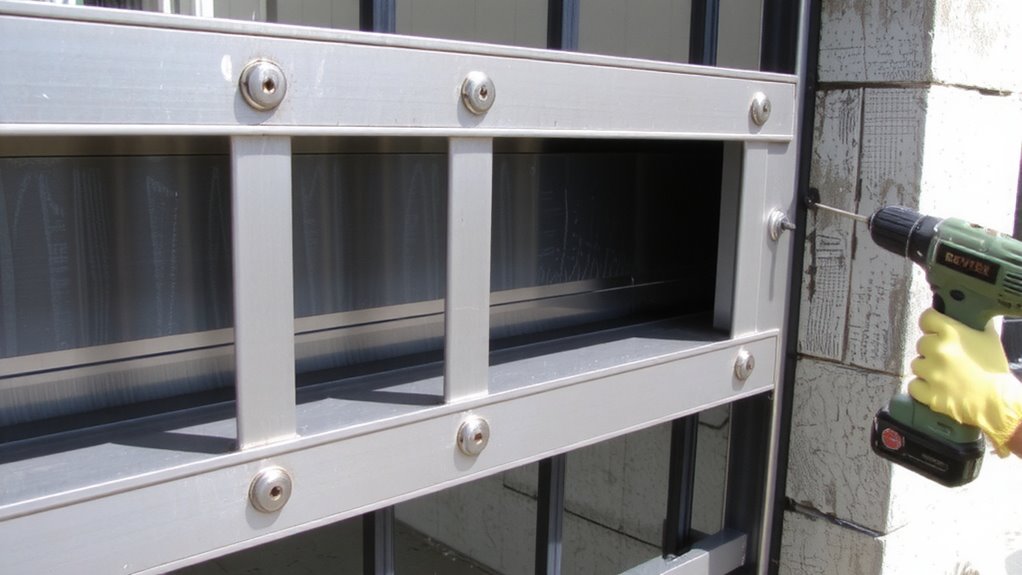
A well-installed steel security gate adds lasting protection to your property, and doing it right means following clear, step-by-step procedures. First, measure the opening carefully and mark post locations to guarantee proper gate alignment. Next, set the posts in concrete, using a level to keep them plumb and at the correct spacing. Once the concrete cures, place the gate between the posts and temporarily secure it with clamps. Check alignment again, adjusting until the gap is even and the gate swings smoothly. Then, use strong welding techniques to attach hinges to both the gate and posts, ensuring durable, stable connections. Finally, install your chosen tamper-proof lock according to the manufacturer’s specs. Each step affects long-term performance-precise alignment prevents wear, while quality welding techniques enhance structural integrity. For best results, use professional help if you lack welding experience. Budget accordingly, as labor may add $200–$500.
Don’t Make These Steel Gate Installation Mistakes
Skimping on proper planning can undo even the toughest steel gate, so take time to avoid common missteps that compromise security and durability. You might overlook gate alignment, but even a slight shift of more than 1/4 inch can stress hinges and weaken tamper-proof locks over time. Always measure twice and use adjustable hardware to fine-tune positioning before finalizing installation. Don’t assume all components work together-check hardware compatibility between your gate frame, posts, and locking mechanism; mismatched specs can lead to premature wear or failure. For instance, a Grade 1 lock won’t perform well with lightweight hinges. Use manufacturer guidelines to match materials and load ratings. Poor post mounting or ignoring soil stability also reduces effectiveness. Concrete footings should extend below the frost line, typically 36–48 inches deep, depending on your region. These steps guarantee long-term function.
Keep Your Gate Secure: Monthly Maintenance Tips
Regularly inspecting your reinforced steel gate guarantees it remains secure and functional, so make it a habit to perform quick checks every month. Key maintenance tasks include gate lubrication and bolt tightening to prevent wear and guarantee smooth operation. Use a silicone-based lubricant on hinges and locks, avoiding grease that attracts dirt. Check all bolts and anchoring points, as loose fittings reduce structural integrity. Look for rust, misalignment, or damage that could compromise security.
| Task | Frequency | Notes |
|---|---|---|
| Gate lubrication | Monthly | Apply to hinges, rollers, locks |
| Bolt tightening | Monthly | Inspect frame and motor mounts |
| Visual inspection | Monthly | Check for rust, dents, misalignment |
| Lock function test | Monthly | Guarantee tamper-proof mechanism works |
| Alignment check | Monthly | Verify even gaps and smooth movement |
These steps extend lifespan and maintain top security performance.
On a final note
You’ve seen how steel gates resist forced entry better than wood or vinyl, and why tamper-proof locks block common attack methods. Choosing swing or slide depends on space and use, while proper installation prevents weaknesses. Regular maintenance keeps components working. Invest in quality hardware-like deadbolts or electromagnetic locks-for long-term security. Plan carefully, follow codes, and budget for professional help if needed. Your gate is only as strong as its weakest part, so secure every element.