Securing Garage-To-House Entry Doors With Commercial-Grade Hardware
Secure your garage-to-house door with a solid core steel model (24-gauge or thicker) and a welded steel frame for durability. Install an ANSI Grade 1 deadbolt using a reinforced strike plate and 3-inch screws into wall studs. Use non-removable pin hinges with hardened steel construction, also secured with long screws. Add smart sensors and motion lighting for monitoring and deterrence. These upgrades, costing $150–$300 for locks and $100–$250 for lighting, cut break-in risks markedly-effective protection starts with layered, tested hardware. You’ll find each component plays a critical role in a stronger defense.
Notable Insights
- Install a solid core door with a commercial-grade ANSI Grade 1 deadbolt for maximum resistance to forced entry.
- Reinforce the door frame with a welded steel frame and 3-inch screws anchored into wall studs.
- Use non-removable pin hinges made of hardened steel to prevent door lifting and prying attacks.
- Upgrade strike plates with reinforced steel and 3-inch backer screws for added structural security.
- Integrate smart sensors and motion-activated lighting to detect breaches and deter intruders effectively.
Don’t Ignore This Garage Security Weak Spot
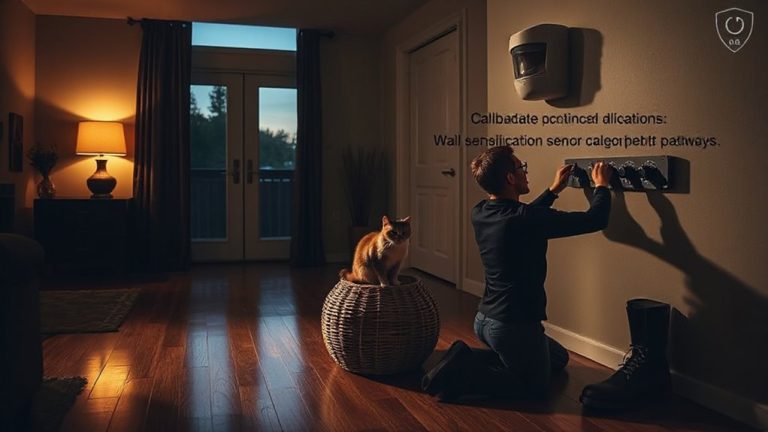
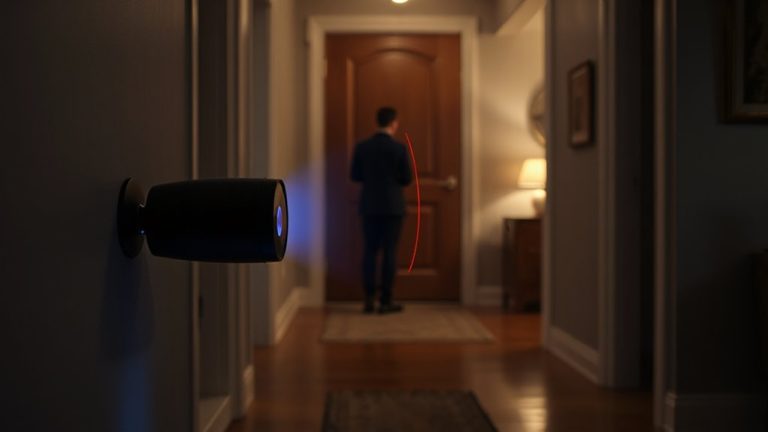
Your garage’s weak spot isn’t always the door itself-it’s often the opener mechanism and side entry door that get overlooked. Thieves can disable openers or exploit flimsy entry points between garage and house. You should reinforce these areas with commercial-grade hardware, especially where hinges and locks are exposed. Install smart lighting paired with motion sensors to deter intruders and improve visibility at night. These systems activate automatically, cutting darkness where criminals hide. Motion sensors with wide-angle detection cover blind spots effectively, and smart lighting can be synced to security apps for remote control. Most kits cost $100–$250 and are easy to install. While not a substitute for structural upgrades, they add layered protection. Combine both features for best results-data shows homes with motion-activated lighting face 30% fewer break-ins. Prioritize coverage near entry doors and the opener unit. For high-risk areas, consider upgrading to best door locks that offer superior resistance to forced entry and integrate with smart home systems.
Install a Commercial-Grade Steel Door and Frame
A reinforced steel door and frame serve as the backbone of any high-performance garage security system. You’ll want at least 24-gauge steel for the door, paired with professional frame reinforcement to resist kick-ins and forced entry. Most residential frames use thin metal, but upgrading to a heavy-duty, welded frame improves durability and alignment under stress. Look for doors with internal stiffening ribs-they add strength without weight. Don’t overlook door insulation; models with polyurethane foam offer better energy efficiency and sound reduction, typically with an R-value of 12 to 16. While insulated doors cost more upfront, they improve comfort and lower heating and cooling costs over time. Installation matters-poor alignment weakens security and reduces insulation performance. Hire a licensed contractor experienced in commercial-grade setups to guarantee proper fit and long-term performance.
Upgrade to a High-Security Deadbolt and Strike Plate
Reinforced doors and frames set a strong baseline, but the lock securing that door often determines how long an intruder is delayed. Upgrading to a high-security deadbolt with a reinforced steel strike plate markedly improves resistance to forced entry. Look for models rated ANSI Grade 1-they’ve been tested for at least 800,000 cycles and withstand greater stress. Pair it with a heavy-duty strike plate secured by 3-inch screws that anchor into the wall stud, not just the frame. Many modern options support smart lock integration, letting you monitor access and receive alerts remotely. Keypad access control adds convenience without sacrificing security, especially when combined with encryption and tamper alerts. While smart models cost more-typically $150–$300-they offer flexibility and logging features. Choose reputable brands like Medeco, Schlage, or Yale for proven performance. Manual deadbolts remain reliable and affordable, often under $100. Either way, proper installation is critical. For front entry points, selecting the best front door locks can significantly enhance overall home security.
Secure Hinges With Non-Removable Pins and Brackets
Hinges with removable pins can be a weak spot on garage doors, letting someone pop them out and lift the door off even if the lock is strong. You can stop pin tampering by switching to hinges with non-removable, secured pins-these resist prying and lifting. Look for commercial-grade hinges with a tight-fitting design and hardened steel construction, which add durability and deter forced entry. Pair them with bracket reinforcement using long, 3-inch backer screws that anchor into wall studs. This upgrade stops hinges from being pried away from the frame. Installation is straightforward but requires precise alignment. Expect to pay $20–$50 per hinge, with 3–4 needed per door. While more expensive than standard hinges, the security improvement is proven and cost-effective long-term. Always choose hinges rated for exterior or commercial use to guarantee lasting protection.
Lock Down Interior Access and Entry Points
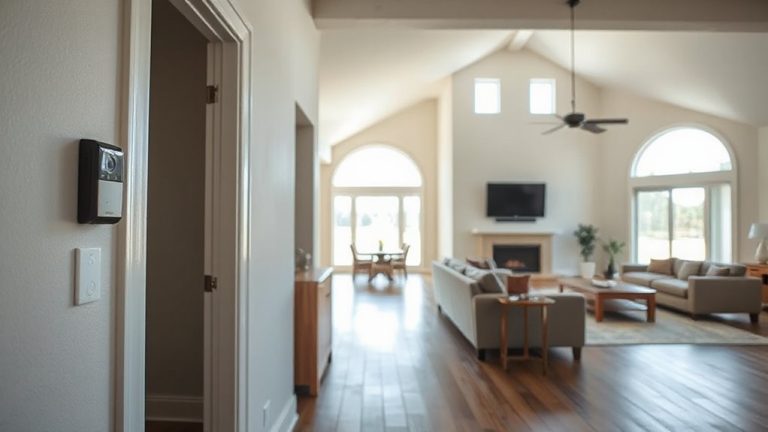
Even if your garage door is secure from the outside, intruders may still gain access through interior entry points like the door leading into your home or unsecured windows. You should reinforce this interior door with a solid core and a commercial-grade deadbolt. Install smart sensors on both the door and adjacent windows to alert you of unexpected openings. Combine these with consistent garage lighting-preferably motion-activated LEDs-to deter unauthorized movement. Smart sensors integrate with home security systems, offering real-time alerts and activity logs. Poor lighting creates blind spots, making it easier for intruders to bypass detection. A well-lit garage improves camera effectiveness and personal safety. While smart sensors typically cost $25–$60 each, they’re affordable for the protection they offer. Plan to power them with batteries or hardwiring, depending on your setup. Properly securing interior access reduces risk markedly when combined with lighting and monitoring. For maximum protection, choose a best door lock that meets commercial-grade security standards.
On a final note
Don’t overlook your garage-to-house door-it’s a common security gap. Use a commercial-grade steel door and frame for durability, then install a high-security deadbolt with a reinforced strike plate. Choose hinges with non-removable pins and secure interior entry points. These upgrades deter break-ins effectively. While costs range from $200–$600, the added protection is worth it. Plan carefully to guarantee proper installation and maximum security.