Strategic Placement of Dummy Cameras to Complement Real Surveillance Systems
You can boost your security by placing dummy cameras in visible spots like entry points and dark corners, where real ones would logically go. Match their design to real cameras and spread them evenly to suggest full coverage. Opt for matte finishes with recessed lenses to look authentic. Avoid obvious flaws like missing wires or poor positioning. They work best when paired with real systems-especially in low-risk areas where deterrence matters most. The smart setup reveals stronger tactics ahead.
Notable Insights
- Place dummy cameras at visible entry points like doors and windows to mimic real surveillance positioning.
- Position dummies in blind spots not covered by real cameras to enhance perceived security coverage.
- Match dummy camera designs with real units to ensure visual consistency and increase credibility.
- Install dummies at the same height and angle as real cameras to maintain uniform, professional appearance.
- Avoid exposing dummies as fake by ensuring proper wiring simulation and realistic lens detailing.
Why Dummy Cameras Actually Deter Intruders
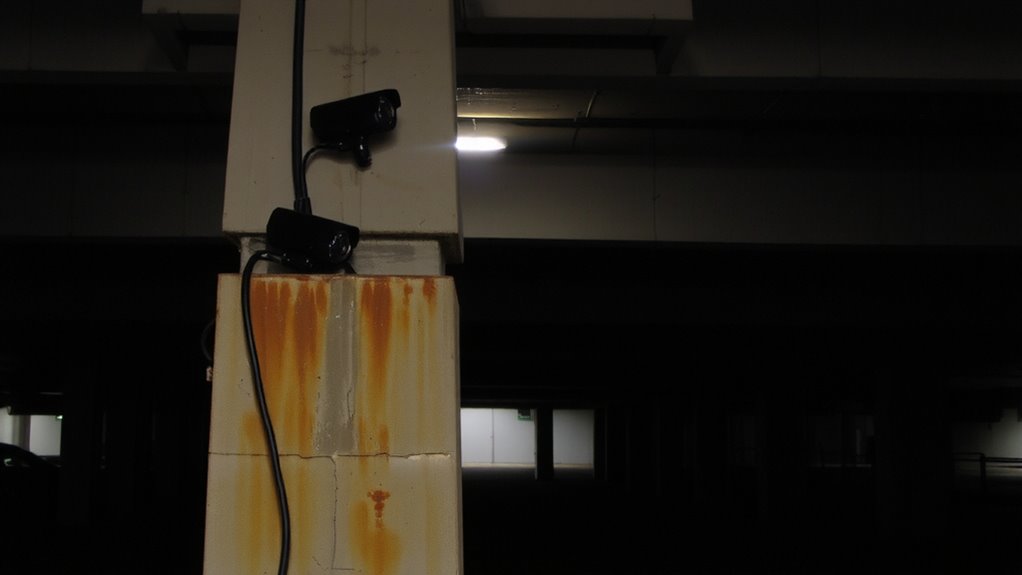
While real surveillance systems offer proven protection, dummy cameras can still play a meaningful role in discouraging intruders-especially when placed strategically. You rely on psychological impact more than actual monitoring, tricking potential intruders into believing they’re being watched. Visual deception works because most criminals prefer targets without visible security. A camera, even fake, increases perceived risk. Studies show that homes with any security cameras-real or not-are less likely to be targeted. Dummy cameras cost far less than live systems, making them a budget-friendly supplement. They’re easy to install and require no wiring or monitoring fees. However, they offer no recording or alerts, so they won’t help after a break-in. For best results, pair them with real cameras to strengthen overall deterrence. You maximize effectiveness by leveraging both appearance and actual capability. For optimal results, consider selecting from the best dummy cameras based on design realism and placement flexibility.
Where to Place Dummy Cameras for Maximum Deterrence
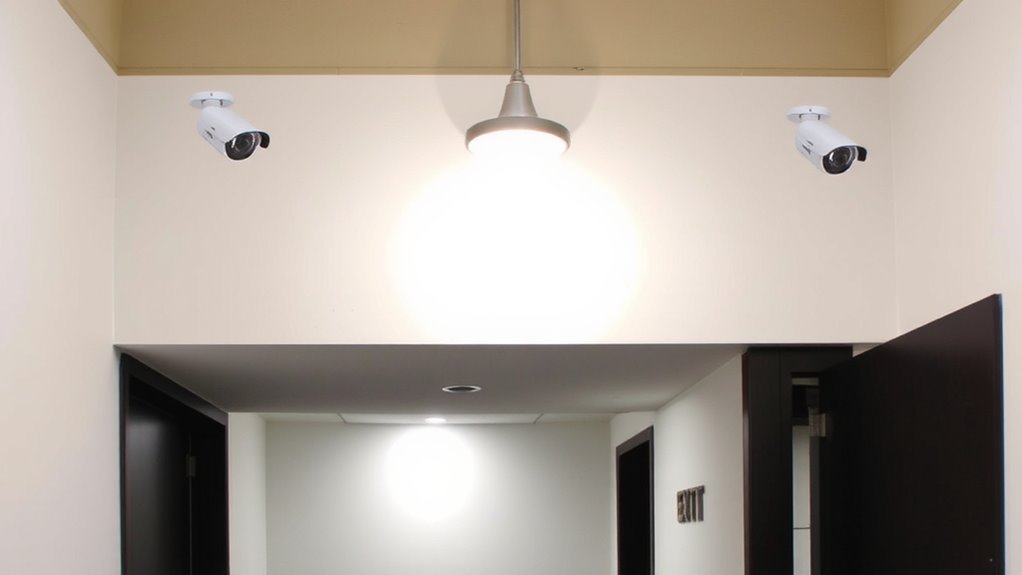
Because placement直接影响 how convincing your fake cameras appear, you’ll want to focus on high-visibility areas that intruders are most likely to notice. Position them where real cameras would logically be-near entry points like doors and windows-so they blend with actual surveillance. Use dummy cameras to cover blind spots your real system can’t monitor, reducing the chance someone exploits those weaknesses. Install them to address perimeter gaps, especially along fences, side alleys, or dark corners, making it seem your entire property is under watch. This discourages trespassers who might otherwise scout for weak points. While dummy cameras don’t record, their strategic placement improves perceived coverage. For best results, pair them with real cameras so the mix feels authentic. Avoid placing all fakes in obvious spots-they’ll lose credibility. Instead, space them evenly and pair with warning signs to boost effectiveness.
How to Pick Dummy Cameras That Look Real
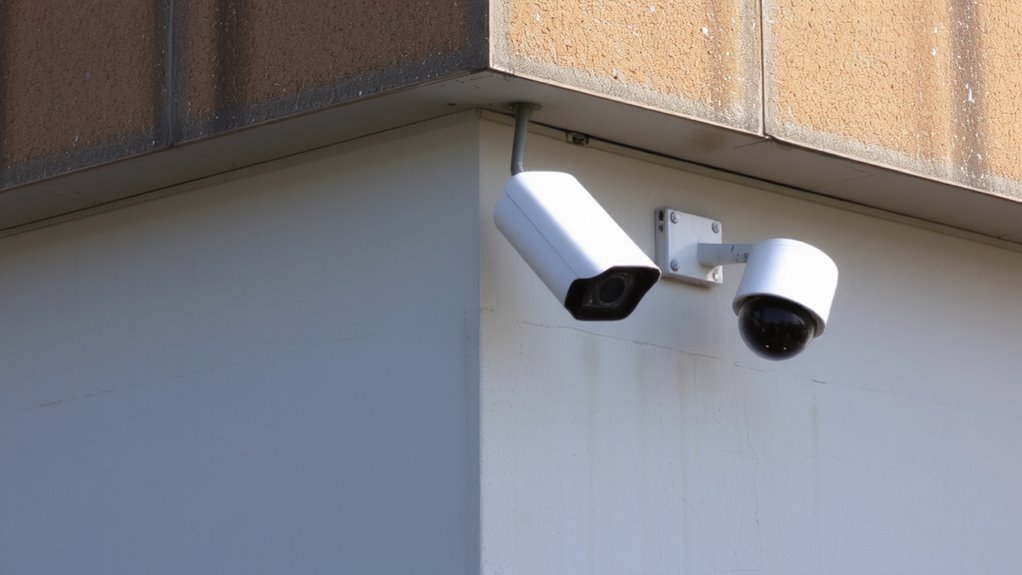
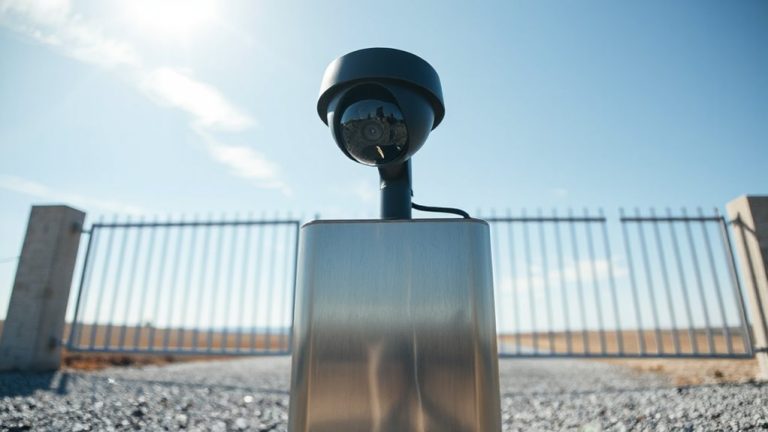
You’ve already positioned your dummy cameras where they’ll have the most impact, but their effectiveness depends just as much on how realistic they look. Choose models with high-quality material finish and convincing lens realism to fool potential intruders. Avoid shiny plastic; go for matte finishes that mimic real housings. The lens shouldn’t be purely decorative-slightly recessed with subtle detailing helps sell the illusion.
| Feature | Realistic Choice | Less Effective |
|---|---|---|
| Material Finish | Matte metal or textured polymer | Glossy, lightweight plastic |
| Lens Realism | Slightly tinted, recessed lens | Flat, obviously fake opening |
| Shape & Size | Matches common security models | Unusually small or bulky |
Check that the design matches your actual cameras, if any. Paying a bit more often means better details, increasing deterrent value without needing active components.
How to Mix Dummy and Real Cameras Without Detection
When blending dummy and real cameras, consistency is key-using mismatched models can draw attention and undermine the entire system’s credibility. You should choose designs that look identical or nearly identical to guarantee visual symmetry, making it hard to tell which units are active. Place dummy and real cameras at similar heights and angles, reinforcing uniformity. Criminals often use behavioral analysis, watching which cameras have lights, move, or appear well-maintained-so simulate activity on dummies with blinking LEDs or slight housing adjustments. Avoid clustering all real units in one area; spread them evenly so surveillance seems thorough. Rotate maintenance schedules occasionally to mimic real operational patterns. This balanced integration increases perceived coverage without revealing actual capabilities. Overall, thoughtful mixing supports deterrence while protecting your investment in real surveillance-smart planning here improves effectiveness without extra cost.
Dummy Camera Placement Mistakes That Backfire
Placing dummy cameras might seem like a simple way to boost security, but poor decisions can do more harm than good-especially after carefully mixing real and fake units for a convincing setup. If you choose obvious placement, like mounting a fake camera with no wiring or lens details in plain sight, intruders will spot the bluff quickly. That undermines the credibility of your entire system, including real units. Poor visibility is another issue-putting a dummy where it can’t “see” entry points makes it look inactive or neglected. Always position dummies to face doors or pathways, just like working cameras. Use similar housings and mounting styles across real and fake units. Avoid extreme heights or dark corners that suggest the camera isn’t functional. Proper placement maintains deterrence without revealing which units are real.
When to Use Dummy Cameras (And When to Just Buy Real Ones)
Why rely on fake cameras when real ones keep getting cheaper and more effective? It depends on your goals. Dummy cameras work best as visual deterrents in low-risk areas, helping with cost considerations. But in high-risk zones, real cameras are essential. Consider the legal implications-some areas prohibit dummy use if they mislead authorities or tenants. Real outdoor security cameras now offer advanced features at affordable prices, making it easier to justify the investment with best outdoor security cameras. Use the table below to decide:
| Scenario | Use Dummy? |
|---|---|
| Low crime, budget limited | Yes |
| High crime areas | No |
| Rental properties | Check laws |
| Need recorded evidence | No |
| Complement real system | Yes |
Dummy cameras save money upfront, but real systems offer long-term security. Always weigh cost considerations and legal implications before deciding. When in doubt, invest in real technology-it’s more reliable and legally sound.
On a final note
You can save money by using dummy cameras, but only if you place them strategically and choose realistic models. Combine them with real cameras at key entry points, like doors and driveways, to boost deterrence without raising costs. Avoid obvious mistakes, like using flickering lights or poor placements. Dummy cameras work best as part of a layered security plan, not as standalone solutions.