Outdoor Cameras With Advanced Zoom Capabilities for License Plate Recognition
You need outdoor cameras with at least 10x optical zoom to clearly capture license plates beyond 30 feet, as digital zoom blurs details by stretching pixels. Pair high optical zoom with 4K resolution, strong IR night vision, and a 15–30° viewing angle for best results. Look for WDR, IP66 rating, and PoE support to handle glare, weather, and power issues. AI-powered plate recognition adds reliable logging and alerts-keep going to compare top models that deliver these features in real-world setups.
Notable Insights
- Choose outdoor cameras with at least 10x optical zoom for clear, detailed license plate capture at long distances.
- Prioritize cameras with optical zoom over digital zoom to avoid pixel degradation and maintain plate readability.
- Ensure cameras have 4K resolution and wide dynamic range to capture plates clearly in challenging lighting.
- Install cameras at 8–10 feet high with a 15°–30° angle for optimal front or rear plate visibility.
- Use infrared illumination with Smart IR and monochrome mode for sharp, readable plates in low-light or nighttime conditions.
Why Zoom Matters for License Plate Recognition
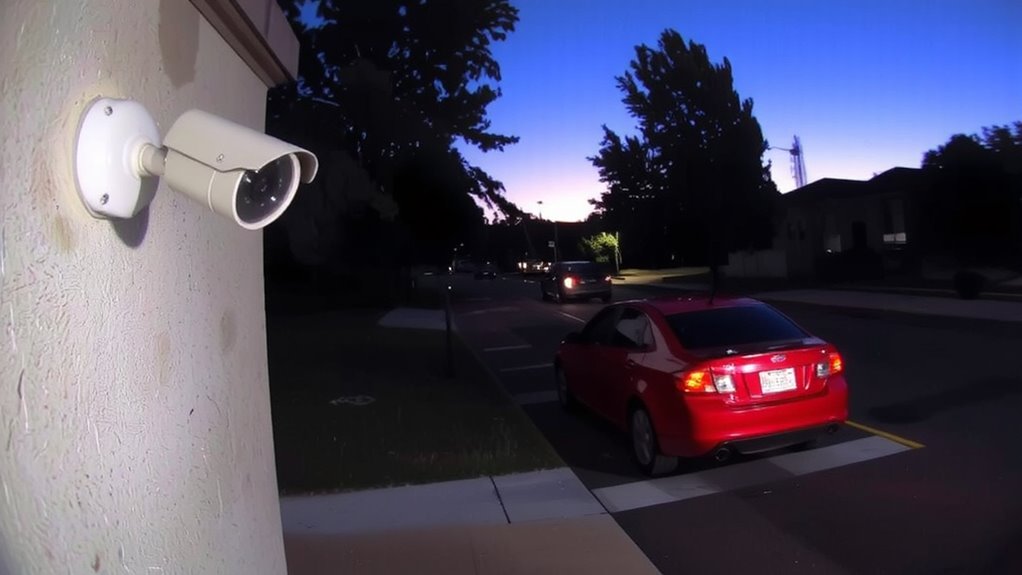
You’ll need optical zoom if you want reliable license plate recognition, especially at distances beyond 20 feet. Digital zoom often degrades image clarity, making plates unreadable. With optical zoom, the lens physically adjusts to bring distant objects closer, preserving detail. This is essential for capturing alphanumeric characters clearly, even in low light or adverse weather. Focus accuracy guarantees the plate stays sharp, reducing blurriness caused by motion or poor alignment. Cameras with auto-focus and image stabilization enhance both image clarity and focus accuracy over long ranges. For best results, choose a model with at least 3x optical zoom and a narrow depth of field for tight plate framing. While higher zoom improves detail, it can reduce field of view, so position the camera to balance coverage and zoom effectiveness. Expect to pay more for advanced zoom optics-typically $150 and up-yet the investment pays off in reliable identification.
Optical vs Digital Zoom: Which Captures Plates Better?
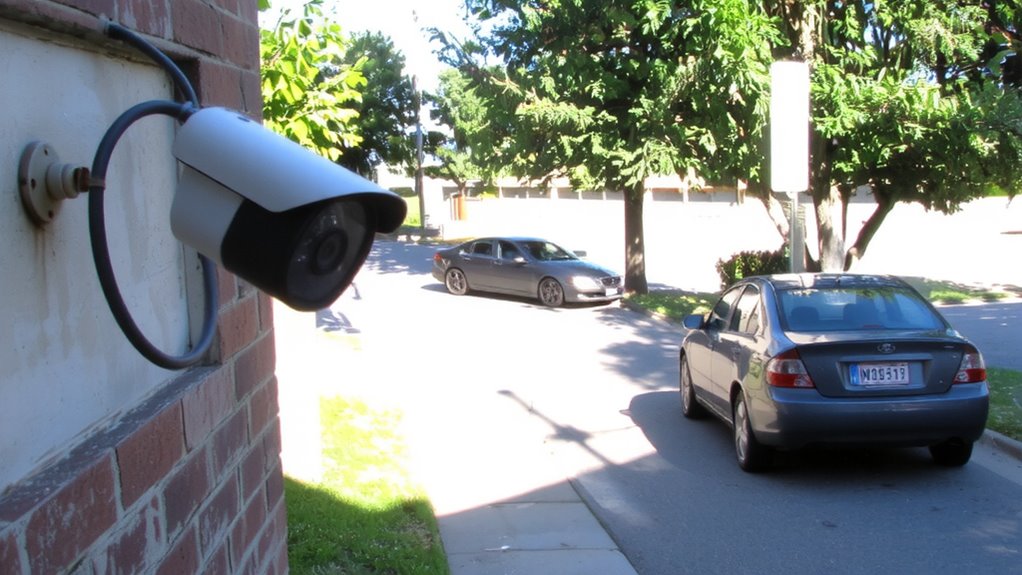
While digital zoom might seem convenient, it can’t match optical zoom when capturing license plates clearly. You’re stretching existing pixels, which leads to pixel degradation and image distortion-especially critical when readability matters. Optical zoom uses the camera’s lens to magnify the scene, preserving resolution and detail without losing clarity. That means you’ll actually see letters and numbers, even from a distance. Digital zoom crops and enlarges the image, but since no new data’s added, the quality suffers. For reliable plate capture, stick with optical zoom-it’s the proven choice. Cameras without strong optical zoom often fail in real-world conditions, no matter how high the megapixels. Invest in at least 10x optical zoom for dependable results. You’ll avoid blurry footage and misread plates, saving time and improving security outcomes overall.
Must-Have Features for License Plate Recognition
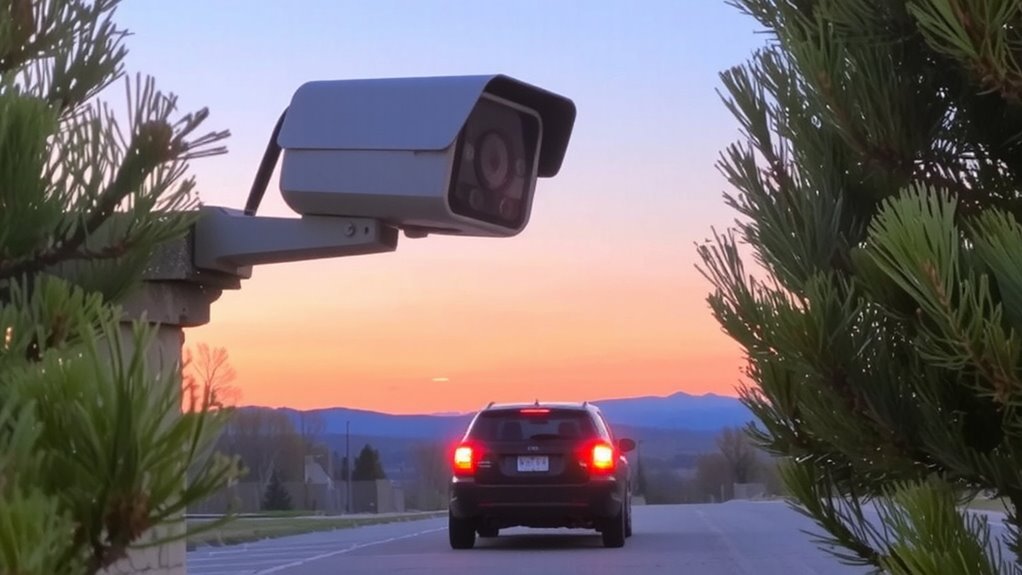
A sharp image is the foundation of effective license plate recognition, and not all outdoor cameras deliver it under real-world conditions. You need high image resolution-ideally 4K or at least 5 megapixels-to capture plate details clearly, especially at night or in motion. Optical zoom helps, but without sufficient resolution, zoomed images blur. Infrared or built-in IR illumination is essential for nighttime clarity, ensuring plates stay readable in low light. Weather resistance is equally critical; look for an IP66 or higher rating so the camera withstands rain, dust, and temperature swings. A wide dynamic range (WDR) prevents glare from headlights or sunlight, preserving plate contrast. Power over Ethernet (PoE) offers stable connectivity, while local storage avoids video loss during outages. Choose models tested in real environments, not just labs. These features together increase your odds of reliable, consistent plate capture when it matters most. For superior image clarity, consider cameras featuring Best 4K Cameras for Stunning Video Quality.
Where to Place Cameras for Best Plate View
Getting the right image starts with having the right camera, but even the highest-resolution sensor won’t help if placement compromises the view. You need to optimize camera angles to capture plates head-on, ideally between 15 and 30 degrees off perpendicular. This minimizes glare and distortion, especially when vehicles approach at night or in bright sunlight. Mounting height matters too-position your camera between 8 and 10 feet high. That’s high enough to cover the plate clearly without including too much background, yet low enough to maintain detail. Avoid placing it too high, or you’ll lose plate readability. Also, avoid sharp downward angles that skew the image. Use a fixed mount for stability and adjust during installation to test the plate view at various distances. Aim the lens so the vehicle’s front or rear plate is centered in the frame as it enters your capture zone. For optimal performance, choose models with high optical zoom capabilities that maintain image clarity when zooming in on distant plates.
Night Vision That Works for License Plate Capture
Even in low light, you can still capture license plates clearly-provided your camera uses the right type of night vision. Infrared illumination is key, as it lights up plates without visible glare that can wash out images. Standard IR LEDs work for short distances, but for plates beyond 30 feet, you’ll need powerful, long-range infrared illumination with narrow beam focus. Cameras with built-in glare reduction help prevent overexposure from headlights or streetlights, preserving plate detail. Look for models with smart IR settings that adjust based on distance to avoid blooming. Monochrome (black-and-white) night mode often delivers sharper plate images than color. Note that IR performance varies by camera design and placement. Expect to pay more for high-quality sensors and IR arrays. Test your setup at night to confirm plate readability. With proper infrared illumination and glare reduction, reliable plate capture after dark isn’t just possible-it’s practical. For optimal results, consider cameras with top night video performance as they are engineered for superior low-light clarity.
How AI Reads and Logs License Plates Automatically
You’ve got clear images at night, thanks to solid infrared lighting and glare control-now it’s time to make those license plate captures work for you automatically. The AI in your camera analyzes each plate using optical character recognition, adapting to license plate formatting across states or countries with high accuracy. Once read, the data is securely stored using automatic data encryption, keeping your logs private and tamper-proof. You can search by date, plate number, or time range, making it easy to review entries without sifting through hours of footage. Most systems log entries in a cloud or local database, offering alerts when unrecognized plates appear. Processing happens in real time, so delays are minimal. Reliable performance depends on image clarity and proper mounting height. Choose a setup that supports updates, so formatting rules and security protocols stay current. This guarantees long-term accuracy and protection without extra effort on your part.
Top Zoom Cameras for License Plate Monitoring
A high-quality zoom camera can make a real difference when it comes to capturing license plates clearly, especially at a distance or in low-light conditions. You’ll want optical zoom of at least 10x to guarantee sharp detail without losing image quality. Models like the Reolink RLC-823A and Hikvision ColorVu offer powerful zoom, strong weather resistance, and reliable night vision. Look for IP66 or higher ratings to guarantee the camera withstands rain, snow, and dust. Weather resistance is key for consistent outdoor performance year-round. Consider storage capacity, too-local SD cards or NVR systems handle continuous recording, but you may need cloud backups for extra security. Cameras with edge storage often support up to 256GB. Plan for higher upfront costs, as premium zoom models range from $200 to $400, but their accuracy and durability deliver long-term value.
On a final note
You’ll need at least 10x optical zoom to clearly capture license plates from a distance, as digital zoom often reduces image quality. Look for cameras with infrared or full-color night vision, a narrow field of view, and high resolution-ideally 4K. Position the camera 20–30 feet from the road, angled slightly downward. Pair zoom with AI-powered license plate recognition to automatically log plate numbers and timestamps for better security tracking.