Using Indoor Cameras With Night Vision to Monitor Motion Alerts in Dark Rooms
You can rely on indoor night vision cameras to detect motion in total darkness using infrared (IR) LEDs, which illuminate rooms up to 25 feet without visible light. The camera switches to IR mode automatically when lights go out, capturing clear 1080p black-and-white video. Look for models with motion zones, pet immunity, and encryption to reduce false alerts and keep footage secure. Position the camera 7–8 feet high in a corner, angled down, for best coverage. Smart placement and settings fine-tune accuracy-optimal performance depends on how well you balance these features.
Notable Insights
- Indoor night vision cameras use infrared light to detect motion and capture clear video in complete darkness.
- Position cameras 7 to 8 feet high and angle downward to optimize motion detection and facial visibility.
- Enable motion zones and sensitivity settings to reduce false alerts from pets or environmental movement.
- Choose cameras with 1080p resolution and IR range up to 25 feet for reliable nighttime monitoring.
- Use end-to-end encryption and local storage to secure night vision footage from unauthorized access.
How Indoor Night Vision Cameras See in Total Darkness
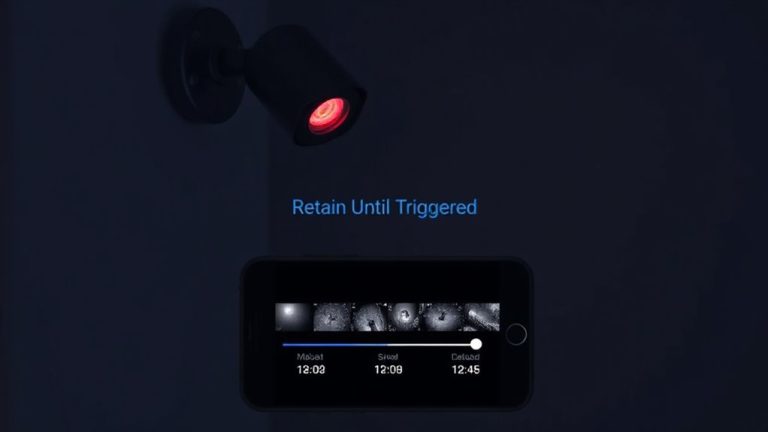
While you might think cameras can’t capture anything in pitch-black rooms, indoor night vision models use infrared (IR) light to “see” in total darkness. These cameras emit infrared illumination, which is invisible to the human eye but detectable by the camera’s image sensor. The sensor’s sensitivity determines how well it picks up this reflected IR light, converting it into a visible black-and-white image. Higher image sensor sensitivity means clearer video in low-light conditions. Most indoor night vision cameras automatically switch to IR mode when ambient light drops below a threshold. The range of infrared illumination typically spans 15 to 30 feet, depending on the model. For reliable performance, choose a camera with at least 940nm IR LEDs and a 1/3-inch image sensor. This guarantees solid image quality without overpaying for unnecessary features. Top models often feature advanced infrared camera sensors for superior performance in complete darkness.
Best Features in Night Vision Indoor Security Cameras
A solid night vision indoor security camera should offer more than just basic low-light visibility. You’ll want strong image clarity, so you can distinguish faces or objects clearly in darkness. Look for at least 1080p resolution and infrared LEDs that provide even, glare-free coverage up to 25 feet. Good motion sensitivity is critical-you need alerts only when necessary, not from shadows or moving curtains. Adjustable motion zones let you ignore unimportant areas and focus on entry points. Cameras with local storage or end-to-end encryption add privacy and reliability. Pair high image clarity with smart detection to reduce false alarms. Most top models range from $60 to $120, with no mandatory subscriptions. Test sensitivity settings after install to balance responsiveness and alert fatigue. These features guarantee dependable monitoring when night falls. For trusted options, check reviews of the best indoor security cameras to find models that excel in low-light performance and reliability.
Position Your Camera for Reliable Nighttime Alerts
You’ve picked a camera with sharp night vision and smart motion detection, so now it’s time to place it where it performs best. Aim for a mounting height of 7 to 8 feet-it’s high enough to cover a room but low enough to capture facial details. This height reduces blind spots and improves motion detection accuracy. Use camera angles to your advantage by pointing the lens slightly downward to cover entry points and high-traffic areas. Avoid placing it directly across from windows or reflective surfaces, as glare can disrupt night vision. Position the camera in a corner for a wider field of view, ensuring walls don’t block infrared sensors. Test different spots at night to confirm coverage. Proper placement boosts alert reliability and helps you monitor what matters most, without gaps in visibility. For best results, choose models with infrared night vision that maintain clarity in total darkness.
Stop False Alarms From Pets on Night Vision Cameras
Why do your cat’s midnight zoomies keep triggering alerts? Because most night vision cameras detect motion based on heat and movement, and pets often set them off. But you can reduce false alarms with features like pet immunity and motion filtering. Pet immunity lets you ignore animals under a certain weight, so your dog or cat won’t trigger alerts. Motion filtering uses smart algorithms to analyze movement size and speed, helping distinguish between a prowler and a curious kitty. Set these options in your camera’s app for better accuracy. Keep in mind that pet immunity isn’t perfect-larger pets may still cause alerts. Pair motion filtering with proper camera height and angle for best results. These tools save you time, reduce notifications, and help focus on real threats. Check your model’s specs-many mid-range cameras now include both features without extra cost.
Keep Your Night Vision Footage Private and Secure
Just because your camera can see in the dark doesn’t mean others should. You need to protect your night vision footage with strong data encryption, both during transmission and while stored. Without it, hackers could intercept video, exposing your private moments. Always choose cameras that offer end-to-end encryption and require strong, unique passwords. Enable two-factor authentication if available. Store your footage in secure storage like encrypted cloud services or local hard drives with access controls. Cloud storage often includes automatic backups but may require a subscription. Local storage keeps data offline but needs physical protection. Either way, regularly update your camera’s firmware to patch security flaws. Avoid default settings, and limit user access to trusted family members. Privacy isn’t automatic-your habits and choices determine how safe your home video really is.
On a final note
You can rely on indoor night vision cameras to monitor dark rooms effectively, especially with infrared sensors that capture clear footage in total darkness. Position the camera to avoid pet movement near heat sources, reducing false alerts. Look for models with motion zones, encryption, and local storage to enhance privacy. Choose trusted brands offering strong app support and reliable alerts, even if they cost slightly more. Planning placement and features carefully guarantees consistent, secure monitoring.