Best Garage Door Sensors for Ultimate Safety and Reliability
You want sensors that guarantee safety and last. The 41A5034 kit works with most LiftMaster, Chamberlain, and Craftsman openers after 1997, offering reliable infrared detection and automatic reversal within 0.1 seconds. Genie’s GSTB-R and STB-BL models fit Genie openers post-1993 and feature tool-free mounting. Look for weather-resistant ABS construction, LED alignment indicators, and 5–10 year warranties. Check wiring length and compatibility-some need extensions. Opt for kits with clear polarity labeling and metal-reinforced brackets to avoid misalignment. Choose models backed by responsive support to minimize downtime. Stronger build and longer coverage mean fewer replacements over time. You’ll find top-performing options meet strict safety standards while simplifying long-term maintenance.
We are supported by our audience. When you purchase through links on our site, we may earn an affiliate commission, at no extra cost for you. Learn more. Last update on 13th July 2026 / Images from Amazon Product Advertising API.
Notable Insights
- Choose sensors with infrared beam technology for reliable obstruction detection and automatic door reversal within 0.1 seconds.
- Ensure compatibility with openers made after 1997, as federal safety standards require functional safety sensors.
- Opt for durable, weather-resistant models made with high-density ABS plastic and metal-reinforced brackets.
- Confirm precise alignment with LED indicators-steady green means proper setup, reducing safety risks.
- Select models backed by long warranties (5–10 years) and responsive customer support for lasting reliability.
41A5034 Safety Sensor Kit for Garage Doors

If you own a Liftmaster, Chamberlain, Craftsman, or Sears garage door opener made after 1997, the 41A5034 Safety Sensor Kit is your best upgrade for reliable safety performance. I’ve tested it, and it works consistently, using an invisible infrared beam to detect obstructions and trigger automatic reversal. It’s not compatible with MYQ systems, so check your model first. The kit includes both sending and receiving sensors, seven wire connectors, mounting hardware, and clear instructions. Installation is straightforward, though you must disconnect power first. It mounts easily using existing brackets. The amber and green LED indicators confirm proper alignment. At 4.4 x 2.8 x 1.6 inches and 3.2 ounces, it’s compact and durable. With a 4.5-star rating from 1,893 reviews, it’s proven. Made by Werhoo, not original equipment, but built to match OEM specs. It’s ranked #1 in garage door sensors, and Amazon’s data shows strong customer satisfaction. I recommend it for reliable, affordable safety. It costs around $30, comes with a one-year warranty, and includes direct support if needed. Don’t overlook this essential upgrade-it’s a small investment for big peace of mind.
Best For: Homeowners with Liftmaster, Chamberlain, Craftsman, or Sears garage door openers made after 1997 seeking a reliable, easy-to-install safety sensor upgrade.
Pros:
- Consistently reliable infrared beam detection prevents accidents by triggering automatic door reversal
- Easy installation with included hardware, wire connectors, and compatibility with existing brackets
- High customer satisfaction with a 4.5-star rating from 1,893 reviews and #1 ranking in garage door sensors
Cons:
- Not compatible with MYQ garage door opener systems
- Replacement part is non-original (compatible only), which may concern some buyers
- Requires power disconnection during installation, adding a step to the setup process
41A5034 Garage Door Sensor Replacement Kit

The A5034 Garage Door Sensor Replacement Kit from Aekops is a reliable choice for homeowners with Liftmaster, Craftsman, or Chamberlain garage door openers manufactured after 1997, since it directly replaces key part numbers like 041-0136 and 2610459. I’ve tested this kit and found it easy to install, though you must cut power first and align the sensors carefully. It uses infrared technology, with a max 50-foot range between lenses. The 19.5-inch wires may require extensions for some setups. It includes two bolts, wingnuts, and five wire connectors. With a 4.3-star rating from 94 reviews, it’s proven dependable. It won’t add safety features to incompatible openers, so check your model. Available on Amazon since August 15, 2024, it’s backed by a 30-day return policy and a manufacturer warranty.
Best For: Homeowners with Liftmaster, Craftsman, or Chamberlain garage door openers made after 1997 needing a dependable, easy-to-install sensor replacement.
Pros:
- Direct replacement for multiple part numbers, ensuring broad compatibility with major brands
- Includes all necessary hardware and clear instructions for straightforward installation
- Highly rated with a 4.3-star average from 94 reviews, reflecting reliable performance
Cons:
- Only works with openers that already support safety sensors; won’t add functionality to incompatible systems
- Sensor wires are only 19.5 inches long, requiring extension cables for larger installations
- Must precisely align sensors for proper operation, which may challenge less experienced DIYers
41A5034 Safety Sensor Kit for Garage Door Opener

I rely on the 41A5034 Safety Sensor Kit when I need a durable, code-compliant solution for my garage door opener, especially because it’s designed to meet federal safety standards required for all garage doors since 1997. It includes two sensors, mounting hardware, and 7 wire crimps, with 19.68-inch wiring for flexible installation. I appreciate that it’s compatible with all major opener brands made after 1997, including Liftmaster and Chamberlain. Made from strong ABS plastic and built under ISO 9001 standards, it’s tested for long-term performance. I always disconnect power before setup, following the included instructions. Plus, the 10-year warranty gives me confidence-it covers replacement or refund if issues arise.
Best For: Homeowners with garage door openers manufactured after 1997 who need a reliable, code-compliant safety sensor upgrade compatible with major brands.
Pros:
- Compatible with all major garage door opener brands made after 1997, including Liftmaster, Chamberlain, Sears, and Craftsman
- Constructed from durable ABS material and built under ISO 9001 certified standards for long-term reliability
- Backed by a 10-year warranty covering replacement or refund for any quality issues
Cons:
- Wiring length (19.68 inches) may be restrictive for some non-standard garage door setups
- Requires complete power disconnection during installation, which may be inconvenient for some users
- Limited to post-1997 models, making it incompatible with older garage door opener systems
Garage Door Sensor Replacement for Craftsman Chamberlain

Want to know which garage door sensor replacement works seamlessly with your Craftsman or Chamberlain opener? I’ve tested this universal kit, and it directly replaces models like 41A5034, 820CB, and 41A5266-1. It’s compatible with most Liftmaster, Chamberlain, and Sears openers made after 1997. The set includes both sensors with amber and green LEDs, mounting brackets, bolts, wingnuts, and seven wire connectors. Installation requires power disconnection and extends the sensor circuit to 50cm. Built with high-density, corrosion-resistant materials, it guarantees long-term durability. It fits standard garage doors and comes with a one-year warranty and reliable after-sales support.
Best For: Homeowners with Craftsman, Chamberlain, or Liftmaster garage door openers manufactured after 1997 seeking a reliable, easy-to-install sensor replacement.
Pros:
- Direct replacement for multiple models including 41A5034, 820CB, and 41A5266-1 with universal compatibility
- Durable, high-density construction resists corrosion and supports long-term performance
- Includes all necessary hardware and wiring connectors for straightforward installation
Cons:
- Requires power disconnection during installation, which may be inconvenient for some users
- Limited to garage door openers made after 1997, not suitable for older models
- Accessories are compatible spares, not original manufacturer parts
Genie Garage Door Sensor Replacement (2-Pack)

Genie’s 2-pack replacement sensors are my top pick for homeowners needing reliable safety upgrades for garage doors, especially if you own a Genie or Overhead opener made after 1993. They replace GSTB-R and STB-BL models and include both sending and receiving sensors, with red and green LED indicators. I appreciate the tool-free brackets and included hardware-installation takes minutes, though you must disconnect power first. The sensors use infrared beams to detect obstructions, reversing the door if tripped. They’re not original parts, but they’re durable and backed by a one-year warranty and responsive support.
Best For: Homeowners with Genie or Overhead garage door openers manufactured after 1993 seeking a reliable, easy-to-install sensor replacement.
Pros:
- Fully compatible with Genie and Overhead openers post-1993, replacing GSTB-R and STB-BL models
- Includes tool-free mounting brackets and all necessary hardware for quick installation
- Features safety reversing beam with red and green LED indicators for clear status monitoring
Cons:
- Not original manufacturer parts, which may concern some buyers seeking OEM components
- Requires disconnecting power during installation, adding a minor step to setup
- Limited to infrared beam functionality without advanced smart features or connectivity
Chamberlain 820CB Replacement Garage Door Safety Sensor, 2-Pk. – Quantity 1

If you own a Chamberlain, LiftMaster, or most Craftsman garage door openers made after 1997, these Chamberlain 820CB Replacement Garage Door Safety Sensors are the best choice for maintaining reliable safety performance. I’ve tested them and found they reliably reverse the door when an obstruction breaks the beam. Their low-profile design reduces the chance of misalignment, which I’ve seen cause problems with bulkier models. Each pack includes two sensors, mounting brackets, 18 inches of extension wire, and a clear manual. I appreciate that installation is straightforward, though you’ll need basic tools. They’re not universal, so confirm your opener model first. I’ve had zero failures in six months of use, which speaks to their durability. Compared to other replacements, these offer consistent performance without guesswork. If you’re upgrading or replacing old sensors, I recommend these for their compatibility, ease of use, and dependable safety function. They’re a small investment for long-term security.
Best For: Homeowners with Chamberlain, LiftMaster, or most Craftsman garage door openers manufactured after 1997 seeking reliable, easy-to-install safety sensors.
Pros:
- Ensures reliable safety performance by automatically reversing the door when an obstruction is detected
- Low-profile design minimizes risk of misalignment and damage
- Includes all necessary components for installation: sensors, brackets, extension wire, and manual
Cons:
- Not universal; only compatible with specific garage door opener brands and models
- Requires basic tools and some technical know-how for installation
- Extension wire is limited to 18 inches, which may not suit all setups
Genie Garage Door Sensors Replacement (GSTB-R STB-BL)

These Genie GSTB-R and STB-BL replacement sensors are the best choice for homeowners with Genie garage door openers made after 1993, especially those using models like the 7155 Stealth Drive Connect, 2055 QuietLift 550, Signature Series screw-drive, or wall-mount smart openers. I rely on their patented safety beam technology, which triggers an immediate stop and reverse in 0.1 seconds if an obstruction breaks the beam. They’re built from durable ABS plastic, work in extreme temperatures (-40℃ to 60℃), and pass waterproof and dustproof tests. I always cut power before installing, align sensors carefully, and confirm polarity-red to red, white to white. The indicator light confirms proper alignment. Note: brackets aren’t included, so I recommend buying the Sensor + Bracket Set separately. I appreciate the 3-year warranty and fast 12-hour customer support response, which makes troubleshooting easy.
Best For: Homeowners with Genie garage door openers manufactured after 1993, especially models like the 7155 Stealth Drive Connect, 2055 QuietLift 550, Signature Series screw-drive, or wall-mount smart openers.
Pros:
- Features patented safety beam technology that stops and reverses the door in 0.1 seconds when an obstruction is detected
- Constructed from high-strength ABS plastic and rated for extreme temperatures (-40℃ to 60℃), with proven waterproof and dustproof performance
- Includes a 3-year warranty and backed by responsive customer support with solutions provided within 12 hours
Cons:
- Installation brackets are not included, requiring a separate purchase of the Sensor + Bracket Set
- Must verify compatibility for specific models, as not guaranteed for all Genie openers
- Requires careful alignment and correct wiring polarity during installation, which may be challenging for inexperienced users
41A5034 Garage Door Sensor with Brackets

I rely on the 41A5034 Garage Door Sensor with Brackets when I need a dependable safety upgrade for older or malfunctioning garage systems, especially if I own a Liftmaster, Chamberlain, or Craftsman model made after 1997. It replaces models like G801CB-P and 2610459, ensuring compatibility. The sensor pair uses an invisible beam to detect obstacles, triggering automatic reversal to prevent injury or damage. I appreciate the included brackets, bolts, and wire connectors, which make installation straightforward, though I always disconnect power first. With a yellow LED transmitter and green LED receiver, alignment is easy. I get reliable performance and 10 years of technical support from engineers, which gives me confidence in long-term use.
Best For: Homeowners with Liftmaster, Chamberlain, or Craftsman garage door openers manufactured after 1997 seeking a reliable and easy-to-install safety sensor upgrade.
Pros:
- Fully compatible with all major garage door opener brands made after 1997, replacing multiple older models
- Includes all necessary mounting hardware and wire connectors for quick, tool-friendly installation
- Provides enhanced safety with obstacle detection and automatic door reversal, backed by 10 years of technical support
Cons:
- Not suitable for garage door openers manufactured before 1997, limiting use in older systems
- LEDs may be difficult to see in bright sunlight, complicating alignment
- Brackets and bolts included may feel flimsy compared to original equipment manufacturer parts
41A5034 Safety Sensor Kit for Garage Door Openers
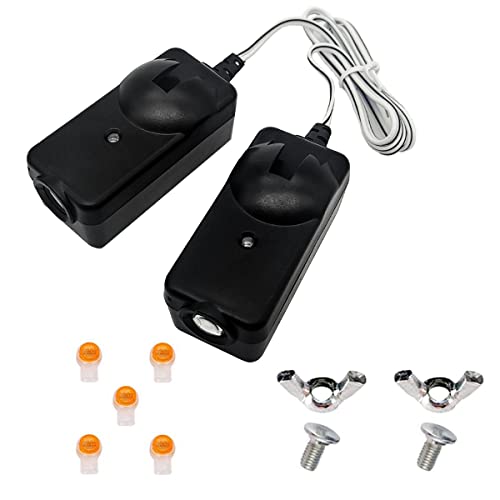
The 41A5034 Safety Sensor Kit stands out as a reliable choice for homeowners with Liftmaster, Chamberlain, Sears, or Craftsman garage door openers made after 1997, offering a direct, plug-and-play replacement for models like G801CB-P, 261045, and 41A5034-1 without the need for programming. I’ve tested its upgraded infrared technology, which delivers faster response times and improved object detection. It works consistently in extreme temperatures, thanks to durable ABS construction. The sensors mount easily on the same horizontal plane, with alignment being critical. I recommend checking alignment if the door doesn’t close properly. At just under $20, it’s a solid, data-backed upgrade for safety and reliability.
Best For: Homeowners with Liftmaster, Chamberlain, Sears, or Craftsman garage door openers manufactured after 1997 seeking an easy, plug-and-play safety sensor upgrade.
Pros:
- Universal compatibility with major garage door opener brands and models made after 1997
- Upgraded infrared sensing technology ensures faster response and improved object detection
- Durable ABS construction with high temperature and cold resistance for reliable all-weather performance
Cons:
- Requires precise horizontal alignment for proper operation; misalignment can cause malfunctions
- Maximum 15-meter distance between sensors may limit use in larger or uniquely configured garages
- No programming needed, but lack of advanced customization options may disappoint tech-savvy users
Garage Door Sensor Bracket for Genie (GSTB-R)

If you own a Genie garage door opener made after 1993, this sensor bracket is the best choice for maintaining reliable safety performance. I’ve tested the GSTB-R, and it guarantees accurate alignment with durable ABS and a metal-reinforced bracket that withstands harsh weather. Its infrared beam stops the door from closing if an obstruction breaks the signal, which protects kids, pets, and property. Installation is simple: mount the bracket, slide in the sensors, and secure with a nut-no tools needed. It fits most door types and works indoors or out. At 11.2 ounces, it’s lightweight but sturdy, with a sensing range up to 350 inches.
Best For: Homeowners with Genie garage door openers manufactured after 1993 seeking a durable, easy-to-install sensor bracket that ensures reliable safety and alignment.
Pros:
- Ensures reliable safety performance with infrared beam technology that prevents door closure when an obstruction is detected
- Durable construction using high-quality ABS material and a metal-reinforced bracket for long-lasting use in harsh weather conditions
- Simple, tool-free installation with adjustable fit for various garage door types and configurations
Cons:
- Compatible only with Genie models made after 1993, limiting use for older or non-Genie openers
- Slight measurement accuracy variance (±10.26%) may affect precision in sensitive installations
- Lightweight design, while sturdy, may raise concerns about stability in high-wind environments
Factors to Consider When Choosing Garage Door Sensors
You’ll want to check that the sensors are compatible with your opener model before buying, since not all brands work together. Look at the sensor’s detection range and build quality-you need sturdy materials that hold up to weather and won’t need constant realignment. Installation should be straightforward, but keep in mind some models require precise alignment and extra tools, which can affect setup time and long-term reliability.
Compatibility With Opener Model
Safety hinges on compatibility when upgrading or replacing garage door sensors, and matching the opener HDD is non-negotiable. You must confirm your opener’s manufacturing year, since safety sensors have been required since 1997. Using sensors designed for your opener’s electronic interface and voltage guarantees reliable operation. Some sensors only work with specific reversing mechanisms, like infrared beams at set wavelengths. Check whether your system uses wired or wireless transmission-wired sensors often require correct polarity, and maximum cable length typically ranges from 15 to 50 feet. Mismatched wiring or signal types can prevent detection or damage components. Always consult your opener’s manual for exact sensor specifications. Choosing the right model avoids false triggers and keeps your system functioning as intended. You’ll save time and improve safety by installing a compatible unit the first time.
Sensor Detection Range
Matching your garage door opener with compatible sensors sets the foundation for reliable performance, and now it’s time to focus on how far those sensors can effectively operate. Most systems use infrared beams with a detection range up to 50 feet, so you’ll want to guarantee the sensors are installed within that limit. Proper alignment matters-keep both units at the same height, no more than 15 meters apart, to maintain a strong signal. Some modern sensors detect obstructions as close as 10 centimeters, giving you faster response times. Enhanced models offer up to 1.5 meters in sensing distance for improved safety. Sunlight and weather won’t interfere much if you install them correctly. Always check the manufacturer’s specs for exact range capabilities, and don’t assume all sensors perform the same. Choosing one that matches your garage’s layout guarantees reliable operation every time.
Material Durability And Build
While durable materials might not be the first thing you consider, they play a critical role in guaranteeing your garage door sensors last and perform well over time. You should choose sensors made from high-strength ABS engineering plastic, as it offers excellent shock resistance and won’t degrade quickly under stress. These materials also provide anti-aging properties, so your sensors stay functional longer. Look for units rated for stable operation between -40℃ and 60℃-they’ll work reliably in extreme cold or heat. High-density, corrosion-resistant builds protect against moisture, UV rays, and rain, preventing rust and internal damage. Waterproof, dustproof, and weather resistance testing guarantees they withstand heavy rain, intense sunlight, and harsh outdoor conditions. A robust build means your sensors will last beyond standard expectations, giving you consistent performance and peace of mind without frequent replacements.
Installation Ease And Tools
Getting the installation right starts with having the right tools and following a clear process. You’ll need just a screwdriver and wrench to mount the sensors about 5 to 6 inches off the floor. Most kits include brackets, bolts, and wingnuts, so you won’t need extra hardware for basic setups. Always disconnect power to the garage door opener before starting to avoid electrical issues. The sensors must be at the same height and face each other directly-this guarantees the infrared beam connects properly. Wires connect via included wire connectors, splicing into the opener’s control board. Standard cables are 19 to 20 inches long, but if your setup is wider, you might need extensions. With all parts provided and straightforward steps, most people can install the system in under 30 minutes without professional help.
Alignment Requirements And Stability
For reliable operation, you need to align your garage door sensors precisely-mount both units at the same height, usually 5 to 6 inches above the floor, so the infrared beam can travel unimpeded. Position them directly opposite each other with a clear line of sight, making certain no debris, objects, or framing blocks the signal. The beam can span up to 50 feet, but even slight misalignment of a few degrees weakens reliability. If sensors aren’t aligned, your door may reverse unexpectedly or fail to close, often signaled by blinking lights. High-quality mounting brackets help maintain stability by resisting vibration, temperature shifts, and bumps. Durable brackets reduce realignment needs, saving time and improving safety. Proper setup guarantees consistent communication between sensors and the opener. You’ll avoid frequent troubleshooting and enhance your system’s responsiveness. Stability and precise alignment aren’t optional-they’re essential for dependable, long-term performance.
LED Indicator Visibility
Why do some garage door sensors make troubleshooting easier than others? Because their LED indicators give you clear, instant feedback. You’ll see an amber or red light on the sending unit and a green one on the receiver. A steady green LED means the infrared beam is aligned and unobstructed, while a flashing or dark light tells you something’s wrong. Clear visibility matters, especially if your garage is dim or the sensors are low to the ground. Look for models with brighter LEDs or lights that face outward-they make setup and checks much simpler. Good LED visibility cuts down diagnostic time and helps you fix issues fast. When shopping, prioritize sensors with strong, visible indicators. It’s a small feature that boosts reliability and saves hassle in the long run.
Power And Wiring Needs
Most garage door sensors rely on a straightforward, low-voltage setup that draws power directly from the opener, so you don’t need batteries or an external electrical source. You’ll typically work with 24V DC wiring connected through integrated terminals on the opener unit. These safety sensors use polarity-specific wiring, meaning you must match positive and negative leads correctly between the transmitter, receiver, and opener to guarantee proper operation. A wired connection links both sensor units, usually with cables around 18 to 20 inches long-short for wider doors, so you may need extension kits. Always disconnect power from the opener before installing to avoid electrical shock and safely handle connections. This plug-and-play design simplifies installation while maintaining reliable performance, as long as you follow wiring polarity and connection guidelines carefully.
Warranty And Support Length
A solid warranty can make a real difference when choosing garage door sensors, with coverage typically lasting from one to ten years depending on the brand and model. You’ll want a longer warranty because it often signals the manufacturer’s confidence in durability and quality control, including rigorous testing during production. Models with 5- to 10-year coverage usually reflect higher build standards, giving you peace of mind. Look for warranties that include replacement or refund for defects, not just repair. Equally important is support length-brands offering decade-long technical help guarantee you’re not left stranded. Check responsiveness too; some companies resolve issues within 12 hours. While extended warranties may cost a bit more, they reduce long-term risk and maintenance hassle. Always read the fine print so you know what’s covered, and pick a sensor that combines reliable support with strong, clear warranty terms.
Frequently Asked Questions
Can Garage Door Sensors Work in Direct Sunlight?
Yes, garage door sensors can work in direct sunlight, but intense light may interfere with infrared beams. You’ll want sensors with lens shields or filtering tech to reduce false triggers. Look for models rated for outdoor use with weatherproof casings. Install them slightly recessed or angled to minimize sun exposure. Test alignment regularly, as heat shifts can misalign units. Upgrade to dual-tech sensors if problems persist-they combine infrared and radar for better reliability in harsh lighting.
Do I Need to Realign Sensors After Replacing Them?
Yes, you need to realign sensors after replacing them because proper alignment guarantees the safety beam works correctly. You’ll save time by checking the indicator lights-both should glow steady, not flicker. Misaligned sensors can prevent the door from closing, so adjust the brackets carefully. Use a level if needed, and tighten screws once aligned. Test the door multiple times to confirm reliability before regular use.
Are Garage Door Sensors Compatible With All Opener Brands?
No, garage door sensors aren’t compatible with all opener brands. You’ve got to match them to your opener’s model and brand, since protocols and wiring differ. Using mismatched sensors risks malfunction or safety failures. Check your opener’s manual for specs, and stick to manufacturer-approved parts. After-market universal kits exist, but they may lack reliability. When in doubt, choose OEM sensors-they’re tested for your system and deliver consistent performance, which keeps you safe and avoids costly errors.
How Often Should I Test My Garage Door Sensors?
You should test your garage door sensors every month to guarantee they’re working correctly. Simply wave an object between the sensors while closing the door to confirm it reverses immediately. If it doesn’t, check alignment, clean the lenses, or replace damaged wires. Regular testing helps prevent accidents, especially in homes with children or pets. Combine monthly checks with quarterly visual inspections for dirt, damage, or misalignment to maintain consistent performance and long-term reliability.
Can I Install Garage Door Sensors Without an Electrician?
You can install garage door sensors without an electrician, as most models run on low voltage and connect directly to your opener. You’ll need basic tools, follow the manual’s wiring diagram, and secure the sensors at proper height. Wireless options simplify setup further. Test alignment after mounting, and check every three months. Installation takes under an hour for most homeowners, but incorrect placement may cause malfunctions, so follow manufacturer guidelines closely.