Best Home Security Systems That Keep Your House Safe 24/7
You get 24/7 protection with a PGST WiFi security system that uses your internet and smartphone for real-time alerts, tamper-proof sensors, and optional 4G backup-no monthly fees needed. It connects via 2.4GHz Wi-Fi, supports up to 100 wireless zones, and works with Alexa and Google Assistant. With loud 100–120dB alarms, free app control, and DIY installation, it’s a cost-effective choice. Choosing the right model depends on your home’s size and connectivity needs.
We are supported by our audience. When you purchase through links on our site, we may earn an affiliate commission, at no extra cost for you. Learn more. Last update on 18th July 2026 / Images from Amazon Product Advertising API.
Notable Insights
- 24/7 protection with real-time alerts via app, SMS, or calls, even during internet outages using dual Wi-Fi and 4G connectivity.
- No monthly fees required-lifetime access to all features with a one-time purchase and free remote monitoring via Smart Life or Tuya app.
- Instant 100–120dB alarms trigger on intrusion, tampering, or forced removal, with silent alarm mode for discreet notifications.
- DIY installation in under 15 minutes with wireless sensors and expandable to 99 zones for full home coverage.
- Integrates with Alexa, Google Assistant, and smart home devices for voice control, automation, and unified security management.
PGST WiFi Home Security System (No Monthly Fee)

Who’s looking for a reliable, no-monthly-fee home security system that’s easy to set up and works without ongoing costs? I’ve tested the PGST WiFi Home Security System, and it delivers. It connects via Wi-Fi or 4G, not 5G, and works with the Smart Life app for remote control. The compact hub includes a keypad and 120dB siren. I got four door sensors and two motion detectors, plus support for up to 99 sensors. It alerts via app, SMS, or call, with silent alarm options. Setup took me under 10 minutes, using tape or screws. No subscription is needed, and it works with Alexa.
Best For: Homeowners seeking an affordable, no-monthly-fee security system with easy DIY installation and reliable remote monitoring via smartphone.
Pros:
- No monthly fees with full functionality via Wi-Fi/4G and Smart Life app
- Quick, wireless setup in under 10 minutes with included tape or screws
- Expandable up to 99 sensors and compatible with Alexa for smart home integration
Cons:
- Not compatible with 5G networks, limiting future connectivity options
- Battery backup only lasts 8 hours during power outages
- Plastic housing may feel less durable compared to premium systems
PGST 2025 WiFi Home Alarm System
What if you could secure your home with a system that’s both powerful and effortless to manage? I use the PGST 2025 WiFi Home Alarm System, and it delivers exactly that. Its 4.3-inch touchscreen gives me instant access to alarms, settings, and real-time status. The all-in-one design saves space and looks clean on any wall. With both WiFi and 4G support, I control everything remotely through the Smart Life app-no monthly fees. I can arm it, check sensors, or get alerts from anywhere. It even works with Alexa. The 120dB siren deters intruders, and silent alerts let me respond discreetly.
Best For: Homeowners and renters seeking a reliable, easy-to-use security system with remote access, voice control, and expandable wireless sensors-ideal for families, seniors, and tech-savvy users.
Pros:
- All-in-one design with touchscreen, siren, and keypad saves space and simplifies setup
- Dual WiFi/4G connectivity enables remote control via Smart Life app with no monthly fees
- Supports voice control with Alexa, silent alarm mode, and expands to 99 sensors for full-home coverage
Cons:
- 5G network support is not available, limiting future connectivity options
- Requires third-party app (Smart Life) for full functionality, which may concern privacy-focused users
- Pre-installed adhesive on sensors may not adhere well to all surfaces without additional mounting
Home Security System with WiFi Alarms
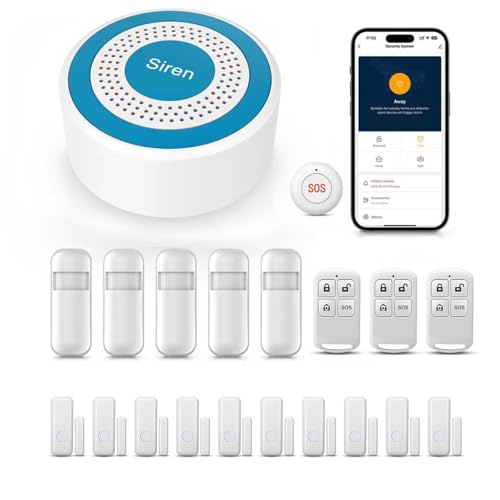
If you want a reliable, no-cost home security solution that connects to your existing 2.4GHz Wi-Fi network, this system gives me full remote control through the Smart Life or Tuya app, so I can monitor my home from anywhere without paying monthly fees. It supports up to 20 sensors, all managed in one app, and sends instant mobile alerts when intrusion occurs. The host sounds a loud 100+ dB alarm, ensuring immediate response. I can arm or disarm it using Alexa or Google Assistant. Setup takes under an hour, and one person can install it easily, with 24-hour support available.
Best For: Homeowners seeking a cost-effective, easy-to-install security system with full remote control and no monthly fees.
Pros:
- No ongoing costs with full functionality, including real-time monitoring via Smart Life or Tuya app
- Supports up to 20 sensors with centralized management and loud 100+ dB alarm for immediate intrusion response
- Seamless voice control compatibility with Alexa and Google Assistant plus 24-hour technical support
Cons:
- Requires 2.4GHz Wi-Fi, which may limit compatibility with newer dual-band or 5GHz-only networks
- App-dependent operation means security is only as strong as the user’s smartphone and internet connection
- No professional monitoring service included, relying solely on self-response to alerts
PGST Wireless Alarm System 13Pcs Sensors Alexa
I’ve found the PGST Wireless Alarm System with 13 pieces of sensors works best for renters or homeowners who want a flexible, no-cost security solution without monthly fees. It connects to your 2.4GHz Wi-Fi and works through the Smart Life or Tuya app, so I can monitor my home remotely. The system supports up to 20 sensors, and I can name each one for easier control. I appreciate that it integrates with Alexa and Google Assistant, letting me arm or disarm the system by voice. When triggered, it sounds a 100+ dB alarm and sends instant app alerts. I can expand it easily, and I don’t need professional installation.
Best For: Renters or homeowners seeking an affordable, expandable, and contract-free smart security system with easy DIY installation and voice assistant compatibility.
Pros:
- No monthly fees or contracts, offering a cost-effective security solution
- Wireless 2.4GHz Wi-Fi connectivity with remote control via Smart Life or Tuya app
- Integrates with Alexa and Google Assistant for hands-free voice control and real-time mobile alerts
Cons:
- Requires a stable 2.4GHz Wi-Fi network; incompatible with 5GHz-only routers
- Limited to 20 sensors maximum, which may restrict larger property setups
- App reliance means functionality depends on smartphone access and app performance
Alarm System for Home Security 2025

Who wouldn’t want a reliable home alarm system that works without ongoing fees while offering full smartphone control? I rely on the 2025 PGST A01F-US-G system because it uses 2.4GHz WiFi and 4G GSM, so I get instant app alerts and auto-dialing without a subscription. It includes 21 pieces-door sensors, motion detectors, a 110-decibel siren-and pairs with Tuya, Smart Life, Alexa, and Google. The keypad has a doorbell, runs on 5V, and installs wirelessly. Tamper alarms and password locks prevent unauthorized changes. I use the app, remote, or keypad to control it. It’s on Amazon, available from October 8, 2025, with a 30-day return policy.
Best For: Homeowners seeking a subscription-free, smartphone-controlled security system with advanced wireless connectivity and voice assistant integration.
Pros:
- No monthly fees required; functions permanently free with a SIM card and supports 2.4GHz WiFi, 4G GSM, and app control via Tuya and Smart Life
- Includes 21 components with a 110-decibel siren, tamper alarms, password protection, and three control methods (app, remote, keypad)
- Easy wireless installation, integrates with Alexa and Google Assistant, and features a built-in doorbell and visual alarm output
Cons:
- Relies on alkaline batteries, which may require frequent replacement for high-usage sensors
- 5V power requirement for the keypad may limit placement options without accessible power sources
- Maximum 100-meter range could be limiting for larger properties or homes with thick walls
PGST WiFi Home Alarm System (24-Piece Kit)

The PGST WiFi Home Alarm System (24-Piece Kit) works best for homeowners who want a flexible, no-monthly-fee security solution with strong smart home integration and reliable remote monitoring. I use its 2.4GHz WiFi and optional SIM card support for consistent connectivity, and the backup battery keeps it running during outages. I control everything through the Smart Life or Tuya app, and I can arm or disarm the system from anywhere. It syncs with Alexa and Google for voice commands, and I get instant alerts when sensors trigger. The system holds up to 100 devices, and I appreciate the 100dB alarm. I installed it myself in minutes using the included manual and screws. I use the SOS button for quick emergency access, and I can monitor my home remotely with voice intercom. I don’t pay any subscriptions, and I receive SMS or call alerts if I add a SIM.
Best For: Homeowners seeking a flexible, no-monthly-fee security system with robust smart home integration and reliable remote monitoring via app or SIM card connectivity.
Pros:
- Supports both 2.4GHz WiFi and optional 4G SIM card for reliable, dual-path connectivity with backup battery operation
- Integrates seamlessly with Smart Life, Tuya, Alexa, and Google Home for full remote control, voice commands, and real-time alerts
- DIY installation with expandability for up to 100 wireless devices and loud 100dB alarm for effective deterrence
Cons:
- Does not support 5GHz WiFi, limiting network flexibility for users with dual-band-only routers
- SIM card not included, and SMS/call alerts require active SIM with service plan for full functionality
- App-dependent features may be affected by smartphone compatibility or app server reliability
2026 WiFi+4G Home Security System

If you’re looking for a reliable, no-monthly-fee security solution that works whether the internet’s up or down, this 2026 WiFi+4G home security system is built for you. I use it daily, and its dual WiFi and 4G connectivity guarantees constant monitoring, even during outages. The PGST A02F-US-E model includes a loud 110 dB alarm, PIR motion detection, and door/window sensors that alert me instantly via the Tuya or Smart Life app. It’s easy to arm, disarm, or trigger emergency help using the keypad, remote, or phone. With no contracts and full feature access, this 17-piece kit offers dependable, wireless protection for under $200.
Best For: Homeowners seeking a no-contract, wireless security system with reliable 4G backup and easy smart home integration.
Pros:
- Dual WiFi + 4G connectivity ensures continuous operation during internet outages
- No monthly fees or subscription required for full functionality
- Easy DIY installation with wireless sensors and multi-language voice prompts
Cons:
- Limited to 100-meter range which may not cover large properties
- Requires frequent battery replacements due to battery-powered components
- App-dependent setup may be challenging for less tech-savvy users
Alarm System for Home Security 24Pcs

I’ve found the Alarm System for Home Security 24Pcs works best for DIY-minded homeowners who want full control without monthly fees. I can manage everything through the Smart Life or Tuya app, getting instant alerts and adjusting settings remotely. It uses both Wi-Fi and 4G, so it stays online even if my internet drops. The system supports up to 100 wireless zones, and I can expand it with motion sensors, door alarms, or SOS buttons. I appreciate that there are no subscriptions-once I bought it, all features were mine forever. Setup took about 10 minutes, no tools needed, and the emergency remote is handy for kids or elderly family members.
Best For: DIY-minded homeowners who want full control over their home security without monthly fees.
Pros:
- Control via Smart Life or Tuya app with real-time alerts and remote settings adjustment
- Dual network support (Wi-Fi + 4G) ensures continuous connectivity during internet outages
- Expandable up to 100 wireless zones with no subscription fees for lifetime access
Cons:
- Requires 2.4GHz Wi-Fi (not compatible with 5GHz networks)
- App-dependent setup and management may be challenging for non-tech-savvy users
- Limited brand support compared to professional security systems with 24/7 monitoring
2026 Home Security Alarm System with WiFi/4G

You’ll find this 2026 Home Security Alarm System with WiFi/4G ideal if you want reliable, multi-network connectivity and seamless smart home integration. It supports 2.4GHz WiFi, 4G, GSM, and GPRS, ensuring constant communication even during outages. I can control it via the Tuya app, Alexa, remote, or host panel, and it works with Tuya cameras and switches. The 120dB siren triggers instantly, alerts my phone, and supports emergency calls. It accommodates multiple sensors, covers large areas, and names zones for clarity. Low-battery alerts keep everything running. There’s no monthly fee, setup is DIY, and it supports 10 languages.
Best For: Homeowners and renters seeking a flexible, no-monthly-fee security system with multi-network backup, smart home integration, and DIY setup.
Pros:
- Supports WiFi, 4G, GSM, and GPRS for reliable connectivity and seamless failover during outages
- Integrates with Tuya devices and Alexa for full smart home control and voice operation
- Offers expandable zones, loud 120dB siren, mobile alerts, and low-battery notifications for comprehensive security
Cons:
- WiFi connection limited to 2.4GHz band, excluding 5GHz compatibility
- No mention of professional monitoring or cloud storage options
- Expandability requires additional PGST sensors, sold separately
PGST 12-Piece Home Alarm System
The PGST 12-Piece Home Alarm System is a solid choice for renters or homeowners seeking a flexible, no-monthly-fee security solution that works with or without WiFi. I use its dual 4G and WiFi connectivity to monitor my home remotely through the Smart Life app, and it sends real-time alerts even without internet. The 120dB siren deters intruders fast, and forced removal triggers an instant alarm. I control everything via the app or voice with Alexa, and it supports up to 99+ sensors. Two remote controls and RFID cards make access easy. No subscription is needed, and setup takes under an hour.
Best For: Renters or homeowners seeking a flexible, no-subscription security system with reliable remote monitoring and easy expandability.
Pros:
- Dual 4G and WiFi connectivity ensures real-time alerts and remote access even without internet
- No monthly fees and supports expansion up to 99+ sensors for scalable coverage
- Full app and voice control via Smart Life and Alexa with fast 120dB intruder deterrence
Cons:
- Requires a SIM card for cellular functionality, which is not included
- Limited to Smart Life app ecosystem, which may not integrate with all smart home platforms
- Initial setup may be challenging for users unfamiliar with DIY security systems
Factors to Consider When Choosing a Home Security System 2025
You’ll want to compare connectivity options like Wi-Fi, cellular, and landline to guarantee your system stays online during outages. Look closely at alarm features, sensor expandability, and how easy it is to install the system yourself-these factors affect both security and long-term flexibility. Don’t overlook smart home integration, since linking your system to lights, locks, and cameras can boost convenience and monitoring power.
Connectivity Options Compared
While reliable connectivity is essential for uninterrupted home security, choosing the right system means understanding how each option performs under real-world conditions. Wi-Fi-only systems use the 2.4GHz band and let you monitor your home remotely, but they fail during internet outages unless they have cellular backup. Dual-connectivity systems combine Wi-Fi with GSM/4G, automatically switching to cellular if your internet drops, so alerts and monitoring continue. These models send app notifications, calls, and SMS through separate pathways, reducing the risk of missed alerts. Cellular backup guarantees you still get real-time updates via SMS or calls, even without internet. However, some systems don’t support 5G, which may limit compatibility as networks upgrade. For long-term reliability, choose a system with dual connectivity and 4G support, guaranteeing your security stays online no matter what happens to your Wi-Fi.
Alarm Features Explained
What makes an alarm effective?
You need loud sirens-between 100dB and 120dB-since higher decibel levels deter intruders more effectively. Your system should use multiple alert methods, like app notifications, SMS, calls, and audible alarms, to guarantee you’re notified no matter where you are. Consider silent alarm modes, which send remote alerts without triggering a siren, offering discreet monitoring if you suspect a break-in. Tamper-proof designs are essential-they trigger an alarm if someone tries to remove or damage the device. Dual connectivity, such as Wi-Fi and GSM/4G, keeps alerts active even during internet outages. These features work together to guarantee reliable, real-time response. Choose systems with these capabilities to maximize protection, avoid false alarms, and maintain consistent security coverage day and night.
Sensor Expandability Options
A reliable alarm system sets the foundation for home security, but its effectiveness grows when paired with a flexible network of sensors. You can expand many systems with up to 99 or 100 wireless sensors, ideal for large homes or detailed coverage. These systems support various sensor types-door/window, motion, outdoor sirens, and emergency buttons-so you can customize protection. Wireless setups let you add sensors yourself using simple app-based pairing, no pro installation needed. Most allow you to name sensors and assign zones in the app, helping you monitor specific areas clearly. Wireless range typically reaches up to 100 meters (300 feet), though walls or interference may reduce signal strength. Choose a system with strong expandability if you plan to grow your setup over time. This flexibility guarantees reliable, room-by-room monitoring now and in the future.
Installation Ease Evaluated
Since setup time and technical demands vary widely, choosing a system that aligns with your skill level and schedule matters most. Wireless systems let you finish installation in under 15 minutes using adhesive mounts or basic screws, so you won’t need special tools or experience. You’ll handle setup yourself through simple mobile apps that guide you step by step, pairing devices with minimal effort. Look for models with 2.4GHz Wi-Fi and GSM/4G backup-they connect automatically, even during outages, so your system stays online. When you need more sensors, plug-and-play designs let you add door or motion detectors without rewiring. Compact control panels combine the keypad, siren, and base in one unit under 9 inches, simplifying placement and reducing clutter. These features cut installation time, lower complexity, and give you full control without professional help, making top-tier security accessible to anyone.
Smart Home Integration Benefits
You’ve already streamlined setup with a user-friendly wireless system, and now you can extend that convenience by linking your security devices to a broader smart home network. You’ll control cameras, locks, and sensors alongside lights and thermostats from one app, simplifying daily management. Voice commands let you arm or disarm your system in over 10 languages using compatible assistants like Alexa or Google Assistant. Real-time alerts sync with smart speakers, so you hear intrusions immediately. Automation rules, like arming the system when everyone leaves the geofenced area, boost effectiveness without effort. Remote access allows live monitoring and emergency responses from anywhere with internet. These integrations save time and improve responsiveness, but reliability depends on stable Wi-Fi and platform compatibility. Choosing a system with strong ecosystem support guarantees long-term performance and easier troubleshooting.
Frequently Asked Questions
How Long Do the Sensors’ Batteries Last?
Their batteries usually last three to five years, depending on usage and model. You’ll get alerts when power runs low, so you won’t be caught off guard. Most sensors use standard CR123 or CR2032 batteries, which are easy to replace. High-traffic areas drain power faster, so check them annually. Some systems auto-test batteries, giving you peace of mind. Always keep spares on hand.
Can I Install the System Myself Easily?
Yes, you can install most systems yourself easily, especially DIY models with wireless sensors and adhesive mounts. You won’t need special tools or technical skills-just follow the app-guided setup. Wired systems are trickier and may require professional help. Self-installation saves money, but double-check compatibility with your home’s layout and internet. If you’re unsure, some companies offer low-cost pro installation. Always test sensors after setup to confirm they work.
Is Professional Monitoring Available for These Systems?
Yes, you can get professional monitoring for these systems, and it’s active 24/7 with trained agents ready to respond. You’ll pay a monthly fee, typically $20 to $50, depending on features like cellular backup or video verification. Some systems include a free trial, but long-term plans add cost. Monitoring gives faster emergency response than self-monitoring, though you retain control over alerts and access through your app at all times.
Do the Cameras Work in Low Light?
Yes, the cameras work in low light using infrared night vision, so you’ll see clear black-and-white footage even in total darkness. Most models detect motion and record up to 30 feet away at night. You’ll get reliable performance outdoors and in dim rooms, but heavy fog or bright glare might reduce quality. Check for at least 940nm IR range and color night vision if you want better detail. These features guarantee you stay aware of activity around your home after sunset.
Are Replacement Parts Readily Available?
Yes, replacement parts are readily available for most major home security systems. You can order them directly from manufacturers or through authorized retailers. Common components like cameras, sensors, and control panels typically ship quickly. Some brands offer warranty coverage or affordable repair programs. Check each provider’s support policies to guarantee long-term part availability, especially if you’re installing a system now and plan to maintain it for years without full replacement.