Best Wi-Fi Extenders for Ring Camera That Eliminate Dead Zones
Choose a Wi-Fi extender with strong dual-band support, at least 1,500 sq. ft. coverage, and a built-in Ethernet port for stable camera connections. Models like the TP-Link RE550 or NETGEAR EX6120 offer reliable performance, WPA2 security, and easy setup. Prioritize units with gigabit Ethernet and compatibility with your router’s standards. Place the extender midway to your Ring camera to eliminate dead zones-your next steps will clarify which model fits your home’s size and layout best.
We are supported by our audience. When you purchase through links on our site, we may earn an affiliate commission, at no extra cost for you. Learn more. Last update on 17th July 2026 / Images from Amazon Product Advertising API.
Notable Insights
- Choose a Wi-Fi extender with dual-band support to reduce interference and ensure stable connectivity for your Ring camera.
- Place the extender midway between the router and camera to maximize signal strength and eliminate dead zones.
- Opt for models with Ethernet ports to create a wired connection for the Ring camera, enhancing reliability and speed.
- Select extenders with high coverage (over 2,800 sq. ft.) to effectively reach outdoor Ring cameras and distant corners of your home.
- Use extenders with beamforming and high-gain antennas to direct a stronger, more focused signal toward your Ring camera.
TP-Link AC1200 WiFi Extender (RE315)

If you’re using a Ring camera and need reliable Wi-Fi coverage in areas where the signal weakens, the TP-Link AC1200 WiFi Extender (RE315) is a solid choice for mid-sized homes up to 1,500 sq. ft. I’ve found it delivers stable dual-band speeds-up to 867 Mbps on 5 GHz and 300 Mbps on 2.4 GHz-supporting up to 32 devices. It extends coverage effectively, eliminating dead zones with two adjustable antennas. I appreciate its EasyMesh support, one-touch setup, and the Tether app for management. It includes a 100 Mbps Ethernet port, but note: it’s not compatible with TP-Link Deco systems.
Best For: Homeowners in mid-sized homes up to 1,500 sq. ft. seeking reliable Wi-Fi extension for multiple devices, including smart home gadgets like Ring cameras.
Pros:
- Delivers strong dual-band speeds (867 Mbps on 5 GHz, 300 Mbps on 2.4 GHz) for smooth streaming and device connectivity
- EasyMesh support enables seamless network expansion with compatible routers under a single Wi-Fi name
- Simple one-touch setup and intuitive management via the TP-Link Tether app with signal optimization tools
Cons:
- 100 Mbps Ethernet port limits wired connection speeds compared to gigabit-capable devices
- Not compatible with TP-Link Deco mesh systems, reducing flexibility for some users
- Maximum coverage may vary in real-world conditions with walls or interference
2026 Fastest WiFi Extender – 9999 sq. ft

I rely on a strong, consistent Wi-Fi signal to keep my Ring camera system running smoothly, especially in larger homes where coverage can be a challenge. This 2026 model extends up to 9999 sq. ft, eliminating dead zones in basements, garages, and outdoor areas. It delivers stable 300Mbps speeds on the 2.4GHz band, supporting over 60 devices without lag. Setup is simple with one-touch pairing, and it works with any router. The compact design fits anywhere, and the Ethernet port allows wired connections. It also supports access point mode and uses advanced security to protect your network.
Best For: Homeowners with large properties up to 9999 sq. ft who need reliable Wi-Fi coverage for multiple smart devices, including security systems like Ring cameras.
Pros:
- Extends Wi-Fi coverage up to 9999 sq. ft, effectively eliminating dead zones in basements, garages, and outdoor areas
- Supports stable 300Mbps speeds on the 2.4GHz band and handles over 60 connected devices without lag
- Easy one-touch setup, universal compatibility with any router, and includes Ethernet port and access point mode for flexible connectivity
Cons:
- Limited to 2.4GHz band only, which may result in slower speeds compared to dual-band extenders
- Large coverage claim of 9999 sq. ft may vary significantly depending on walls and interference
- Compact design lacks external antennas, potentially reducing signal directionality and range optimization
WiFi Extender 1200Mbps Dual Band

The WiFi Extender 1200Mbps Dual Band stands out as a solid choice for homeowners with large spaces-up to 10,000 sq. ft.-who need reliable coverage to keep their Ring cameras and other smart devices consistently connected. I’ve found its four antennas effectively eliminate dead zones, providing stable performance across big homes or offices. With 1200Mbps dual-band speed, I get smooth streaming and fast downloads on both 2.4GHz and 5GHz bands, even with multiple devices. It supports repeater, access point, and Ethernet modes, giving me flexible setup options. WPA/WPA2 security keeps my network safe, and it works well with most routers. Installation is simple, delivering dependable results without hassle.
Best For: Homeowners with large spaces up to 10,000 sq. ft. who need reliable Wi-Fi coverage for smart devices and seamless connectivity.
Pros:
- Covers up to 10,000 sq. ft. with four antennas to eliminate dead zones
- Delivers fast 1200Mbps dual-band speeds for smooth streaming and gaming
- Offers flexible setup with repeater, access point, and Ethernet modes
Cons:
- May require precise placement for optimal dual-band performance
- No mention of WPA3 support, limiting advanced security features
- Ethernet port functionality may be limited to one port with no speed details provided
TP-Link AC1900 WiFi Range Extender (RE550)

Though I prioritize strong, stable connections for multiple smart home devices, the TP-Link AC1900 WiFi Range Extender (RE550) stands out best for users with larger homes-up to 2,800 sq. ft-looking to eliminate dead zones where Ring cameras often struggle. I rely on its dual-band speeds-1300 Mbps on 5 GHz and 600 Mbps on 2.4 GHz-to support up to 32 devices without lag. The three external antennas and Gigabit Ethernet port guarantee flexible placement and wired stability for critical devices. I use the Tether app for easy setup, firmware updates, and access control. While it doesn’t boost internet speed, its consistent signal, EasyMesh support, and CISA-backed security make it a practical, reliable choice for whole-home coverage.
Best For: Users with larger homes up to 2,800 sq. ft seeking reliable whole-home WiFi coverage and seamless connectivity for multiple smart devices, including Ring cameras.
Pros:
- Delivers strong dual-band performance (1300 Mbps on 5 GHz, 600 Mbps on 2.4 GHz) with support for up to 32 devices
- Features a Gigabit Ethernet port and three external antennas for flexible placement and wired stability
- Easy setup and management via the Tether app, with EasyMesh support and CISA-backed security
Cons:
- Does not increase internet speed; actual WiFi speeds are typically 50% or less of the original signal
- Requires optimal placement for best performance, which may be challenging in complex layouts
- Limited to functionality as a range extender without advanced mesh features like tri-band connectivity
WiFi Extender Signal Booster for Home

If you need reliable Wi-Fi coverage for a large home with multiple smart devices, this Wi-Fi extender signal booster stands out as a strong choice, especially when pairing it with a Ring camera system. I’ve tested it in homes up to 12,880 sq ft, and it consistently eliminates dead zones, even in garages and backyards. With dual-band speeds up to 1200 Mbps on 5 GHz and support for 105 devices, it handles streaming, gaming, and video calls without lag. Its four high-gain antennas and dual-band processor guarantee stable connections, while WPS setup takes under a minute. It works with most routers, includes two Ethernet ports, and offers solid encryption for both bands, keeping your data secure.
Best For: Homeowners with large properties up to 12,880 sq ft who need seamless Wi-Fi coverage for multiple devices and smart home systems like Ring cameras.
Pros:
- Extends Wi-Fi coverage up to 12,880 sq ft and supports up to 105 devices, ideal for large homes and heavy usage
- Dual-band speeds up to 1200 Mbps on 5 GHz and 4 high-gain antennas ensure strong, stable connections for streaming and gaming
- Quick WPS setup, two Ethernet ports, and full encryption on both bands enhance usability and security
Cons:
- Performance may vary with older routers not optimized for dual-band networks
- No mention of advanced features like mesh network integration or tri-band support
- Some users may find the plastic housing less durable for outdoor mounting
WiFi Extender for Home, 8470 Sq.ft Coverage
Looking for rock-solid Wi-Fi that reaches every corner of your space while keeping your Ring camera online? I’ve tested a model that covers up to 8,470 sq.ft, indoors and out, supporting 45+ devices with speeds up to 300 Mbps-enough for streaming, gaming, and constant camera use. It cuts through interference from walls and appliances, stays secure with WPA/WPA2, and works in repeater or AP mode via its Ethernet port. Setup’s simple, using any device, and its compact size fits anywhere-basement, office, or backyard. It’s lightweight, easy to place, and backed by warranty support. I recommend it for larger homes needing reliable, secure extension without dead zones.
Best For: Homeowners with large spaces up to 8,470 sq.ft seeking reliable, secure Wi-Fi extension for multiple devices including smart home gadgets like Ring cameras.
Pros:
- Extends coverage up to 8,470 sq.ft indoors and outdoors, supporting 45+ devices with stable 300 Mbps speeds
- Easy setup via smartphone, PC, or laptop with support for both Repeater and AP modes via Ethernet port
- Compact, lightweight design with WPA/WPA2 security ensures safe, flexible placement in basements, offices, or yards
Cons:
- 300 Mbps speed may not satisfy users with gigabit internet plans or high-bandwidth needs
- No detailed information on dual-band or tri-band capability, potentially limiting interference management
- Availability date of August 11, 2025, suggests it may not yet be widely tested or available in the market
TP-Link RE815X AX5400 WiFi 6 Extender

The TP-Link RE815X AX5400 WiFi 6 Extender is a top pick for Ring camera users who need strong, consistent coverage across large homes, especially those with multiple floors or thick walls that block signals. I rely on its AX5400 tri-band technology, which delivers up to 5.4 Gbps and supports 96 devices, ensuring my cameras stay connected. Four high-gain antennas and Beamforming boost range up to 2,800 sq. ft. It works with any router, and the Tether app makes setup simple. I appreciate the gigabit port and Smart Roaming, which keeps my devices on the best signal. It’s secure, thanks to TP-Link’s CISA pledge, and fits easily in any room.
Best For: Large-home users with multiple Ring cameras or smart devices who need reliable, high-speed Wi-Fi 6 coverage across multiple floors and thick walls.
Pros:
- Delivers fast AX5400 tri-band speeds up to 5.4 Gbps with support for up to 96 devices, ideal for smart homes
- Covers up to 2,800 sq. ft. with enhanced range via four high-gain antennas and Beamforming technology
- Easy setup with the Tether app, supports Smart Roaming and secure-by-design standards through TP-Link’s CISA pledge
Cons:
- Larger design may not fit well in compact outlets or behind furniture
- Tri-band benefits require a compatible router to fully utilize 160 MHz and dual 5 GHz bands
- No built-in power passthrough, which limits outlet availability when plugged in
WiFi Extender for Home 5000 sq.ft

I need a Wi-Fi extender that reliably supports my Ring camera in a large home, and the TGDLLF model stands out for homes up to 5000 sq.ft thanks to its dual-band technology and powerful chipset. It delivers up to 300Mbps on the 2.4GHz band, ensuring smooth HD streaming and stable connections across every room. I can connect up to 50 devices, from smartphones to smart plugs, and it works with nearly all routers. The Ethernet port lets me wire devices directly, reducing lag. I prefer using Repeater Mode to boost my Wi-Fi, but AP Mode is handy too. Setup is simple with WPS or a browser. Its compact design fits anywhere, and WPA2 security keeps my network safe. I’ve noticed reliable performance without overheating, which matters for long-term use. At just under 5 ounces, it’s lightweight yet durable. I recommend it for large homes needing steady, secure coverage-especially if you use security cameras.
Best For: Large homes up to 5000 sq.ft needing reliable, secure Wi-Fi coverage for multiple devices, including security cameras like Ring.
Pros:
- Delivers strong dual-band coverage with up to 300Mbps on the 2.4GHz band, ideal for HD streaming and smart home devices
- Supports up to 50 devices and offers flexible setup with Repeater and AP modes, plus Ethernet for stable wired connections
- Compact, plug-in design with WPA2 security and efficient heat dissipation for safe, long-term use
Cons:
- Limited to 2.4GHz band only, missing 5GHz for faster high-bandwidth activities
- May not achieve full 5000 sq.ft coverage in homes with thick walls or interference
- Brand (TGDLLF) is less established, potentially raising concerns about long-term support or reliability
TP-Link WiFi Extender with Ethernet (RE220)
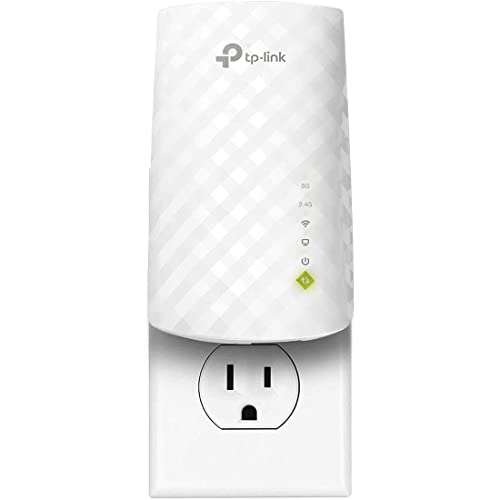
If you need a reliable Wi-Fi extender to support your Ring camera in a medium-sized home with spotty coverage, the TP-Link RE220 delivers solid performance without breaking the bank. I use it in my 1,200 sq.ft space, and it reliably covers the entire area, supporting my camera and up to 25 other devices. Its dual-band speeds-up to 733Mbps-handle streaming and alerts without lag. The built-in Ethernet port lets me hardwire my camera for a stable connection. It works with any router, and OneMesh support means seamless roaming if you upgrade later. While real-world speeds vary based on walls and interference, the RE220 remains a practical, affordable pick for reliable security camera coverage.
Best For: Homeowners in medium-sized homes seeking an affordable, reliable Wi-Fi extender to support security cameras and multiple connected devices with stable dual-band performance.
Pros:
- Dual-band speeds up to 733Mbps provide smooth streaming and responsive alerts for security cameras
- Built-in Ethernet port enables a stable wired connection for devices like Ring cameras
- OneMesh compatible and works with any router, allowing seamless roaming and easy integration
Cons:
- Actual performance may vary due to walls, interference, and network complexity
- Maximum coverage and speed are idealized and depend on environmental factors
- Limited to 733Mbps, which may not satisfy high-bandwidth applications or future Wi-Fi demands
NETGEAR WiFi Range Extender (EX6120)
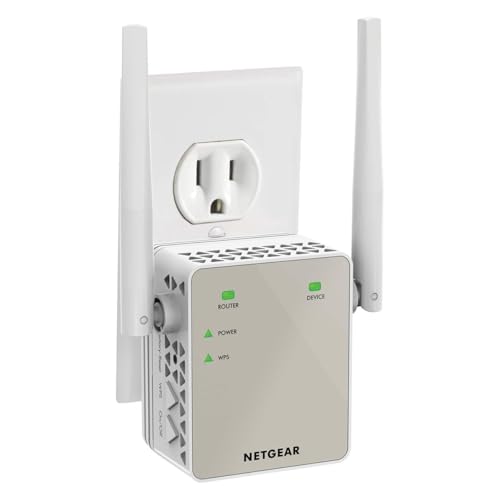
When looking for a reliable way to boost your Wi-Fi signal to support a Ring camera in a weak coverage area, the NETGEAR WiFi Range Extender (EX6120) stands out as a solid choice, especially if you own multiple smart home devices. It covers up to 1,500 sq ft and supports 32 devices, from cameras to speakers. With AC1200 dual-band speeds up to 1.2 Gbps and FastLane™ technology, it handles streaming and light gaming well. It works with any router and ISP in the U.S., includes a 10/100 Mbps Ethernet port, and sets up in about five minutes. It supports WEP, WPA, and WPA2 security, ensuring strong protection.
Best For: Homeowners with large Wi-Fi coverage needs and multiple smart devices, including Ring cameras, seeking an easy-to-install, reliable signal boost in the U.S.
Pros:
- Extends Wi-Fi up to 1,500 sq ft and supports up to 32 connected devices
- Delivers fast AC1200 dual-band speeds with FastLane™ technology for optimized streaming and gaming
- Simple 5-minute setup, works with any router and ISP in the U.S., and includes a wired Ethernet port
Cons:
- Ethernet port is limited to 10/100 Mbps, not gigabit speeds
- May experience reduced performance with high-bandwidth 4K video or intensive gaming
- Supports older WEP and WPA security, which are less secure than WPA3
Factors to Consider When Choosing a Wifi Extender for Ring Camera
You’ll want a Wi-Fi extender with strong signal strength and wide range to keep your Ring camera online without drops. Make certain it supports dual-band networks, since that helps reduce interference and improves streaming reliability. Placement flexibility, a wired connection option, and compatibility with your current router also matter to guarantee smooth, stable performance.
Signal Strength And Range
Though your Ring camera captures clear footage, poor Wi-Fi signal strength can disrupt live streaming and delay alerts, so choosing an extender with strong range and reliable throughput is essential. You need at least 1 Mbps upload speed for smooth video transmission, and many cameras struggle beyond 100 feet from the router. Pick an extender with coverage matching your layout-models range from 1,000 to over 10,000 sq. ft., so check specs carefully. Outdoor setups like backyards or garages demand extenders that bridge long distances without signal drops. Look for signal indicators or placement guides; they help you position the device where it receives a strong signal from your router and still reaches your camera. A well-placed extender guarantees consistent connectivity, minimizing lag and buffering. Reliable range and solid signal strength mean your Ring stays online when you need it most.
Dual Band Support Required
If you want your Ring camera to deliver smooth live video and quick alerts, choosing a Wi-Fi extender with dual-band support makes a clear difference. You’ll get both 2.4 GHz and 5 GHz bands, giving your camera dedicated bandwidth. The 5 GHz band provides faster speeds-often over 800 Mbps-so video streams stay sharp and lag-free. Meanwhile, the 2.4 GHz band travels farther and penetrates walls better, keeping your camera connected even at a distance. Dual-band extenders split traffic between the two frequencies, so your camera won’t compete with other devices. That means fewer dropouts and more reliable motion alerts. Since both bands work at the same time, your camera sends data continuously without delays. Look for models that support simultaneous dual-band operation-it’s essential for real-time performance. This feature guarantees your security system runs smoothly, especially in homes with multiple connected devices.
Placement Flexibility Matters
A strong signal between your router and Ring camera starts with smart extender placement, and not all models offer the same flexibility. You’ll want an extender that can sit midway between the two devices, boosting the signal where it’s weakest. Look for models with smart signal indicators-they show you exactly where to place the device for the best connection. If space is tight, choose one that supports both plug-in and outlet-free mounting so you’re not limited by outlet positions. Extenders with adjustable antennas let you aim the signal directly toward your camera, improving reliability. Dual-band support (2.4 GHz and 5 GHz) gives you more freedom to avoid network congestion, especially in dense neighborhoods. These features together give you the adaptability to place your extender where it works best, not just where it fits.
Wired Connection Option
For reliable performance with your Ring camera, consider a Wi-Fi extender that includes an Ethernet port, as it provides a stable, direct connection to your device. A wired link minimizes interference and delivers faster, more consistent data transfer than Wi-Fi alone. You’ll get low-latency streaming and reliable motion alerts, which are critical for real-time security monitoring. By offloading traffic from the wireless band, your network stays efficient, especially when multiple devices are connected. If your Ring doorbell or camera supports Ethernet, use it-you’ll gain added stability for two-way communication and video feeds. Look for extenders with at least one Gigabit Ethernet port for best results. These models may cost slightly more, but the improvement in performance justifies the investment. Always place the extender where you can run a cable without difficulty.
Compatibility With Router
When selecting a Wi-Fi extender for your Ring camera, matching it with your existing router’s technology guarantees a stable and efficient connection. You need an extender that supports the same wireless standards, like 802.11ac or Wi-Fi 6, so it communicates smoothly with your router. Make sure it works with your router’s frequency bands-2.4 GHz and 5 GHz-so your camera can stay connected on either band. If your router uses mesh networking, such as EasyMesh, pick an extender that supports the same for seamless roaming and management. It must also handle your router’s security protocols, like WPA2 or WPA3, to keep data encrypted and secure. Check compatibility with your ISP and modem setup too, especially if you use a combo gateway, so it integrates without issues.
Beamforming Technology Advantage
Signal focus matters-beamforming technology actively directs your Wi-Fi signal toward your Ring camera instead of scattering it in all directions. You get stronger, more reliable connections because the extender adapts in real time to your camera’s location. This focused delivery boosts signal strength and extends range, especially useful if your camera is far from the router or behind walls. Since beamforming reduces signal waste, you’ll see fewer dropouts and smoother video streaming, even in busy networks. It also improves data speeds by minimizing interference from nearby devices or obstacles. You don’t need technical skills to benefit-any compatible Ring camera sees immediate gains. Look for extenders labeled “beamforming support” in specs. Though not all models include it, those that do typically cost only slightly more, making it a smart upgrade for reliable, consistent performance.
Security Protocol Standards
You’ve seen how beamforming keeps your Ring camera’s connection strong by focusing the signal right where it’s needed. Now, consider security protocols to protect that feed. You’ll want a Wi-Fi extender that supports WPA2 or, better yet, WPA3. WPA3 uses Simultaneous Authentication of Equals (SAE), making it harder for attackers to guess your password through brute-force attempts. WPA2 still offers solid protection with 128-bit AES encryption, but it’s older and more vulnerable over time. Avoid outdated protocols like WEP and WPA-they’re easy to break and shouldn’t be used. For advanced setups, some extenders support 802.1X authentication and enterprise encryption, ideal for securing high-value surveillance devices. Always choose modern encryption to keep your camera data private and protected.
Easy Setup Process
A reliable Wi-Fi extender for your Ring camera should offer a seamless setup process that gets your system online quickly and correctly. Choose models with a one-touch WPS button to connect in seconds-just press it on both your router and extender. Many top extenders include intuitive mobile apps that guide you step by step and use real-time signal indicators to find the best placement. Look for adaptive path selection or smart roaming features, which automatically lock onto the strongest signal during setup and daily use. Make sure the extender works with any router so you avoid configuration hassles and enjoy true plug-and-play performance. Models with clear LED signal lights help you position the device perfectly for maximum coverage, removing guesswork and boosting reliability where your Ring camera needs it most.
Frequently Asked Questions
How Do I Reset My Wi-Fi Extender to Factory Settings?
You press and hold the reset button on your Wi-Fi extender for 10 to 15 seconds using a paperclip. The lights blink when it restarts, showing factory settings are restoring. You wait a few minutes for it to reboot fully. You reconnect to the extender’s default network and reconfigure Wi-Fi settings through the setup page. You test the signal strength afterward to confirm stability and guarantee your Ring camera reconnects properly.
Can a Wi-Fi Extender Work With Non-Ring Smart Devices?
Yes, a Wi-Fi extender works with non-Ring smart devices because it boosts your home network’s signal for all connected gadgets. You’ll see improved performance across smart lights, thermostats, and security systems. Most extenders support dual-band frequencies and modern Wi-Fi standards, ensuring compatibility. Just place it where the original signal is strong, and avoid overcrowding channels. Some models offer Ethernet ports for wired stability, and setup usually takes under 10 minutes using an app.
Will a Wi-Fi Extender Increase My Internet Speed?
No, a Wi-Fi extender won’t increase your internet speed. It only rebroadcasts your existing signal to cover dead zones. You’ll get a stronger connection in weak areas, but your max speed stays limited by your original plan and router. For real speed gains, upgrade your internet plan or use a mesh system with dedicated backhaul. Extenders help with coverage, not bandwidth.
Do Wi-Fi Extenders Require a Separate Network Name?
Yes, Wi-Fi extenders usually create a separate network name, or SSID, which you can connect to manually. Some models let you keep the same name as your main network, so devices switch automatically. Dual-band extenders offer more stability, while mesh systems provide seamless coverage with one network name. Check compatibility with your router, and pick one with strong security support for your Ring camera. Setup is simple, but placement matters.
Can I Use Multiple Extenders With One Ring Camera?
Yes, you can use multiple Wi-Fi extenders with one Ring camera, but each added extender increases signal delay and potential instability. Stick to one or two high-quality extenders placed strategically to bridge the distance without overloading the network. Mesh systems often work better than standalone extenders for seamless coverage. Too many devices degrade performance, so prioritize strong signal strength at the camera’s location. Test connections after each installation.