Understanding the Impact of Lighting on Video Footage From Security Cameras
Poor lighting affects your security footage by reducing clarity, causing blur, and distorting colors-reds turn brown, blues look gray, and bright lights wash out faces or license plates. Overexposure, backlighting, and low-light grain are common issues, but Wide Dynamic Range (WDR) and infrared help. Higher-end cameras with large sensors perform better in dark or mixed lighting. Position lights above camera height, use 4000K–5000K LEDs, and avoid glare to improve results. You’ll learn how to optimize each element for reliable, clear video.
Notable Insights
- Low light reduces color accuracy and increases noise, leading to grainy, distorted footage.
- Overexposure from bright lights can wash out faces and critical details in video.
- Backlighting creates silhouettes, making subjects hard to identify without WDR technology.
- Infrared night vision enables clear monochrome footage in total darkness up to 100 feet.
- Proper lighting placement and color temperature improve image clarity and facial recognition.
How Lighting Affects Security Camera Footage
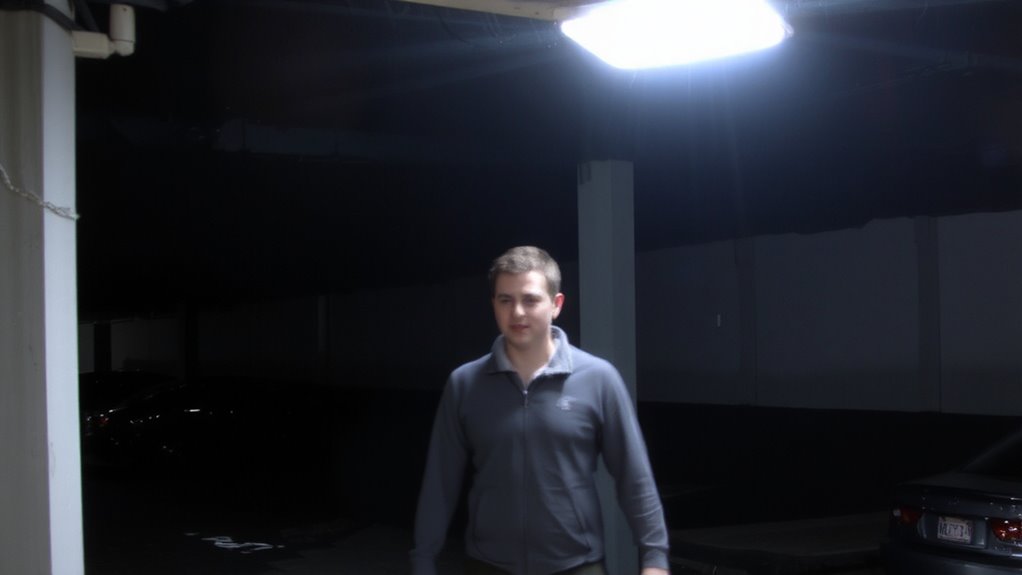
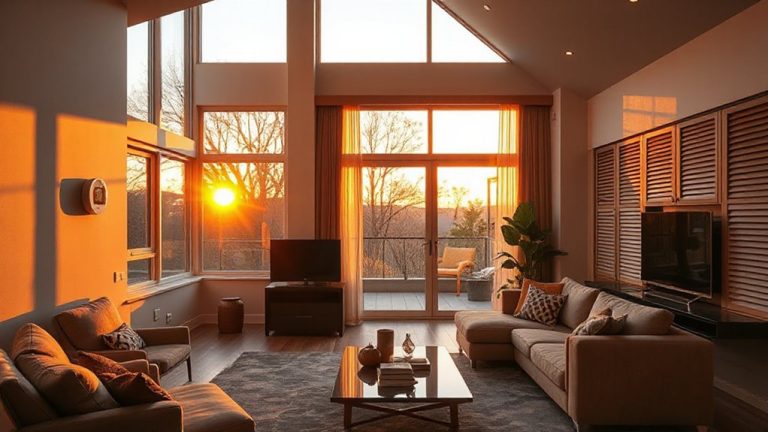
When lighting is poor, your security camera footage can suffer greatly, making it harder to identify people or objects. Low light often reduces color accuracy, so reds might look brown or blues appear gray, which impacts how well you recognize clothing or vehicles. You may also notice image distortion, especially around edges, as cameras amplify available light and introduce noise. This distortion worsens in cheap models with poor sensors. Higher-end cameras use larger image sensors and wider apertures to improve light capture, preserving color accuracy and minimizing distortion. For best results, choose a camera with good low-light ratings, ideally one that supports true color night vision using supplemental lighting. While these models cost more, they deliver clearer, more reliable footage when you need it most. Always test placement to guarantee even lighting coverage. Models with larger image sensors typically perform better in low-light conditions, making them ideal for clear night video.
Common Lighting Problems (And Why They Blur Footage)
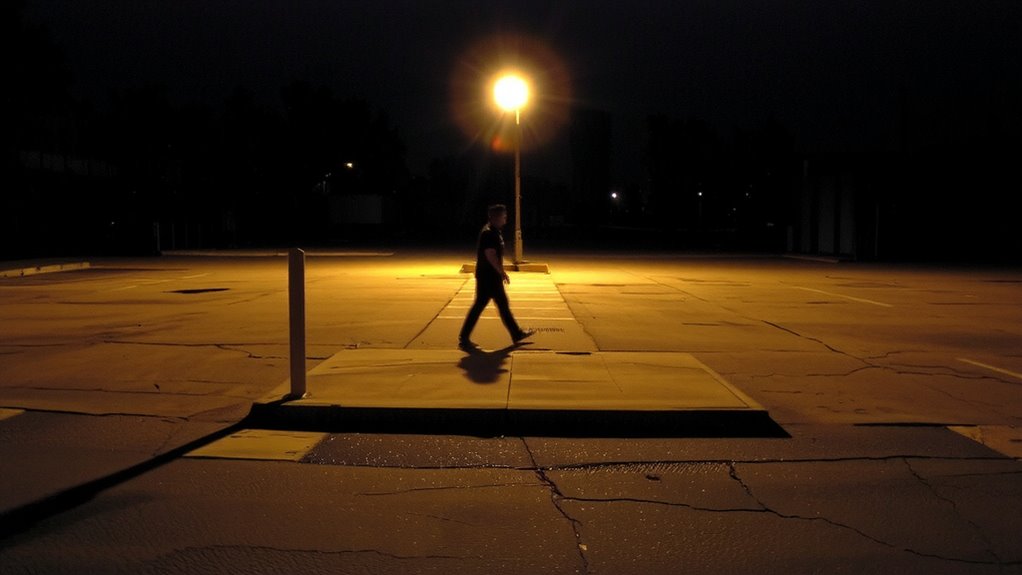
Though lighting is essential for clear video, too much or too little can distort your footage and reduce its usefulness. If lights are too bright, you’ll often see overexposure artifacts-washed-out areas where details vanish, especially around faces or license plates. These bright spots make it hard to identify key elements. On the flip side, low light leads to grainy, blurry images because the camera boosts gain to compensate. Poor lighting can also cause color distortion, making objects appear unnaturally red, blue, or green, which misrepresents scenes. Both issues hurt footage reliability for identifying people or events. To avoid this, position lights evenly and avoid direct backlighting. Use cameras with wide dynamic range (WDR) to balance light and dark areas. WDR reduces overexposure artifacts and improves clarity. While better cameras cost more, they prevent costly misjudgments from distorted video. A well-chosen indoor security camera can significantly improve performance in challenging lighting conditions.
How Infrared Fixes Security Camera Night Vision
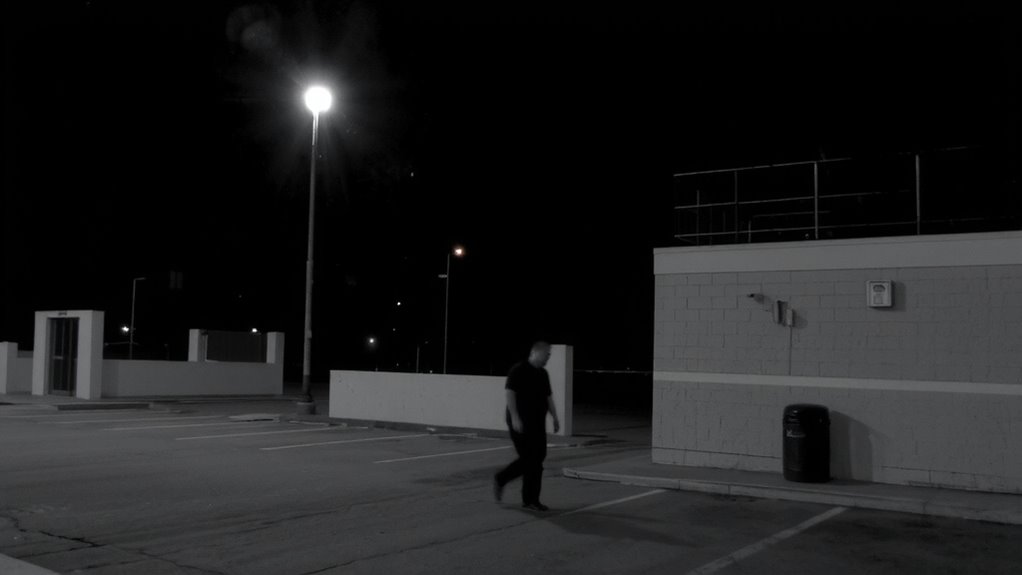
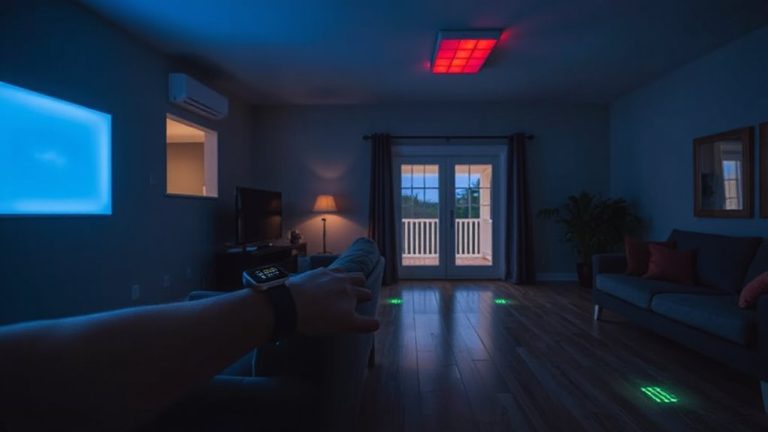
Infrared technology solves many of the low-light problems discussed earlier by allowing security cameras to capture clear footage even in total darkness. You get reliable image clarity without depending on visible light, which means your camera won’t miss critical details at night. Infrared works by detecting heat signatures from people, animals, or vehicles, then converting them into a visible monochrome image. This guarantees consistent performance, especially in pitch-black environments where traditional cameras fail. Most infrared cameras have built-in IR LEDs with a range of 30 to 100 feet, depending on the model. Keep in mind, very dense fog or rain can slightly reduce effectiveness, and reflective surfaces might cause minor glare. For best results, choose a camera with adjustable IR intensity to avoid overexposure. Infrared is a proven, cost-effective solution that boosts nighttime surveillance without extra lighting, giving you dependable coverage when you need it most. Top models offer advanced features like best infrared cameras for improved clarity and range.
Fix Lighting: Smart Placement and Fixture Tips
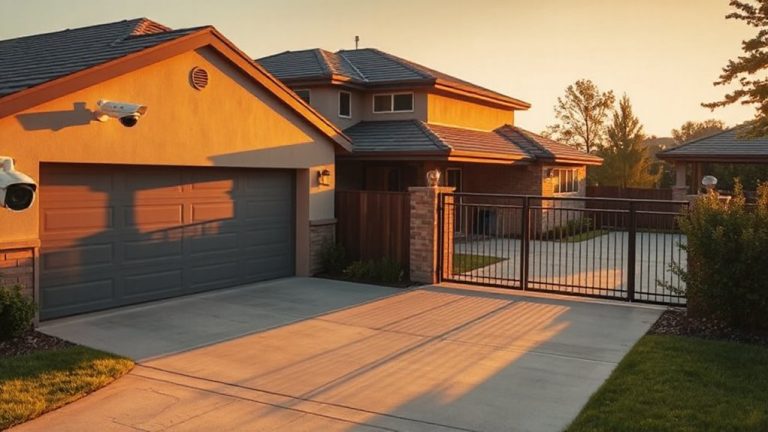
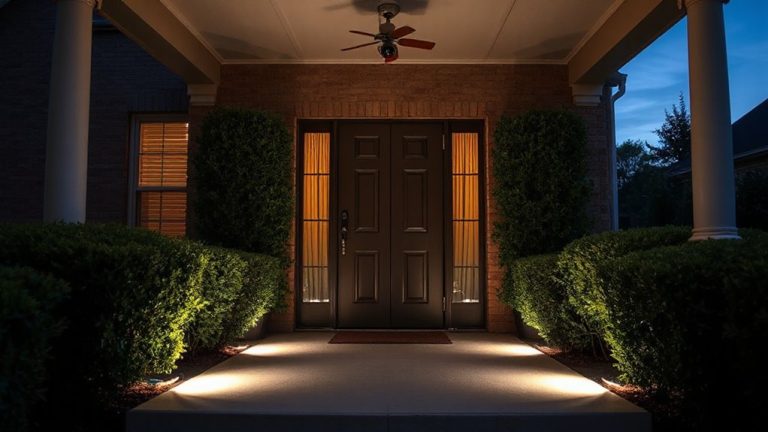
Since lighting directly affects the quality and reliability of your security camera footage, positioning both lights and cameras with care can make a real difference in performance. Smart placement means avoiding backlighting and positioning lights so they illuminate faces and key areas without creating glare. Mount fixtures above camera height to reduce shadows and guarantee even coverage. Your fixture selection should favor consistent color temperature-around 4000K to 5000K-for accurate image reproduction. LED fixtures are energy-efficient and long-lasting, though cheaper models may flicker on video. Use weather-resistant, adjustable housings for flexibility across seasons. Avoid placing lights directly behind cameras, as this creates silhouettes. Instead, angle lights to support the camera’s field of view. With smart placement and thoughtful fixture selection, you’ll boost clarity, improve detection accuracy, and enhance overall surveillance effectiveness without overcomplicating your setup.
Choose a Security Camera for Bright and Dark Conditions
When you’re dealing with areas that shift between bright sunlight and deep shadows, picking a security camera with strong dynamic range performance is key. A camera with good Dynamic Range captures clear details in both bright and dark parts of the same scene, so you don’t lose faces or license plates in shadows or glare. Look for models labeled with WDR (Wide Dynamic Range), as they balance exposure better than standard cameras. You’ll also want solid Low Light Performance for nighttime clarity. Cameras with larger sensors and infrared night vision usually deliver sharper images in darkness. Pairing strong Dynamic Range with reliable Low Light Performance guarantees quality footage 24/7. Consider cameras priced slightly higher-they often include these essential features. While more affordable options exist, they may struggle in mixed lighting, reducing overall effectiveness. Plan for lighting fluctuations when choosing your model.
On a final note
You now see how lighting shapes the quality of your security camera footage. Poor lighting causes blur and lost details, while infrared helps capture clear night images. Smart placement and the right fixtures improve visibility. Choose cameras with wide dynamic range and infrared for both bright and dark areas. These features boost performance, giving you reliable, consistent footage day and night. Plan thoughtfully and invest wisely for the best protection.