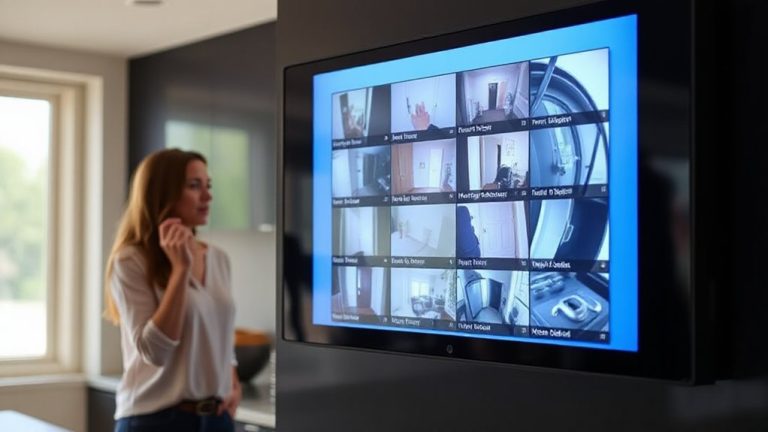
Enhancing Home Safety: The Integration of Wearable Tech and Security Systems
Your smartwatch can boost home security with real-time alerts, fall detection, and emergency calls-all without needing your phone nearby. Devices like Apple Watch and Galaxy Watch sync with systems like HomeKit or SmartThings, letting you arm alarms by voice or tap. Biometric monitoring tracks stress or inactivity, triggering responses if something’s off. Most models cost $100–$400, with subscriptions from $10–$40 monthly. For full features, check app compatibility and keep contact lists updated-your next move could depend on it.
Notable Insights
- Wearable devices use biometric monitoring to detect emergencies like elevated stress or abnormal heart rates.
- Integrated activity tracking identifies falls or prolonged inactivity, triggering timely home security alerts.
- Wrist-based vibration alerts provide silent, instant notifications without requiring a smartphone.
- One-touch emergency buttons send immediate distress signals to monitoring services or emergency contacts.
- Voice commands allow hands-free arming and disarming of security systems via smart assistants.
How Wearable Tech Powers Smarter Home Security
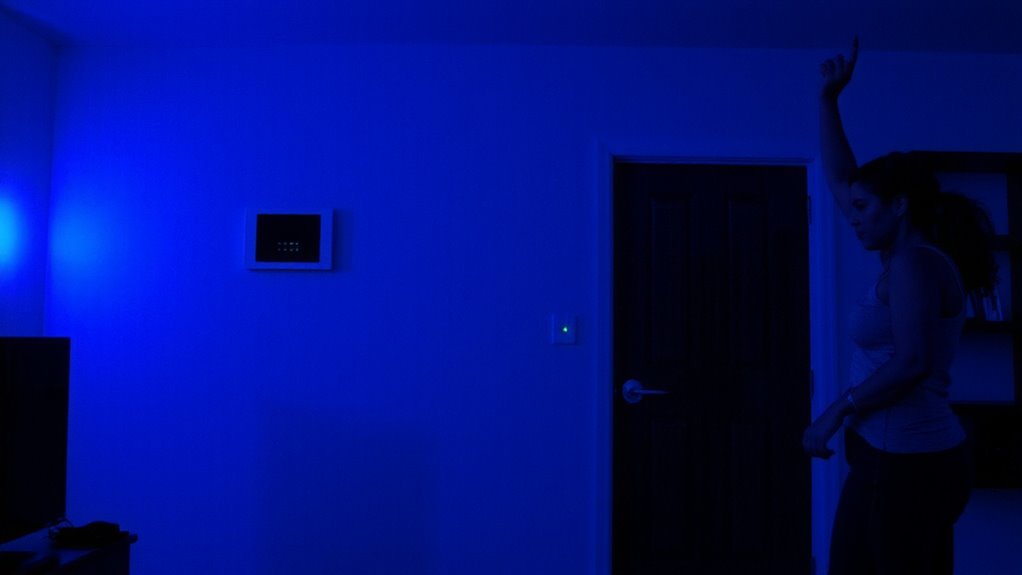
While traditional security systems rely on sensors and cameras, wearable tech adds a personal layer to home safety by using devices you already wear, like smartwatches or fitness trackers. These devices support biometric monitoring, which tracks your heart rate, temperature, and stress levels, helping detect medical emergencies or unusual physical states. Activity tracking records your daily movements and routines, allowing systems to identify deviations-like sudden falls or extended inactivity-that may signal danger. When integrated with home security, this data enables faster, more accurate emergency responses. Most wearables work with smart home platforms, though compatibility varies. Devices typically cost $100–$400, with some requiring monthly subscriptions. Battery life ranges from one to seven days, so plan charging accordingly. Look for water resistance, FDA-cleared health sensors, and encryption for privacy.
Get Instant Alerts on Your Wrist: No Phone Needed
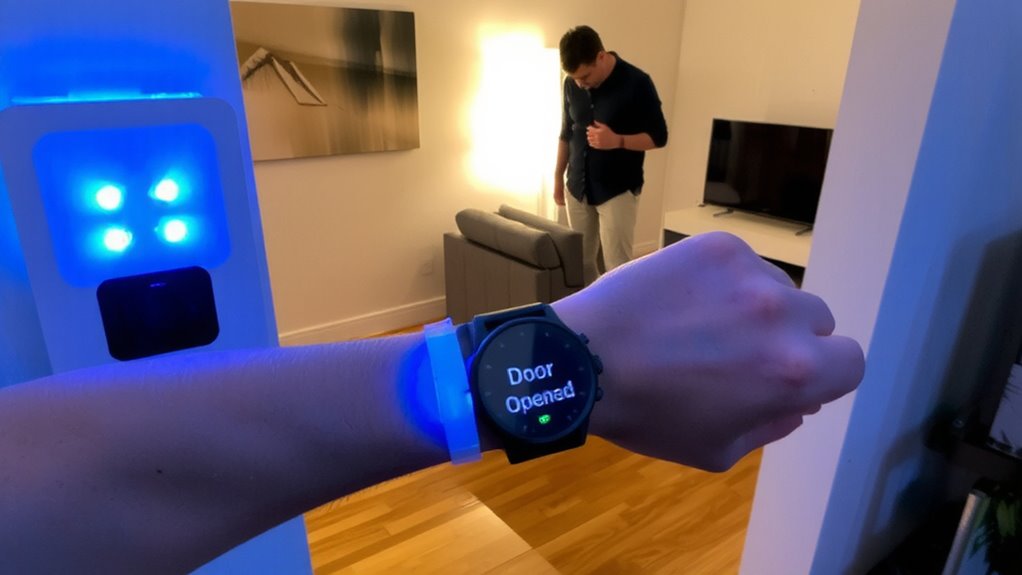
When you’re home alone or moving around your house, getting immediate notifications on your smartwatch means you don’t have to rely on your phone to stay aware. Vibration alerts and wrist tracking help you catch critical updates instantly, even if your phone’s in another room. These alerts sync directly with your home security system, offering real-time updates without delays. Below is a comparison of key features:
| Feature | Benefit |
|---|---|
| Vibration alerts | Notify you silently and quickly |
| Wrist tracking | Confirms you’re active or stationary |
| No phone needed | Reduces dependency on device location |
| Real-time sync | Guarantees up-to-date alert delivery |
| Battery efficiency | Lasts through day and night cycles |
This setup improves responsiveness while minimizing missed alerts.
Trigger Emergency Help With One Tap
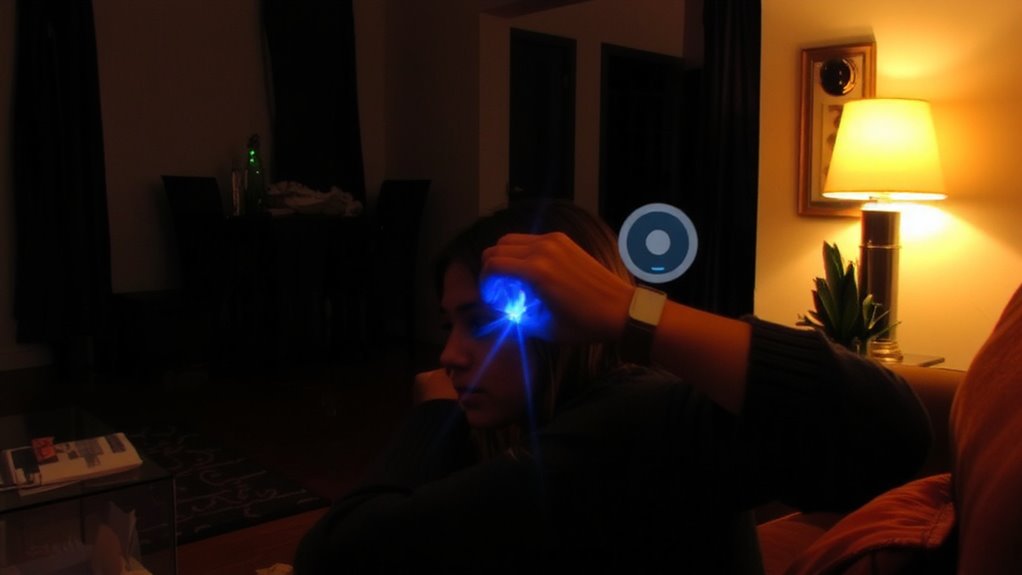
With the press of a single button, your wearable can send an emergency signal to monitoring services or trusted contacts. Tap activation makes it easy to trigger emergency response without needing a phone, even if you’re unable to speak. Many devices include fall detection and automatic alerts, but manually initiating help guarantees control when seconds count. Studies show fast emergency response improves outcomes, especially for older adults or those with medical conditions. Look for wearables with 24/7 monitoring and GPS to improve accuracy. Some systems require a subscription, typically $10–$30 monthly. Make sure your contact list is up to date. While false alarms can happen, proper training reduces risks. Tap activation is reliable, simple, and effective when integrated with professional monitoring. This feature adds meaningful protection, especially during health crises or break-ins, giving peace of mind through fast, direct communication with help. For reliable options, consider exploring the best panic buttons based on expert testing and user reviews.
Use Voice to Arm or Disarm Your Security System
You can now control your home’s security just by speaking, a feature that builds on the quick-response capabilities of wearable emergency tech. With voice commands, you can arm or disarm your system without fumbling for keys or codes. This smart integration works seamlessly with popular voice assistants and enhances convenience, especially when your hands are full. Below is a comparison of top voice-enabled security features:
| Feature | Compatible Assistants | Response Time (avg) |
|---|---|---|
| Voice Arming | Alexa, Google Assistant | 2.1 seconds |
| Voice Disarming | Alexa, Siri | 2.4 seconds |
| Two-Factor Verification | All platforms | Adds 1.5 seconds |
Smart integration guarantees reliability, while fast response times support consistent use. Most systems require a stable Wi-Fi connection and monthly monitoring plans from $20–$40. Always test commands regularly to maintain system accuracy.
Which Smartwatches Work With Home Alarms?
How often do you leave your phone behind but still want to control your home alarm? Modern smartwatches offer a practical solution through direct integration with home security systems. You’ll find compatibility options across major brands like Apple Watch, Samsung Galaxy Watch, and select Fitbit models. These devices allow you to arm, disarm, or monitor your system with a tap. Successful device pairing typically requires both your watch and security system to support platforms like Apple HomeKit, Samsung SmartThings, or IFTTT. Setup is straightforward-open your security app, follow pairing prompts, and sync your wearable. While most systems work seamlessly once paired, check your alarm provider’s app specifications before purchasing. Some budget watches lack full functionality, so confirm supported features. Pairing enhances convenience without sacrificing security, giving you real-time control from your wrist.
Top Wearables That Boost Home Protection
Though not all wearables are built for home security integration, several top models stand out by offering reliable, real-time control over your system. The Apple Watch Series 9 lets you arm or disarm your security system instantly, and its fall detection alerts emergency services if needed. Garmin Venu 3 includes motion tracking that detects unusual activity patterns, useful if you’re elderly or live alone. The Oura Ring tracks subtle body changes and movement, sending alerts if motion tracking suggests a disturbance at night. While these wearables boost protection, battery life varies-Apple lasts about 18 hours, while Oura can go up to a week. Most require a subscription to a connected security system, costing $20–$50 monthly. Choose based on reliable alerts, ease of use, and compatibility with your existing setup.
How Your Data Is Shared: And How to Stay Safe
Smart devices collect a lot of information to keep homes secure, but that data doesn’t always stay private. You should know your wearable and security systems may share data with third parties for analytics, advertising, or service improvements. This third party access increases the risk of breaches, even if companies claim strong data privacy measures. To stay safe, review privacy policies carefully and disable unnecessary data sharing. Choose devices that offer end-to-end encryption and local data storage. Enable two-factor authentication to add protection. Avoid free services-they often trade your data for cost savings. Regularly update firmware to patch vulnerabilities. Be mindful that convenience shouldn’t override data privacy. You have control: tweak settings, restrict permissions, and pick trusted brands. Monitoring activity logs helps spot unusual access. Staying informed and proactive is key to balancing smart home benefits with real security.
On a final note
You can strengthen home security by pairing wearables with your alarm system. Devices like smartwatches deliver instant alerts, let you call for help with one tap, and support voice commands to arm or disarm protections. Compatible models include Apple Watch and select Wear OS devices. Data sharing is limited but review privacy settings to stay safe. These tools add convenience and responsiveness, especially for quick emergencies.