Child-Friendly Home Security Measures That Don’t Compromise Safety
Use smart locks with tamper-resistant keypads and auto-lock features-around $100–$250-to secure entry while allowing quick exit. Install window guards with 3.5-inch spacing and quick-release mechanisms ($20–$60 per window) for fall prevention and fire safety. Place cameras in shared areas, avoiding private spaces, for monitoring without intrusion. Choose alarm systems with 30–60 second escape timeouts ($300–$600 plus monthly fees) to prevent startling kids. Practice fire drills twice yearly. More details follow on optimizing each measure.
Notable Insights
- Install smart locks with tamper-resistant keypads and backup entry methods to secure doors while ensuring emergency access.
- Use window guards with 3.5-inch max spacing and quick-release mechanisms to prevent falls and allow safe egress during fires.
- Place cameras in common areas only, using privacy modes and motion alerts to monitor children without invading personal space.
- Set alarms with 30–60 second customizable entry delays to prevent startling kids and reduce false alerts.
- Practice fire drills twice yearly, teaching children to exit immediately and gather at designated safe meeting spots.
Use Smart Locks That Keep Kids Safe and Allow Escape
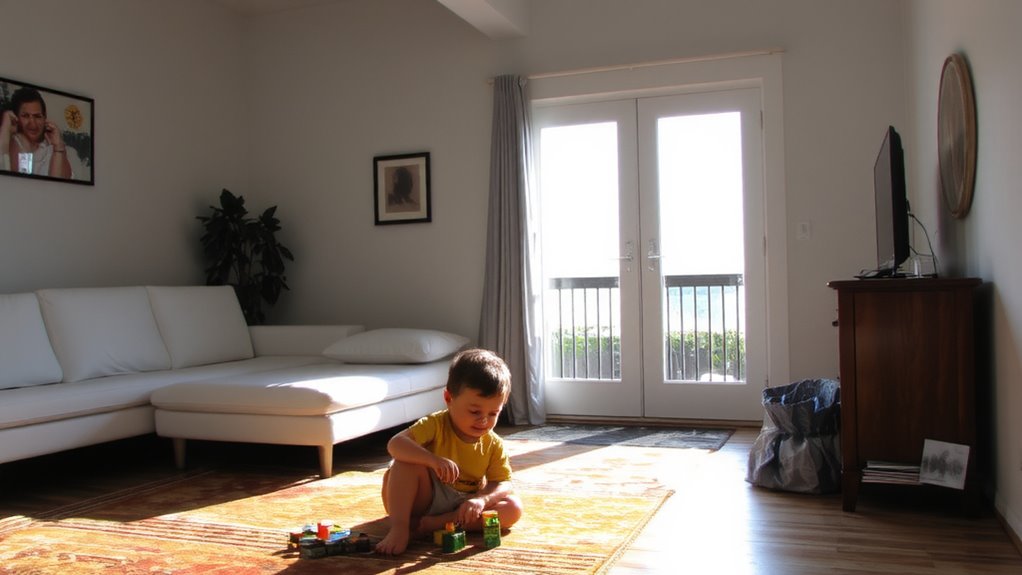
While smart locks can make home security easier, choosing the right one matters when you have kids. You need features that balance child safety with smart access during emergencies. Look for models with tamper-resistant keypads and auto-lock functions that prevent doors from being left unsecured. Some smart locks allow you to set up temporary access codes for caregivers, improving supervision without sacrificing convenience. Avoid complex biometric systems-kids’ fingerprints may not register reliably. Instead, opt for durable, low-maintenance locks with backup entry methods like physical keys or PINs. Guarantee the lock complies with fire egress standards so children or guests can exit quickly. Most quality models cost $100–$250 and integrate with home automation systems. Prioritize reliability, simple interfaces, and proven performance to support both security and emergency escape. Top picks include models recognized in the best smart locks roundup for their safety and ease of use.
Install Window Guards That Meet Safety and Egress Standards
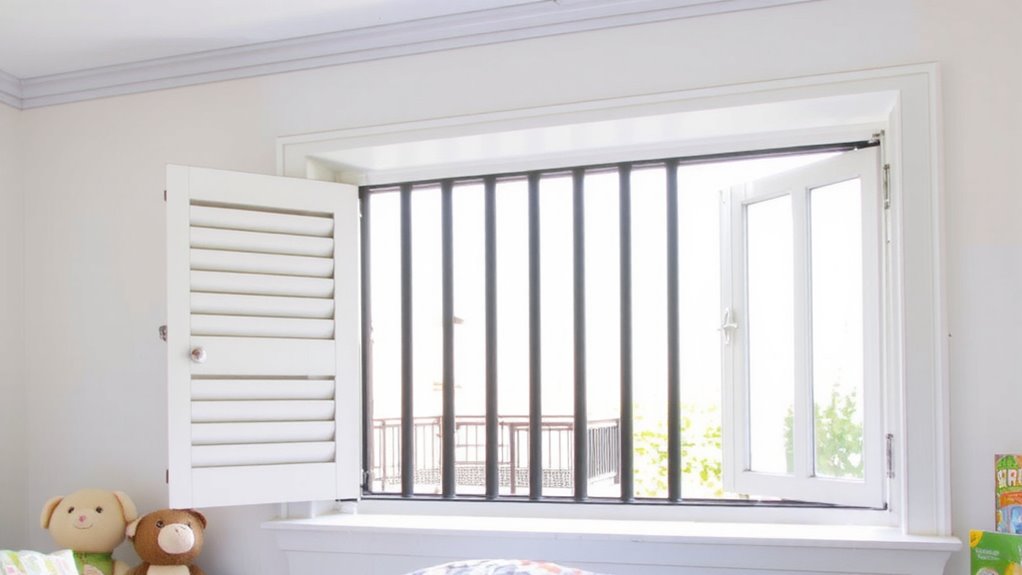
Safety comes first when protecting curious kids around windows, especially in multi-story homes. Installing window guards is a proven way to prevent falls while maintaining escape routes during emergencies. Look for models that meet local building codes and allow quick release in fires. Window strength matters-guards must withstand force without bending or breaking. Choose guard materials like steel or aluminum, which balance durability and rust resistance. Spacing between bars should be no more than 3.5 inches apart to prevent a child from slipping through. Make sure each guard includes a quick-release mechanism adults can operate easily. These devices cost between $20 and $60 per window, depending on size and material. Proper installation is key-use wall anchors if mounting into drywall. Regularly check for loose screws or corrosion. With the right window strength and high-quality guard materials, you gain peace of mind without sacrificing safety.
Place Cameras to Monitor Kids Without Invading Privacy
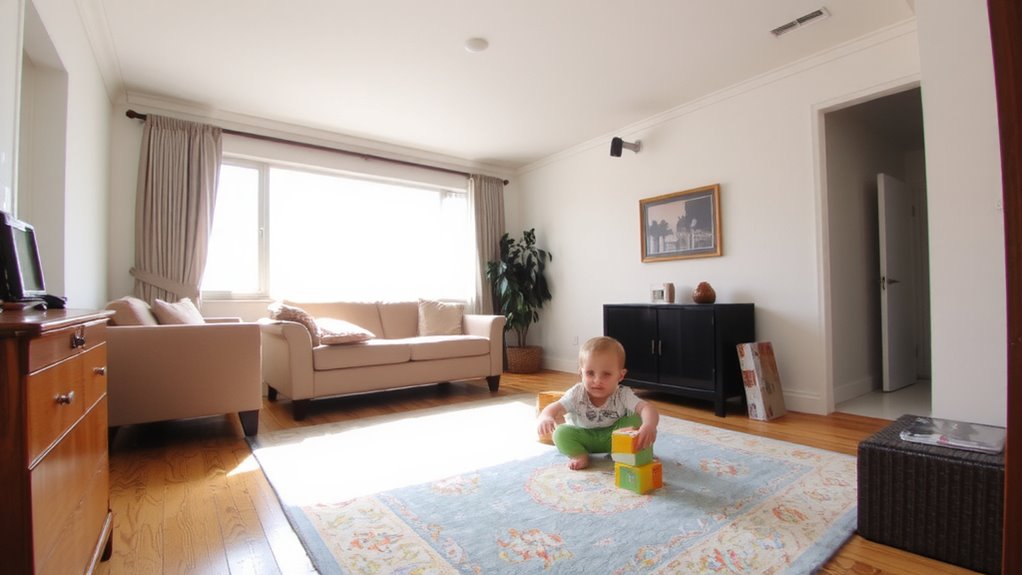
How can you keep an eye on your kids without crossing the line into constant surveillance? Use cameras strategically in shared spaces, not private areas like bedrooms. For playroom surveillance, position the camera high in a corner to capture the whole room while avoiding direct views of personal items. Choose models with privacy modes that let you disable recording remotely. For backyard monitoring, mount weather-resistant cameras at ground level to avoid blind spots, focusing on play structures and pools. Opt for systems with motion alerts and two-way audio so you can respond if needed. Wired setups offer reliability; Wi-Fi models ease installation. Expect to spend $100–$250 for a solid setup. Test sightlines before final mounting. Always inform family members about camera locations to balance safety and trust. Top picks include models with advanced features like best indoor security cameras.
Use Alarms With Kid-Friendly Escape Timeouts
You’ve set up cameras to keep an eye on shared spaces without stepping into private zones, but what happens when an alarm goes off and little ones are nearby? Standard alarms often trigger full alerts instantly, which can panic children and delay safe exits. That’s where alarm customization helps. Many modern systems offer adjustable timeout settings, letting you extend the entry delay-typically 30 to 60 seconds-so kids aren’t startled by sudden sirens when opening a door. These settings allow time to disarm the system calmly, especially helpful if a child returns home from school. Look for systems with customizable per-user profiles and app-based controls. Pros include reduced false alarms and smoother routines; cons may involve setup complexity. A mid-range system with these features costs $300–$600 upfront, plus $20–$40 monthly. Choose one that supports these kid-friendly timeout settings for safer, smarter security. Best Home Alarm Systems & Buying Guide can help you compare top-rated models that offer these essential child-friendly features.
Practice a Fire Escape Plan With Your Kids
What good is a security system if your family doesn’t know how to respond during a real emergency? Practicing a fire escape plan with your kids guarantees they react safely and quickly. Conduct fire drills at least twice a year, using both daytime and nighttime scenarios to simulate real conditions. Make sure everyone knows the locations of all emergency exits in your home and can open them safely. Designate two meeting spots-one just outside the home and another outside your neighborhood. During fire drills, time your family’s escape to identify delays and improve coordination. Teach kids never to hide or re-enter the house. Reinforce that smoke detectors mean go, not investigate. Practicing builds confidence and reduces panic. While drills take effort, the routine increases survival odds. Include children in planning so they understand each step. A practiced family responds better when seconds count.
On a final note
You can keep your home secure and safe for kids by choosing smart locks with easy escape functions, installing window guards that meet fire safety codes, and positioning cameras to monitor without invading privacy. Use alarms with kid-friendly escape timeouts, and practice fire drills regularly. These evidence-based steps balance security and safety, giving you peace of mind without compromising your child’s well-being.