Understanding FCC ID Verification for Legitimate Smart Lock Purchases From Third-Party Retailers
When you buy a smart lock from a third-party seller, checking the FCC ID helps confirm it’s real and safe to use. Look for the ID on the device or box, then enter it into the FCC’s online database to verify it matches official records. This quick check guarantees the lock meets U.S. standards for performance and radio interference. Fake IDs often have wrong formatting or mismatched model numbers. Spotting these red flags protects your home-and knowing what to watch for gives you an edge when choosing wisely.
Notable Insights
- FCC ID verification confirms a smart lock meets U.S. safety, interference, and security standards before purchase.
- Genuine FCC IDs are uniquely formatted and traceable to the manufacturer in the FCC’s public database.
- Counterfeit smart locks often have fake or mismatched FCC IDs, indicating non-compliance with federal regulations.
- Always cross-check the FCC ID on the device, packaging, and listing against official FCC database records.
- Third-party sellers pose higher risk; verifying FCC IDs adds critical protection against fraudulent or unsafe products.
Why Fake Smart Locks Make FCC ID Checks Essential
What if the smart lock you installed for added security actually puts your home at risk? You might not realize it, but counterfeit risks are rising in the smart home market. Fake devices often bypass mandatory testing, leaving you exposed to malfunctions or hacking. These knockoffs thrive due to regulatory gaps, especially on third-party platforms where verification is weak. Without proper oversight, dangerous products can reach consumers undetected. That’s why checking the FCC ID is essential. It confirms the device meets U.S. safety and interference standards. Genuine products have traceable IDs; counterfeits usually don’t or use falsified ones. Always verify the ID before buying. It’s a quick step that guarantees authenticity, performance, and protection. Don’t trade convenience for compromise-your home’s security depends on it. Just like ensuring you’re purchasing the best Ring Doorbell 2, verifying the FCC ID helps avoid subpar or risky smart home devices.
How to Find the FCC ID on a Smart Lock or Box
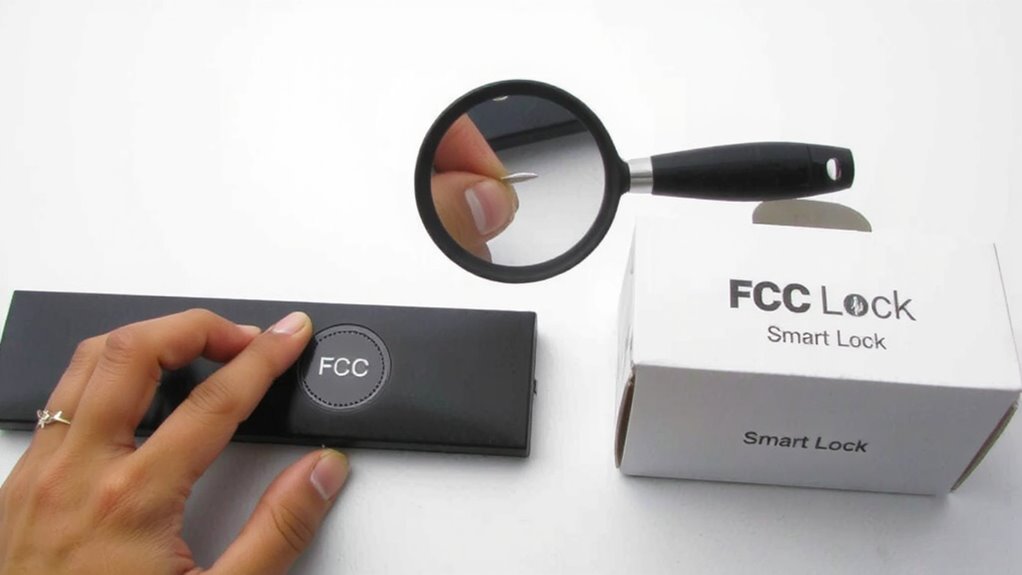
You’ve already seen how counterfeit smart locks can slip through regulatory cracks, putting your home at risk without clear safety certification. To verify legitimacy, finding the FCC ID is your first step. Check the physical device or its original packaging-most manufacturers print the FCC ID near other labels, often on the back, base, or side. Look closely at the product design, as the ID may be small or integrated into a molded label. The ID typically starts with a grantee code, followed by a product code. This identifier reveals the manufacturing origin and approved specifications. If labels are missing or unclear, the product may not comply with U.S. standards. Never rely on online images alone, as listings can misrepresent details. Keeping the box helps preserve access to this critical info. For added assurance, cross-reference the FCC ID with trusted listings of top smart lock models to confirm it matches a verified product.
Check a Smart Lock’s FCC ID in 3 Minutes Online
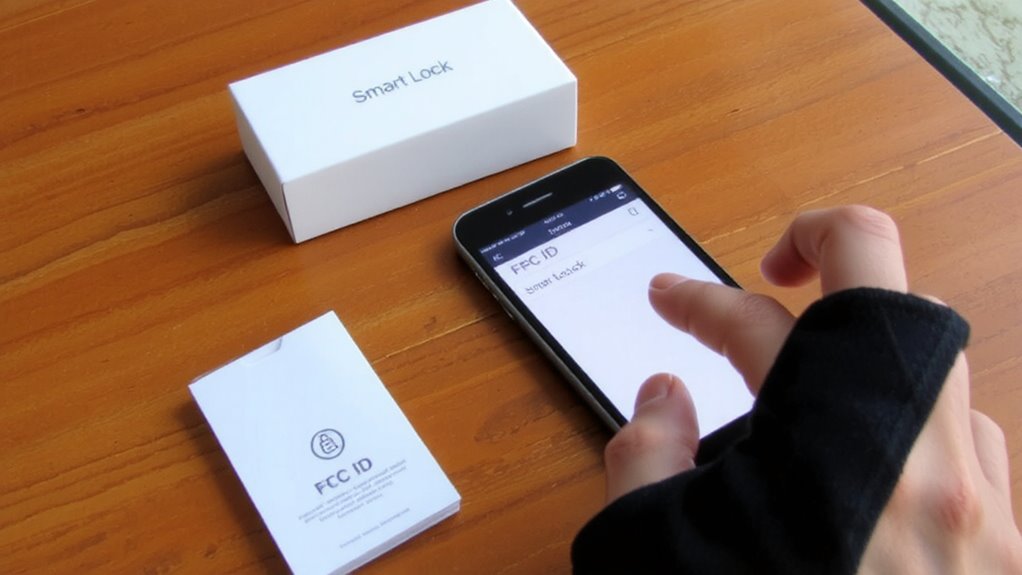
Need proof your smart lock meets U.S. safety and interference standards? You can verify it in under three minutes using the FCC’s official database. Start by entering the lock’s FCC ID-found on the device or packaging-into the FCC ID search tool online. The site will direct you to detailed technical files, including compliance reports and radio frequency data. Use ID validation tools on the FCC website to confirm authenticity. Proper FCC database navigation guarantees you’re not reviewing a copied or expired registration. Look for matching grantee codes and product details that align with your model. This quick check adds confidence in your purchase, especially from third-party sellers. No extra cost, no delays-just clear, official confirmation. Smart buyers use this step to avoid non-compliant devices that could interfere with home networks or fail under inspection. It’s a small step with real security value. When choosing a model, consider top-performing options like the best smart locks for Home Assistant.
7 Red Flags of a Fake FCC ID
Could a missing or mismatched grantee code be your first clue? Yes-grantee codes are unique identifiers assigned by the FCC, and if yours doesn’t match the manufacturer, that’s a major red flag. Fake FCC IDs often come with inconsistent formatting, like extra letters or wrong spacing. You might also spot a mismatch between the model number on the device and the one listed in the FCC database. Be alert for counterfeit packaging, which may include blurry logos, poor print quality, or incorrect technical details. Misleading branding can mimic well-known brands with slight variations in spelling or design. These aren’t just cosmetic issues-they suggest the product hasn’t passed proper safety or interference testing. Always cross-check the full FCC ID, verify the test results, and confirm the device’s approval date matches the product’s release. If anything seems off, trust the official database over the seller’s claims.
Why Third-Party Sellers Need Extra FCC Verification
While shopping from third-party sellers can offer competitive prices and convenience, it also increases the risk of receiving smart locks with falsified or invalid FCC IDs. You can’t always rely on marketplace listings to reflect accurate compliance, making extra verification necessary. Unlike direct retailers, third-party sellers may lack strict oversight, raising concerns about third party liability if a product causes interference or fails safety standards. Confirming the FCC ID helps establish seller accountability, ensuring they stand behind legitimate products. Without this step, you might unknowingly install a device that hasn’t passed required testing. Always cross-check the FCC ID in the Commission’s public database before buying. It takes minutes but protects your purchase, network, and home. Look for consistent labeling and avoid listings with missing or blurry ID numbers.
How FCC Approval Boosts Smart Lock Security
Since FCC approval requires smart locks to undergo rigorous testing for radio frequency emissions and interference, you can trust that a certified device meets federal standards for reliable and secure operation. This means your lock maintains signal integrity and offers strong interference resistance, ensuring commands from your phone or keypad aren’t disrupted. Stable communication protects against lockouts or unauthorized access due to signal failure.
| Peace of Mind | Risk of Uncertified Devices |
|---|---|
| Trusted performance | Unpredictable behavior |
| Consistent signal integrity | Weak interference resistance |
| Verified by federal testing | No independent verification |
| Reliable daily use | Potential connectivity loss |
| Long-term security | Possible safety hazards |
Choosing FCC-approved smart locks means selecting a product built for dependable, secure performance in real-world conditions. You’re not just buying a lock - you’re investing in proven, consistent protection.
No FCC ID? Here’s What to Do
What happens if you can’t find an FCC ID on your smart lock? It could mean the device hasn’t been tested for radio frequency compliance, which might affect performance or safety. First, check the product’s label, packaging, and online listing-sometimes the ID is listed where you’d least expect it. If it’s truly missing, read recent product reviews to see if others had the same issue or reported connectivity problems. Many reputable retailers offer a clear return policy, so use it if the lock lacks verification-you’re better off choosing a model with proper certification. Without an FCC ID, you risk interference with other devices or unreliable operation. Always prioritize locks with confirmed FCC approval. It’s a small step that guarantees long-term reliability, security, and compatibility in your smart home setup. Don’t assume legitimacy-verify first.
On a final note
You should always check a smart lock’s FCC ID before buying, especially from third-party sellers. A valid FCC ID confirms the device meets U.S. safety and interference standards. You can verify it in minutes online using the FCC’s public database. No ID or fake details? Avoid it-your security and privacy could be at risk. Taking this step helps guarantee reliability, proper function, and protection against substandard electronics.