Protecting Your Home During Renovations and Construction Projects
Seal off construction zones with plastic sheeting and use HEPA air filters to cut dust spread by up to 90%. Cover floors with 6-mil plastic or plywood to prevent damage, costing $0.10–$0.50 per square foot. Protect furniture with moving blankets and plastic, secured with tape. Set up boot trays and doormats at entries to reduce tracked debris. Use carbon-filter air purifiers and low-VOC materials to minimize fumes, though costs rise 5–10%. More smart strategies await.
Notable Insights
- Seal construction zones with plastic sheeting and HEPA air filters to contain dust at the source.
- Protect floors with heavy-duty plywood or 6-mil plastic to prevent damage from debris and moisture.
- Cover furniture with plastic and moving blankets to guard against dust, scratches, and impact.
- Place boot trays and doormats at entryways to minimize tracking debris into clean areas.
- Use low-VOC materials and activated carbon air purifiers to reduce odors and indoor air pollution.
Seal Off Construction Zones to Block Dust at the Source
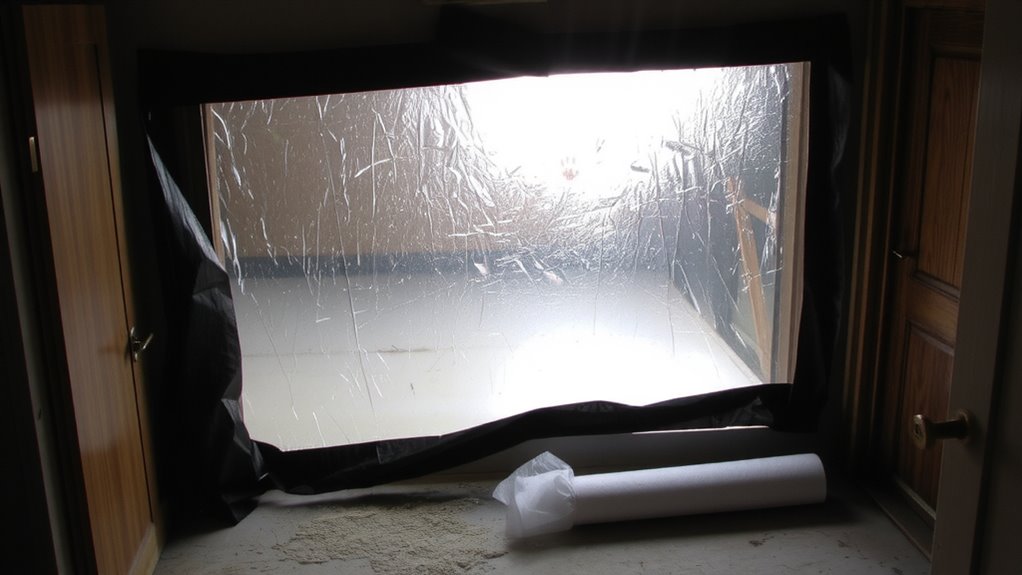
While renovations can improve your home’s value and functionality, they also generate dust and debris that can spread throughout your living space if not properly contained. You should seal off construction zones to block dust at the source using sturdy containment barriers like plastic sheeting taped securely around doorways and vents. This prevents particulates from migrating to clean areas. Pair these barriers with portable air filtration units equipped with HEPA filters, which capture fine dust and improve indoor air quality. Run the units continuously during work hours for best results. A well-sealed zone reduces cleanup time, protects your HVAC system, and limits health risks. Though setup takes effort and materials cost $50–$150, the investment pays off in reduced damage and faster project completion. Proper containment is a proven, effective step in any renovation plan.
Cover Floors With Heavy-Duty Protective Materials
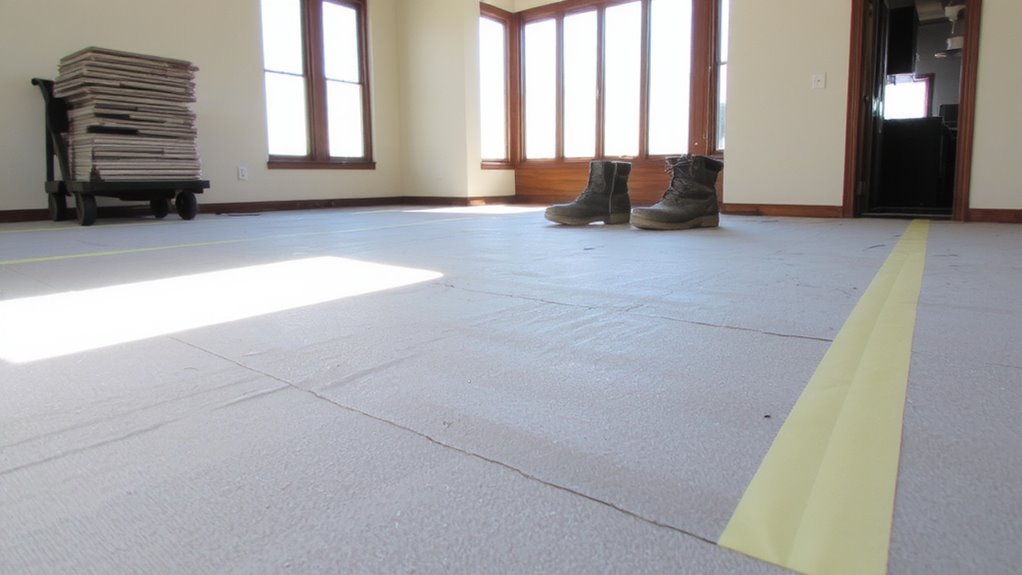
Since renovation work often involves heavy foot traffic, dropped tools, and stray debris, you’ll want to protect your floors with durable coverings that stand up to real job-site conditions. Different floor types-like hardwood, tile, or laminate-require specific protection to prevent scratches and stains. You can use rosin paper for light jobs, but for heavier work, choose thick plywood or contractor-grade plastic with a minimum material thickness of 6 mils. Thicker materials offer better resistance to punctures and moisture. Tape seams securely to avoid tripping hazards and guarantee full coverage. Budget about $0.10 to $0.50 per square foot, depending on the material. Always overlap edges by at least 6 inches and anchor them properly. This step saves you from costly repairs and guarantees your floors stay in prime condition throughout the project.
Shield Furniture Using Plastic and Moving Blankets
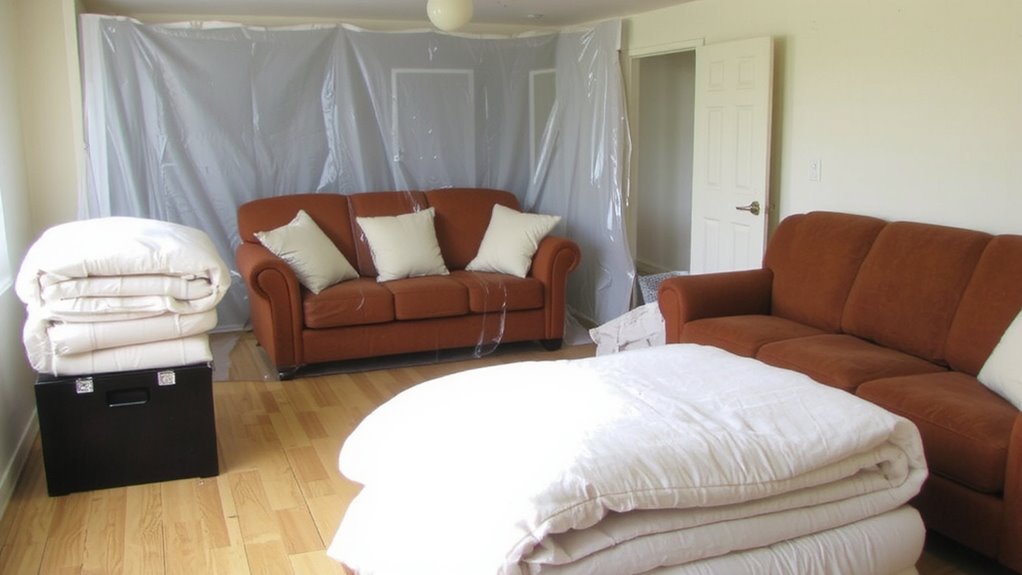
Protect your furniture by covering it with plastic sheeting and moving blankets to guard against dust, spills, and accidental impacts during renovations. Use furniture padding under plastic to prevent scratches and absorb moisture. Secure surface wrapping tightly with painter’s tape or stretch film, ensuring full coverage of legs, corners, and tops. Plastic alone resists dust but can shift; combine it with moving blankets for better protection against dents and scrapes. Start by grouping furniture in the center of the room, then wrap each piece individually. For delicate finishes, add an extra layer of padding to avoid abrasion. Most moving blankets cost $10–$20 each and can be reused, while plastic sheeting runs about $0.10 per square foot. Proper surface wrapping reduces cleanup time by up to 40%. Use this method on non-moving items staying in place.
Set Up Clean Entryways to Stop Debris Tracking
Keep your renovation mess contained by controlling access points. Set up clean entryways where everyone-from workers to family-must pass through before entering undisturbed areas. Place boot trays at each doorway to catch dust, mud, and debris from shoes. These trays are inexpensive and prevent contaminants from spreading throughout your home. Pair them with durable doormats to boost effectiveness. Position air purifiers near active zones to reduce airborne particles, improving indoor air quality. Choose models with HEPA filters for best results. Make sure entryway pathways are clearly marked and unobstructed. Limit the number of open routes between construction zones and living spaces. Seal off temporary walkways with plastic sheeting if needed. Boot trays and air purifiers work together to minimize cleanup and health risks. Plan your entry setup early-spending a little time now saves effort later.
Reduce Noise, Smell, and Daily Disruption Risks
How do you maintain peace and comfort when your home becomes a worksite? Start by using sound insulation to reduce noise. Seal windows and doors near work zones with temporary barriers or acoustic panels-these can cut noise levels by up to 50%. Schedule loud tasks during daytime hours to minimize personal disruption. For odor control, use air purifiers with activated carbon filters, which effectively trap fumes from paints and adhesives. Guarantee strong ventilation by opening windows or using exhaust fans. You can also ask contractors to use low-VOC materials, which reduce smell and health risks. Limit access to active areas to keep daily routines intact. Though sound insulation and odor control require upfront effort and slight cost increases-usually 5% to 10%-they markedly improve livability during renovations. Plan these steps before work begins for best results.
On a final note
You can protect your home during renovations by sealing off work areas with plastic sheeting and tape to contain dust. Cover floors with durable drop cloths or plywood to prevent scratches. Use plastic and moving blankets to shield furniture. Set up clean entryways with mats to reduce tracked debris. These steps limit damage, noise, and odors, making your project cleaner, safer, and more predictable without major cost or effort.