Integrating Flood and Freeze Sensors With Security Systems for Vacation Homes
You can cut vacation home water damage costs by integrating flood and freeze sensors with your security system. These sensors detect leaks and temperature drops early, sending phone alerts to prevent $7,000+ in average repair costs. Use Z-Wave or Zigbee models for better range and battery life-some last up to five years. Pair with systems like ADT Command or Ring Alarm Pro for remote monitoring. Confirm compatibility and install near water sources. A hub may be needed.
Notable Insights
- Flood and freeze sensors help prevent costly water damage in unoccupied vacation homes by detecting leaks and temperature drops early.
- Ensure sensors are compatible with your security system’s protocol, such as Z-Wave, Zigbee, or Wi-Fi, for seamless integration.
- Use a central hub if your security panel lacks built-in support for wireless sensors to enable reliable communication.
- Install sensors near water heaters, under sinks, or in basements using adhesive mounts for quick, tool-free setup.
- Enable push notifications, email, and text alerts through your security system for immediate remote warnings and response.
Why Your Vacation Home Needs Flood and Freeze Sensors
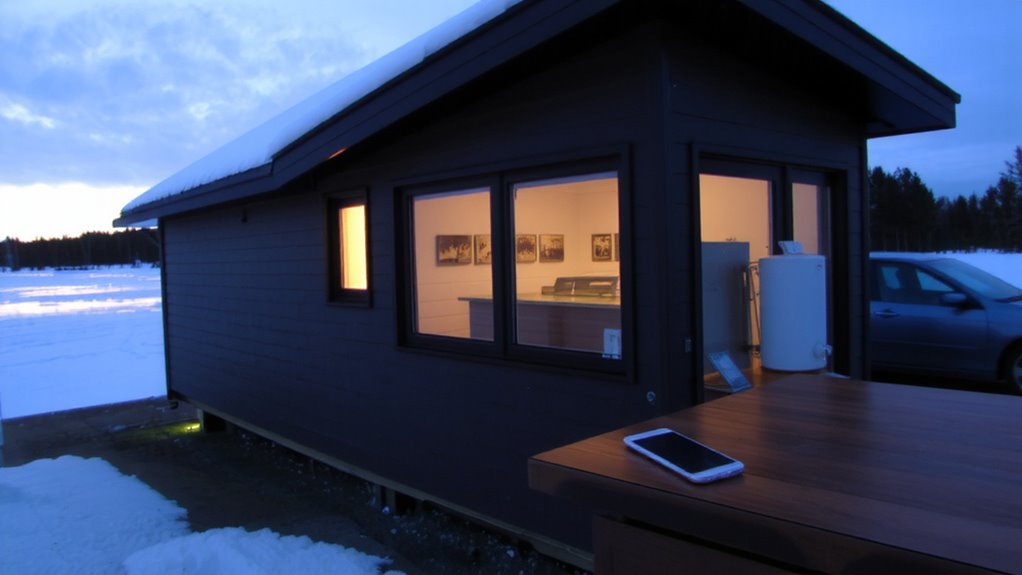
While you’re away enjoying peace and quiet, your vacation home could be facing unseen risks-like a burst pipe or a slow leak-that turn into costly disasters by the time you return. Without regular monitoring, minor issues can escalate quickly, leading to extensive water damage that’s both expensive and disruptive. Freeze sensors help detect sudden temperature drops, especially in colder climates where inadequate pipe insulation raises the risk of freezing. These sensors alert you early, letting you act before pipes burst. Flood sensors, placed near basements or appliances, detect moisture on the floor, signaling leaks before they worsen. Together, they offer a proactive layer of protection, minimizing repair costs and downtime. While some systems require upfront investment and proper placement, their early warnings often justify the cost. They’re especially useful when combined with remote monitoring, giving you reliable oversight even when you’re miles away.
How to Connect Smart Sensors to Your Security System
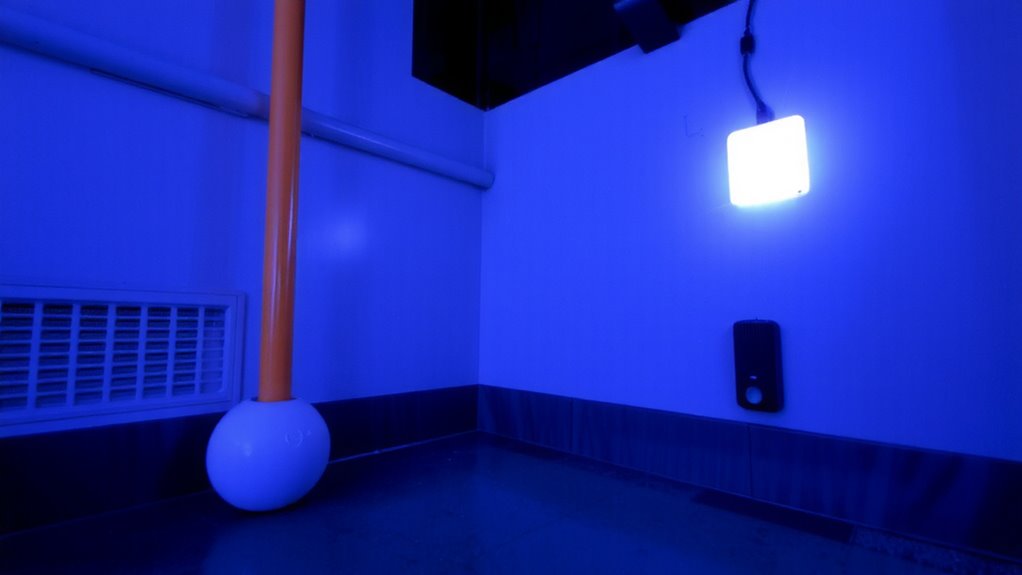
How do you turn smart sensors into active parts of your security system? Start by checking sensor compatibility with your existing setup-most modern systems support sensors via Wi-Fi, Z-Wave, or Zigbee. If your security panel lacks built-in support, consider a hub that bridges communication. Integration methods vary: some sensors link directly through your home network, while others require a central smart home controller. Always verify that your chosen sensors work with your system’s platform before buying. For DIY systems, follow the app prompts to pair new devices. Hardwired setups may need a technician. Prioritize sensors with standard battery types and straightforward mounting. Matching sensor specs to your system’s requirements guarantees smooth, reliable detection. A well-integrated sensor alerts your system instantly, enabling fast response when water leaks or freezing temps occur.
Must-Have Features: Alerts, Battery Life, and Range
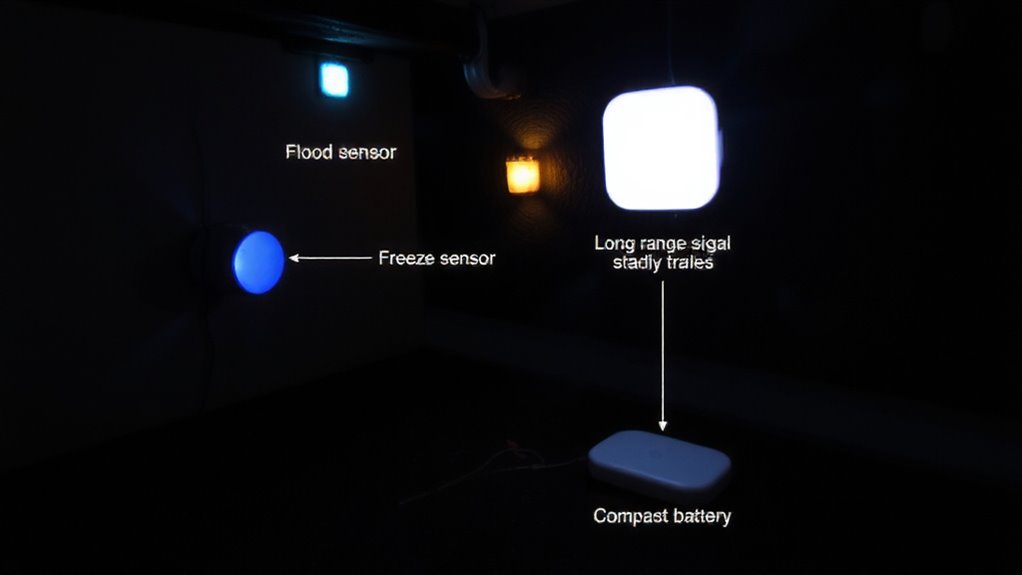
What good is a sensor if it fails when you need it most? You need reliable alerts that reach you fast, so look for models with push notifications, texts, and email backups. Frequent false alarms frustrate and reduce trust-avoid them with sensors that include smart filtering and proper sensor calibration during setup. Battery life matters, especially in vacation homes you visit occasionally; choose units rated for at least three to five years to reduce maintenance. A long wireless range-over 300 feet unobstructed-ensures signals reach your security hub, even in larger or remote properties. Some sensors use Bluetooth or Wi-Fi, while others use Z-Wave or Zigbee for better range and efficiency. Always check signal reliability in your specific layout. Balance cost and quality-higher-priced sensors often offer better calibration, longer battery life, and fewer false alarms.
Install Sensors in 5 Steps (No Tools Needed)
You’ve picked a sensor with strong alerts, long battery life, and solid signal range-now it’s time to get it working where it matters most. Sensor placement is critical: install units near water heaters, under sinks, or by basement floors where leaks often start. Many models use adhesive pads or magnetic mounts, so installation time is under five minutes and requires no tools. Position sensors flat against the surface to guarantee contact and reliable detection. Avoid placing them behind furniture or in dead zones where signals weaken. Test the connection to your security system after setup to verify communication. Good placement improves response speed and reduces false alarms. With quick installation time and smart positioning, your vacation home gains immediate protection. These small steps make a big difference in early problem detection. For optimal performance, consider models highlighted in the Best WiFi Water Sensors roundup to ensure compatibility and reliability.
Get Instant Phone Alerts: Stop Damage Before It Spreads
Why wait hours-or days-to learn about a burst pipe when every minute counts? With instant phone alerts, you get early detection of leaks or freezing temps, helping prevent major water damage at your vacation home. These alerts notify you the second a sensor is triggered, so you can act fast-shut off water, call a plumber, or adjust the heat remotely.
| Scenario | Without Alerts | With Alerts |
|---|---|---|
| Basement leak | Found after return-extensive damage | Caught early-minimal repair |
| Frozen pipe | Bursts overnight | Detected before freezing |
| Sump pump fail | Flood spreads slowly | Immediate warning |
Early detection means saving thousands. Most systems send alerts via app or text, ensuring you’re informed even when miles away. Response time improves dramatically, reducing risk and repair costs. Choose models with reliable connectivity and test alerts monthly.
Top Security Systems That Support Freeze and Flood Detection
While not all home security systems include environmental monitoring, the best ones integrate freeze and flood detection as core features, giving you full protection for your vacation property. Systems like ADT Command, Ring Alarm Pro, and SimpliSafe Elite support Z Wave compatibility, letting you connect third-party water and temperature sensors seamlessly. You’ll want reliable sensor calibration to avoid false alerts, especially in seasonal homes with fluctuating temps. Frontpoint and Cove offer professional monitoring with customizable alerts, but check monthly fees-some charge extra for environmental monitoring. DIY setups save money but require careful placement and testing. Look for systems with mobile app access so you can respond fast, no matter the distance. With Z Wave compatibility and accurate sensor calibration, these platforms provide proven, round-the-clock oversight. Choose one that balances upfront cost, long-term value, and ease of integration for real peace of mind.
On a final note
You’ll want freeze and flood sensors if you own a vacation home, especially in regions with cold winters or plumbing risks. Connect them to a security system that sends phone alerts, so you’re notified fast. Look for long battery life, strong Wi-Fi range, and easy installation. Some systems cost more but offer better reliability. Checking alerts weekly helps catch issues early. This small upgrade can save thousands in damage over time.