Installing Glass Break Detectors Near Large Windows: A Complete Guide
Large windows are prime targets for break-ins, so installing glass break detectors boosts security. Use sound-based models for wide coverage up to 20 feet, or vibration sensors for more reliability on big, unique panes. Place detectors within 15 feet of the glass, with clear line of sight, and avoid noisy areas. Test regularly and adjust sensitivity to prevent false alarms. Proper setup guarantees fast, accurate threat detection-knowing the best options helps you protect every inch.
Notable Insights
- Large windows are vulnerable entry points, making glass break detectors essential for early intrusion detection.
- Choose sound-based detectors for wide coverage or vibration sensors for reliability on oversized or unique windows.
- Install detectors within 15 feet of the window, ideally 6 to 20 feet away for optimal sensitivity and response.
- Mount units with clear line of sight to the glass, avoiding obstructions like furniture or curtains.
- Test detectors with recommended tools and adjust sensitivity to prevent false alarms while ensuring protection.
Why Big Windows Need Glass Break Detectors
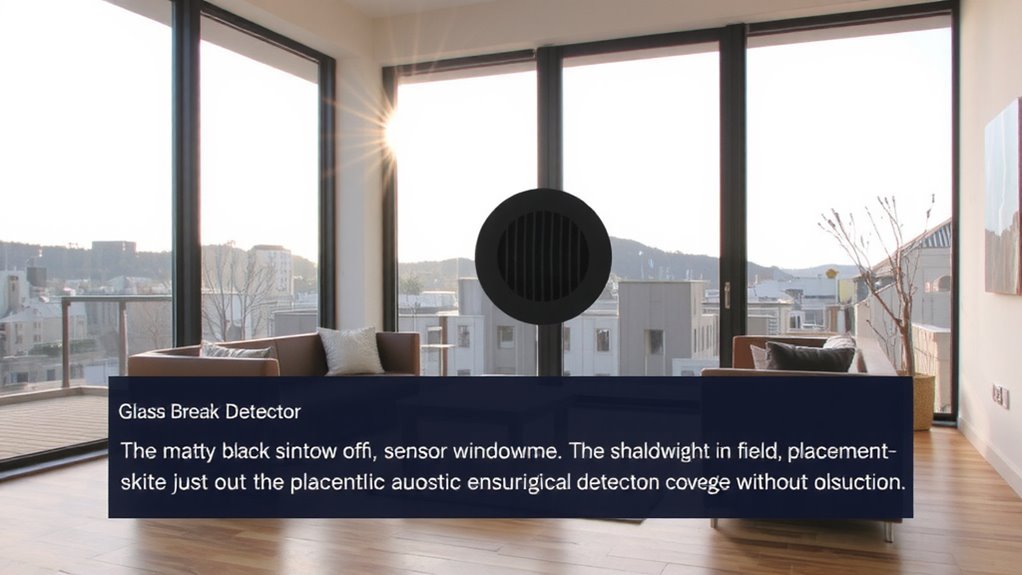
You might not think about it, but large windows are more than just an attractive feature-they’re a potential entry point for intruders. Their size increases window exposure, making them easier targets, especially on ground floors or secluded sides of a home. While they offer natural light and views, they can compromise structural integrity if not properly secured. Glass break detectors help offset this vulnerability by detecting breakage sounds before an intruder enters. These sensors don’t rely on motion or contact, so they’re effective even when windows are closed. For large panes or sliding glass doors, one detector typically covers up to 20 feet, depending on layout. Install them within 15 feet of the protected window for best performance. Though pricing varies-usually $25–$70 per unit-most systems integrate with existing alarms. Prioritize detectors with both sound and vibration analysis for better accuracy.
How Glass Break Detectors Work: Sound vs. Vibration
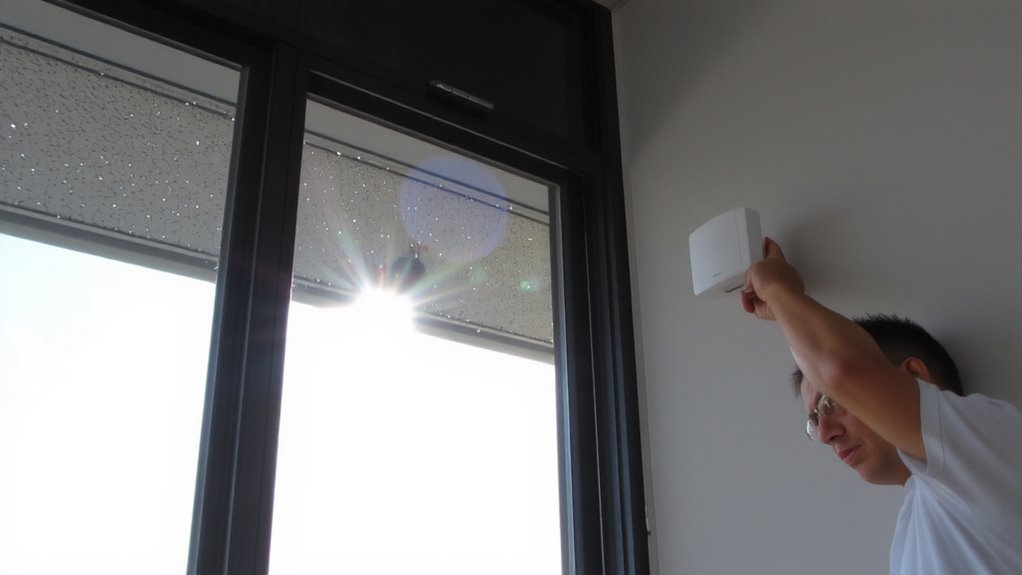
Glass break detectors operate by identifying specific patterns associated with shattering glass, and they typically rely on one of two methods: sound detection or vibration sensing. If you choose a sound-based detector, it listens for the high-frequency noise produced when glass breaks, using frequency analysis to distinguish real threats from similar sounds like clinking dishes. These detectors use signal processing to analyze audio in real time, reducing false alarms. Vibration sensors, on the other hand, attach directly to the glass and detect the physical shock of an impact. They’re less prone to false triggers from ambient noise but must be installed on each window. Sound detectors cover multiple windows in a room but can miss breaks if background noise is too loud. Both types rely on signal processing to confirm threats before triggering an alarm. Each has trade-offs in range, installation effort, and sensitivity.
Choose the Right Detector for Your Windows
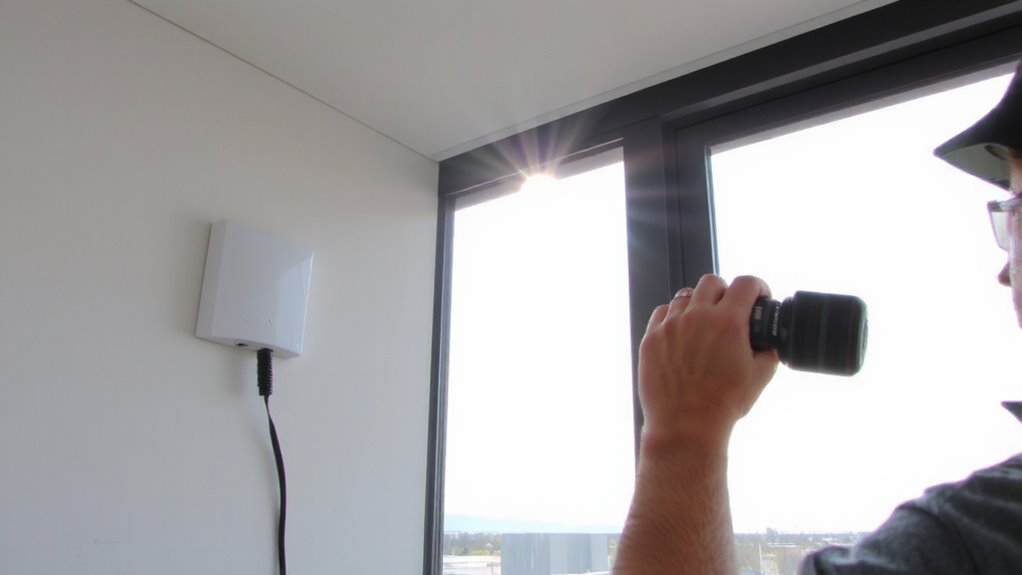
While both sound and vibration detectors can protect your windows, picking the right one depends on your home’s layout, window size, and noise environment. If you have large windows near a busy street, a sound-based detector might trigger false alarms from traffic or outside noise. In that case, a vibration detector could be more reliable since it responds only to physical impacts on the glass. Look for models with adjustable sensitivity settings, so you can reduce the chance of false alarms without sacrificing security. Vibration detectors often cost more but work better on oversized or uniquely shaped windows. Sound detectors cover a wider area and are usually easier to install. Consider your budget, room usage, and nearby noise sources when choosing. A well-matched detector with proper sensitivity settings gives effective, consistent protection tailored to your space.
Where to Place a Glass Break Detector
When installing a glass break detector, placement plays a critical role in guaranteeing reliable detection and minimizing false alarms, so it’s essential to position the device within 6 to 20 feet of the windows it’s meant to protect. Mount it on the wall or ceiling, facing the glass, and avoid placing it behind furniture or curtains that could block sound. Keep it away from noisy appliances or high-traffic areas to reduce false alarms caused by similar sound frequencies. Avoid locations near devices that emit radio signals, as signal interference can hinder communication with your security system. Guarantee the detector isn’t directly exposed to airflow from vents, which can affect sensor performance. For large windows, consider using multiple detectors to cover the full area effectively. Proper placement guarantees accurate detection, reliable operation, and long-term effectiveness without unnecessary alerts or system disruptions.
Install and Test Your Glass Break Detector
You’ve picked the right spots to cover your windows, so now it’s time to get your glass break detector up and running. Follow the manufacturer’s instructions to mount the unit securely-usually with screws or adhesive. Make sure it has a clear line of sight to the glass. Then connect it to your security system or power source.
| Step | Action |
|---|---|
| 1 | Mount the detector at recommended height |
| 2 | Set detector sensitivity to match room size |
| 3 | Test with manufacturer-recommended tool |
| 4 | Adjust placement if false alarms occur |
Test the device by simulating glass breakage using a sound clip or tool. Avoid clinking glasses or jangling keys, which can trigger false alarms. If issues persist, lower the detector sensitivity slightly. Proper setup guarantees reliable detection without unnecessary alerts.
On a final note
You now know where and how to install glass break detectors for large windows. Choose models based on sound or vibration, depending on room noise and window size. Place detectors within 20 feet of the window, with clear line of sight. Test monthly using manufacturer instructions. These steps, backed by security studies, reduce false alarms and improve response. For best results, combine with other sensors and monitor system updates.