How to Use Doorbell Camera Networks Responsibly Within Municipal Surveillance Ordinances
You should check local laws, since rules on doorbell cameras vary by city and may require signs or restrict audio recording. Aim cameras only at your property, avoiding neighbors’ homes and public sidewalks. Never share footage without a warrant-this protects privacy and follows legal standards. Talk to nearby residents to build trust and agree on boundaries. Set your system to delete videos after 30 days automatically. You’ll also want to know exactly when police need a warrant to access your data.
Notable Insights
- Review local surveillance laws to ensure compliance with city or county ordinances on recording and data use.
- Limit camera views to your property by adjusting angles to avoid neighbors’ homes, yards, and public sidewalks.
- Exclude public areas from recording to comply with privacy rules and avoid legal issues with municipal surveillance bans.
- Only share footage with law enforcement when presented with a valid warrant to protect civil rights and privacy.
- Communicate with neighbors about camera placement and retain recordings for no more than 30 days to minimize risk.
Check Local Laws on Doorbell Camera Use
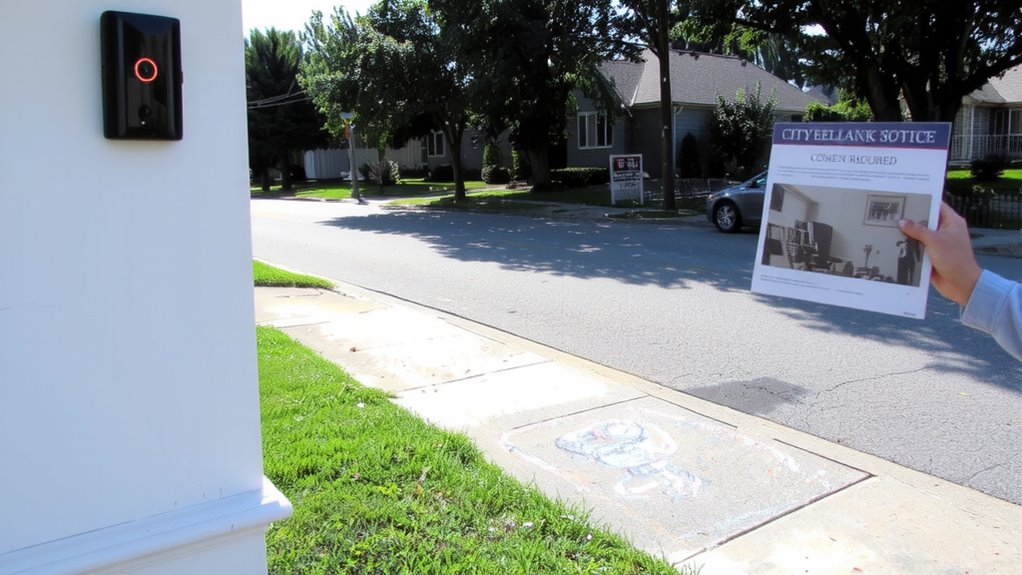
A good first step in using doorbell cameras responsibly is checking your local laws, since regulations can vary greatly by city, county, or state. You’ll need to know how privacy rights are balanced with public safety in your area. Some places require posted signs notifying visitors of recording, while others restrict audio capture. Ignoring these rules could lead to fines or legal issues. Data ownership matters too-know who controls the footage, how long it’s stored, and whether third parties like police or tech companies can access it. Always review your camera provider’s policy. Opt for models with clear data ownership terms, local storage options, and strong encryption. Local compliance protects you legally and ethically. Planning ahead guarantees your security setup respects neighbors’ privacy rights and complies with local surveillance ordinances. It’s a small effort that prevents bigger problems.
Aim Cameras at Your Property Only
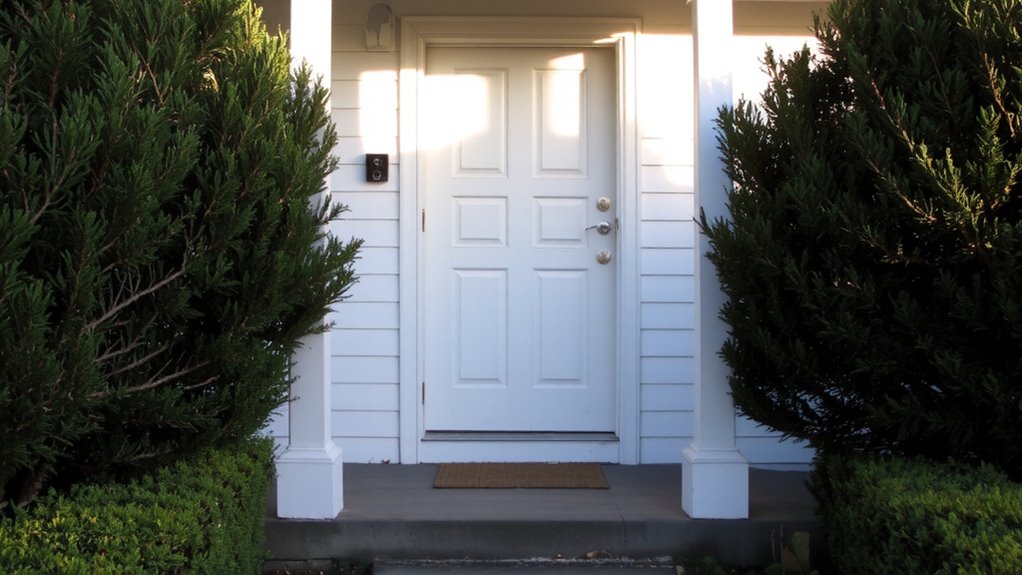
Since your doorbell camera is meant to monitor your property, point it so it only captures areas you own or control, like your porch, driveway, or front walkway. Staying within property limits helps avoid overreach and keeps your surveillance legal and ethical. Respect privacy boundaries by adjusting the camera angle to exclude neighboring homes, yards, or windows. Many models let you customize motion zones and field of view, which helps focus monitoring exactly where you need it. Doing this reduces the chance of recording people on public or private property where you have no right to observe. It also minimizes conflicts with neighbors and potential legal issues under municipal surveillance rules. A well-aimed camera still gives you security without overstepping. Always check your setup periodically, since weather or bumps can shift the lens over time. Stay within privacy boundaries and property limits-you’ll maintain trust and stay compliant. Consider choosing models from the best doorbell cameras list that offer precise field-of-view adjustments and privacy zoning features.
Keep Recordings Off Public Sidewalks
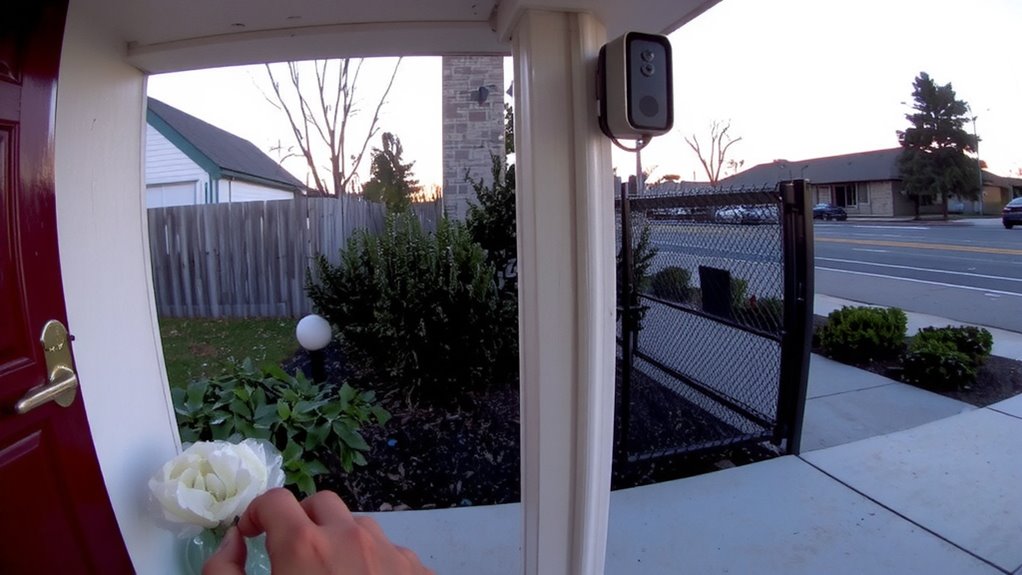
Why should your camera avoid recording public sidewalks? Because capturing footage beyond your property risks violating public privacy and turns your system into unwarranted private monitoring. Most municipal surveillance ordinances limit recording in public spaces to protect civil liberties. Even if legal, sweeping sidewalk footage can capture children, neighbors, and passersby without consent, increasing liability. Adjust your camera’s angle and motion zones so recordings focus only on your walkway or porch. Use models with customizable field-of-view settings to help. While wider coverage might seem safer, it brings ethical and legal concerns. Prioritizing targeted surveillance reduces misuse risks and community tension. You’ll still deter crime while respecting others’ privacy. Simple repositioning or digital masking can exclude sidewalks efficiently. Always check local laws, since some cities ban recording public areas outright. Smart planning protects your home without overreach. For added security on the go, consider using a travel safety pouch to safeguard valuables during daily commutes or neighborhood walks.
Only Share Footage If Police Have a Warrant
Just because footage is yours doesn’t mean you should share it freely. You have data ownership, but with it comes privacy ethics. Only hand over recordings if police present a warrant-this protects innocent neighbors and prevents misuse. Without a warrant, sharing could violate local surveillance laws or invite liability. Most municipal ordinances require legal justification before accessing private camera networks. Warrants guarantee there’s probable cause, balancing public safety and civil rights. While it might feel helpful to offer footage during investigations, doing so voluntarily risks normalizing unchecked surveillance. It can also expose non-suspects to unwarranted scrutiny. By insisting on a warrant, you uphold legal standards and model responsible behavior. This small step supports broader community trust and reinforces ethical tech use. Let courts, not hunches, decide when footage should be shared.
Talk to Neighbors Before Activating Your Camera
Ever wonder how your new doorbell camera might affect the people living nearby? Your camera could capture more than your porch-it might record public sidewalks, driveways, or even parts of your neighbors’ homes. That’s why getting neighbor consent isn’t just polite; it’s key to maintaining community trust. Surveys show neighborhoods with open communication about surveillance report fewer conflicts and higher cooperation. Start by sharing your camera’s general field of view, and listen to any concerns. You don’t need formal agreements, but a simple conversation can prevent misunderstandings. Avoid pointing cameras directly at neighboring properties. Respecting privacy boundaries reduces tension and supports responsible use. When neighbors feel informed and respected, they’re more likely to support shared safety efforts. Building goodwill now makes future cooperation easier, especially if police need to access footage. Choosing models with adjustable motion detection zones can further minimize unintended recording of neighboring areas.
Set Short Video Retention Periods
A majority of security experts recommend keeping your doorbell camera footage for no more than 30 days, and for good reason. Limiting storage duration reduces privacy risks and complies with many municipal surveillance ordinances. Shorter retention periods align with data limits set by law or platform policies, preventing unnecessary collection. Most cloud services automatically delete older clips, but you should check your settings to confirm. Local storage options, like microSD cards, require manual management to enforce these data limits. A 7- to 30-day window balances security needs and privacy protection. Longer storage increases vulnerability to breaches and misuse. Set automatic deletion features if available, and review them periodically. This practice minimizes liability, supports responsible surveillance, and maintains community trust. You don’t need to keep footage indefinitely to stay safe-short storage duration is both practical and ethical. Doing so reflects a commitment to privacy-conscious security.
Know When Police Need a Warrant to Access Footage
You’ve set a short video retention period to minimize data ownership ownership data ownership data ownership risks, but another key part of responsible camera use is understanding when authorities can access your footage. You retain data ownership, meaning police typically need your consent or a warrant to view recordings. Privacy expectations matter: courts often uphold them for footage captured inside private property boundaries. However, video from public-facing cameras may offer less legal protection, especially if it shows public spaces. Some jurisdictions require warrants for any third-party data access, reinforcing your privacy expectations. Check local laws, as they vary widely. Proactively notify law enforcement your footage isn’t freely shareable. Knowing these rules helps balance community safety with personal rights. Be prepared to act if requested-cooperate legally, but safeguard your data ownership and privacy expectations accordingly.
On a final note
You should always check local laws before using a doorbell camera. Aim it only at your property and avoid recording public sidewalks. Keep videos briefly-most experts recommend less than 30 days. Share footage only if police have a warrant. Talk to neighbors first, respect privacy, and know your rights. These steps keep your home secure while following the law and protecting community trust, ensuring safety without overreach.