Designing Layered Perimeter Defense Using Magnetic Contact Sensors on Entry Doors
You can stop break-ins early by placing magnetic contact sensors on all exterior doors, including sliding and garage entry points. They trigger alarms the moment a door opens, with quality models lasting 5–10 years. Use weather-resistant, low-profile sensors where needed and avoid metal interference. Pair them with alarms, cameras, and mobile alerts for faster response. Best systems deliver notifications in under 10 seconds via Wi-Fi or cellular backup. There’s more to fine-tuning your setup effectively.
Notable Insights
- Install magnetic contact sensors on all exterior and garage-access doors to create a reliable first line of defense.
- Use dual-contact sensors on sliding doors and low-profile models on glass entries for optimal coverage and concealment.
- Choose weather-resistant, high-quality sensors rated for 5–10 years to ensure durability and consistent performance.
- Integrate sensors with alarms, security cameras, and mobile alerts for immediate response and evidence capture.
- Prioritize Wi-Fi or cellular-connected systems to achieve sub-10-second alert delivery for real-time monitoring.
How Magnetic Door Sensors Stop Break-Ins
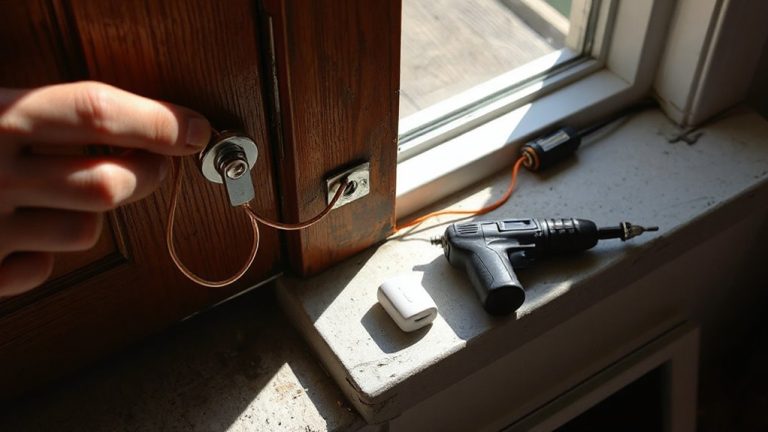
While no security system can guarantee 100% protection, magnetic door sensors are a proven first line of defense that alert you the moment a door is opened. You rely on their simple, effective design: a magnet on the door and a sensor on the frame separate when opened, triggering an alarm. Sensor durability matters-quality units last 5–10 years and withstand daily use. Look for weather-resistant models if installing on exterior doors. False alarms can occur, usually from misalignment or poor installation, so check alignment every few months. Modern sensors have improved circuitry to reduce false alarms markedly. They work in total darkness and don’t require line-of-sight like motion detectors. Most systems let you arm and disarm easily via smartphone. Costs range from $10–$30 per sensor, making them a low-cost addition. When properly installed, they provide reliable monitoring you can trust night after night.
Where to Install Door Sensors for Full Coverage
You’ve seen how magnetic door sensors work and why they’re a reliable part of your security setup, but knowing where to place them matters just as much as having them. Proper sensor placement guarantees every potential entry point is monitored. Install sensors on all exterior doors, including side entrances, back doors, and garage access doors-these are common attack vectors. Don’t overlook sliding doors; use sensors on both the fixed and moving panels. Consider basement and ground-floor entry points, especially near windows or secondary exits. For full coverage, place sensors on any door leading outdoors, even infrequently used ones. Magnetic sensors work best when aligned precisely, so follow manufacturer spacing guidelines. Avoid placing them near metal frames that could interfere with the magnetic field. Consistent sensor placement across all entry points maximizes detection reliability, reduces blind spots, and strengthens your layered perimeter defense.
Pair Sensors With Alarms and Security Cameras
Since a sensor alone can’t deter intruders, pairing it with alarms and security cameras creates a more effective defense system. When your magnetic contact sensor detects a door opening, it should trigger an audible alarm and activate nearby cameras to record. This combination not only alerts you but also collects evidence. To reduce false triggering, make certain sensors and alarms are properly calibrated and placed away from vibrating surfaces. Wireless systems may face signal interference, so choose models with strong encryption and frequency-hopping tech. Opt for systems with mobile alerts so you’re notified instantly. Cameras with motion detection work best when synced to sensor triggers, minimizing unnecessary recording. While integrated systems cost more upfront, they save time and improve reliability. Always test the full chain monthly to verify response and avoid missed alerts. Home security systems that include professional monitoring offer added peace of mind with 24/7 professional monitoring.
Choose the Right Sensor for Your Door Type
When securing your home, picking the right magnetic sensor for your door type matters because not all sensors work equally well on every door. Sensor compatibility depends heavily on door material, which affects alignment, durability, and signal reliability. For wooden or metal doors, standard surface-mounted sensors usually work well and are easy to install. If your door is metal, make sure the sensor’s magnet isn’t disrupted by interference-test placement before finalizing. For glass doors, use low-profile models designed for smooth surfaces, often with adhesive backing to avoid drilling. Sliding doors need sensors that span the gap effectively, so consider dual-contact types. Heavier commercial-grade doors may require industrial sensors with wider gap tolerance. Always check manufacturer specs for compatibility with your door material. Choosing the right match improves detection accuracy, reduces false alarms, and ensures long-term performance. Planning now saves time and strengthens perimeter defense.
Get Instant Alerts When Doors Open
While fast alerts can make a real difference in home security, not all systems deliver them equally-knowing what to look for helps you choose wisely. With real time monitoring and instant notifications, you’ll know the moment a door opens, whether you’re home or away. Look for systems that push alerts directly to your phone or tablet in under 10 seconds. Delays can compromise response, especially during break-ins. Below is a comparison of common alert methods:
| System Type | Alert Speed | Reliable Connectivity |
|---|---|---|
| Wi-Fi Based | 5–8 sec | High |
| Cellular Backup | 6–10 sec | Very High |
| Bluetooth Only | 10–15 sec | Moderate |
Wi-Fi systems offer fast alerts but depend on your network. Cellular backup adds reliability during outages. Bluetooth alone isn’t ideal for instant notifications. For real time monitoring that matters, combine quick transmission with stable connectivity. That way, you get instant notifications without delays-critical for layered perimeter defense.
On a final note
You strengthen your home’s security by layering magnetic door sensors with alarms and cameras. These sensors detect forced entry fast, especially when placed on all exterior doors and ground-floor windows. Pair them with smart alerts for real-time notifications. Choose models suited to your door material-surface-mounted for wood, recessed for metal. While installation is simple, proper alignment guarantees reliability. Systems vary in price from $20–$60 per sensor, with wireless options offering flexibility.