Creating a Security Culture Among Family Members and Household Residents
You create a security culture by holding monthly family meetings to review plans and assign roles like alarm checks or emergency calls. Secure doors and windows daily with strong locks and sensors, and practice consistent routines. Set online boundaries using password managers and two-factor authentication. Monitor for suspicious activity using cameras and network checks. Run drills for fires or intruders to build confidence-each step strengthens your household’s safety habits, and there’s more to explore to keep your family prepared.
Notable Insights
- Hold monthly family security meetings to review plans, assign roles, and practice emergency responses.
- Establish daily routines for locking doors and windows to reinforce consistent physical security habits.
- Use strong passwords, two-factor authentication, and a password manager to protect household digital accounts.
- Conduct regular safety drills for emergencies like fires or intruders to ensure everyone knows their role.
- Install security cameras and monitor network devices to detect suspicious activity and deter threats.
Start a Family Security Meeting

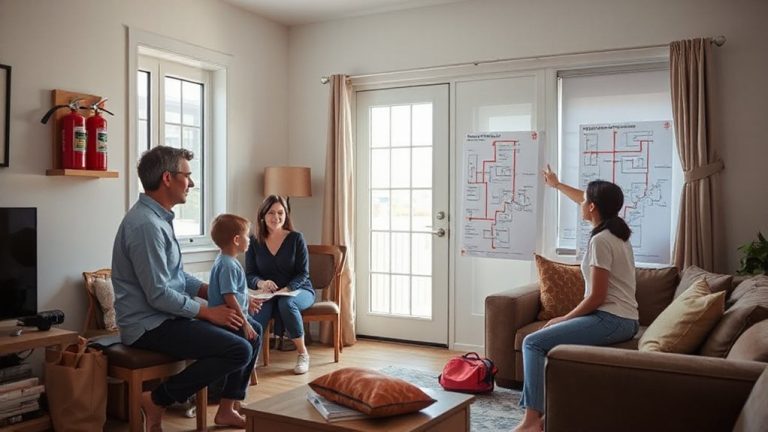
How often do you and your family talk about what to do during a break-in or a fire? Not often enough, if ever. Starting a family security meeting helps establish clear home security practices and defines family roles. Set a monthly time to review emergency plans, discuss concerns, and update contact lists. Assign each person a specific role-someone checks alarms, another calls emergency services, and one makes certain everyone’s safe. This teamwork improves response times and reduces panic. Meetings don’t need to be long-15 minutes is enough. Use checklists and practice drills to reinforce actions. Data shows households with plans are 60% more prepared. Include kids so they understand their part. Rotate roles as needed. These meetings strengthen awareness, encourage responsibility, and create consistency in how your home handles risks. It’s a simple, no-cost habit that builds long-term safety.
Secure Doors and Windows Every Day
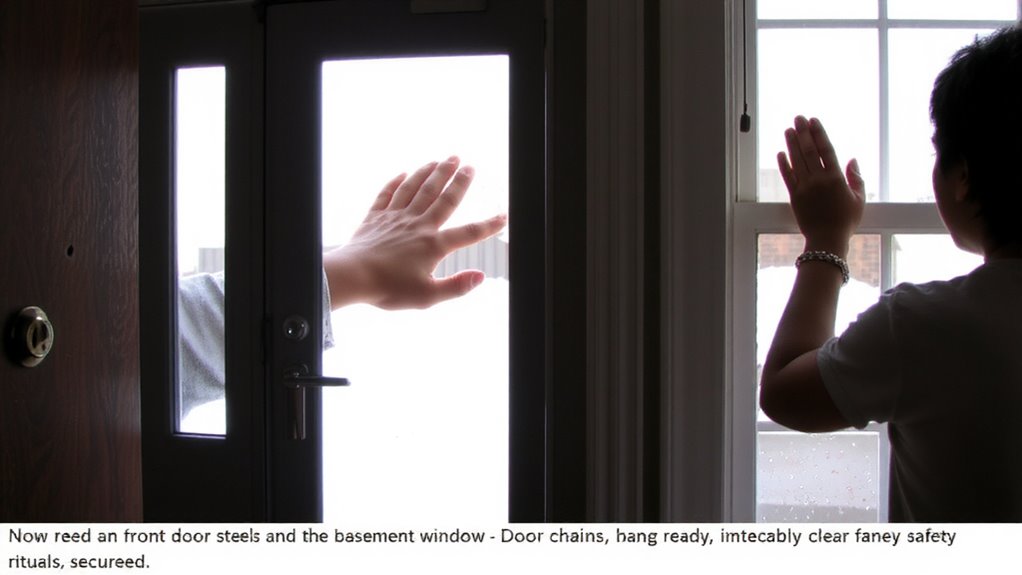
You’ve already taken a smart step by involving your family in regular security discussions, and now it’s time to put those plans into physical action where they matter most-your doors and windows. Make lock checks part of your daily routine-especially at night or when leaving home. Consider installing window sensors to detect unauthorized openings and link them to your home alarm. These simple steps reduce intrusion risks markedly. Upgrading to the best window locks can further enhance protection against forced entry.
Set Boundaries for Devices and Online Safety
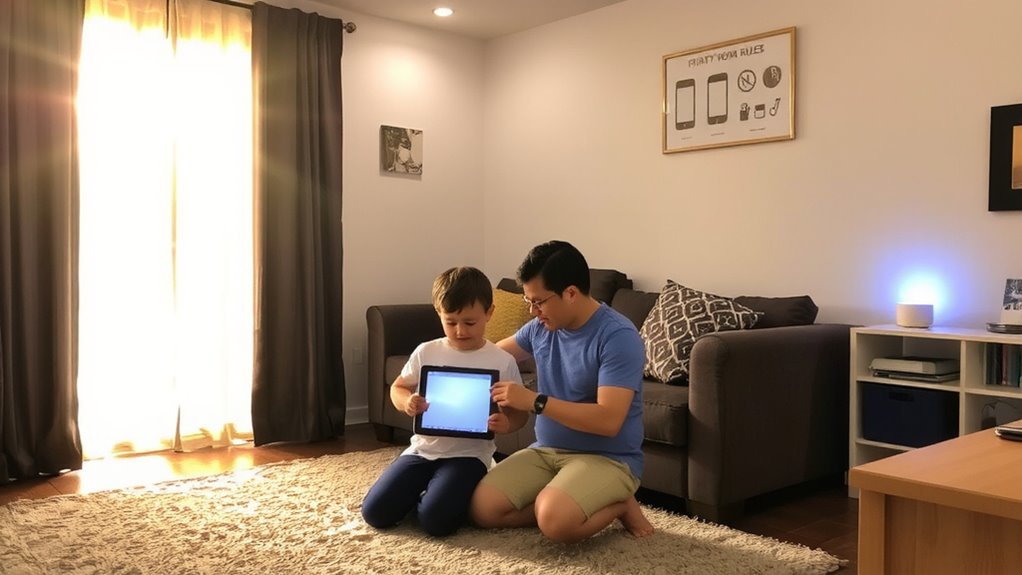
Why do many households overlook digital boundaries when securing their homes? You likely focus on locks and alarms but forget that devices are just as vulnerable. Setting clear rules around password sharing and screen time strengthens your household’s security culture. Never share passwords-it increases the risk of unauthorized access. Use strong, unique passwords and a reputable password manager. Limit screen time to reduce exposure to phishing or scams. Too much unsupervised use raises risks, especially for younger members. Establish device-free times or zones, like during meals or in bedrooms, to encourage mindful usage. Enable two-factor authentication whenever possible-it adds a layer of protection even if credentials are compromised. Discuss these boundaries openly, so everyone understands their role in maintaining safety. Digital security isn’t just technical-it’s behavioral. Start small, enforce consistently, and adjust as needed.
Recognize Suspicious Activity at Home
What would you do if you noticed a device on your home network you didn’t recognize? You should investigate immediately-unauthorized access could signal a security breach. Check your router’s connected devices list and remove unknown ones. Monitor for patterns like odd login times or slow internet. Install cameras to deter package theft, a common issue in many neighborhoods. Share footage and concerns with your neighborhood watch group to strengthen community awareness. Suspicious activity like unfamiliar people lingering or repeated false doorbell alerts warrants attention. Encourage everyone at home to report odd behavior. While security systems help, human vigilance is key. Balance tech use with active observation. Don’t ignore small signs-they can prevent larger threats. Use a reliable RF detector to identify hidden surveillance devices that may be transmitting on your network. Stay alert, stay informed, and work with neighbors to keep your home safe.
Run Monthly Safety Drills Together
While routine security habits strengthen daily awareness, conducting monthly safety drills guarantees everyone in your home can respond quickly and correctly during an actual emergency. Assigning emergency roles secures each person knows their responsibility, reducing confusion. Rotate roles periodically so all members gain experience. After each drill, gather to share drill feedback, noting what worked and where improvements are needed. Use this input to refine your plan. Practice different scenarios like fire, intruder alert, or power outage.
| Scenario | Recommended Action |
|---|---|
| Fire | Evacuate immediately, use exits |
| Intruder | Lock down, stay quiet, call 911 |
| Power Outage | Use flashlights, check generators |
| Medical Emergency | Administer first aid, call help |
Drill feedback and clear emergency roles make responses more effective. Review and adjust plans every month.
On a final note
You can build a strong security culture by holding regular family meetings and practicing safety habits together. Lock doors and windows daily, set clear online rules, and learn to spot suspicious activity. Monthly drills help everyone respond calmly during emergencies. These steps are low-cost and effective, especially when done consistently. Working as a team strengthens awareness and preparedness, making your home safer now and in the long term.