How to Choose the Right Type of Motion Sensors for Your Home’s Layout
Choose sensors based on room size and ceiling height-standard 8- to 9-foot ceilings work best. For small rooms, PIR sensors detect body heat efficiently, while microwave types cover larger or narrow spaces but may trigger beyond the room. Mount pet-friendly units 5–6 feet high or use models with immunity settings. In hallways, pick durable sensors with wide 110-degree angles. Dual-tech models reduce false alarms. You’ll find the right fit with the right specs.
Notable Insights
- Match sensor range to room size and ceiling height for reliable coverage, avoiding blind spots.
- Choose PIR sensors for energy efficiency in small to medium rooms with direct line-of-sight.
- Use microwave sensors for wider coverage in long or obstructed spaces, but watch for wall penetration.
- Install pet-friendly sensors at 5–6 feet high with adjustable immunity to prevent false alarms.
- Opt for dual-technology sensors in large areas to reduce false triggers and improve detection accuracy.
How Room Size and Ceiling Height Affect Motion Sensors
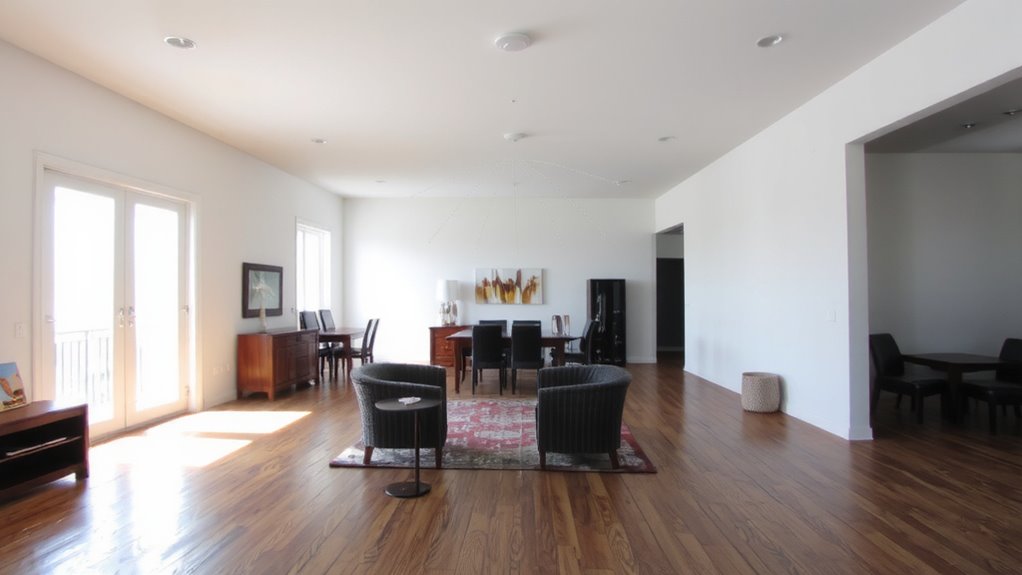
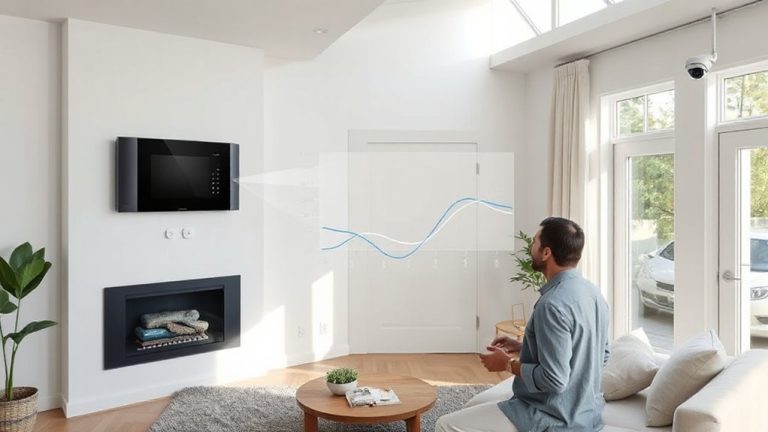
Room size and ceiling height play a key role in how well your motion sensor works. If your room size is too large, standard sensors may not cover all corners, leaving blind spots. Most sensors are designed for typical ceiling height-around 8 to 9 feet. When ceilings are higher, like in vaulted living rooms or two-story foyers, the detection range decreases because the sensor’s field of view becomes narrower. Mounting a sensor too high without adjusting sensitivity can cause missed triggers. For best performance, check the sensor’s specified range and match it to your room size. Some models include pet immunity or adjustable sensitivity, which help in larger or taller spaces. Always follow manufacturer guidelines for ceiling height clearance. Choosing the right model based on room size and ceiling height guarantees reliable detection and better home security overall-don’t guess, measure first. For optimal results, consider the best motion sensors for Home Assistant that are designed to handle challenging room layouts.
PIR vs. Microwave Sensors: Which Is Best by Room Type?
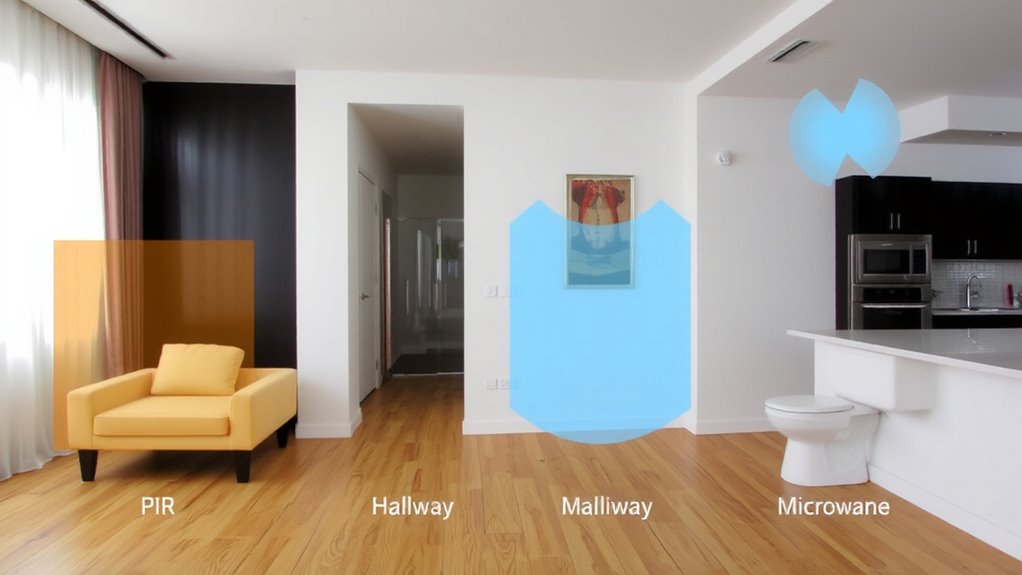
While both PIR and microwave sensors detect motion, they work differently and suit distinct room types based on layout, activity, and materials. PIR sensors detect body heat, offering solid sensor accuracy in small to medium rooms like bedrooms or offices, with excellent energy efficiency since they use little power. They struggle with long, narrow spaces or areas with poor line-of-sight. Microwave sensors emit waves that penetrate walls and glass, making them ideal for larger, open areas like living rooms or garages, providing wider coverage and high sensor accuracy even around corners. However, they use more power, reducing energy efficiency, and may detect motion beyond the intended room. For closets or hallways, PIR is usually sufficient and cost-effective. In high-traffic or expansive rooms, microwave sensors deliver stronger performance. Choose based on room function, size, and power needs. For more tailored options, explore the best motion detectors for every home, including models optimized for specific room layouts.
Pet-Friendly Placement to Prevent False Alarms
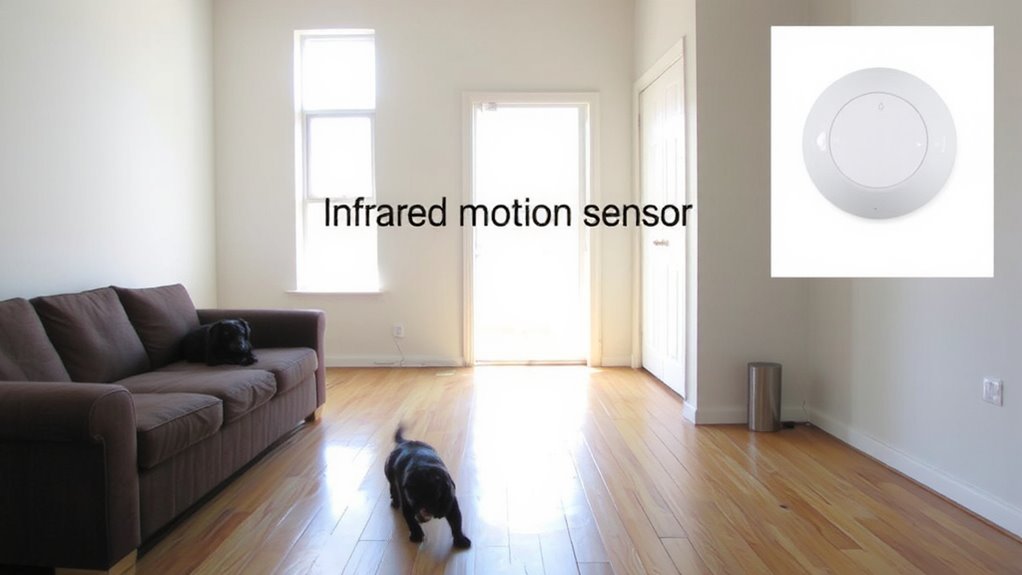
Have you ever wondered why your motion sensor goes off when your dog walks by? It’s likely due to improper pet sensitivity settings or incorrect placement height. Many modern sensors offer pet sensitivity modes that ignore animals under 40 or 80 pounds, reducing false alarms. For best results, choose models with adjustable pet immunity based on your pet’s size. Placement height matters too-mounting sensors at 5 to 6 feet high helps avoid detecting pets moving below the detection zone. Avoid placing sensors directly above pet beds or common walking paths. Ceiling mounting can help, but verify the sensor’s field of view still covers entry points. Always test after installation. Proper pet-friendly placement saves time, reduces alerts, and keeps your system reliable without sacrificing security coverage in key areas. Top picks in the Best Motion Sensor Alarms roundup include models specifically designed with advanced pet immunity features for homes with larger animals.
Best Motion Sensors for Entryways and Hallways
What makes a motion sensor effective in high-traffic areas like entryways and hallways? You need reliable detection without constant false triggers. Sensor durability matters here-these spots see heavy use, so you’ll want rugged units that last. Look for models rated for at least 50,000 detection cycles. The installation angle is just as important; mount the sensor 6 to 8 feet high, aimed slightly downward to cover foot traffic. Wide-angle lenses, around 110 degrees, work best for hallways. Passive infrared (PIR) sensors are affordable and effective, though they can miss slow movement. Avoid placing them near heat sources or drafts. Test different positions before finalizing placement. Most quality sensors cost $20–$40, a solid investment for consistent performance where you need it most.
Why Dual-Technology Sensors Improve Home Security
Dual-technology sensors boost home security by combining two detection methods-usually passive infrared (PIR) and microwave-in one unit, which means both sensors must trigger before an alarm activates. This design improves signal accuracy and guarantees detection reliability by reducing false alarms from pets, drafts, or lighting changes. You get smarter monitoring since intruders must simultaneously generate heat movement and reflect microwaves-something harder to accidentally mimic.
| Feature | Benefit |
|---|---|
| Dual detection (PIR + microwave) | High signal accuracy |
| Cross-verification required | Improved detection reliability |
| Ideal for large, open areas | Fewer false alerts |
These sensors are slightly more expensive but offer long-term value by minimizing unnecessary alarms and service calls. Install them in living rooms or basements where threats are most likely.
On a final note
Choose motion sensors based on your room’s size, ceiling height, and layout. PIR sensors work well in small to medium rooms, while microwave sensors cover larger spaces but cost more. For pets, use pet-immune models placed high on walls. Entryways need narrow detection zones to avoid false alarms. Dual-tech sensors reduce errors by combining technologies. Always match sensor type to room function and consider installation cost.