How to Select the Right Passive Infrared Motion Detector for Your Home Security System
Choose a PIR motion detector with a range of 15–40 feet, adjusting sensitivity to match your room size and reduce false alarms. Pick a 90° to 180° field of view based on the space-wider angles suit large rooms. Opt for pet-immune models if you have animals, supporting up to 80 lbs. Use outdoor-rated (IP65+) units for exterior areas, mounted 6–8 feet high. Dual-tech sensors cut false alarms by combining infrared and microwave detection, ideal for high-interference zones. Proper placement and testing guarantee peak performance-fine-tune positioning to cover entry paths while avoiding heat sources. You’ll find further insights on maximizing detection accuracy and system integration just ahead.
Notable Insights
- Choose a PIR detector with a detection range of 15–40 feet based on room size to balance coverage and reliability.
- Select a sensor with a coverage angle between 90° and 180° depending on the area’s layout and monitoring needs.
- Opt for pet-immune models with adjustable sensitivity if you have pets up to 40 or 80 pounds.
- Use dual-tech PIR sensors for higher accuracy, combining infrared and microwave detection to reduce false alarms.
- For outdoor use, pick IP65-rated or higher sensors mounted 6 to 8 feet high for weather resistance and optimal detection.
How PIR Motion Sensors Work
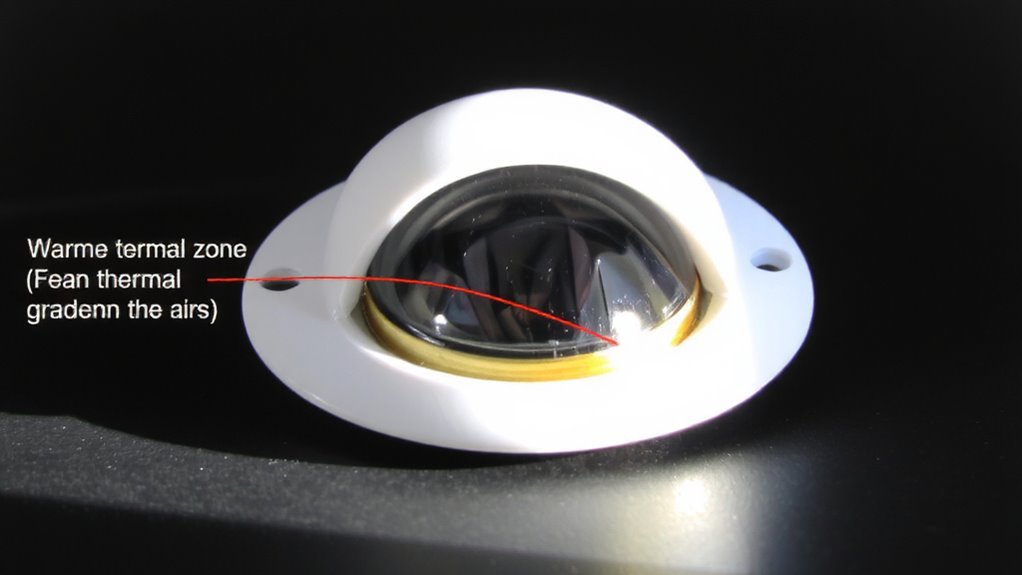
While you might think motion detectors “see” movement like a camera, PIR sensors actually detect changes in infrared energy, which all warm objects emit. Your body, pets, and even heaters give off infrared radiation, creating a heat signature the sensor can monitor. When something warm moves across its field of view, the sensor notices the shift in radiation levels. That change triggers a signal sent to the control unit. But not every fluctuation should set off an alarm-signal processing helps filter out false triggers, like sunlight warming a wall. The system analyzes the signal’s pattern, ensuring only real threats prompt a response. This makes PIR sensors reliable for home security. They’re affordable and energy-efficient, though they can miss slow movements. For most homes, they offer a solid balance of performance and cost. Top-rated models often feature advanced best motion detectors technology for improved accuracy and integration with smart home systems.
Pick the Right PIR Detection Range
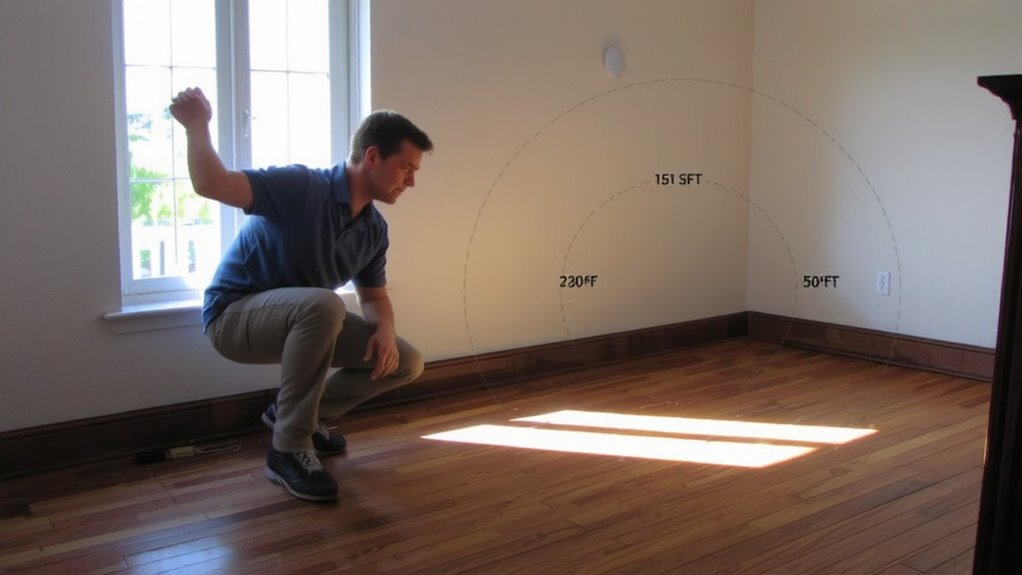
How far should your motion detector reach? Your PIR sensor’s detection range determines how far it can sense movement-typically between 15 to 40 feet. Choose a range that matches your room size; too short, and you’ll miss intruders, too long, and you risk false alarms from pets or outdoor motion. Most quality detectors list their max detection range, so measure your space first. Many models offer sensitivity adjustment, letting you fine-tune responsiveness. Lower sensitivity reduces false triggers near pets or heat sources, while higher settings boost coverage in large, open areas. You’ll want adjustable sensitivity for flexibility across different rooms. Remember, rated detection range is often under ideal conditions-real-world performance may be 10–15% less. Balance range and adjustability for reliable, accurate motion detection tailored to your home.
Choose a PIR Sensor With the Right Field of View
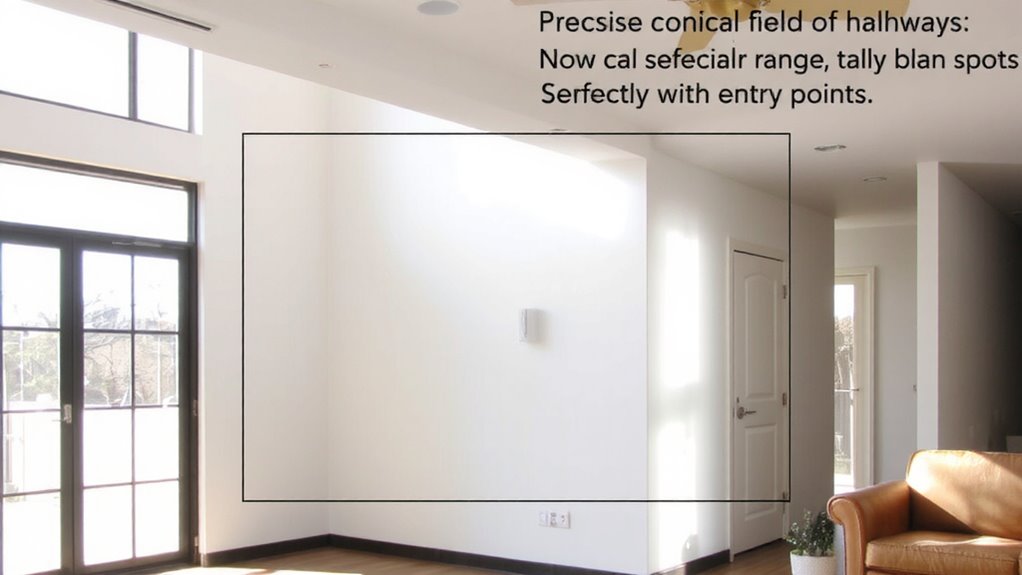
You’ve already set the right detection range to match your room size and adjusted sensitivity to minimize false alarms, but coverage isn’t just about distance-it’s also about width. The coverage angle determines how much side-to-side area your PIR sensor can monitor, which directly affects sensor placement. A narrow angle might miss motion near walls, while too wide could create overlapping blind spots. Choose based on room layout and mounting position.
| Coverage Angle | Ideal Use Case |
|---|---|
| 90° | Hallways, narrow rooms |
| 110° | Medium-sized living areas |
| 150° | Large open spaces |
| 180° | Wide entryways or corners |
Wider angles often require precise sensor placement to avoid obstructions. Always test detection zones after installation. Matching coverage angle to room dimensions guarantees reliable detection and reduces vulnerability gaps. Make sure your layout supports the sensor’s designed field of view. A well-placed indoor security camera can complement your PIR sensor by providing visual confirmation of detected motion.
Get Pet-Immune PIR Detectors for Homes With Animals
Many modern PIR detectors come with pet-immune technology, so you won’t get false alarms when your cat walks by or your dog moves across the room. These sensors are designed with adjustable pet sensitivity settings, usually supporting animals up to 40 or 80 pounds. This feature minimizes animal interference by distinguishing heat signatures and movement patterns typical of pets versus humans. Look for models labeled “pet-immune” or “pet-tolerant” and check the manufacturer’s weight threshold. Keep in mind that larger pets or multiple animals may still trigger alerts if they enter the sensor’s detection zone near the device. Proper mounting-on walls or ceilings-and correct height settings also improve accuracy. While pet-immune detectors cost slightly more, the reduction in false alarms adds reliability. Always verify specs before buying to match your home’s needs and guarantee consistent performance without sacrificing security.
Use Outdoor-Rated PIR Sensors for Exterior Areas
When placing motion detectors outside, opt for outdoor-rated PIR sensors built to withstand weather, temperature shifts, and dust. These models offer superior weather resistance, ensuring reliable operation in rain, snow, or extreme heat. Standard indoor detectors can fail quickly when exposed to outdoor conditions, so don’t risk performance. Look for sensors with an IP65 rating or higher to guarantee protection against moisture and debris. Mounting height matters-install sensors between 6 and 8 feet high to optimize detection range and minimize blind spots. Avoid mounting too low, where pets or debris could trigger false alerts, or too high, where sensitivity decreases. Outdoor models often cost more, but the durability and consistent performance justify the price. Always follow the manufacturer’s guidelines for angle and placement to cover driveways, entryways, or walkways effectively. For extreme climates, consider pairing your sensor with one of the best outdoor cameras for cold weather to ensure comprehensive, year-round exterior monitoring.
Reduce False Alarms With Dual-Tech PIR Sensors
While no motion sensor is completely immune to false triggers, dual-tech PIR sensors considerably reduce them by requiring two types of detection-passive infrared and microwave-before signaling an alarm. You’ll benefit from this dual verification since everyday nuisances like pets or moving curtains rarely set off both sensors simultaneously. Proper sensor calibration guarantees each technology responds accurately to real threats without oversensitivity. Environmental shielding also plays a key role, protecting the sensor from wind-blown debris, direct sunlight, or HVAC drafts that could lead to errors. These sensors are especially useful in areas prone to interference, such as near kitchens or garages. Though dual-tech models cost more upfront, their reliability cuts down on false alerts and potential service fees. Aim for units with adjustable sensitivity and solid housing to maximize performance. With smart setup, you gain a more trustworthy security layer.
Test Your PIR Sensor Placement Before Final Install
How well does your PIR sensor actually detect motion once it’s mounted? Testing placement before final installation guarantees best sensor alignment and accurate response to motion patterns. Temporarily mount the unit and walk through common pathways at different speeds and angles to verify detection range and blind spots. Adjust the sensor’s angle and height as needed-most perform best at 6 to 8 feet high with a clear view.
| Factor | Ideal Setting | Why It Matters |
|---|---|---|
| Height | 6–8 ft | Maximizes coverage and detection accuracy |
| Alignment | Centered on entry points | Improves sensor alignment with motion patterns |
| Obstructions | None in view | Prevents missed triggers or false negatives |
Avoid pointing sensors at heat sources or moving objects like fans. Confirm consistent detection before securing mounting screws. This simple test boosts reliability and system effectiveness.
On a final note
You’ve seen how PIR sensors detect heat and movement, so pick one with a range that matches your room size-usually 30 to 50 feet. Choose a wide field of view for open areas, and use pet-immune models if you have animals. For outdoors, select weather-rated units. Dual-tech sensors reduce false alarms by requiring both heat and motion triggers. Test placement before mounting, avoiding vents or sunlight.