Adding Pet-Immune Motion Detectors to Avoid False Alarms While Securing Living Areas
You can add pet-immune motion detectors to protect living areas without false alarms from cats or dogs. These detectors use dual-tech sensors-passive infrared and microwave-to analyze heat, movement speed, and size, ignoring pets under 40 to 100 pounds depending on the model. Proper placement at 7–8 feet high and aimed away from pet zones boosts accuracy. Match the detector’s range and coverage to your room size for best results. Choosing the right model and setup guarantees reliable security tailored to your home’s layout and pet habits.
Notable Insights
- Pet-immune sensors use infrared and microwave technology to distinguish pets from intruders by analyzing heat patterns and movement speed.
- Install detectors 7 to 8 feet high and angle slightly downward to minimize false alarms from roaming or climbing pets.
- Choose sensors rated for pets up to 40–100 lbs depending on room size and pet weight to ensure reliable detection exclusion.
- Avoid placing detectors near heat sources, windows, or pet pathways to reduce environmental triggers and false alerts.
- Match detector range and field of view to room layout, using dual-technology models in open or multi-level living areas for optimal coverage.
How Pet-Immune Sensors Tell Pets From Intruders
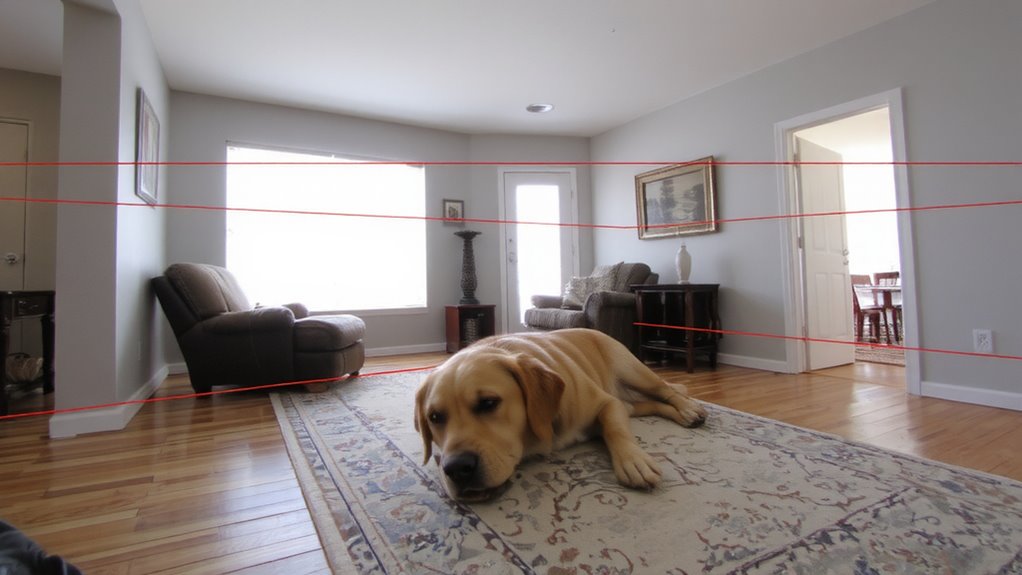
While traditional motion detectors often trigger false alarms from pets, pet-immune sensors use advanced technology to distinguish between animals and people. These detectors rely on signal filtering to ignore small heat patterns typically emitted by cats or dogs under 40 pounds. You benefit from reduced false alarms without sacrificing security. Pattern recognition analyzes movement shape and speed, helping the sensor differentiate a creeping intruder from a roaming Labrador. Most models use dual-technology, combining passive infrared with microwave sensing, requiring both triggers to activate an alarm-this boosts accuracy. Installation matters: mount at recommended heights and avoid aiming at heat sources. Units range from $25–$60 each, with smart models costing more. For best results, pair with a monitored system. These features make pet-immune sensors a reliable, data-backed choice for homes with animals. Some of the best motion sensors for Home Assistant offer pet-immune capabilities and seamless smart home integration.
Why Traditional Motion Detectors Trigger on Pets
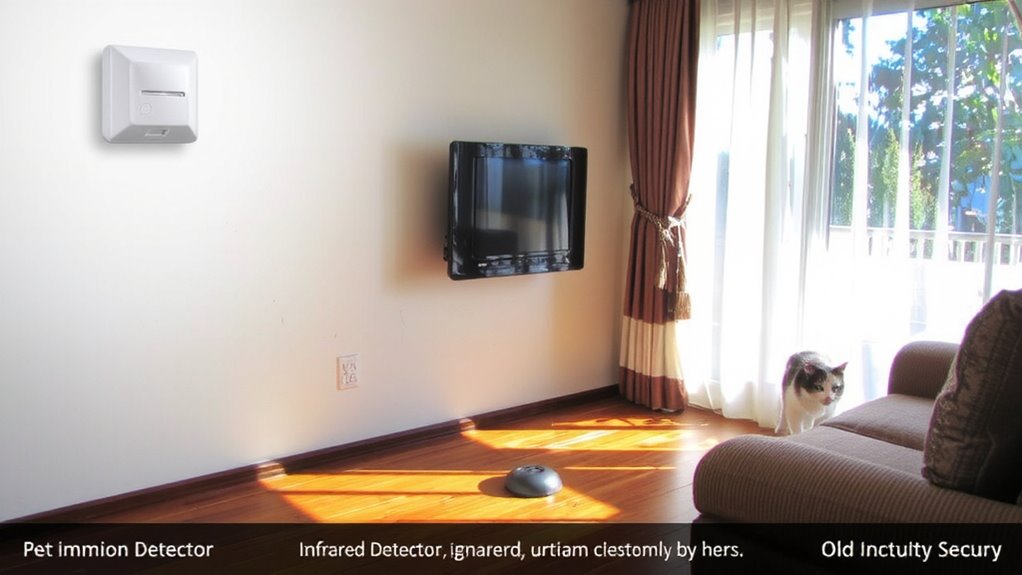
Ever wonder why your dog or cat sets off the alarm? Traditional motion detectors rely on infrared heat and movement to detect intruders, but they don’t distinguish between humans and pets. Their sensor sensitivity is set to catch any warm body moving across their field of view. If your pet gets close enough and is large enough, the system can’t tell the difference. Most standard sensors trigger on animals over 40 pounds, but some activate even with smaller pets due to high sensor sensitivity. Pet size plays a major role-larger dogs nearly always set them off, while smaller cats might avoid detection only by staying low or moving slowly. These detectors use broad detection patterns, increasing false alarms in homes with animals. Upgrading isn’t just about convenience-it’s about accurate threat response. A pet-immune system adjusts for household realities without sacrificing security.
Pick the Right Pet-Immune Detector for Your Room Layout
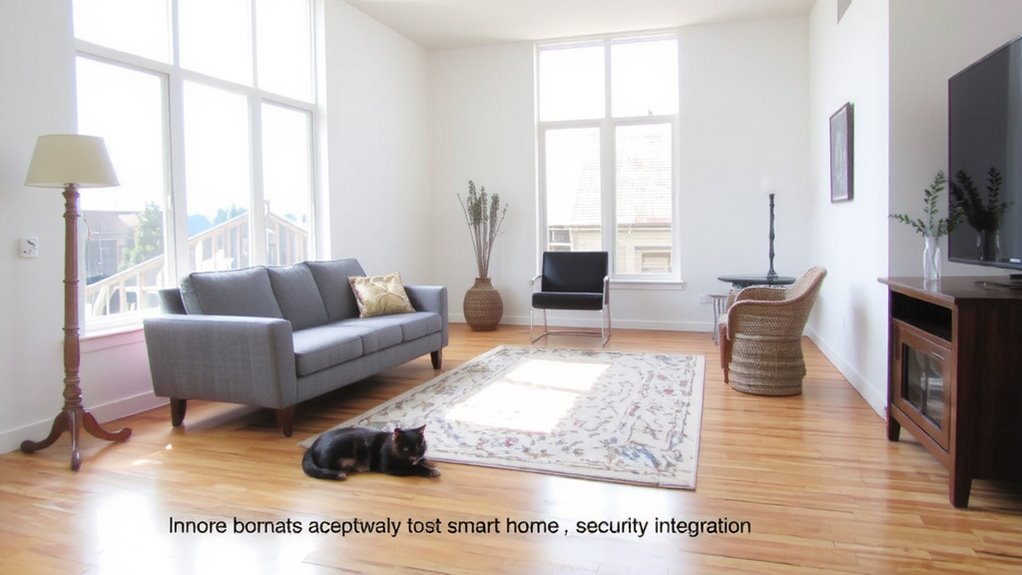
A pet-immune motion detector that matches your room layout helps prevent false alarms while keeping your home secure. Choose a model based on your space and pet size to guarantee reliable performance. Sensor range and placement directly affect detection accuracy.
| Room Size | Recommended Sensor Range |
|---|---|
| Small (up to 10×10 ft) | Up to 25 ft, pet size up to 40 lbs |
| Medium (10×15 ft) | 25–40 ft, pet size up to 55 lbs |
| Large (15×20 ft) | 40–50 ft, pet size up to 85 lbs |
| Open floor plan | Dual-sensor, pet size up to 100 lbs |
| Multi-level rooms | Adjustable angle, longer sensor range |
Matching your detector’s pet size limit and sensor range to your room guarantees fewer false alarms. Always verify specs before buying. For improved accuracy in larger areas, consider models with dual-sensor technology.
Install for Full Coverage Without False Alarms
Since proper placement直接影响 detection accuracy, you’ll want to install your pet-immune motion detector in a spot that maximizes coverage while minimizing false triggers. Mount it in a corner overlooking high-traffic areas, ideally 7 to 8 feet high, to reduce blind spots. Avoid pointing it toward heat sources or windows where sunlight can cause temperature shifts. Use wiring methods that match your system-hardwired setups offer reliability but require professional installation, while wireless options provide flexibility with periodic battery maintenance. Check device compatibility before integrating with smart hubs or existing alarms to guarantee seamless operation. Some models support multiple protocols like Z-Wave or Wi-Fi for broader compatibility. Always follow the manufacturer’s guidelines for range and field of view. Proper installation backed by correct wiring methods and verified device compatibility reduces false alarms while maintaining full security coverage. For reliable performance across different environments, consider the best motion detectors based on expert testing and real-world use.
Fine-Tune Placement to Ignore Cats and Dogs
Pet size and movement patterns matter when positioning your pet-immune motion detector-most models are designed to ignore animals under 40 pounds, but proper alignment guarantees they don’t mistake a jumping dog or climbing cat for an intruder. Mount the detector at the recommended sensor height, usually between 6 and 8 feet, to reduce false triggers from pets moving below the detection zones. Angle it slightly downward to focus on human-level movement. Avoid pointing it toward furniture your pet climbs, as leaping from a sofa could still enter sensitive zones.
| Factor | Recommendation |
|---|---|
| Sensor Height | 6–8 feet above floor |
| Detection Zones | Aim away from pet pathways |
| Mounting Surface | Stable wall or corner |
Position carefully, and your system stays secure without nagging false alarms.
On a final note
You can trust pet-immune motion detectors to reduce false alarms while keeping your home secure. These sensors use advanced algorithms and dual-tech sensing to distinguish pets from intruders, typically ignoring animals up to 40–80 pounds. Proper placement, away from heat sources and at the right height, guarantees reliable coverage. Though slightly more expensive than standard models, their accuracy and peace of mind make them a smart investment for pet owners.