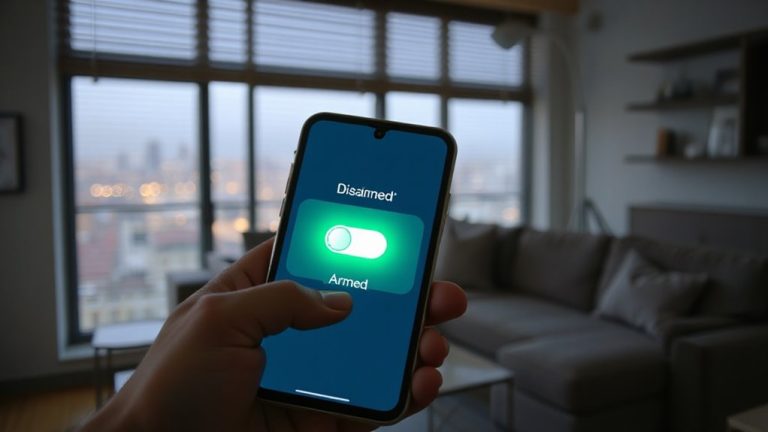
Integrating Garage Door Sensors Into Your Centralized Home Alarm Network
You can integrate garage door sensors into your home alarm network using a compatible smart hub, like one with Zigbee or Z-Wave support, for reliable, encrypted connectivity. Wired hubs offer stable performance, while wireless sensors install easily for $20–$50. Mount the sensor near the top of the frame, calibrate within 1/4 inch, and link it via the hub’s app. Set custom alerts and test monthly. Keep up with cleaning and alignment checks every few months. There’s more to learn about optimizing your setup.
Notable Insights
- Choose a weather-resistant garage door sensor to ensure reliable performance in extreme temperatures and moisture.
- Install the sensor near the top of the door frame to prevent tampering and avoid interference from moving parts.
- Use a smart hub with strong encryption and Zigbee or Z-Wave support for secure integration with your alarm system.
- Properly calibrate the sensor and magnet, ensuring alignment within 1/4 inch for accurate door position detection.
- Set up custom alerts through the hub’s app and perform regular maintenance to sustain long-term functionality.
Securing Your Garage With Door Sensors
While your home’s main entry points often get the most attention, don’t overlook the garage-it’s a common, often weak, link in home security. Installing a garage door sensor strengthens this entry by alerting you if the door opens unexpectedly. Look for sensors with high weather resistance, especially if your garage is exposed to rain, snow, or temperature swings-this guarantees reliable performance year-round. Mount the sensor at the proper installation height, typically near the top of the door frame, to avoid damage and tampering while guaranteeing accurate contact detection. Most models cost $20–$50 and are easy to DIY-install in under 20 minutes. Wired options offer consistent power, while wireless ones provide flexible placement. Either way, a well-installed sensor improves awareness and deters break-ins effectively. For top-performing options, consider checking out the Top Garage Door Sensors based on expert testing and user reviews.
Choose a Security-Compatible Smart Hub
You’ll usually need a smart hub to connect your garage door sensor to your home alarm system, especially if you want remote alerts or automation. Choose a hub with strong security encryption and reliable integration with your existing alarm. Look for Zigbee compatibility if you plan to add other sensors-Zigbee uses low power and supports mesh networking, improving signal range. However, guarantee your hub supports your preferred ecosystem, like SmartThings or Hubitat, since not all systems work together. Wi-Fi stability matters too-hubs relying on Wi-Fi must maintain consistent connections to send alerts. A weak signal can delay notifications or cause dropouts. Wired hubs typically offer better Wi-Fi stability than battery-powered ones. Expect to pay $50–$120 for a solid hub. Check for firmware updates and customer support before buying. Top smart home devices often include hubs that support seamless automation and device integration.
Connect Your Garage Door Sensor to the Alarm
Once you’ve selected a compatible smart hub, connecting your garage door sensor to the alarm system is a straightforward process that typically involves syncing the sensor via the hub’s app. You’ll rely on wireless connectivity to link the sensor to your central alarm network, guaranteeing real-time updates when the door opens or closes. Most systems use Z-Wave, Zigbee, or Wi-Fi protocols, so verify your hub supports the sensor’s communication standard. After physical installation, follow the app’s pairing instructions precisely-this activates the sensor and establishes a secure connection. You’ll also need to perform sensor calibration to confirm accurate position detection, aligning the magnet and sensor properly to avoid false alarms. Proper calibration guarantees the system correctly reads the door’s state. This setup usually takes under 15 minutes and doesn’t require professional help, though checking compatibility beforehand prevents connectivity issues later. For added security, consider using a Z-Wave smart lock to integrate access control with your alarm network.
Avoid These 5 Garage Sensor Setup Errors
A faulty setup can undermine your home security, even with top-tier equipment. First, skipping proper sensor calibration leaves gaps in detection-you must align the sensor and magnet within 1/4 inch for reliable operation. Second, ignoring weather resistance leads to premature failure, especially in unheated garages or humid climates-choose sensors rated for your environment. Third, mounting on uneven surfaces causes misalignment over time, so secure them on clean, flat areas with durable hardware. Fourth, placing sensors near moving parts risks interference or damage. Finally, neglecting battery checks compromises long-term function. Wireless sensors need fresh batteries every 12–18 months. Avoid these errors to guarantee seamless integration with your alarm system. Proper installation guarantees accurate status updates, preserves system integrity, and supports consistent monitoring, so take time to plan placement, verify durability, and follow manufacturer guidelines for peak performance.
Set Custom Alerts for Open/Close Events
Now that your sensors are correctly installed and aligned, the next step is setting up custom alerts for door open and close events to stay informed in real time. You can configure these custom alerts through your home security app, choosing exactly when and how you’re notified. Most systems let you adjust notification preferences based on time of day, user activity, or door status duration. For example, you might want an alert if the garage door opens after 10 p.m., but not during daytime use. Push notifications, emails, or text messages can all be customized to fit your routine. Setting tailored custom alerts reduces unnecessary notifications while maintaining security oversight. Be sure to review your system’s settings carefully, as some platforms charge for premium alert features. Properly configured notification preferences improve responsiveness without overwhelming you.
Test Your Garage Door Sensor Response
How well does your garage door sensor respond when the door moves? Testing its response guarantees your alarm system registers every open and close event accurately. Start with basic response testing: open the door and confirm the alert appears in your central hub. Close it and verify the system updates immediately. Delays or missed signals suggest faulty sensor calibration, which can compromise security. Proper calibration means aligning the sensor components so they detect motion consistently. Do this test monthly to catch performance drops early. Most systems show real-time status updates, letting you compare expected versus actual behavior. If discrepancies persist, consult the manufacturer’s specs for adjustment steps. Reliable response testing takes under five minutes but strengthens your home’s overall defense. Don’t assume it works-verify.
Maintain Your Sensor for Long-Term Reliability
Consistency in performance over time depends on regular care, and your garage door sensors are no exception. To guarantee long-term reliability, you should routinely check alignment, clean lenses, and verify sensor calibration. Exposure to temperature swings and moisture means weather resistance is key-inspect seals and housing for wear. Below is a maintenance checklist:
| Task | Frequency |
|---|---|
| Clean sensor lenses | Every 3 months |
| Check alignment | Every 6 months |
| Test sensor response | Monthly |
| Inspect weather resistance | Annually |
Proper calibration ensures accurate readings, preventing false alarms or missed triggers. Sensors with strong weather resistance last longer in harsh climates. Plan annual inspections, especially if you live in areas with extreme heat, cold, or humidity. Most modern sensors require minimal upkeep, but skipping maintenance risks security gaps. A few minutes of care keeps your alarm network effective and reliable.
On a final note
You’ve strengthened your home security by linking your garage door sensor to the central alarm system. This integration provides real-time alerts and helps prevent unauthorized access. Regular testing and maintenance guarantee reliable performance. While setup costs vary, the long-term protection and peace of mind are worth it. Proper planning and compatible equipment avoid common issues. You’re now better equipped to monitor and secure your home effectively.