Responding Correctly to Alarm Activation: Steps Every Household Should Practice
When your alarm sounds, stay calm and check the type-smoke, carbon monoxide, or security-to confirm the threat. If real, evacuate fast using planned routes, crawling low if needed. Get everyone out, including kids, and never re-enter. Call 911 only once safe. Monthly drills cut escape time by 30–60 seconds, boosting survival. Silence false alarms wisely and log them to improve system accuracy. You’ll learn how each step fits into a smarter, safer home response plan.
Notable Insights
- Identify the alarm type and sensor location to determine if the threat is real or a false trigger.
- Stay calm, check the alarm panel or app, and verify signs of danger before taking action.
- Evacuate immediately using pre-planned routes if a real emergency is confirmed, never stopping for belongings.
- Train all household members to recognize alarm sounds and practice monthly emergency drills.
- Call 911 only after reaching safety, then stay out until authorities confirm it is safe to re-enter.
What Your Home Alarms Are Telling You

Why do your alarms go off, and what exactly are they trying to tell you? Different alarm types respond to specific threats, like smoke, carbon monoxide, or unauthorized entry, and each sound pattern gives you essential clues. Smoke alarms often beep repeatedly in a steady rhythm, while security alarms may pulse or alternate tones depending on the trigger. Sensor locations play a key role-you’ll usually find motion sensors near entry points, door/window sensors on access points, and environmental sensors in basements or near furnaces. Knowing where these sensors are helps you assess whether an alarm is accurate. For example, a kitchen-based smoke alarm might false-trigger from cooking, but one in a hallway likely means real danger. Understanding alarm types and sensor locations improves your response time and reduces unnecessary panic, ensuring you act based on facts, not fear. A reliable wired door chime system can also serve as an early alert for entry points, enhancing overall home awareness and integrating well with security setups. Best Wired Door Chimes are designed for durability and consistent performance.
Stay Calm and Check What’s Happening

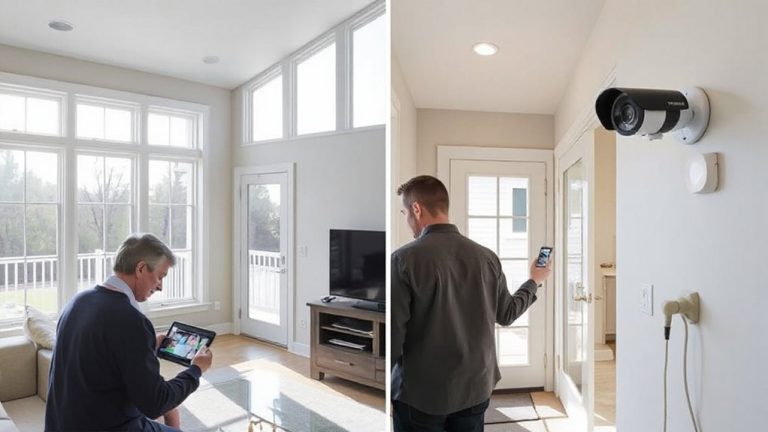
When your alarm goes off, the first thing you need to do is stop, take a breath, and assess the situation-your safety and the safety of others depends on clear thinking, not quick reactions. Staying calm helps you avoid panic attacks, which can cloud judgment and slow response time. Quickly check your alarm panel or security app to identify the trigger zone and type of alert. Many activations turn out to be false alarms caused by cooking smoke, humidity, or faulty sensors. Before assuming danger, verify signs of fire, intrusion, or carbon monoxide. If the environment seems safe and the system shows no confirmed threat, silence the alarm only if protocol allows. Keep a log of false alarms to identify recurring issues and improve system reliability. Addressing root causes improves long-term safety, reduces stress, and guarantees real emergencies get immediate attention. Choosing a reliable system can significantly reduce false alarms and improve response accuracy, so consider researching the best home alarm systems in the UK.
Get Everyone Out Safely and Fast
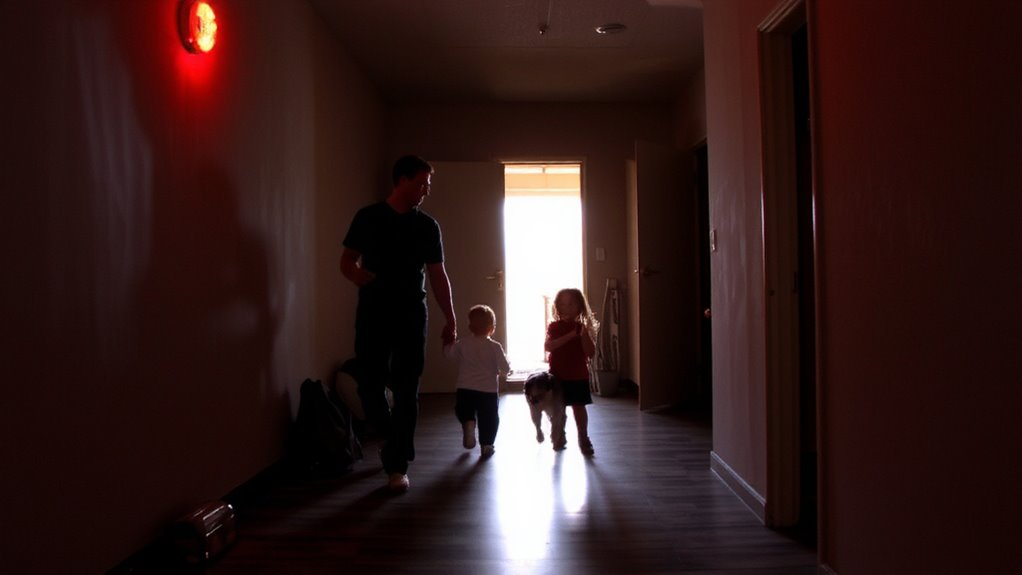
If you’ve confirmed a real emergency, your priority is to get everyone out safely and fast, following a clear and practiced escape plan. Move immediately when you hear emergency signals-don’t stop to gather belongings. Every household should have at least two evacuation routes from each room, ensuring a way out even if one path is blocked. Test these routes regularly so everyone knows how to respond quickly and confidently. Crawl low if there’s smoke, and feel doors for heat before opening them. Once outside, go to your designated meeting spot away from the house. Stay out and never re-enter until authorities confirm it’s safe. Working alarms and practiced emergency signals reduce response time, which can be the difference between life and death. Clear, consistent evacuation routes improve survival odds during fires or break-ins.
Prepare Every Family Member, Including Kids
How ready is your family when the alarm sounds? Every member, including kids, should understand emergency signals and their role during an alarm. Assign clear family roles based on age and ability-older children can help younger ones, while adults manage exits or call for help. Practice monthly drills so responses become automatic, reducing panic. Teach kids to recognize alarm patterns: a single beep may mean low battery, while continuous beeping signals danger. Make sure everyone knows at least two escape routes from each room and where to meet outside. Reinforce not reentering the home under any circumstances. Simple, consistent training strengthens response accuracy. Studies show households with practiced plans evacuate 30–60 seconds faster. That time can save lives. Update roles every six months or after major household changes. Preparedness isn’t optional-it’s essential.
Call 911 Only After Reaching Safety
You might be tempted to grab your phone and dial 911 the moment you hear the alarm, but doing so before getting to safety can cost precious time and increase risk. Focus first on escaping. Once you’re outside and clear, call for help. Responding to emergency signals properly means prioritizing your life over communication.
| Action | Reason |
|---|---|
| Evacuate first | Guarantees personal safety before calling |
| Call 911 after exit | Prevents delays during escape |
| Confirm location | Helps responders find you quickly |
| Report visible danger | Provides accurate emergency details |
| Mention possible false alarms | Helps dispatchers assess credibility |
Stay calm, act fast, and only call once you’re safe-this approach reduces confusion and increases response effectiveness, especially when emergency signals turn out to be false alarms.
Always Stay Out After Escaping
Once you’ve made it out, staying outside is non-negotiable-re-entering a building during an alarm, even briefly, puts you at serious risk. Fire, smoke, or intruders can make conditions unpredictable, and every second counts. Emergency protocols exist for a reason: they keep you and responders safe. Let trained personnel handle alarm verification-this means confirming the threat’s nature before entry. Police or fire crews are equipped to assess danger, so wait for their all-clear. Standing outside also guarantees you don’t obstruct emergency access. You may think you’ve forgotten something important, but possessions aren’t worth your life. Designate a family meeting spot away from the home to account for everyone. Following through on staying out supports faster, safer responses. It’s a small step with big consequences and a cornerstone of effective emergency preparedness.
Practice Drills So Everyone Knows What to Do
What good is an alarm system if no one knows how to respond when it sounds? Regular practice drills guarantee everyone in your home understands their role during an emergency. Emergency preparedness enhances markedly when you rehearse responses to alarms, especially at night or in low visibility. Conduct drills at least twice a year, simulating real conditions-close doors, use flashlights, and stay low. Make sure all household members can identify every evacuation route, including secondary exits, and know where to meet outside. Clear pathways and labeled routes reduce confusion and speed up exit times. Practice helps children and older adults build confidence and reduces panic. You’ll find weak spots in your plan, like blocked exits or forgotten steps. Update your strategy based on each drill’s outcome. These small efforts boost safety, guarantee faster response, and increase the effectiveness of your home’s security system.
On a final note
You should always respond quickly and calmly when alarms activate. Check the situation, get everyone out fast, and call 911 only after reaching safety. Practice fire drills regularly so all household members, including kids, know the plan. Never re-enter the home. Preparedness reduces risk, and working smoke alarms cut fire deaths by half. Install them on every level and test monthly.