Smart Locks With Built-In Alarms: Combining Access Control With Intrusion Detection
Your smart lock with a built-in alarm combines access control and intrusion detection to protect your home. It triggers a loud siren and sends phone alerts if someone tries to force entry, use the wrong code, or tamper with the lock. Models like August, Ultraloq, and Yale offer strong encryption, adjustable sensitivity, and up to 100dB alarms. They connect via Wi-Fi, Z-Wave, or Bluetooth and work with security systems to activate lights or cameras. Choose one with good battery life, tamper resistance, and reliable integration-knowing the right features helps you make a smarter choice.
Notable Insights
- Smart locks with built-in alarms combine access control and intrusion detection in a single secure device.
- They trigger loud alarms and send instant phone alerts during forced entry or tampering attempts.
- Adjustable alarm sensitivity reduces false alarms while detecting threats like wrong codes or physical attacks.
- Reinforced casings, tamper-resistant designs, and encryption enhance security against break-in attempts.
- Integration with smart home systems enables coordinated responses using Z-Wave, Zigbee, Wi-Fi, or Bluetooth protocols.
How Smart Locks With Built-In Alarms Work
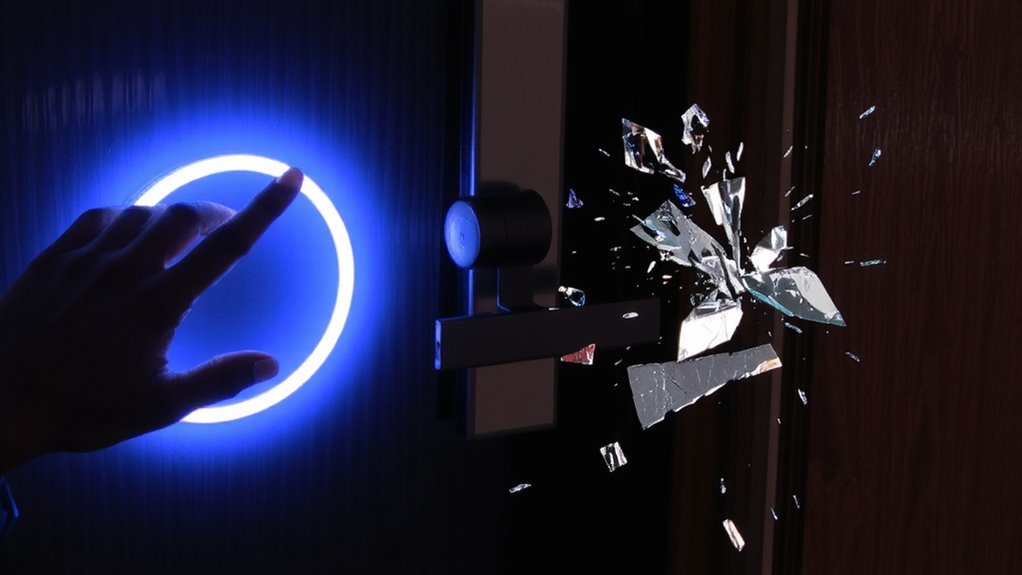
A smart lock with a built-in alarm adds an extra layer of security by combining access control and intrusion detection in one device. You get instant alerts when someone attempts forced entry, thanks to built-in sensors. These locks monitor for unusual activity, like repeated incorrect codes or physical manipulation, triggering a loud alarm to deter intruders. Alarm sensitivity is adjustable, so you can set it to ignore minor bumps but respond to serious threats. High tamper resistance guarantees the lock withstands physical attacks, such as pry attempts or drilling. Most models use reinforced materials and concealed mounting screws. Connection to your home network lets you receive real-time notifications on your phone. Power comes from batteries, typically lasting 6–12 months. Look for UL certification and weather resistance if installing outdoors. While more expensive than basic models, these locks provide measurable improvements in home security through integrated detection and tough design. Some top models even support voice assistant integration, allowing hands-free control and status checks via devices like Alexa or Google Assistant.
Smart Lock Alarm Features That Prevent Break-Ins
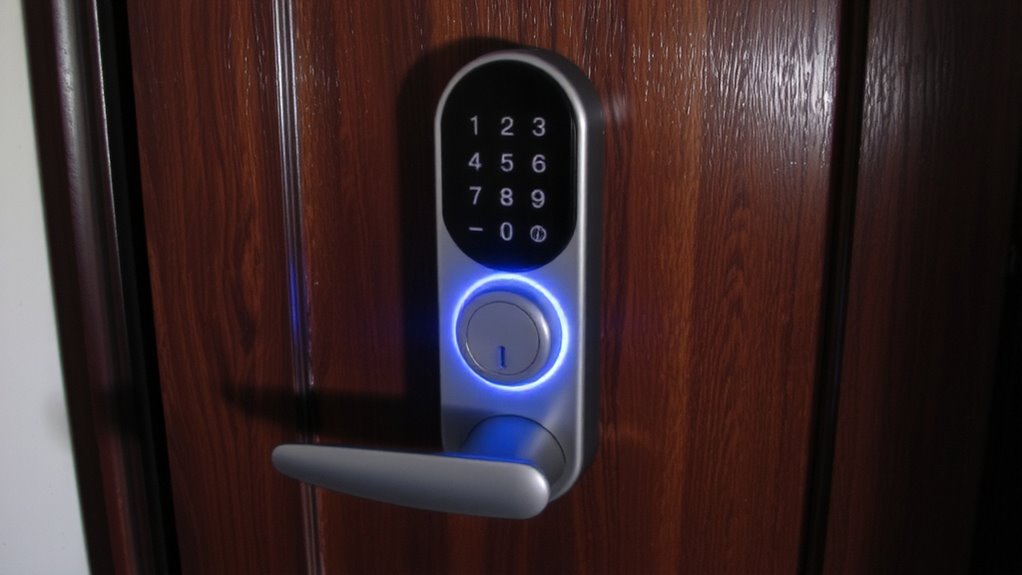
When someone tries to force their way into your home, smart locks with built-in alarms can stop them in their tracks. These alarms trigger instantly when unusual activity is detected,吓唬 off intruders and alert regain you. High alarm sensitivity guarantees the system responds to suspicious movement, like repeated wrong code entries or physical jimmies. You can often adjust sensitivity to reduce false alarms from everyday bumps. Tamper resistance is built into the lock’s hardware, making it hard to disassemble or force open without triggering the alarm. Most models use reinforced casings and internal sensors to detect drilling or prying. When triggered, the alarm sounds loudly and sends real-time alerts to your phone. Some sync with security cameras for video verification. Look for models with low false alarm rates and clear tamper resistance ratings. These features work together to strengthen entry points before a break-in fully occurs. A key factor in choosing the right model is reviewing expert top picks from trusted roundups like the Best Smart Locks guide.
Top Smart Locks With Built-In Alarms for Home Security
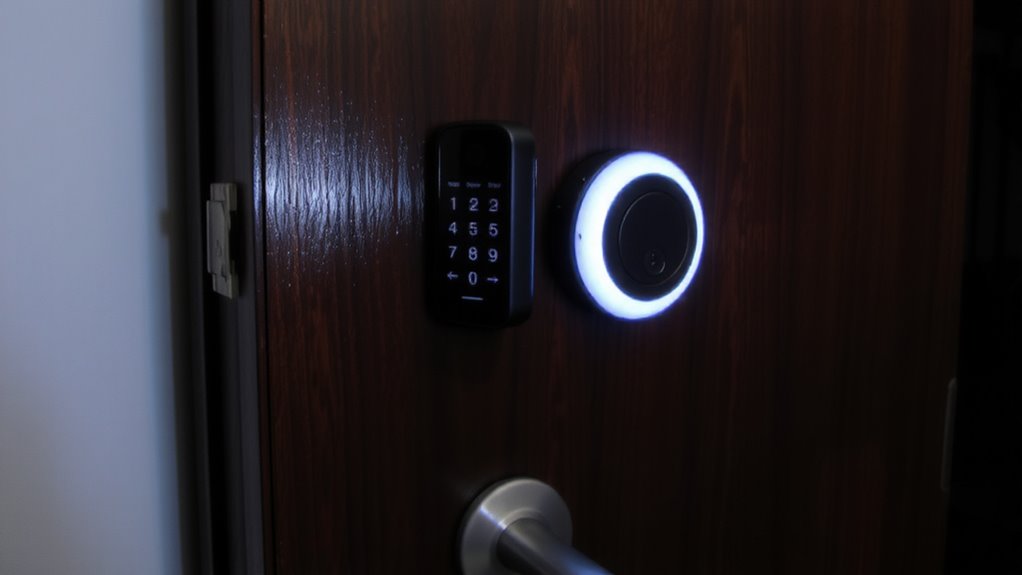
You’ve seen how smart lock alarms deter break-ins by detecting forced entry and tampering-now it’s time to explore which models deliver the strongest protection. The August Wi-Fi Smart Lock offers reliable alarm integration and strong encryption, with a battery life lasting up to three months. Its voice recognition support through Alexa or Google Assistant lets you lock doors hands-free. The Ultraloq U-Bolt Pro combines a built-in alarm with fingerprint access and a 24-month battery life, making it ideal for low-maintenance security. Yale’s Assure Lock 2 with Add-On Alarm module triggers a 100dB siren on tampering and lasts about six months on a set of batteries. While voice recognition isn’t standard on all models, those that support it add convenience without sacrificing response time. Each lock balances alarm sensitivity, access methods, and power efficiency, ensuring dependable performance when it matters most. According to expert reviews, the best smart locks offer both advanced security features and seamless smart home compatibility.
Critical Buying Criteria for Alarm-Enabled Smart Locks
Every reliable smart lock with a built-in alarm needs to meet key performance standards, and choosing the right one comes down to a few essential factors. You’ll want strong encryption and tamper resistance to guarantee security. Look for models offering user customization, so you can set unique access codes and adjust settings for family or guests. Alarm sensitivity is vital-choose a lock that lets you fine-tune alerts to avoid false alarms from normal door use. Check if it supports auto-locking and has a reliable power source, like long-life batteries or backup options. Make sure the build quality suits your climate and door type. Price typically ranges from $150 to $300, with higher costs bringing more smart features. Read verified customer reviews to assess real-world performance. Prioritize products backed by solid warranties and responsive support. These criteria help guarantee dependable protection and ease of use over time.
How Built-In Alarms Connect to Your Security System
Although standalone smart locks with built-in alarms offer a layer of security on their own, their real strength emerges when integrated into a broader security system, where they can share data and respond in tandem with other devices. Using standard integration protocols like Z-Wave, Zigbee, or Wi-Fi, your smart lock communicates with hubs, cameras, and sensors. Signal encryption guarantees that every command-from releasing to triggering alarms-remains secure from interference or hacking.
| Protocol | Range | Best For |
|---|---|---|
| Z-Wave | ~100 ft | Whole-home systems |
| Zigbee | ~50 ft | Low-power networks |
| Wi-Fi | Router-dependent | Quick setup |
| Bluetooth | ~30 ft | Close-range access |
| Proprietary | Varies | Brand-specific setups |
This connectivity lets alarms trigger lights or record video, giving you coordinated, automated protection.
Get the Most From Your Smart Lock After Installation
Once your smart lock is installed and linked to your security network, you can start fine-tuning its features to match your daily routine and security needs. User customization lets you set access codes for family, guests, or service personnel, and you can schedule when these codes work, adding control and accountability. You should enable notifications so you’re alerted to every access attempt, especially those that trigger the built-in alarm. Regular firmware updates are essential-they patch vulnerabilities, improve response times, and add functions via the manufacturer’s improvements. Check for updates monthly through the app, or enable auto-updates if available. Protect your network using strong encryption to protect data. While customization increases convenience, remember that too many access codes can complicate monitoring. Firmware updates and smart settings together enhance security without sacrificing ease of use, making your system both responsive and reliable over time.
On a final note
You now know how smart locks with built-in alarms combine access control and intrusion detection. These locks trigger alerts when tampering is detected, boosting home security. Look for models with loud alarms, system integration, and strong encryption. Consider price, ease of installation, and battery life. Pairing with a security system increases effectiveness. Choose a reputable brand with proven reliability and strong customer support for best results.