Evaluating the Effectiveness of Decoy Security Signs Based on Local Crime Patterns
You can use decoy security signs to deter casual intruders, especially in low-crime areas where criminals are more likely to be discouraged by the appearance of protection. They work best when paired with lighting and visible placement near entrances, costing just $5–$15. In high-crime neighborhoods, though, they’re often ignored or easily spotted as fake. Criminals look for missing wires, lack of weathering, and poor positioning. While not a substitute for real systems, combining decoys with other measures increases perceived risk-and your advantage comes from blending them into a broader strategy.
Notable Insights
- Decoy signs deter opportunistic criminals by increasing perceived risk, especially in low-crime areas with high community vigilance.
- Effectiveness drops in high-crime neighborhoods where intruders are more likely to recognize or ignore fake systems.
- Realistic placement and design improve credibility, reducing the chance criminals detect the signs as fakes.
- In low-crime or urban historic districts, decoys complement aesthetic and budget constraints without requiring active monitoring.
- Decoy signs should supplement lighting, locks, or patrols, as standalone use offers limited long-term crime prevention.
What Are Decoy Security Signs?
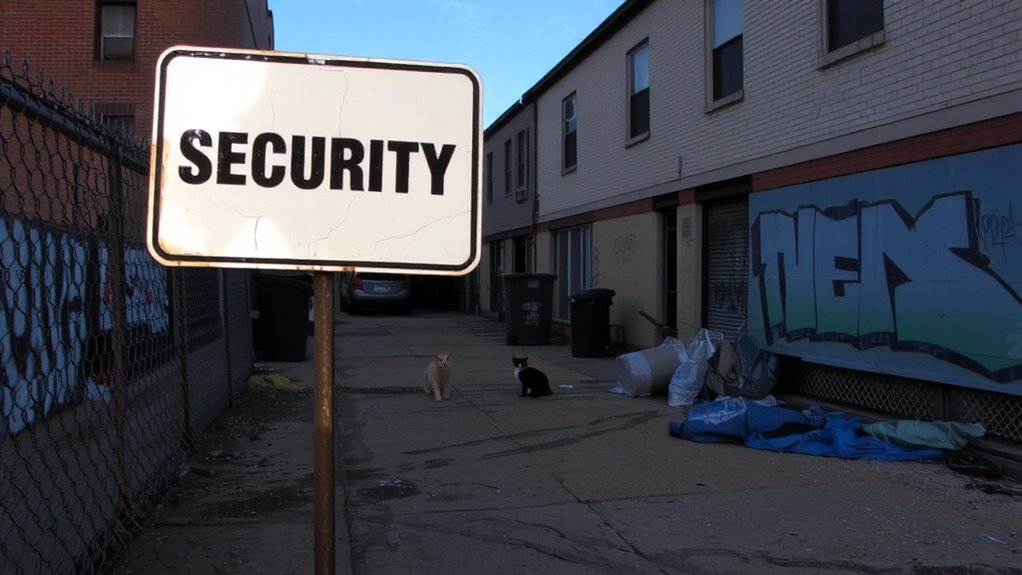
While you might assume all security signs are attached to working systems, decoy security signs are deliberately placed without any actual security equipment connected. You use them as a form of symbolic deterrence, relying on visual psychology to make intruders think your property is protected. These signs mimic real security branding, such as “Protected by ADT” or “Surveillance in Use,” but operate independently of alarms or cameras. They’re inexpensive, easy to install, and require no monitoring fees. Though they provide no active protection, their presence may discourage casual criminals who avoid risky targets. You should place them visibly near entrances, pairing them with outdoor lighting for stronger psychological impact. However, they won’t stop determined intruders. Consider combining decoys with motion-sensor lights or real cameras to enhance credibility. Use them as part of a broader strategy, not a standalone solution.
Do Decoy Security Signs Actually Work?
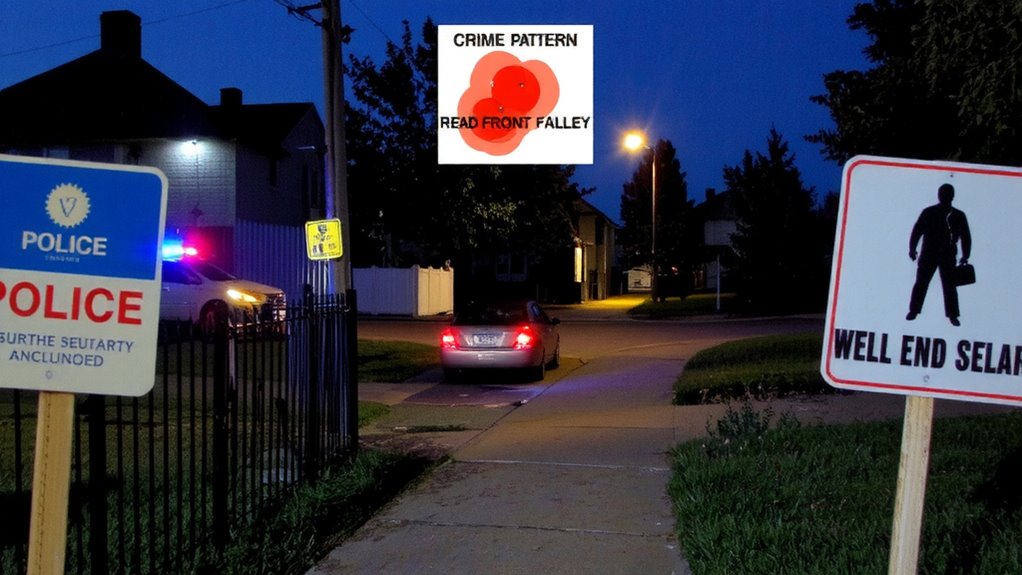
How effective are decoy security signs when it comes to preventing break-ins? Research suggests they can work through psychological deterrence, making your home seem riskier to potential intruders. Even without real cameras or alarms, these signs increase the perceived risk of getting caught, which deters many would-be burglars. Studies show criminals often avoid homes with visible security indicators, regardless of whether they’re fake. While not a guarantee, decoy signs are a low-cost addition to a broader strategy. They cost as little as $5–$15 and take seconds to install. Still, they shouldn’t replace real security systems. Their effectiveness depends on placement and the local crime environment. In high-crime areas, pairing decoy signs with real lights or motion sensors boosts credibility. Used wisely, they can be a practical, evidence-backed element in reducing the perceived risk that attracts criminals to easy targets.
How Criminals Tell Real From Fake Cameras
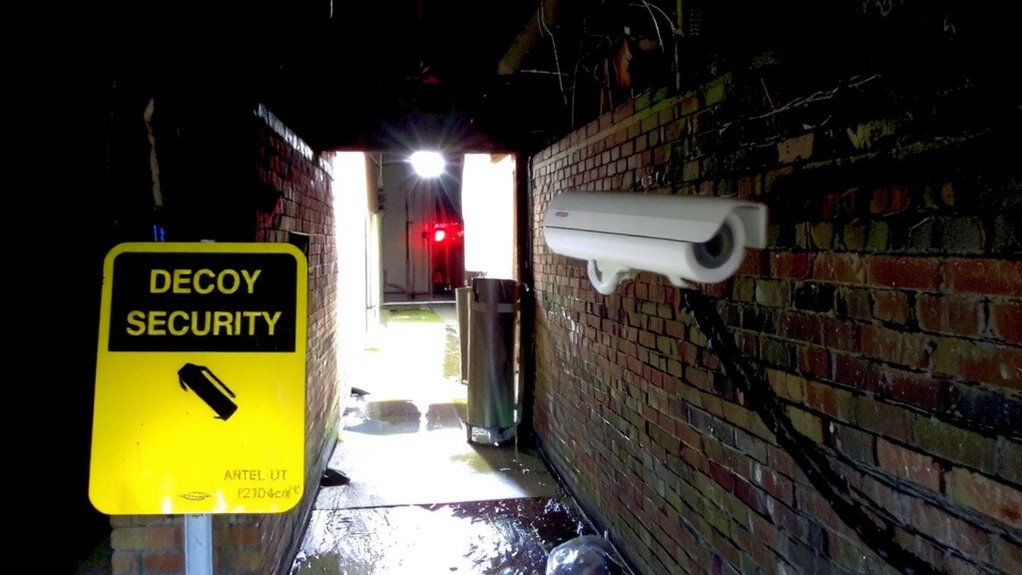
Criminals often spend time observing homes before attempting a break-in, and during that time, they look for clues to determine whether security devices are real or fake. You might not realize it, but experienced intruders check camera design closely-fake models often lack lens details, weathering, or wiring. Real cameras usually have consistent placement patterns, like near entry points or corners with clear views. Fakes are often too high, too symmetrical, or pointed at walls. Many decoys also don’t swivel or reflect light like real lenses do. Studies show that criminals notice these details, especially in neighborhoods where security systems are common. If your camera looks mass-produced or lacks power sources, it’s likely to be spotted as a fake. Choosing realistic camera design and natural placement patterns increases deterrent value. Proper research and setup matter-don’t rely on signs alone. For added realism, consider models from the best dummy cameras list, which mimic wiring and lens reflections more accurately.
Decoy Signs in High-Crime Neighborhoods
Could a simple yard sign really make a difference in a high-crime neighborhood? It might, but evidence suggests limits. Decoy signs can briefly deter opportunistic criminals, especially where actual security systems are rare. Still, in areas marked by economic disparity, these signs may deepen distrust if residents feel they’re forced to rely on illusions instead of real protection. When neighbors install decoys, community trust often erodes because people question who’s truly secure and who’s pretending. Repeat offenders may ignore signs altogether, knowing many can’t afford monitoring services. While low cost-usually under $20-is a clear benefit, false security is a real risk. You should pair signs with visible, active measures like outdoor lighting or community patrols. Data shows standalone decoys rarely reduce crime long-term in high-risk areas. They’re not useless, but they’re far from a full solution.
Why Low-Crime Areas Benefit More From Decoys
While decoy signs might seem too simple to matter, they actually work better where crime is already rare. You live in a neighborhood with strong community trust, so residents are more likely to notice and respond to suspicious activity. The signs boost perceived safety, making your area feel even more secure. Since crime rates are low, criminals are already hesitant-and the decoys add just enough doubt to deter them. They’re a low-cost option, usually under $20, and easy to install. The main downside? They won’t help much if real threats emerge, since there’s no actual monitoring. Still, when combined with good lighting and visible doorbells, decoy signs strengthen the sense of order. You don’t need advanced systems here-the psychological effect does most of the work. Just place them clearly at entry points. Overall, they complement existing safety behaviors, making your already safe street feel even safer.
Real-World Examples: Decoy Signs Across U.S. Cities
Have you ever noticed a security sign in a quiet suburb and wondered if it was real? You’re not alone-many U.S. cities use decoy signs to deter crime without installing full systems. In neighborhoods with historical architecture, like Charleston or Savannah, property owners often avoid visible tech upgrades to preserve aesthetics, opting instead for fake camera and alarm signs. These areas see moderate benefits due to lower foot traffic and higher community vigilance. In cities with rising urban tourism, such as Nashville or Portland, decoy signs are common in rental units and small businesses aiming to appear secure without high costs. Studies show that while decoys alone don’t stop determined offenders, they do reduce casual theft, especially when placed near entry points. However, overuse can reduce effectiveness-if every door has the same sign, it loses credibility. Planning matters: choose realistic designs and rotate signage periodically for better results.
How to Use Decoy Signs Based on Local Crime
Why do some neighborhoods benefit more from decoy signs than others? It comes down to crime mapping and behavioral analysis. You can use local crime data to place decoy signs where they’ll have the most impact. Burglars often avoid homes with visible security-real or not-so positioning matters. Below is how to match signs to local crime patterns:
| Crime Type | Recommended Sign Placement |
|---|---|
| Frequent break-ins | Front yard, near doors/windows |
| Car thefts | Driveway and garage entry |
| Package thefts | Near mailbox or porch |
| Low crime area | Minimal, subtle placement |
| High foot traffic | Highly visible, multiple signs |
Use behavioral analysis to predict criminal routes and target zones. Pair decoy signs with real security when possible. While affordable-typically $10–$20 each-they work best alongside lighting and locks. Rely on crime mapping tools from police or online databases to stay informed.
On a final note
You can save money with decoy security signs, but their effectiveness depends on local crime patterns. In low-crime areas, they often deter casual criminals by suggesting surveillance. In high-crime neighborhoods, experienced offenders may spot the fakes, reducing impact. Pair decoys with real measures like motion lights for better results. Check local crime data before deciding-placement and realism matter most. A well-planned approach improves perceived risk and home security.