How Glass Break Detectors Work and Where to Install Them for Maximum Protection
You rely on glass break detectors to catch intrusions by detecting the unique sound frequencies of shattering glass, using either acoustic sensors for wide coverage or shock sensors for tempered glass. Install them within 20 feet of windows, near corners at ceiling height, avoiding vents or obstructions. Use one per floor, combine types for better protection, and choose hardwired for reliability or wireless for ease. Proper placement and sensor type improve response-if you keep going, you’ll find smarter ways to secure every entry point.
Notable Insights
- Glass break detectors use frequency analysis to identify the unique sound patterns of shattering glass.
- Acoustic sensors detect glass break sounds over large areas, while shock sensors respond to vibrations on the glass surface.
- Install detectors within 6 to 20 feet of windows, prioritizing corners for optimal coverage of multiple windows.
- Mount detectors at ceiling height (7–9 feet) with a clear line of sight to windows, avoiding obstructions like furniture.
- Avoid placing detectors near air vents, kitchens, or loud appliances to reduce false alarms and interference.
How Glass Break Detectors Work
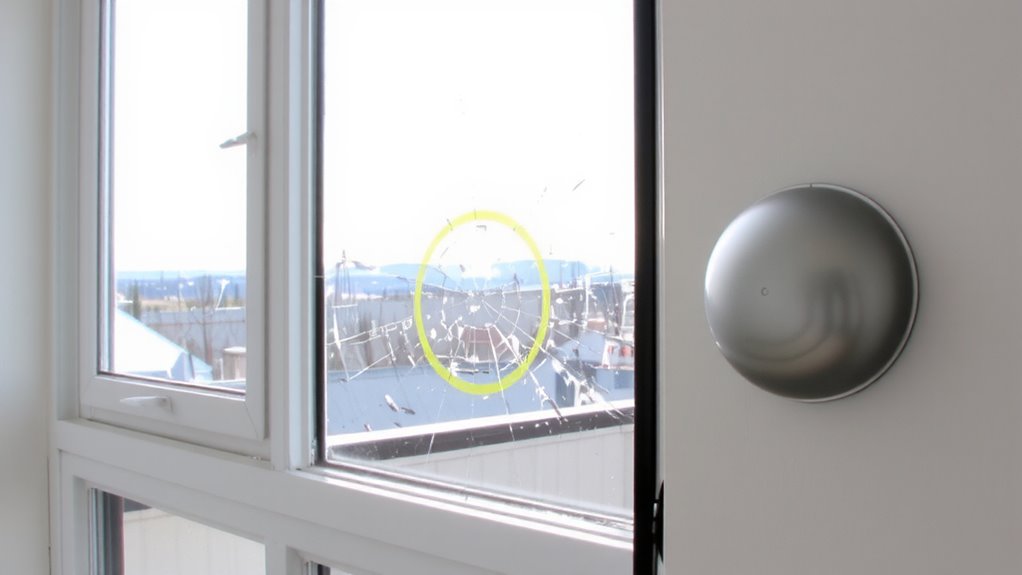
While some home security systems rely solely on door and window sensors, glass break detectors add an extra layer of protection by listening for the specific sound patterns of shattering glass. You can trust these devices to respond quickly because they use frequency analysis to distinguish breaking glass from other loud noises. They detect both the high-pitched crash and low-frequency thud glass makes when breaking, ensuring accurate alerts. Proper sensor calibration is key-you’ll need to adjust sensitivity based on room size and glass type to reduce false alarms. Most models cover up to 20 feet in all directions, so placement near windows matters. They work well in living rooms or near entry-level sliding doors. Though more expensive than basic sensors, they’re cost-effective for homes with large glass surfaces. Always choose models tested to industry standards for reliable performance.
Acoustic vs. Shock Sensors: Which Is Better?
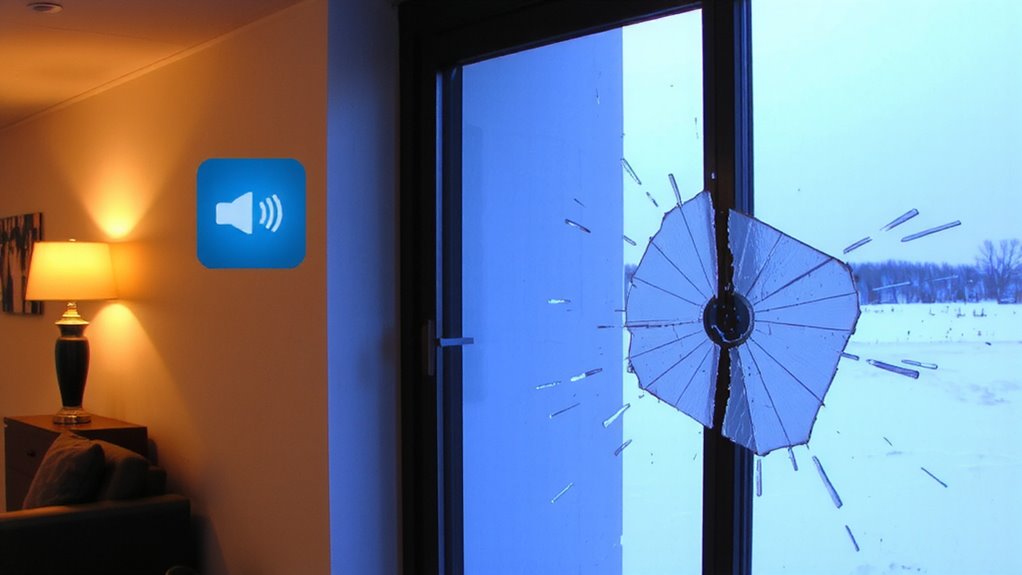
Since not all glass break sensors work the same way, it’s important you understand the difference between acoustic and shock models before choosing one for your home. Acoustic sensors detect the sound of breaking glass using frequency analysis to distinguish real breaks from similar noises, making them effective for standard windows. They’re easy to install and cover large areas but can miss breaks if background noise is high. Shock sensors, mounted directly on glass or frames, sense vibrations and offer better material compatibility with tempered or laminated glass. They’re less prone to false alarms but only protect the surface they’re attached to. Acoustic models usually cost less, while shock sensors often require professional installation. For best results, consider combining both types based on your home’s layout and window materials.
Where to Install Glass Break Detectors for Maximum Coverage
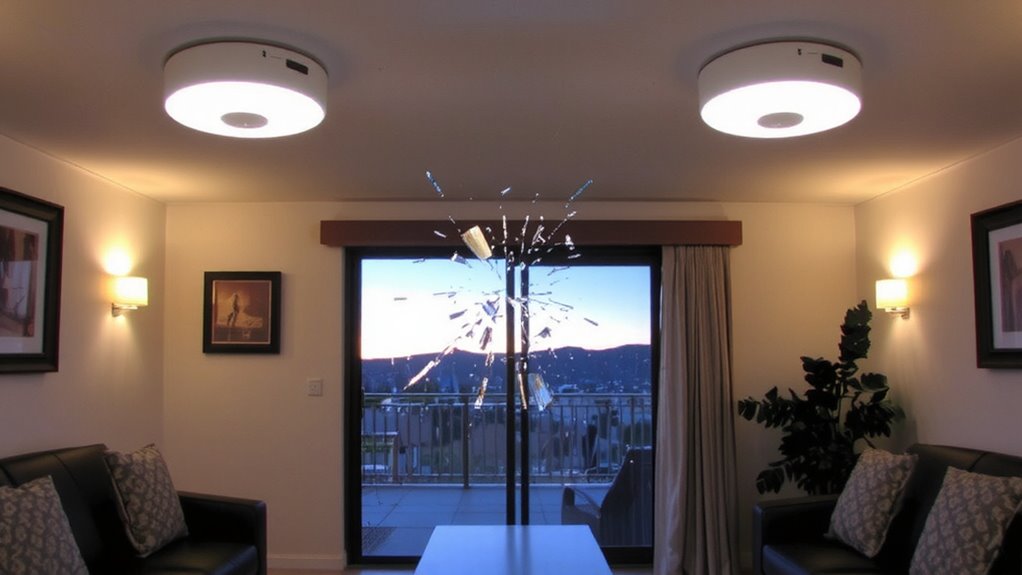
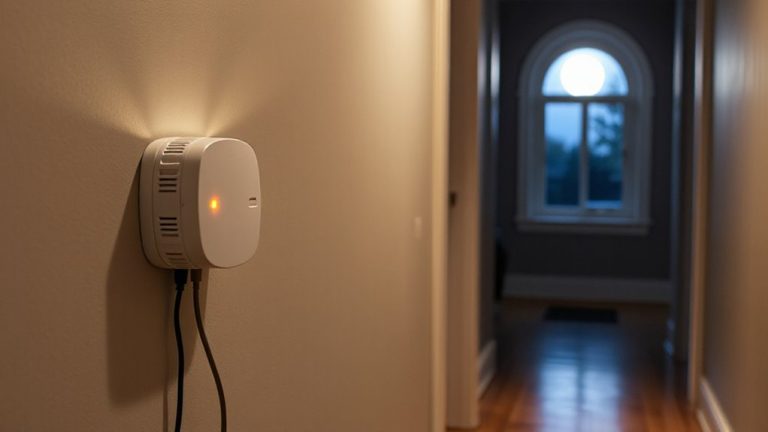
Where should you place glass break detectors to guarantee every window is protected? Mount them within six to 20 feet of each window, depending on the model’s range. Corner placement is ideal-it gives a clear line of sight to multiple windows, maximizing detection coverage. Install at recommended ceiling height, usually 7 to 9 feet, to assure sound travels unobstructed. Avoid blocking the sensor with furniture or curtains. Most detectors cover a 360-degree radius, but walls and doors can create blind spots, so position units in rooms with multiple entry windows. Always consult the manufacturer’s specs for exact range and mounting guidance. For open floor plans, one unit may suffice, but larger homes need multiple detectors. Proper placement improves response time and reduces missed events. You’ll get the best protection by combining strategic positioning with device specifications.
Common Glass Break Detector Placement Mistakes
You’ve got the basics of where to place glass break detectors for full window coverage, but even the right location can fail if common mistakes go unaddressed. Placing detectors too far from windows reduces sensitivity, leading to missed breaks. Mounting them near air vents or ceiling fans causes sensor interference, which can trigger false alarms. Avoid installing detectors near kitchens or bathrooms-steam and loud appliances like blenders often cause false alarms due to sound frequency overlap. Positioning detectors behind furniture or inside cabinets blocks sound waves, limiting effectiveness. Also, never mount them near loudspeakers or TVs, as they emit similar high-decibel sounds to breaking glass. Always follow the manufacturer’s range specs and test after installation. Correct placement prevents sensor interference, guarantees reliable detection, and minimizes false alarms. A little planning now saves time and enhances security later.
How to Combine Multiple Detectors for Full Home Protection
While a single glass break detector can safeguard one room, covering your entire home means using multiple sensors in a coordinated layout. You’ll need to space detectors evenly, especially near large windows, sliding doors, and glass walls. Effective sensor integration guarantees all units communicate with your central alarm system, allowing synchronized alerts and faster response. To reduce false alarm prevention issues, avoid placing detectors near noisy appliances or high-traffic areas that generate loud sounds. Use detectors with dual-sound recognition so they respond only to the specific frequencies of breaking glass. For best results, install one on each floor and in rooms with the most glass exposure. Hardwired systems offer reliability, while wireless models provide easier setup. Budget for $50–$100 per unit, with professional installation adding upfront cost but improving accuracy.
On a final note
You now know how glass break detectors use acoustic or shock sensors to catch break-ins, and where to place them for full coverage. Acoustic models detect sound, while shock sensors feel vibrations-each has pros and cons. Avoid common mistakes like placing them too far from windows. For best results, combine multiple detectors, especially in high-risk areas. A well-planned system improves security, with costs varying by features and home size.