How to Install Door Security Bars That Prevent Forced Entry While Allowing Quick Emergency Exit
Choose a steel or reinforced polymer security bar with a high load rating for maximum strength. Pick one with one-handed release and fire code compliance for safe, quick exits. Measure your door’s width and frame material to guarantee proper fit and anchoring. Install brackets into wall studs at a 45-degree angle for peak resistance. Test the bar’s stability and release mechanism, then inspect monthly for wear. Proper setup guarantees protection without compromise-knowing more helps you stay prepared.
Notable Insights
- Choose a steel or reinforced polymer security bar with a high load resistance rating for maximum forced entry protection.
- Select a model with one-handed operation and fire-code compliance to ensure quick emergency exit.
- Measure door width at multiple points and confirm frame material to determine proper fit and mounting method.
- Install the bar at a 45-degree angle, anchored into wall studs or solid framing for optimal strength.
- Test the release mechanism regularly and inspect monthly for loose hardware, corrosion, or alignment issues.
Choose the Right Type of Door Security Bar
While selecting a door security bar might seem straightforward, knowing the differences between available types can save you time and boost your home’s safety. You’ll find models made from steel, aluminum, and reinforced polymers, each offering different levels of material durability. Steel bars resist bending and forced entry better, making them ideal for high-risk areas. Aluminum bars are lighter but slightly less durable. Installation complexity varies-some require drilling and permanent fixtures, while others use pressure or adjustable brackets. Permanent installations typically offer stronger protection but limit portability. Temporary models are easier to remove but may not withstand intense force. Consider your door type, daily use, and emergency exit needs when comparing options. Higher-priced bars often use thicker gauges and proven designs. Always check product testing data, such as load resistance ratings, to guide your choice.
Pick a Safe, Easy-to-Open Security Bar
You’ve picked the right type of door security bar based on material and installation needs, but don’t stop there-how you open and close it every day matters just as much. A safe bar must allow quick exit during emergencies while providing reliable protection. Consider legal compliance, especially if renting-some models meet fire code requirements for easy release. Prioritize an aesthetic design that fits your home’s style without sacrificing strength.
| Feature | Why It Matters |
|---|---|
| One-handed operation | Guarantees fast exit under stress |
| Visual appeal | Matches décor while staying secure |
| Compliance label | Confirms legal compliance |
| Smooth finish | Prevents snags, boosts aesthetic design |
Choose a model with tested release mechanisms and visible safety certifications.
Measure Your Door and Frame for Fit
Since a poorly sized security bar won’t stay in place or may damage your door frame, measuring your door and frame accurately is essential before making a purchase. Start by measuring the door width at three points-top, middle, and bottom-to account for any inconsistencies; use the smallest measurement. This guarantees the bar fits snugly without forcing. You should also check the frame material, as metal or concrete frames securely anchor bars, while wood or drywall may require reinforced mounting. Knowing your frame material helps choose the right fasteners and installation method. Most standard doors range from 28 to 36 inches in width, but confirming your size prevents returns or delays. Always double-check measurements before ordering. A correct fit improves both security and ease of use, reducing wear over time. Take precision seriously-your safety depends on it.
Place the Bar for Strength and Clearance
A well-placed door security bar can considerably boost your home’s protection, but its effectiveness depends on proper positioning for both strength and clearance. You’ll want to position the bar at a 45-degree angle from the floor to the door, as this maximizes resistance against forced entry. Proper door alignment guarantees the bar presses evenly against the door surface, preventing warping or slippage during impact. Make sure the bar doesn’t interfere with the door’s ability to open fully-clearance is key for daily use and emergency exits. For lasting security, choose wall anchoring points that hit wall studs or solid framing; using drywall anchors alone could fail under pressure. Position the mounting spot on the floor so the bar aligns smoothly when deployed, avoiding awkward shifts. Correct placement balances strength, safety, and functionality.
Install the Mounting Brackets Securely
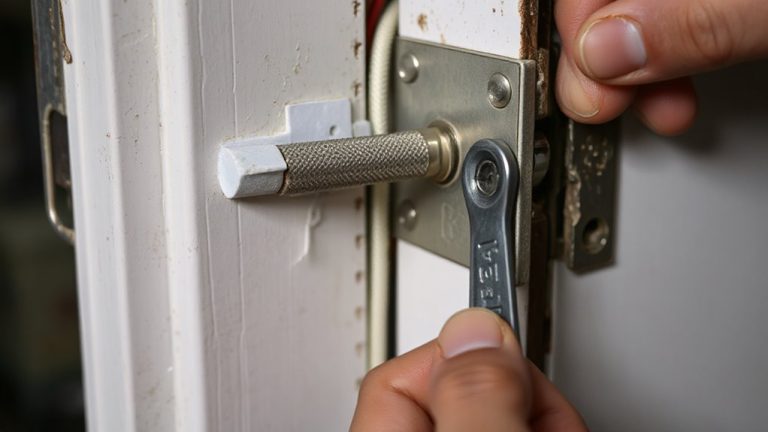
Position the mounting brackets with precision to guarantee the door security bar functions effectively and safely. Proper bracket alignment guarantees the bar slides smoothly into place and resists forced entry. Misaligned brackets can compromise material durability over time, especially under stress. Use a level and measuring tape to confirm both brackets are even and match the bar’s length. Secure them into wall studs whenever possible-this boosts strength and reliability. If you can’t hit studs, use heavy-duty anchors rated for the load. Follow the manufacturer’s guidelines for screw type and depth, as they’re tested for maximum performance. Quality brackets made from reinforced steel offer the best material durability. Double-check all connections before final tightening. Correct installation now prevents failure when it matters most.
Test the Bar and Emergency Release
How do you know the door security bar is ready for real-world use? You test it thoroughly. Start with stress testing: apply firm, steady pressure to the door while the bar is locked in place. The bar shouldn’t slip, bend, or damage the floor or door frame. Next, check the emergency release-activate it quickly as if during a fire or urgent exit. It should disengage smoothly every time. Practice emergency drills with all household members so everyone can open and remove the bar in under ten seconds. Make certain no tools are needed and that the mechanism works in the dark. A reliable bar balances strong resistance to entry with fast, simple release. If it fails any test, adjust the installation or consider a more responsive model. Proper testing guarantees safety without compromise.
Inspect Your Door Security Bar Monthly
Regularly checking your door security bar guarantees it stays effective over time. Make this part of your monthly door maintenance routine to catch issues early. During each security inspection, examine the bar, brackets, and floor anchor for looseness, corrosion, or warping. Tighten any screws that have shifted, and replace damaged parts immediately-most manufacturers offer affordable replacements. Test the bar’s alignment to guarantee it fits snugly and clears the floor without dragging. Check wall anchors to confirm they’re still secure, especially if the door frame has shifted. Also, verify that the emergency release works smoothly with no resistance. A quick monthly check takes under five minutes but greatly extends the life and reliability of your system. This small effort improves long-term protection, guarantees quick exit during emergencies, and maintains peak performance. Stay consistent-your safety depends on it.
On a final note
You’ve chosen a strong, quick-release bar and installed it securely. Now, it works only when needed-blocking intruders but letting you escape fast. Monthly checks keep it reliable. Pick models with easy grip, clear instructions, and steel construction. Avoid cheap locks or complicated mechanisms. Plan for $25–$60, and always test fit before mounting. A well-placed bar adds real security without trapping you inside.