Choosing Outdoor Cameras With Anti-Glare Lenses for 24/7 Sunlight Performance
You need a camera with anti-glare lenses to prevent sunlight from washing out footage, since direct exposure can ruin up to 70% of daytime video. Look for models with multi-layer lens coatings, wide dynamic range (WDR), and UV-resistant housings to maintain clarity. Opt for IP66-rated, heat-resistant designs-like Arlo Ultra 4 or Reolink Argus 3-for reliable performance. Avoid common placement errors, and you’ll get sharper, consistent results in bright conditions. There’s more to contemplate for long-term success.
Notable Insights
- Choose cameras with multi-layer anti-reflective lens coatings to minimize glare and improve image clarity in direct sunlight.
- Opt for models with wide dynamic range (WDR) technology to balance bright and dark areas in high-contrast lighting.
- Install cameras under eaves or with sun shields to reduce direct sun exposure and lens flare.
- Select cameras with UV-resistant, heat-reflective housings to prevent overheating and material degradation in constant sunlight.
- Avoid pointing cameras toward the sun; position them to face away from sunrise and sunset to prevent glare issues.
Why Sunlight Ruins Outdoor Security Camera Footage
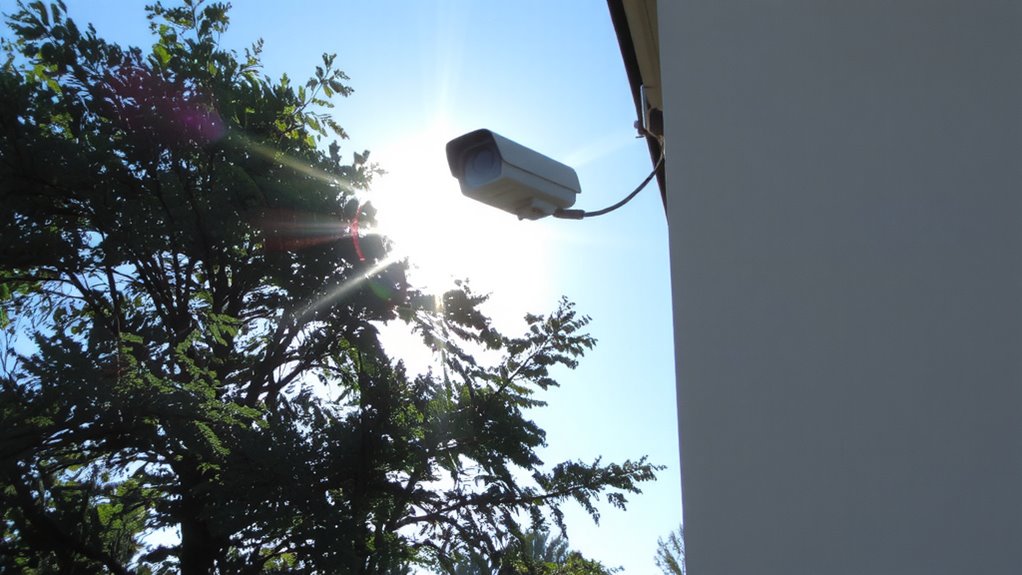
Ever wonder why your outdoor camera footage turns washed out or blurry during the day? Direct sunlight often overwhelms standard camera sensors, causing lens flares and image distortion that degrade video quality. When bright light enters the lens at certain angles, it creates streaks or halos-commonly known as lens flares-that obscure key details. At the same time, excessive brightness can trigger image distortion, making faces or license plates unreadable. These issues aren’t just inconvenient-they reduce the camera’s effectiveness for security. Cameras without proper lens coatings or housings are especially prone to these problems. You’ll want to check specs for wide dynamic range (WDR) and weather-resistant builds, though higher WDR models may cost more. While some budget cameras claim outdoor use, they often lack the optics to handle strong daylight, leaving you with unreliable footage when you need it most. Best outdoor security cameras are specifically engineered to combat these challenges with advanced glare reduction and durable designs.
How Anti-Glare Lenses Beat Harsh Sunlight
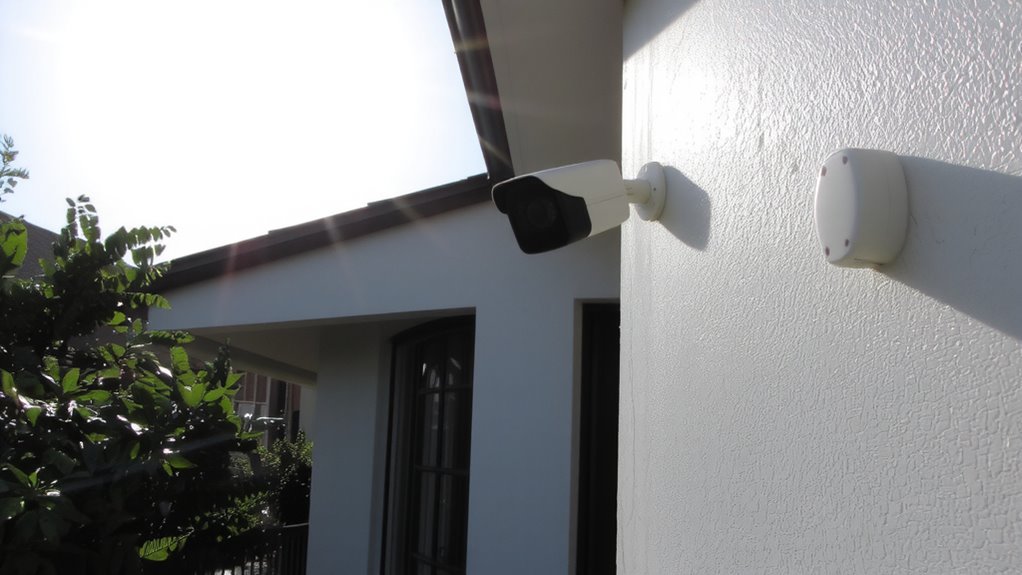
While sunlight can overwhelm standard camera lenses, anti-glare models are designed to minimize reflections and maintain image clarity even in bright conditions. You benefit from advanced lens coating and strategic light diffusion, both working to cut glare and balance exposure. These features preserve detail in high-contrast scenes, like sunlit driveways or south-facing entrances. Top-performing systems often include wired security camera setups for reliable power and video transmission, ensuring uninterrupted monitoring in challenging lighting conditions.
| Feature | Benefit | Consideration |
|---|---|---|
| Multi-layer lens coating | Reduces surface reflections | Slight cost increase |
| Textured surface design | Improves light diffusion | Needs regular cleaning |
| Polarization filters | Enhances contrast | May affect night performance |
| Wide dynamic range (WDR) | Balances bright and dark areas | Requires proper alignment |
| UV-resistant housing | Protects internal components | Bulkier form factor |
You’ll get sharper footage during peak daylight, ensuring reliable monitoring. Choose cameras with verified anti-glare tech for consistent outdoor performance.
Must-Have Features in Sun-Resistant Security Cameras
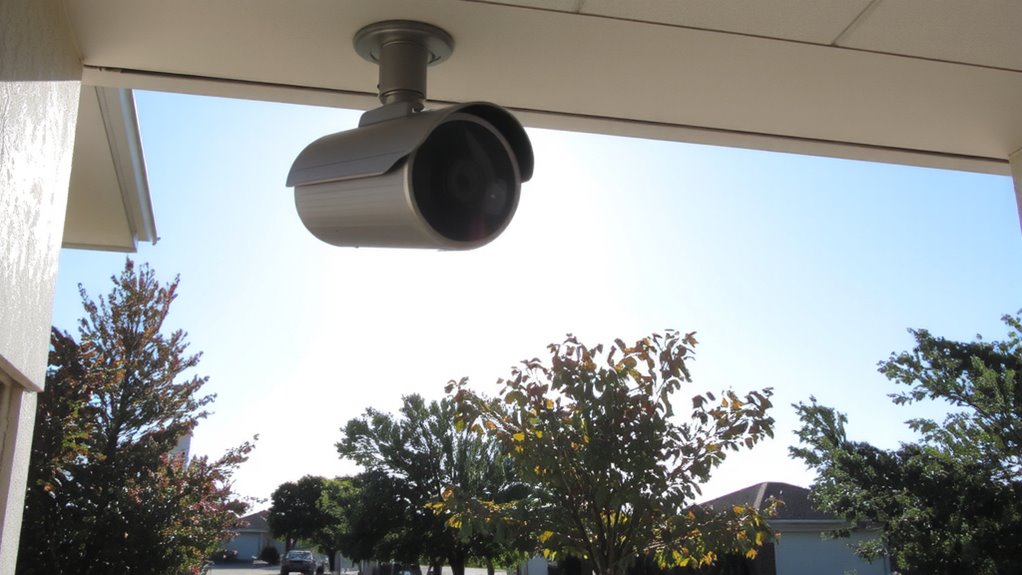
What makes a security camera truly resilient in relentless sunlight? It’s not just the lens-it’s the full build. You need weather resistance to handle UV exposure, rain, and temperature swings without degrading. Look for IP66 or higher ratings, which confirm solid protection. Power efficiency matters too, especially for wireless models; efficient cameras reduce strain on batteries or solar chargers, ensuring uptime during peak sun. Models with smart sensors cut power use by activating only when needed. Pair that with durable, heat-reflective housings, and you’ve got lasting performance. Avoid plastic casings that warp-they crack under thermal stress. Metal or UV-stabilized materials hold up better. Don’t skip checking manufacturer specs on operating temps, often listed between -20°C to 50°C. These features, combined, deliver reliable 24/7 operation where sun exposure is constant, without extra maintenance or premature failure. For optimal image clarity in bright conditions, choose models with anti-glare lenses designed to minimize reflections and lens flare.
Best Outdoor Cameras for Constant Sun Exposure
When sunlight beats down all day, not every outdoor camera can keep up, but a few models stand out for handling constant exposure without performance drops. You’ll want cameras with strong image stabilization to reduce washed-out footage and maintain clarity during peak brightness. Look for models like the Arlo Ultra 4 or Reolink Argus 3, which combine anti-glare lenses with HDR imaging for balanced light handling. Their motion sensitivity adjusts automatically, so bright reflections don’t trigger false alerts. These cameras also resist overheating and UV damage, guaranteeing long-term reliability. While they cost more upfront-typically $150–$200 each-their durability cuts replacement costs. Installation in direct south or west-facing positions still requires slight angling to minimize glare. Always check IP ratings; at least IP65 guarantees weather resistance. With the right setup, these cameras deliver consistent, 24/7 performance even under relentless sun.
Common Anti-Glare Camera Mistakes to Avoid
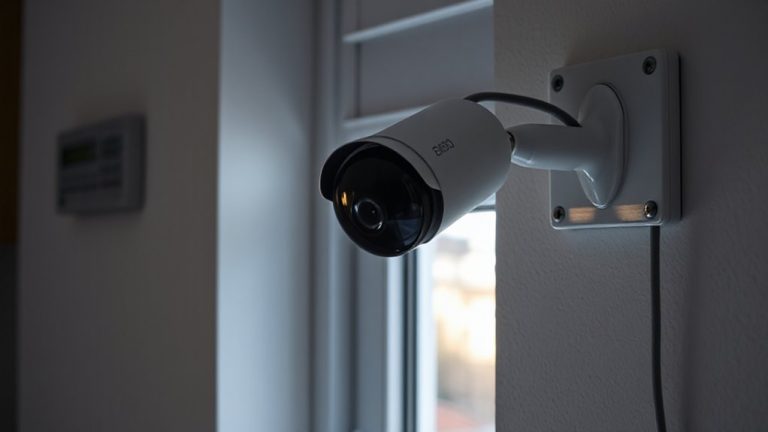
You’ve picked a solid outdoor camera with anti-glare features and HDR support, but even high-performing models like the Arlo Ultra 4 or Reolink Argus 3 won’t fix poor setup habits. One common mistake is ignoring lens coating quality-cheap coatings degrade quickly, reducing glare protection over time. Always choose cameras with multi-layer, UV-resistant lens coatings for lasting performance. Another issue is installation angle errors; pointing the camera directly into sunlight causes lens flare, even with anti-glare tech. Mount it under eaves or use a sun shield to block direct overhead light. Avoid positioning where sunrise or sunset hits the lens head-on. Test the view at different times to catch glare problems early. Proper placement and quality coatings guarantee you get reliable footage day and night, maximizing your camera’s effectiveness without needing costly replacements.
On a final note
You’ll get clearer footage in bright sunlight by choosing outdoor cameras with anti-glare lenses and proper sun protection. Look for models with lens hoods, wide dynamic range, and weather-resistant housings. Position cameras to avoid direct sun exposure when possible. While higher-end models offer better performance, even mid-range options work well if installed correctly. Always check warranty and weather ratings before buying.