Using Security Film and Tinting on Perimeter Windows for Privacy and Protection
You’re leaving your home vulnerable if your perimeter windows lack security film or tint. These upgrades reinforce glass against break-ins, with films from 4–15 mil slowing forced entry by holding shattered glass together. Tinting boosts privacy on ground-level windows using frosted or decorative finishes that block outside views. Most films block up to 99% of UV rays, protecting interiors from fading. Professional installation ($5–$8 per sq ft) guarantees peak adhesion and warranty coverage, though DIY kits are cheaper but risk bubbles and peeling. Thicker films offer greater resistance, while regular cleaning with mild soap preserves performance. Explore what type fits your home’s needs and exposure best.
Notable Insights
- Security film strengthens windows by holding glass together upon impact, deterring break-ins.
- Privacy window tint blocks visibility into homes while maintaining natural light and outward views.
- UV-blocking films protect interiors by filtering up to 99% of damaging ultraviolet rays.
- Professional installation ensures optimal adhesion, durability, and performance of security and tinted films.
- Security films come in varying thicknesses (4–15 mil) to match specific threat levels and privacy needs.
Why Windows Are Security Weak Spots
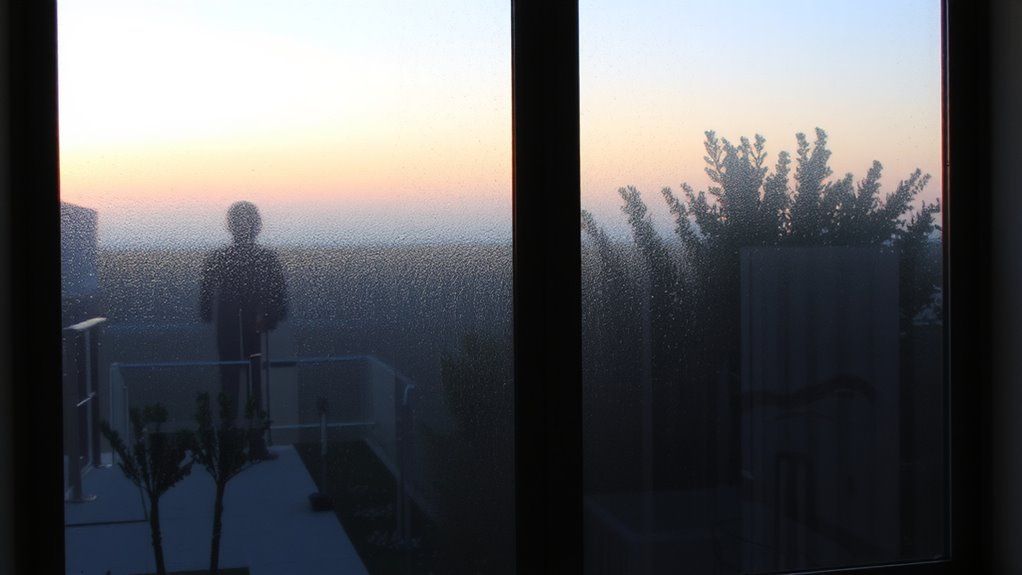
Glass windows are a common target for intruders because they’re often the weakest point in a home’s perimeter. You face real risk when unmonitored glass exposure goes unprotected, especially on ground-level or secluded sides of your house. These vulnerable access points offer visibility and easy entry-if windows aren’t reinforced, a smash-and-grab can happen in seconds. Standard glass shatters easily, giving criminals quick access without triggering alarms. Even double-pane windows aren’t immune to forced entry. Many break-ins occur through backyard or side windows that homeowners overlook during security planning. You should assess every window for both location and structural strength. Unsecured glass is predictable; attackers exploit it because it requires less time and effort. By identifying these weak spots, you take the first practical step toward a more secure home. Prevention starts with recognizing exposure, not waiting for an incident.
How Security Film Stops Break-Ins
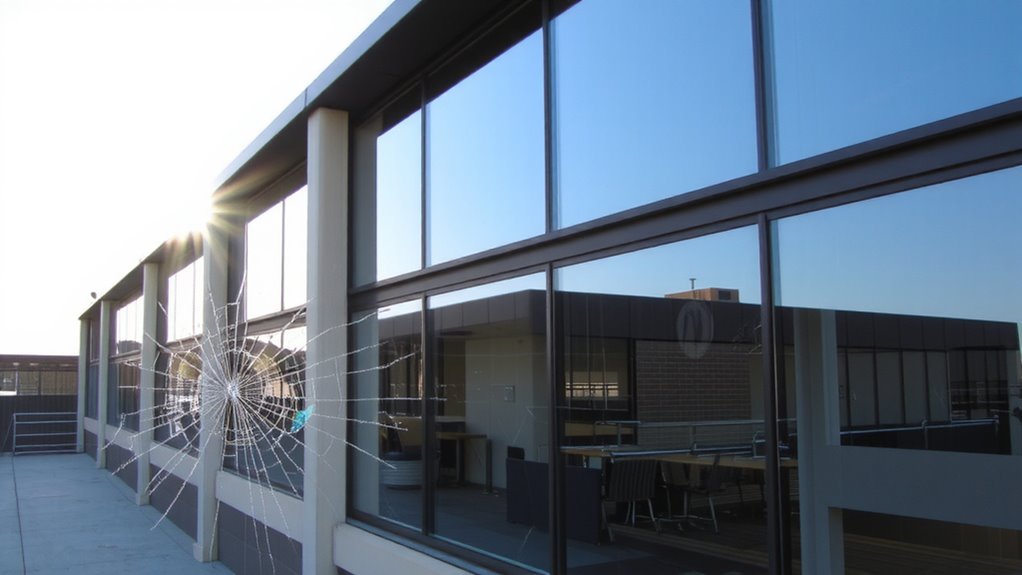
One layer of protection can make a critical difference in delaying forced entry, and security film is designed to do just that by holding glass together when impacted. It provides impact resistance by reinforcing the window surface, making it harder to penetrate. Shatter containment guarantees broken glass stays bonded to the film, reducing access points and slowing intruders. This delay often deters break-ins altogether.
| Feature | Benefit |
|---|---|
| Thickness options | Ranges from 4 to 15 mil for varied threat levels |
| Impact resistance | Increases time needed to breach window |
| Shatter containment | Keeps glass in place when cracked |
| Installation | Professional recommended for full adhesion |
| Cost | $8–$14 per sq ft including labor |
Security film is a proven, cost-effective layer that enhances window durability without altering appearance.
Boost Privacy With Ground-Level Window Tint
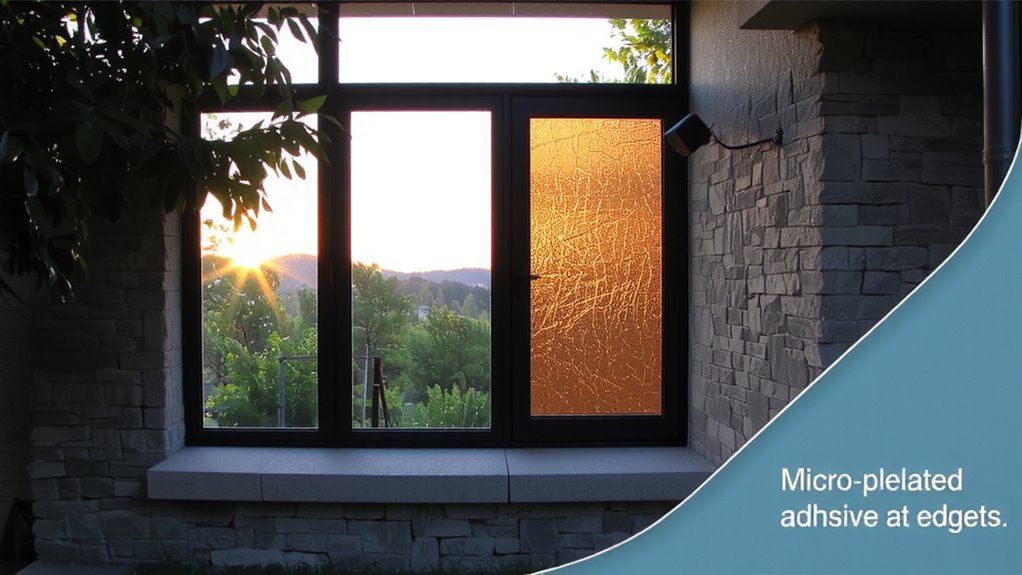
Why leave your home vulnerable to prying eyes? Ground-level windows are easy viewing points for strangers, but tinting offers a smart, affordable fix. You can install privacy window film that blocks clear sightlines while still letting in natural light. Frosted patterns scatter visibility, so people can’t see in, but you can see out. They work well for bathrooms or entryways. Decorative finishes add style and function, turning plain glass into a design feature. Most films cost $8–$14 per square foot, including professional installation. DIY kits save money but require careful application to avoid bubbles or peeling. These films last 10–15 years with minimal upkeep. Unlike heavy curtains, they don’t degrade in sunlight or restrict airflow. Choose matte, geometric, or etched-glass styles depending on your home’s look. Privacy films are a proven, low-maintenance upgrade for any ground-floor room.
Block UV Rays and Protect Your Interiors
You’ve already made your ground-floor windows harder to peer into with privacy film, but there’s another benefit you shouldn’t overlook: blocking harmful UV rays. Most quality security and tinting films offer strong UV protection, filtering up to 99% of ultraviolet light. This isn’t just about comfort-it’s essential for interior preservation. Prolonged UV exposure fades furniture, flooring, and artwork over time, degrading materials and reducing their lifespan. Installing film helps maintain your home’s appearance and value. It also improves energy efficiency by reducing solar heat gain. Look for films labeled with high UV-blocking capabilities, typically included in both clear security films and darker tints. Though costs vary by film type and window size, the long-term savings in interior preservation often outweigh initial expenses. UV protection is a practical, evidence-backed upgrade that complements privacy and security efforts seamlessly.
DIY vs Pro Installation: Which Is Better?
How well your window film performs often comes down to how well it’s installed. You can choose DIY, but pros usually deliver better results. Professionals use high-grade installation tools and understand how to maximize adhesive quality, ensuring the film bonds securely without bubbles or peeling. DIY kits are cheaper, often costing $20–$50, but lack precision. Without proper tools like squeegees, application solutions, and heat guns, mistakes are common. Poor fits reduce film effectiveness and durability. Pros charge $5–$8 per square foot but offer warranties and faster, cleaner results. They handle large or hard-to-reach windows better. For basic tinting on standard windows, DIY might work if you’re careful. But for security film, where performance matters most, professional installation gives you reliable protection. Your choice affects long-term performance.
Choose the Best Security Film by Thickness and Shade
Security film thickness and shade play a direct role in how well your windows resist break-ins and manage light. Thicker films, like 7–14 mil, offer stronger barrier protection against forced entry, while thinner options (2–4 mil) provide basic shatter resistance. You’ll want to weigh film clarity when preserving outward views-clear films maintain visibility while still adding strength. Tinted films reduce glare and block UV rays, and their shade options range from light bronze to near-black, affecting both privacy and solar control. Darker shades limit visibility into your space but may reduce natural light. Some dual-action films combine thickness with UV-blocking dyes for added function. Higher clarity and deeper tints often cost more, typically $5–$15 per square foot installed. Match thickness to your security needs and shade options to your lighting and privacy preferences for best results.
How to Clean and Extend the Life of Security Tint
While security tint enhances window durability and privacy, maintaining its performance over time depends on proper cleaning and care. Use gentle cleaning techniques to avoid scratching the film: opt for a soft microfiber cloth and a mild soap-and-water solution instead of ammonia-based products, which can degrade the adhesive. Always wipe in a circular motion to lift dirt without damaging the surface. Establish a regular maintenance schedule, cleaning every few weeks to prevent dust and grime buildup. Avoid abrasive tools like razors or scrubbing pads, as they compromise tint integrity. Keep windows shaded during cleaning to reduce streaking. With consistent care, most tints last 10–15 years. Proper maintenance not only preserves clarity and function but also sustains the security benefits. Avoid harsh weather exposure immediately after installation, allowing proper curing. Following these steps maximizes lifespan and performance, ensuring long-term value and protection for your property.
On a final note
You can strengthen home security and privacy by applying security film and tint to perimeter windows. Films from 4 to 8 mil thick deter break-ins, while tint reduces visibility and blocks 99% of UV rays. Professional installation guarantees peak adhesion and performance, though DIY may save cost. Choose shade and thickness based on safety needs and local climate. Clean gently with non-abrasive solutions to extend life.