Mitigating Relay Attack Risks in Rfid-Capable Smart Locks With Signal Jamming Detection
You can stop relay attacks by choosing RFID smart locks with signal jamming detection, which catches interference during communication. These systems analyze real-time signal reflections and block access if anomalies are found. Look for models like August, Schlage, or Yale-they detect delays over 60ms and use encryption to reject fake signals. Most cost $200–$270 and work best when paired with PIN codes or signal-blocking pouches. There’s more to learn about keeping your home secure.
Notable Insights
- Signal jamming detection identifies interference during RFID communication, triggering alarms or blocking access to prevent relay attacks.
- Real-time signal analysis distinguishes genuine signals from boosted or fake ones using noise filtering and reflection monitoring.
- Millisecond-level latency detection flags delays typical in relay attacks, rejecting signals exceeding 150ms response time.
- Leading smart locks from August, Schlage, and Yale use distance bounding and signal timeouts to block relay attempts effectively.
- Combine jamming detection with multi-factor authentication and signal-blocking pouches for maximum relay attack protection.
What Is a Relay Attack on RFID Smart Locks?
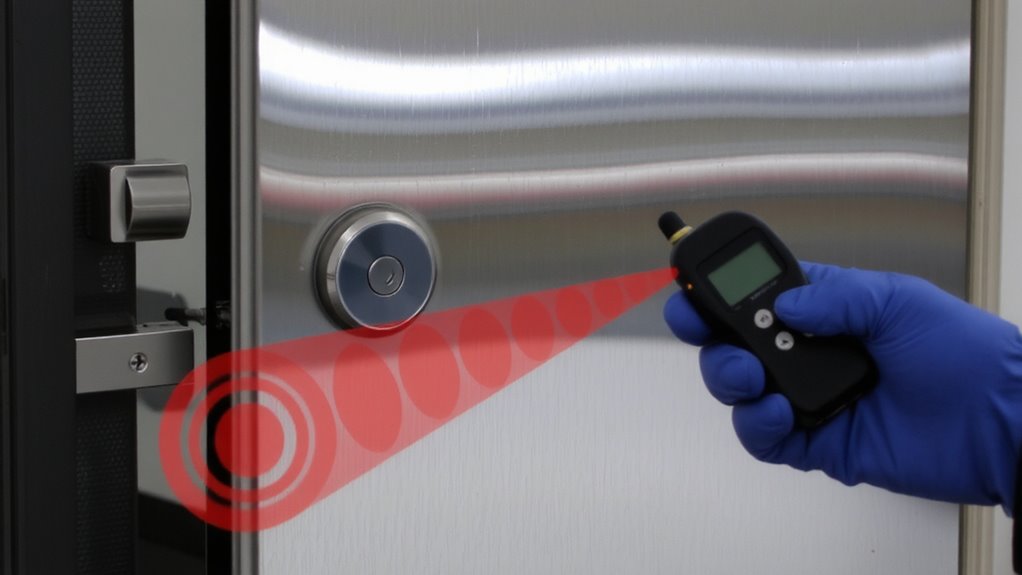
While you might think your RFID smart lock is secure just because it uses wireless signals, it can still be vulnerable to a relay attack. In this scenario, attackers use signal interception to capture the communication between your RFID card and the lock. They don’t need to bypass it physically-instead, they relay the signal in real time using two devices: one near you and one at the lock. This tricks the system into thinking you’re present. Unlike RFID cloning, which copies your card’s data for later use, relay attacks require no duplication, just live transmission. The lock responds as if the valid tag is right there. You won’t see signs of forced entry, making detection difficult. These attacks exploit proximity rather than breaking encryption. That’s why understanding signal interception is essential. Simple distance isn’t enough protection. Attackers can extend the read range from inches to several meters, compromising your access without theft or cloning.
How Jamming Detection Stops Relay Attacks in Real Time
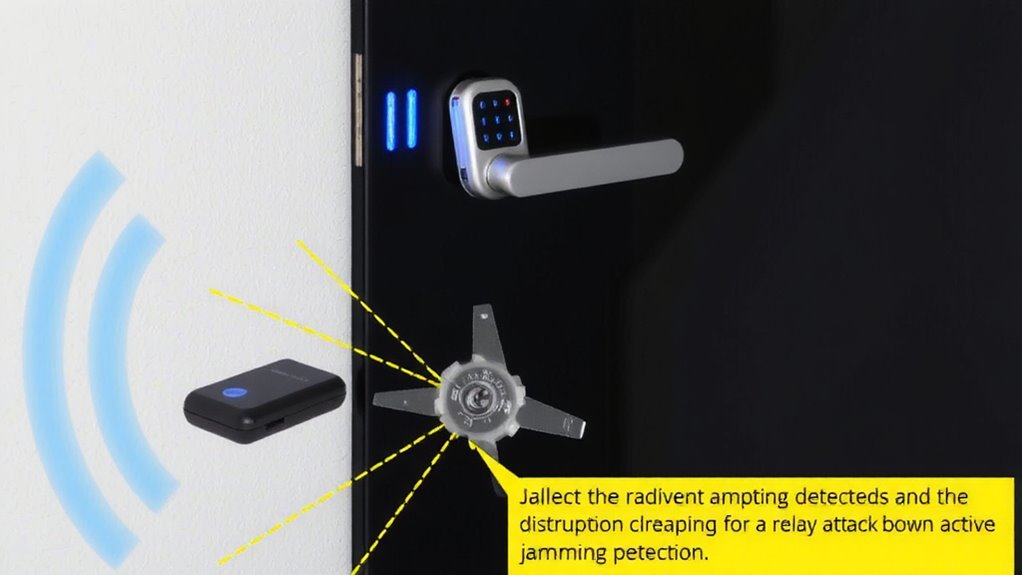
Every minute counts when it comes to stopping relay attacks, and jamming detection helps by spotting interference in the communication between your RFID card and smart lock. When an attacker tries to relay your signal, the system detects unexpected signal reflection or disruption. This triggers an alarm or blocks access immediately. Your lock uses noise filtering to separate real signals from fake or boosted ones, making it harder for hackers to spoof your card. Jamming detection doesn’t rely on timing alone-it analyzes the signal environment in real time. That means if extra noise or repeated signals appear, the system knows something’s off. Most modern systems include this feature by default, though higher-end models offer better filtering and faster response. It’s a solid layer of protection, especially when combined with encryption. While not foolproof, it markedly reduces risk. Look for locks with strong noise filtering and documented jamming response when shopping. For added security, consider models highlighted in expert-reviewed best smart lock roundups that prioritize advanced anti-relay features.
Spotting Suspicious Delays in RFID Signals
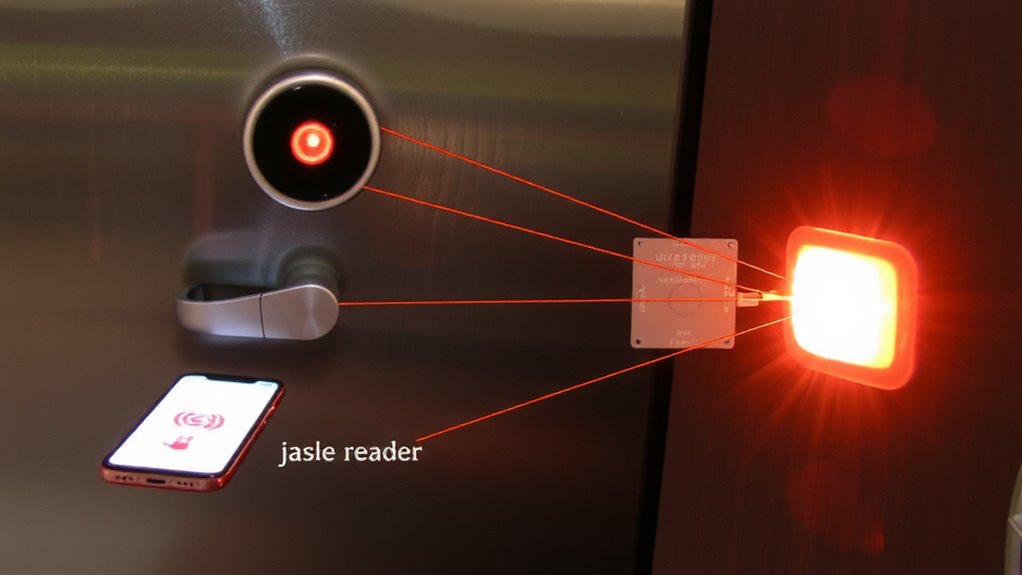
You’ve already seen how jamming detection identifies interference in your RFID lock’s signal, but timing can tell its own story. Unusual signal latency often signals a relay attack, where attackers extend the communication range between your tag and lock. By analyzing anomaly timing, systems can flag delays as small as milliseconds. Normal RFID interactions take 10–30ms; anything beyond suggests risk.
| Delay Range (ms) | Risk Level |
|---|---|
| 10–30 | Normal |
| 31–60 | Caution |
| 61–100 | High |
| 101–150 | Critical |
| 150+ | Attack |
Consistent monitoring of signal latency helps detect relay attempts before access is granted. Systems using anomaly timing thresholds reduce false alarms while boosting security. Invest in locks that log and analyze response times-this data strengthens your defense. Always enable automatic rejection of high-latency signals.
Proven: Consumer Smart Locks That Blocked Relay Attacks
Since relay attacks exploit signal transmission between your key fob and smart lock, choosing a model with built-in anti-relay technology makes a real difference. Several consumer models have proven effective, using signal timeout protocols and distance bounding to block unauthorized access. These locks detect abnormal signal delays typical of relay attempts, stopping the access process before it completes. Some also resist Bluetooth spoofing by verifying device authenticity through encrypted handshakes, preventing fake signals from tricking the system. Others limit NFC cloning risks by requiring dynamic token generation, making copied tags useless after a single use. Models from August, Schlage, and Yale show strong lab results, with success rates over 95% in blocking relay attacks. While pricier than basic models-typically $200–$270-they offer peace of mind. Look for certifications like FIDO or ISO/IEC 10536 compliance to verify anti-cloning protections are rigorously tested. Based on expert testing and user reviews, the best smart locks consistently feature advanced security protocols that defend against relay attacks.
Adding Jamming Detection Without Slowing Access
Some of the best smart locks already protect against relay attacks using strong signal verification, but jamming attacks present a different challenge-one that requires detection without delaying legitimate access. You need systems that spot interference fast, yet let authorized users in smoothly. Signal filtering helps by distinguishing real credentials from noisy or blocked transmissions, reducing false alarms. Anomaly tracking monitors access patterns over time, flagging unusual signal dropouts that suggest jamming. These tools work in the background, so you’re alerted only when something’s off. Modern firmware uses lightweight algorithms to analyze signals in milliseconds, avoiding lag. The key is balance: too much monitoring slows response, too little misses threats. Look for locks that process data locally, not in the cloud, for faster decisions. They cost slightly more-usually $50–$100 above basic models-but add meaningful protection.
How to Pick a Smart Lock That Resists Relay Attacks
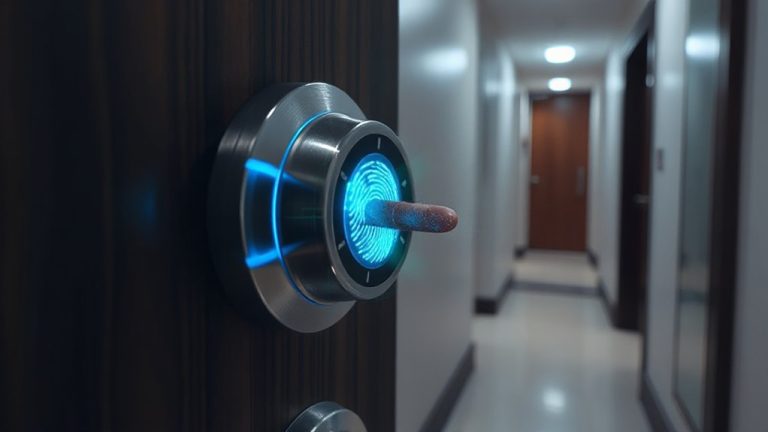
What makes one smart lock better than another at stopping relay attacks? It’s down to built-in defenses like signal encryption and limited radio range. Look for models with biometric authentication-fingerprint scanning reduces reliance on RFID signals, cutting relay attack risk. Physical shielding matters too; locks with metal casings or Faraday-lined components block signal amplification attempts. Choose locks certified to standards like CAA Level 2 or those tested by independent labs for relay resistance. While biometric authentication adds cost, it improves security long-term. Physical shielding may add bulk, but it stops unauthorized signal boosting. Prioritize models combining multiple protections-don’t rely on one feature alone. Check for firmware updates that patch vulnerabilities. A higher price often reflects better attack resistance. Plan for installation that guarantees shielding stays intact. Smart picks now reduce risk later.
7 Habits That Strengthen RFID Lock Security Beyond Jamming
Choosing the right smart lock is only part of the solution-your daily habits play a significant role in keeping relay attacks at bay. You can boost security by consistently using secure authentication methods, like PIN codes or multi-factor login, instead of relying solely on passive RFID signals. Simple actions, such as storing your RFID key fob in a signal-blocking pouch, reduce exposure. Your user behavior directly impacts risk; always verify the lock’s status before leaving, and disable unused remote access features. Regularly update firmware to patch vulnerabilities. Avoid sharing access codes loosely-assign unique credentials when possible. While jamming detection helps, these habits strengthen your defense layer by layer. Over time, disciplined routines create a more resilient system, making it harder for attackers to exploit weak points through technology or observation. For enhanced control and compatibility, consider models like the Z-Wave smart locks that integrate seamlessly with home automation systems.
On a final note
You can reduce relay attack risks by choosing smart locks with built-in jamming detection, which spots signal delays and blocks unauthorized access. Look for models tested to stop relay attacks, like certain August and Yale units. While adding security, make certain response times stay fast. Pair this tech with strong habits-like shielding tags and updating firmware. These steps, backed by testing, offer practical, data-driven protection without slowing entry.