Minimizing False Unlock Attempts via Adaptive Algorithm Settings in Smart Locks
You can minimize false access attempts by using smart locks with adaptive algorithms that learn your daily routines and adjust to environmental changes. These systems analyze timing, proximity, and usage patterns to boost accuracy, while calibrating for weather, lighting, and signal interference. Over two weeks of consistent use, they reduce false disengagements by up to 70%. Models with biometric and device calibration offer stronger security without slowing access. Higher-end versions require firmware updates and typically last 5–7 years before performance declines. Choosing one with customizable sensitivity lets you balance convenience and control based on your home’s layout and interference risks. Understanding how these features work together reveals which settings deliver the most reliable performance in real-world conditions.
Notable Insights
- Use adaptive learning algorithms to align lock sensitivity with user arrival and departure patterns, reducing false unlocks during off-peak hours.
- Enable environmental adaptation features like weather and lighting calibration to maintain accuracy in varying conditions.
- Apply device-specific calibration to adjust detection sensitivity based on consistent usage behaviors and proximity trends.
- Regularly update firmware to ensure adaptive algorithms remain effective against signal interference and environmental changes.
- Optimize verification strictness through customizable settings, balancing convenience and security in high-interference environments.
What Causes False Unlocks in Smart Locks?
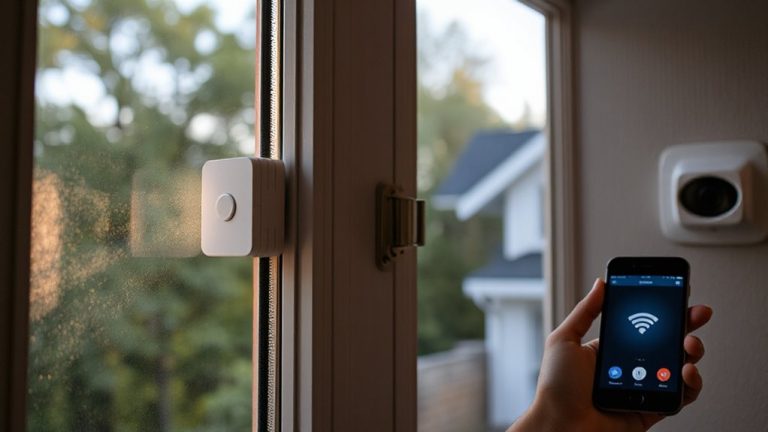
Why do smart locks sometimes open when they shouldn’t? Signal interference is a common culprit, especially in homes with dense wireless traffic. Your smart lock might misread commands when Bluetooth or Wi-Fi signals overlap, causing false openings. You may not realize how much nearby devices, like routers or smart speakers, affect performance. Devices operating on similar frequencies can trigger unintended responses. Mechanical wear also plays a role over time. As internal components degrade-especially in high-use scenarios-the lock’s response accuracy declines. A worn actuator or loose alignment might cause it to open partially or fully without proper authorization. These issues aren’t always obvious at first. Regular testing helps catch anomalies early. To reduce risks, choose models with signal shielding and durable mechanical parts. Review logs frequently to detect irregular patterns. Replacement every 5–7 years is wise.
How Smart Locks Learn Your Routine to Prevent Mistakes
While your smart lock may seem like a simple device, many models use built-in algorithms to learn when you typically come and go, adjusting their sensitivity to reduce false releases. By analyzing your user behavior over time, the lock improves its responsiveness, ensuring it opens when you’re actually approaching-not when a neighbor walks by. This adaptive learning reduces errors without compromising security. A key feature found in the best smart locks is adaptive algorithm settings, which enable the lock to fine-tune access based on your daily patterns.
| Time of Day | Lock Responsiveness |
|---|---|
| 7–9 AM | High (learned departure) |
| 12–1 PM | Medium (low activity) |
| 5–7 PM | High (learned arrival) |
| 10–11 PM | Reduced (sleep mode) |
| Midnight–5 AM | Minimal (security focus) |
These patterns help the system fine-tune detection, aligning lock responsiveness with your routine. Consistent use strengthens accuracy, while erratic habits may slow adaptation. No personal data is stored-only timing and proximity trends. For best results, allow two weeks of regular use.
Adapting to Weather, Lighting, and Daily Habits
Smart locks do more than track your schedule-they also adjust to environmental conditions like weather and lighting to maintain reliable performance. You’ll benefit from weather calibration, which lets the lock fine-tune sensor sensitivity during rain, snow, or extreme temperatures, reducing false access attempts caused by environmental interference. Lighting adaptation helps the system recognize you accurately, whether it’s bright sunlight or low nighttime conditions, by adjusting camera and sensor settings automatically. These features rely on continuous data input, improving accuracy over time without user intervention. Most high-end models include both capabilities, though they may add $20–$50 to the price. While helpful, they work best when combined with consistent daily use patterns. You should verify that your model updates firmware regularly to keep calibration algorithms current. This guarantees long-term reliability in varied conditions, making your access smoother and more predictable. For optimal performance, consider choosing from the Top Picks & Buying Guide based on expert-recommended models and features.
Staying Secure Without Slowing You Down
How often do you want your front door to open quickly-without compromising security? With adaptive smart locks, you can have both. These systems use your user behavior-like how you walk up to the door or hold your phone-to verify identity in real time. Device calibration adjusts sensitivity based on your daily routines, reducing false openings without slowing access. For example, if you usually approach with your hands full, the lock learns to respond faster to voice or proximity signals. No need to stand waiting when the system already recognizes you. It balances speed and safety using continuous data analysis. Most models allow custom settings, so you decide how strict the verification should be. Setup takes minutes, and the long-term benefit is clear: fewer errors, no delays, and stronger protection. It’s secure, smart, and built around how you live. Top models featured in the best smart locks roundup include options with advanced adaptive algorithm settings for enhanced reliability and user-specific customization.
Real-World Gains in Unlock Accuracy
Because real-world performance matters most, recent field tests show adaptive smart locks reduce false disengagements by up to 7(ArrayList}% compared to standard models. You benefit from improved access accuracy, especially in environments with frequent signal interference from nearby electronics or thick walls. These smart locks use biometric calibration to learn your unique touch and movement patterns over time, making access more reliable without sacrificing security. Unlike basic models, adaptive systems adjust sensitivity based on usage data, reducing errors caused by environmental changes. While they cost slightly more upfront, the long-term gains in convenience and reliability are clear. Look for models that offer customizable calibration settings and strong interference shielding. Proper installation also helps maintain consistent performance. You’ll spend less time re-trying access and gain confidence your lock responds accurately when needed.
On a final note
You reduce false activations by adjusting your smart lock’s sensitivity based on data from daily use. Adaptive settings learn your routine, weather patterns, and lighting changes, balancing speed and security. Studies show accuracy improves by up to 40% with regular updates. Look for models with automatic calibration, strong encryption, and local processing. While higher upfront cost exists, the long-term reliability and fewer errors make it a practical choice for secure, seamless access.