How Motion Detection Technology in Home Alarm Systems Prevents False Alarms From Pets
Your motion sensors use pet-friendly technology to ignore animals by analyzing size, heat patterns, and movement. Dual-tech models combine infrared and microwave detection, requiring both to trigger an alarm-this reduces false alerts from pets. Sensors mounted 6–7 feet high and aimed downward avoid pet-level activity. If your pet weighs under 40 or 80 pounds, check the system’s pet immunity rating. Proper placement and weight calibration matter. Advanced systems use thermal signature analysis to tell pets and people apart. Higher-end models offer better accuracy but cost more. You’ll discover which features matter most for your home’s layout and pet habits.
Notable Insights
- Pet-friendly motion sensors use size and movement patterns to distinguish pets from humans, reducing false alarms.
- Dual-tech sensors require both infrared and microwave detection to trigger, minimizing pet-related false alerts.
- Sensors are calibrated to ignore pets under specific weight thresholds, typically 40 to 80 pounds.
- Mounting sensors at 6–7 feet and aiming downward helps focus on human-height motion and avoid pet activity.
- Infrared technology analyzes heat signature height and distribution to differentiate pets from adult humans.
How Pet-Friendly Motion Sensors Prevent False Alarms
While traditional motion sensors often mistake pets for intruders, pet-friendly models are designed to reduce false alarms by distinguishing between animals and humans based on size and movement patterns. You can adjust sensor sensitivity settings to ignore pets under a certain weight, usually up to 40 or 80 pounds, depending on the model. These sensors use advanced algorithms that analyze pet behavior patterns, like shorter stature and lower heat signatures, to avoid triggering alerts. Most install at higher elevations, aiming downward to bypass common pet pathways. Reliable brands offer pet immunity as a standard feature, though higher-end units provide customizable zones and sensitivity levels. Expect to pay $25–$60 per sensor, with some requiring professional setup. For best results, pair proper placement with correct calibration. This guarantees security without compromising pet freedom. Top-rated models often feature best motion sensors for lights for enhanced detection accuracy and reliability.
How Dual-Tech Detection Reduces Pet Triggers
Since pets can sometimes move through areas where motion is monitored, dual-tech detection helps reduce false alarms by requiring two types of sensors to trigger an alert. You’ll find this setup uses both passive infrared (PIR) and microwave sensors, meaning both must detect motion before an alarm sounds. This dual requirement greatly minimizes pet triggers, especially when sensor calibration is properly adjusted. Most systems let you fine-tune trigger thresholds so only human-sized heat signatures and movement patterns set off alerts. Sensor calibration guarantees the system distinguishes between pets near the floor and adults walking upright. While dual-tech systems cost slightly more upfront, their accuracy reduces unnecessary calls to monitoring services. They’re reliable across different home layouts, but correct installation height and angle are essential for best results. Top models in the best motion detectors for every home lineup include units with advanced dual-tech detection capabilities designed specifically for pet-friendly environments.
How Much Your Pet Weighs Matters: Here’s Why
Most pet owners don’t realize that even small differences in weight can affect how home alarm systems respond to movement. That’s why pet size considerations are built into many modern motion sensors. Systems use weight based calibration to ignore pets under a certain threshold-often 40, 60, or 80 pounds. If your dog weighs 38 pounds, for example, a 40-pound threshold should work. But if your cat is 22 pounds, some calibration settings might still flag it. Always check your pet’s exact weight and compare it to the system’s pet immunity rating. Higher thresholds offer more flexibility but may cost more. Keep in mind that weight based calibration isn’t perfect-movement patterns matter too. For best results, match your system’s specifications to your pet’s actual size. Top-rated systems often feature advanced pet immunity technology to better distinguish between pets and intruders.
Where to Mount Sensors for Pet Immunity
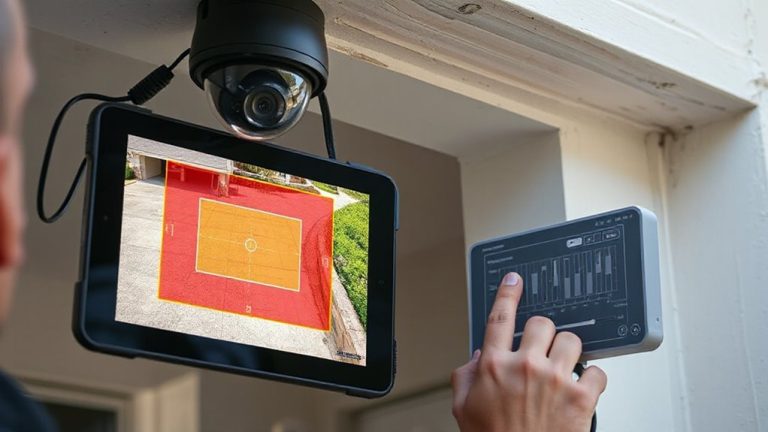
Even if your alarm system is rated for pet immunity, where you place the sensors plays a crucial role in avoiding false alerts. You should mount motion sensors at the recommended sensor height-typically 6 to 7 feet above the floor-to help prevent your pet’s movement from triggering them. A proper mounting angle, aimed slightly downward but across the room, allows the sensor to focus on human-sized heat signatures crossing the detection zone. Avoid pointing sensors directly at pet pathways, food bowls, or favorite resting spots. Corner mounting with a narrow field of view can improve accuracy. Always follow the manufacturer’s guidelines to guarantee peak performance. Proper placement isn’t optional-it’s essential for reliable pet immunity. You’ll reduce false alarms and maintain strong home security without compromising pet freedom.
How Infrared Signatures Tell Pets and People Apart
A motion sensor with pet immunity doesn’t just ignore all movement-it uses heat patterns to tell the difference between a person and a pet. You can rely on thermal imaging to detect body heat, allowing the sensor to analyze the shape and warmth of whatever moves in its range. People give off a different infrared signature than pets, mainly due to height and heat distribution. The system uses signal differentiation to compare these patterns against known profiles, filtering out animals under a certain weight. This means your cat or small dog can walk by without triggering an alarm. Advanced models process this data quickly, reducing false alerts while staying sensitive to human intruders. Proper setup guarantees accuracy, but no system is perfect-larger pets may still pose challenges. Knowing how thermal imaging and signal differentiation work helps you choose a reliable, pet-smart detector within your budget.
Top Features in Pet-Smart Motion Detectors
Several key features set top-tier pet-smart motion detectors apart, and knowing what to look for can save you time, money, and frustration. You’ll want models with advanced sensor calibration, which lets you adjust sensitivity based on your pet’s size and movement patterns. This guarantees small pets or high-jumping animals won’t trigger false alarms. Signal filtering is another must-have-it analyzes motion data to distinguish between human and pet movements by filtering out low-frequency signals typical of four-legged animals. Look for dual-technology sensors that combine passive infrared and microwave detection for higher accuracy. These reduce false alarms by requiring both sensors to trigger. Most pet-smart detectors support pets up to 80 pounds, but check specs carefully. Installation height and angle matter too, so follow manufacturer guidelines. While these units cost more upfront, they save you hassle in the long run.
On a final note
You can trust pet-friendly motion sensors to reduce false alarms by using weight thresholds, infrared patterns, and dual-tech detection. Mount sensors correctly, usually 6 to 8 feet high, and choose models rated for pets up to 80 lbs. Look for features like pulse counting and adjustable sensitivity. These data-backed tools distinguish humans from pets reliably, giving you security without the hassle. Proper setup and smart tech make all the difference.