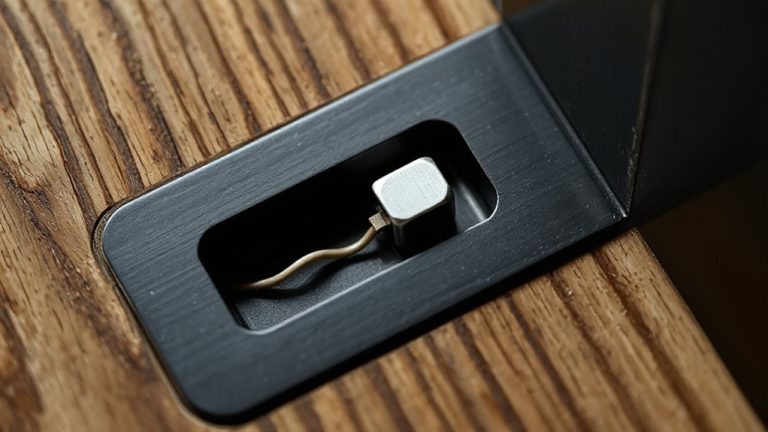
How to Integrate Window Sensors With Home Insurance Discounts and Monitoring Services
You can cut your home insurance by 5% to 15% by installing window sensors at ground-level and accessible entry points. Use magnetic sensors, which cost $15–$30 each, and pair them with monitored systems for full protection. Choose 24/7 professional monitoring with cellular backup to meet insurer requirements and maintain alert reliability. Confirm sensor and hub compatibility, test signal strength, and document your setup thoroughly. You’ll need receipts, model numbers, and installation proof to claim and keep your discount-details on optimizing each step follow.
Notable Insights
- Install window sensors on ground-level and accessible windows to qualify for 5%–15% insurance discounts.
- Choose magnetic contact sensors and ensure compatibility with your security system’s wireless protocol.
- Pair window sensors with monitored alarm systems to meet insurer requirements for premium reductions.
- Subscribe to 24/7 professional monitoring with cellular backup for reliable signal transmission and discount eligibility.
- Submit installation photos, receipts, and monitoring logs to your insurer to verify and maintain discount claims.
Get Insurance Discounts With Window Sensors
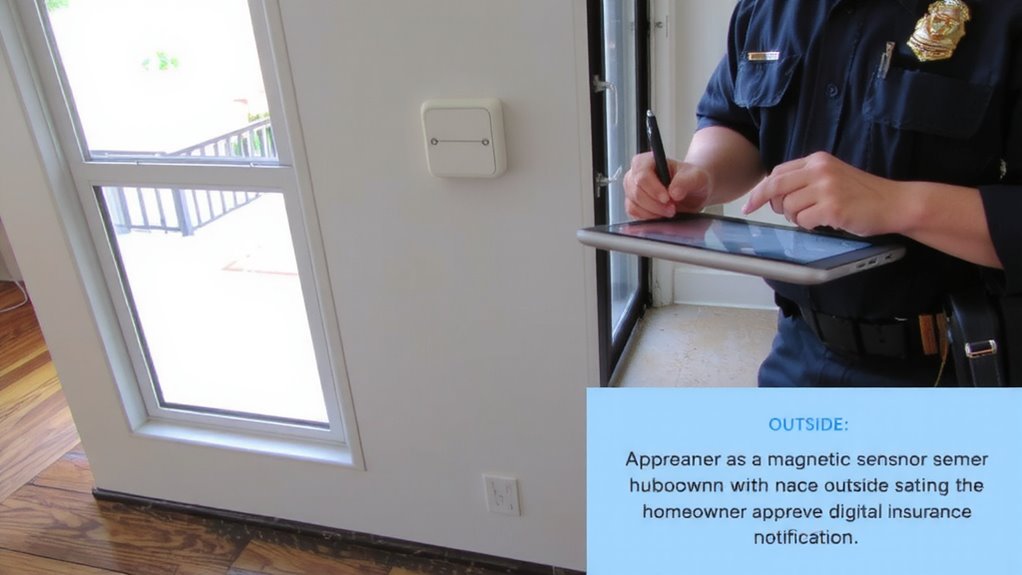
While not every homeowner realizes it, installing window sensors can lead to real savings on your insurance premiums. Many insurers offer insurance incentives for homes with upgraded window security, viewing them as lower risk. On average, you could save 5% to 15% annually, depending on your provider and location. These sensors trigger alerts when a window opens, improving response times and reducing break-in likelihood. Data shows monitored homes with sensors face fewer successful burglaries, a fact insurers reward. Be sure to ask your agent which devices qualify and whether documentation is needed. Some systems require professional installation or monitoring contracts, which may affect overall cost. While upfront expenses range from $50 to $150 per sensor, the long-term savings and increased safety make it a sound investment. Strong window security doesn’t just protect your home-it pays for itself over time.
Install Sensors at Key Entry Points for Full Coverage
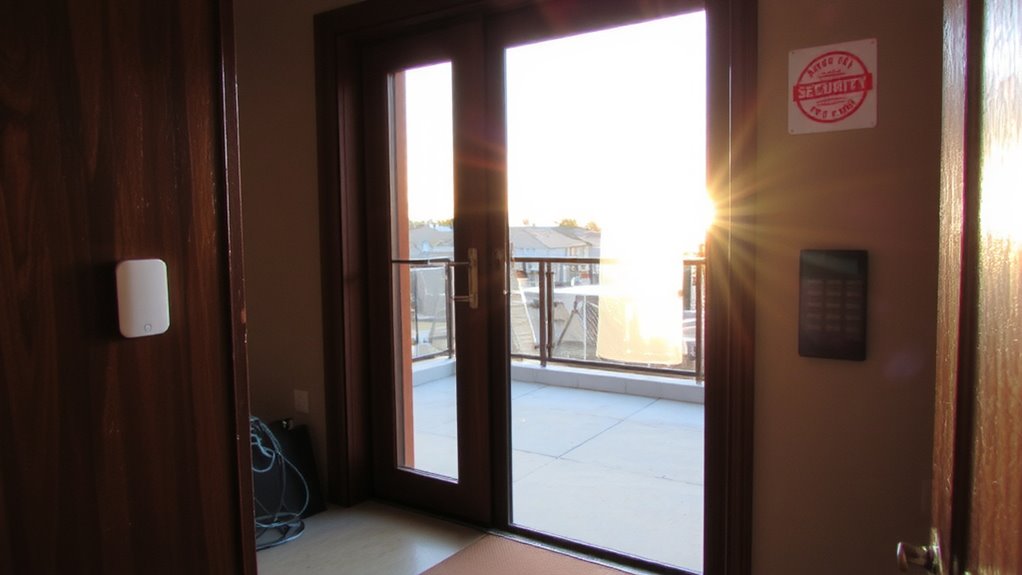
Strategic placement of window sensors is key to maximizing both security and insurance benefits. You’ll want to focus on ground-level and easily accessible windows, since these are common entry points for intruders. Proper sensor placement guarantees reliable entry detection, which insurers often require for discount eligibility. Install sensors on all primary-floor windows and any basement or attic windows that could be used for access. Make sure each sensor is aligned correctly to avoid false alarms and maintain consistent operation. Most systems use magnetic contact sensors, which trigger when the window opens. These are affordable, typically $15–$30 per unit, and easy to install. For maximum coverage, pair them with door sensors. Reliable entry detection across key points not only strengthens home security but supports your case for lower premiums.
Pick Monitoring That Helps Prove Your System to Insurers
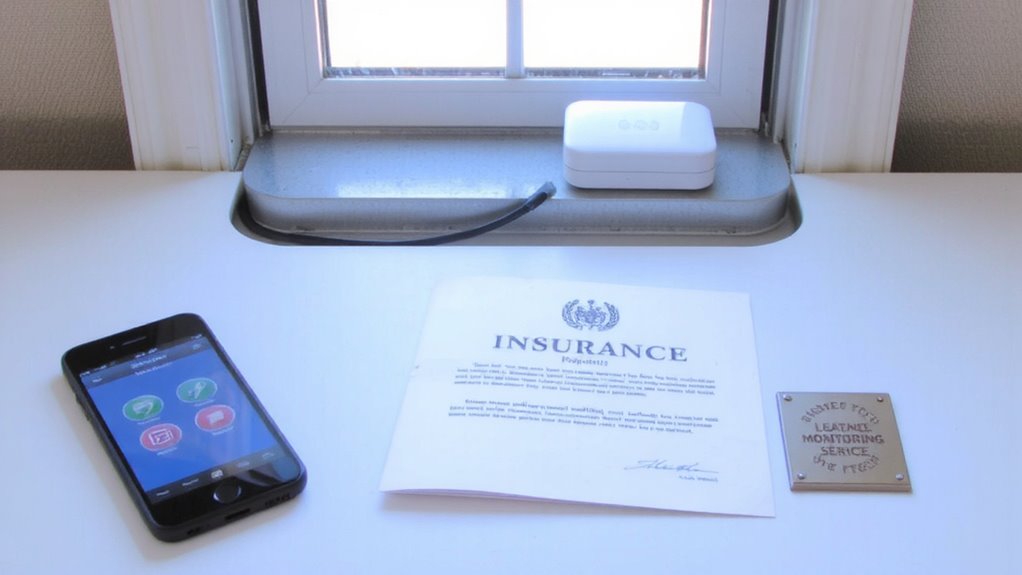
You’ve installed window sensors at key entry points, but your insurance provider still needs proof that your system is active and monitored. Choose professional monitoring that sends encrypted, consistent signals to a central station, reducing false alarms and ensuring reliability. Monitoring services log each alert and response, creating a record insurers accept for discount eligibility. Opt for systems with cellular backup to avoid signal interference from Wi-Fi outages or jamming. These systems cost $15–$30 monthly, but the investment often offsets higher insurance premiums. Reliable monitoring lowers false alarms, which insurers view negatively, potentially disqualifying you from discounts. Confirm your monitoring service provides certification or regular reports proving system uptime and response times. This documentation strengthens your claim for reduced rates. Prioritize providers with UL certification and 24/7 live monitoring to meet insurance requirements.
Check Sensor and Monitoring Compatibility
Even if your window sensors are properly installed, they won’t deliver the full benefit for insurance discounts unless they’re compatible with your monitoring service. Not all sensor types work with every system-magnetic contact sensors, for example, may use different wireless protocols than what your hub supports. Check with your provider to confirm which sensors they accept. You’ll also need to assess signal range, as weak or spotty connections can cause delays or missed alerts. Most systems have a range of 300 to 500 feet in open spaces, but walls and interference reduce that. Pick sensors within your system’s specs to guarantee reliable communication. Test each sensor during setup to verify the signal reaches the hub. Choosing compatible hardware now prevents costly swaps later and guarantees your monitoring service can validate your setup for discounts.
Document Your System to Claim and Keep Lower Premiums
Once your sensors are installed and communicating reliably with your monitoring system, the next step is confirming your insurer recognizes the upgrade. You’ll need solid system documentation to prove your setup qualifies for a discount. Take photos, keep purchase receipts, and save installation records, including model numbers and dates. Share this documentation with your provider to start premium verification. Most insurers require annual updates, so keep files organized and accessible. Without updated proof, your discount may be removed. Digital folders or cloud storage make retrieval easy. Some companies offer online portals for faster verification. Accurate documentation guarantees you claim and maintain the full savings. It also speeds up claims if break-in damage occurs. A well-documented system strengthens your case for lower premiums long term.
On a final note
You can lower your home insurance by installing window sensors at all entry points. Choose monitored systems insurers recognize, and confirm compatibility before buying. Document your setup thoroughly to prove coverage and maintain discounts. Monitoring adds cost but strengthens security and validation. Sensors deter break-ins and may reduce premiums by up to 15%. Check with your insurer for specific requirements and savings. Plan for installation and monthly fees to budget effectively.