Embedding Vibration Sensors Inside Door Edge to Detect Break-In Attempts Early
You can catch break-ins early by embedding vibration sensors in your door’s edge, where hidden accelerometers detect impacts at 50–500 Hz-like kicks or drilling-before the door opens. These sensors, often piezoelectric or MEMS-based, filter out everyday bumps using smart algorithms, cutting false alarms. Installed flush within the frame, they avoid interference, last longer on battery, and cost $20–$60 each, with kits running $40–$80. Wired setups boost reliability and tamper resistance. You’ll get alerts in seconds, giving real-time response advantages and stronger security overall-there’s more to evaluate for ideal setup.
Notable Insights
- Embedding vibration sensors in the door edge enables early detection of break-in attempts through impact and vibration analysis.
- Piezoelectric and MEMS accelerometers are optimal for detecting kicks, drilling, and forced entry within the 50–500 Hz frequency range.
- Hidden installation in the door edge provides concealment, reduces false alarms, and avoids interference from metal or electronics.
- Sensors use adaptive algorithms to filter normal disturbances like wind or keys, improving threat detection accuracy over time.
- Wired integration with tamper resistance and encrypted signals ensures reliable performance and faster alert response during intrusions.
How Vibration Sensors Detect Break-Ins Before Doors Open
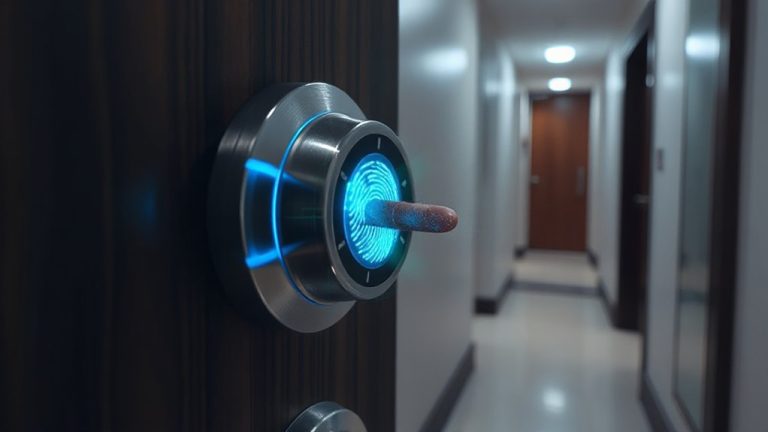
A door-edge vibration sensor acts like a silent guard, picking up unusual impacts or forced entry attempts before the door ever opens. You rely on its ability to detect subtle vibrations through built-in accelerometers. When someone strikes or jimmies the door, the sensor captures the motion and sends data for frequency analysis, distinguishing normal bumps from threats. This allows accurate impact recognition, filtering out everyday disturbances like wind or keys. Most systems use algorithms trained on real break-in data, improving reliability. Sensors typically operate in the 50–500 Hz range, focusing on energy patterns linked to forced entry. Installation fits within the door frame’s edge, keeping it hidden and protected. Units cost $25–$60, with low power use enabling years of battery life. While false alarms are rare, improper calibration can reduce effectiveness. Proper setup guarantees early warnings, giving you time to respond before compromise.
Why Door-Edge Sensors Outperform Surface-Mounted Alarms
While surface-mounted alarms rely on detecting door movement after the latch is compromised, door-edge vibration sensors catch threats earlier by monitoring impacts directly at the frame, giving you a critical advantage. You’ll get alerts the moment someone strikes the door, not after it’s forced open. Because the sensor’s embedded, it avoids signal interference from nearby electronics or metal surfaces that often disrupt surface models. It’s also designed for power efficiency, running longer on batteries and reducing maintenance. Surface alarms can misfire or miss attacks, especially on sturdy doors, but edge sensors respond precisely to impact patterns linked to break-ins. Installation takes more effort upfront, but the reliability is worth it. They cost a bit more, typically $20–$40 per door, but enhance whole-system responsiveness. You’ll get fewer false alarms and faster detection, making them a smarter long-term choice for serious home security planning.
Which Sensor Types Stop Kicks and Drills Most Effectively
You’ve seen how embedding sensors at the door edge improves detection timing and reliability over surface models, but now it’s time to focus on which specific sensor types handle high-impact attacks like kicks and precise threats like drilling. The right sensor materials and signal filtering make all the difference.
| Sensor Type | Best Against |
|---|---|
| Piezoelectric | Kicks, impacts |
| MEMS accelerometers | Drills, vibrations |
| Acoustic wave | Sudden force |
| Strain gauge | Prying, pressure |
Piezoelectric sensors detect sharp force quickly, while MEMS units offer precise signal filtering to ignore everyday noise. Acoustic wave sensors respond well to fast attacks, and strain gauges monitor slow pressure changes. Choose models with durable sensor materials like quartz or ceramic for longer life. Effective signal filtering reduces false alarms from wind or slamming. Combined, these types give layered protection-ideal for high-risk entry points.
Install a Hidden Sensor in 5 Steps
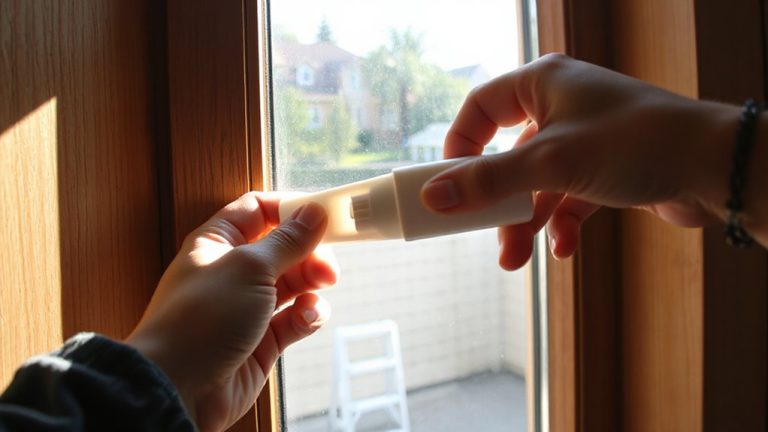
Hidden sensors work best when installed out of sight and out of reach, so positioning matters as much as the tech itself. First, choose your sensor placement near the door’s edge, away from handles or hinges to maximize vibration detection. Second, mark a narrow channel along the door edge where the sensor will sit flush. Third, carefully chisel the groove, ensuring it’s deep enough to allow for hidden wiring. Fourth, secure the sensor in place with strong adhesive or screws, depending on the model. Finally, route the wiring into the door frame and cover it to maintain concealment. Proper hidden wiring prevents tampering and keeps the setup clean. Sensor placement impacts sensitivity-test it by tapping the door gently. Avoid over-tightening mounts to preserve responsiveness. Most kits cost $40–$80, with professional installation adding $100–$150. Good planning saves time and boosts effectiveness.
Connect to Your System So Intruders Can’t Disable It
Since the sensor is hidden in the door edge, connecting it to a secure, tamper-resistant system guarantees intruders can’t disable it remotely or by cutting wires. Use wired connectivity to boost reliability and guarantee constant power without battery failure risks. Tamper resistance means the system alerts you if someone tries to interfere physically. Best home alarm systems offer these advanced security features along with professional monitoring for comprehensive protection. Below are key choices to evaluate:
| Feature | Why It Matters |
|---|---|
| Wired connectivity | Prevents signal jamming and avoids Wi-Fi outages |
| Tamper resistance | Triggers alarm if intruder tampers with sensors |
| Central hub connection | Keeps signal secure and centralized |
| Encrypted signal | Blocks remote hacking attempts |
| Backup power | Maintains operation during outages |
Calibrate to Block False Triggers
While proper installation matters, calibrating your vibration sensor is just as important to avoid false alarms from everyday door use. You’ll need to adjust the sensor sensitivity so it responds to strong, suspicious impacts but ignores normal knocks or slams. If set too high, environmental interference-like nearby traffic or slamming windows-can trigger alerts. Most systems let you fine-tune sensitivity through an app or control panel, letting you test responses by tapping the door gently and firmly. Start with medium sensitivity, then adjust based on consistent performance over a few days. Some sensors offer adaptive learning, reducing false triggers over time. Keep records of alerts to spot patterns linked to interference. Proper calibration guarantees reliable detection without unnecessary disruptions, maintaining trust in your system. This small step greatly improves accuracy and long-term effectiveness.
Real-World Cases: When Door-Edge Sensors Foiled Break-Ins
You’ve set up your vibration sensor and fine-tuned the sensitivity to avoid false alerts from daily vibrations, but how well does it perform when someone actually tries to break in? Real cases show these sensors detect forced entry attempts within seconds, sending alerts before locks are compromised. In one instance, a homeowner in a suburban area received an alert at 2:17 a.m.; police arrived to catch a suspect mid-attempt. The data logged helped resolve neighbor disputes over responsibility, providing clear evidence of external tampering. Another user’s timely alert led to a successful arrest and simplified insurance claims with timestamped sensor records. These sensors don’t stop all break-ins, but they improve detection speed and documentation. For best results, pair them with motion cameras and monitored alarms. At $40–$80 per unit, they’re a cost-effective layer in a full security plan.
On a final note
You can catch break-ins early by embedding vibration sensors in your door edge. These detect kicks, drilling, or prying before the door opens. They’re harder to spot than surface alarms, reducing tampering risk. Use piezoelectric or MEMS sensors for best results. Install carefully, wire to a monitored system, and calibrate to ignore daily bumps. Hidden sensors add strong, data-backed protection without false alarms when set up right.