How Home Alarm Systems Detect Intrusions and Trigger Alerts
Your home alarm system detects intrusions using sensors that monitor doors, windows, and motion. Door contacts alert when opened, glass break sensors catch shattering sounds, and motion detectors spot unexpected movement. When triggered, the system sounds an alarm and sends a signal to a monitoring center or your phone. Wired systems offer faster response, while wireless ones are easier to install. Smart features can reduce false alarms from pets or environmental factors. Dual-sensor technology and proper placement improve reliability. You’ll find how to choose the right setup based on your home’s layout and security needs.
Notable Insights
- Door contact sensors detect intrusions by triggering an alert when windows or exterior doors are opened.
- Motion detection sensors monitor infrared energy to identify unexpected movement within interior spaces.
- Glass break sensors recognize the specific sound frequency of shattering glass to detect forced entry.
- Dual-technology sensors combine motion and environmental detection to reduce false alarms and confirm threats.
- Upon detection, alarms trigger sirens and send signals to monitoring centers or smartphone alerts for immediate response.
How Home Alarm Systems Detect Intrusions

While every home alarm system works to protect your property, most rely on a combination of sensors and communication protocols to detect intrusions effectively. You’ll find that motion detection sensors monitor infrared energy to identify unexpected movement inside your home. These sensors trigger alerts when someone enters a monitored room, making them essential for indoor security. Glass breakage sensors, meanwhile, detect the specific sound frequency of shattering glass, providing immediate response to forced entry through windows. Together, these technologies reduce false alarms and improve accuracy. Most systems use wireless signals to notify your control panel or mobile app within seconds. For best results, place motion sensors in open areas and glass breakage sensors near vulnerable windows. While standard packages start around $200, professional monitoring adds $20–$50 monthly. Choose models with adjustable sensitivity to balance security and convenience. Top-rated systems often include features like professional monitoring for enhanced protection.
The Sensors That Spot Break-Ins
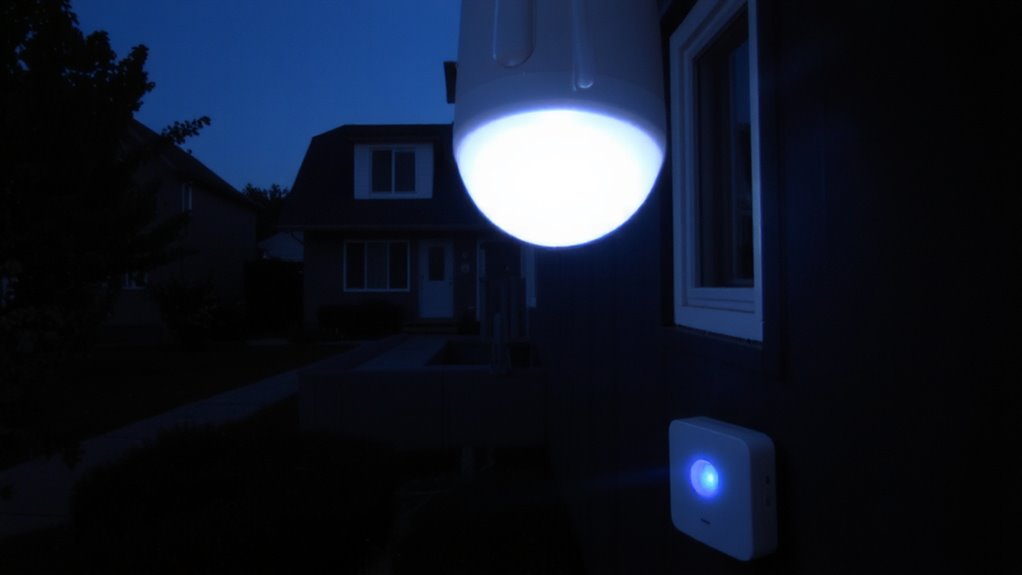
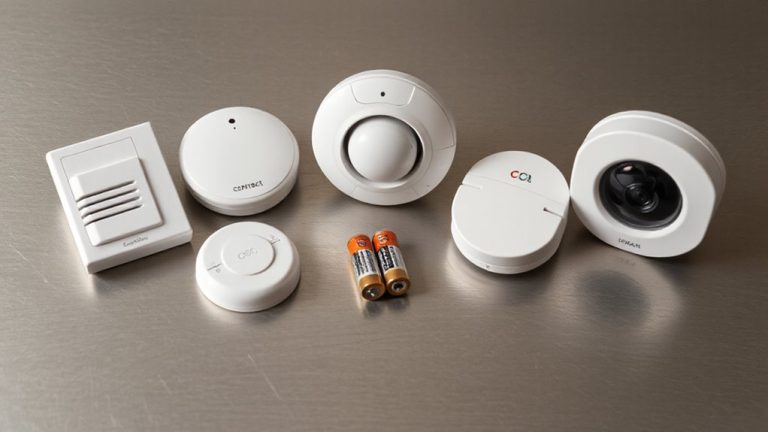
Break-in sensors are the frontline defense in any home security setup, and knowing how they work helps you choose the right ones for your needs. Door contact sensors alert you when a window or door opens, making them ideal for entry points. Motion detection sensors use infrared technology to identify body heat, triggering alerts when movement is sensed. Combine both for stronger protection.
| Sensor Type | Best For |
|---|---|
| Door contact | Windows, exterior doors |
| Motion detection | Interior rooms, hallways |
| Dual-technology | Reducing false alarms |
| Pet-immune motion | Homes with pets |
Door contact sensors are affordable and easy to install, while motion detection units cover larger areas but may cost more. Use door contact sensors on every entry and motion detectors in key interior zones. This layered approach guarantees intruders are detected early, no matter their entry method. For seamless integration with smart home systems, consider Best Motion Sensors for Home Assistant.
What Happens When the Alarm Goes Off?

Once the sensors detect an intrusion, your alarm system springs into action within seconds. A loud siren or strobe light activates to deter the intruder and alert you and your household. At the same time, the system sends a signal to the monitoring center. There, professionals begin alarm verification, reviewing sensor data or camera footage to confirm a real threat. This helps reduce false alarms and guarantees a faster, more accurate response. If confirmed, they initiate emergency dispatch, contacting police, fire, or medical services based on the situation. Most monitored systems offer 24/7 support with response times averaging under 60 seconds. Self-monitored systems alert you directly, but you must contact authorities. For reliable protection, experts recommend professional monitoring with alarm verification. It’s a small monthly fee-typically $20 to $60-that improves accuracy and speeds emergency dispatch when every second counts. Top-rated systems often include features like mobile alerts and professional monitoring.
Do Wireless Alarms Respond Faster Than Wired?
How quickly does your alarm system respond when danger strikes-does the type of setup really make a difference? Wired systems typically offer lower signal latency, sending alerts faster due to direct connections. Wireless alarms are convenient but face slight delays and rely on battery dependency, which can affect performance if not monitored.
| Feature | Wired System | Wireless System |
|---|---|---|
| Signal Latency | Low | Moderate |
| Installation | Complex, professional | Easy, DIY-friendly |
| Power Source | Direct wiring | Battery dependency |
| Response Speed | Faster alert delivery | Slight delay possible |
You’ll want consistent response times, so consider regular battery checks with wireless setups. While wireless models offer flexibility, wired systems generally respond quicker due to stable connections. Choose based on your home’s layout and maintenance habits.
How Smart Homes Improve Intrusion Alerts
What if your alarm didn’t just sound but also sent a video clip to your phone the moment a window was forced open? Smart homes make this possible. They use smart alerts to notify you instantly when sensors detect unusual activity. These alerts arrive on your smartphone, tablet, or smartwatch, so you’re never left guessing. Integrated cameras and motion detectors work together to confirm threats and deliver real-time updates. Automated responses can turn on lights, lock doors, or sound indoor and outdoor sirens without you lifting a finger. Many systems learn your habits and adjust settings accordingly, improving accuracy. While setup costs range from $200 to $600, monthly monitoring adds $15–$50. Choose systems with strong encryption and local data storage for better security. Smart alerts and automated responses give you faster awareness and greater control over your home’s safety.
Can False Alarms Be Prevented?
Some false alarms are unavoidable, but modern systems can reduce them substantially with smart design. You can minimize triggers by adjusting sensor calibration and accounting for environmental factors like pets, sunlight, or drafts. Dual-sensor technology, which requires two triggers before alerting, helps avoid false positives.
| Factor | Impact on False Alarms |
|---|---|
| Poor sensor calibration | Increases risk of false triggers |
| Pets moving in detection zones | Triggers motion sensors |
| Sudden temperature shifts | Affects heat-sensitive detectors |
| Windows vibrating in wind | Activates contact sensors |
| Proper placement and testing | Reduces unwanted alerts |
You should test your system monthly and update settings as your household changes. Advanced models use algorithms to learn normal patterns, further cutting down errors. Environmental factors matter-place sensors thoughtfully and recalibrate when seasons change for best results.
What to Look for in a Home Alarm System
A reliable home alarm system starts with the right mix of features tailored to your household’s layout and lifestyle. Look for installation ease-systems that support DIY setup save time and money, while still offering solid performance. Check the monitoring options: professional monitoring provides 24/7 oversight and faster emergency response, though it usually requires a monthly fee. Self-monitoring alerts you directly through a mobile app and cuts costs, but relies on your availability. Choose a system with both wired and wireless sensors, so it adapts to your home’s structure. Guarantee compatibility with smart home devices for added control. Battery backup and cellular connectivity improve reliability during outages. Compare contracts-some monitoring plans lock you in for years, while others offer month-to-month flexibility. Prioritize systems with strong customer support and positive user reviews.
On a final note
You can trust modern alarm systems to detect intrusions using sensors on doors, windows, and motion zones. When triggered, they send alerts to your phone or a monitoring center. Wireless systems offer easier installation, while wired ones provide reliability. Smart features reduce false alarms and improve response. Look for systems with 24/7 monitoring, mobile access, and proven accuracy to fit your needs and budget.