How Two-Way Voice Verification Helps Monitoring Centers Respond to Alarms Faster
You get faster alarm responses because two-way voice verification lets monitoring centers speak through your system’s speaker to assess threats in real time. Operators listen for sounds like breaking glass or voices, ask direct questions, and use audio cues to confirm emergencies. This cuts false alarms by up to 90% and speeds up police or medical dispatch when needed. It works even during Wi-Fi outages and costs $30–$50 monthly. System performance depends on microphone placement. More details on how it works daily follow.
Notable Insights
- Operators instantly communicate via system speakers to assess alarms in real time.
- Live audio analysis detects threats like shouting or breaking glass within seconds.
- Immediate voice interaction confirms emergencies, reducing false alarm dispatches.
- Verified threats receive priority response from police and emergency services.
- System operates on backup lines, ensuring functionality during internet outages.
How Two-Way Voice Verification Works
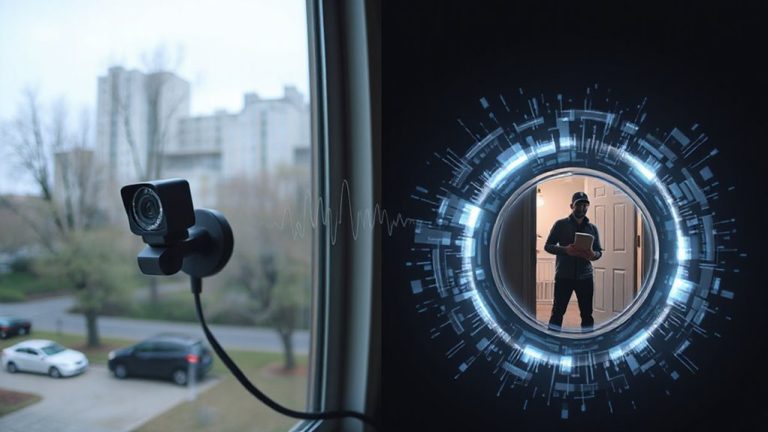
When you install a security system with two-way voice verification, it means that instead of relying solely on motion sensors or alarms, a live operator can speak directly through your system’s speaker to assess a potential break-in. You’ll hear the operator asking questions, like “Is everything okay?” while they listen for context. The system uses audio analysis to detect background sounds-like breaking glass or voices-that support threat evaluation. Advanced speaker recognition helps determine if it’s you, a family member, or an unknown person responding. This reduces false alarms and increases accuracy. The operator remains on the line, gathering real-time information. Systems with these features typically cost $30–$50 monthly, depending on integration level. Proper mic placement improves performance. Two-way voice doesn’t replace sensors but enhances them with human and technological verification.
How It Speeds Up Threat Assessment
You hear the operator’s voice come through your security system, asking if everything’s okay-this immediate interaction cuts down response time markedly. With two-way voice verification, you can provide immediate confirmation of your safety, allowing the monitoring center to assess the situation without delay. Instead of waiting for emergency services to arrive only to find a false alarm, they use real time analysis to evaluate what’s happening based on your response. This direct communication helps operators distinguish between real threats and non-emergencies in seconds. Real time analysis of audio cues-like breaking glass or shouting-adds another layer of accuracy. You benefit from faster, smarter responses, and monitoring teams can prioritize genuine alarms. It’s a reliable method that improves emergency protocols while reducing unnecessary dispatches. No extra effort is needed on your part, just a quick reply. This system makes threat assessment quicker and more precise.
Stop False Alarms: Confirm Threats in Seconds
Because false alarms account for a significant portion of emergency dispatches, two-way voice verification helps you confirm actual threats in seconds, reducing unnecessary calls to authorities. You can reduce noise from common triggers like pets or cooking by hearing live audio from the site. This direct communication lets you distinguish between real emergencies and false alarms instantly. Monitoring centers use it to improve accuracy, ensuring only verified incidents prompt responses. You gain faster resolution without overburdening emergency services. It works day or night, even when the homeowner can’t answer a callback. The system integrates with existing alarms and requires no extra user effort. Though setup needs professional calibration, the long-term benefits outweigh initial costs. With fewer false dispatches, you save money and increase trust in your security system. It’s a reliable way to maintain safety while streamlining operations.
Respond Faster to Break-Ins and Medical Emergencies
While every second counts during a break-in or medical emergency, two-way voice verification lets you respond faster by confirming the situation in real time. You can assess threats instantly, which speeds up emergency response and enables rapid intervention when it’s most critical. If someone breaks in or a resident falls, you hear it-no waiting for police or EMTs to arrive just to find a false alarm. This immediate audio check reduces delays, so help is dispatched only when truly needed. Rapid intervention becomes possible because verified alarms receive top priority from authorities. You gain reliable confirmation without physical presence, making your emergency response smarter and more efficient. Plus, faster verification means medical teams or officers arrive sooner, improving outcomes. It’s a practical upgrade that boosts both safety and system accuracy, all without requiring expensive hardware overhauls. You’ll save time, resources, and potentially lives.
How Monitoring Centers Use Voice Verification Daily
Every day, monitoring centers handle hundreds of alarm signals, and two-way voice verification has become a key tool in sorting real threats from false alerts. When an alarm triggers, operators use voice monitoring to instantly call the site through built-in speakers. You hear them asking, “Is everything okay?” If you respond, they cancel the dispatch, saving time and resources. If there’s no answer or signs of distress, emergency protocols activate immediately. This method reduces false alarms by up to 90%, according to industry data. It’s faster than waiting for video confirmation or third-party checks. While some systems require a subscription, the cost is often outweighed by quicker emergency response and fewer fines. Voice verification works even if Wi-Fi drops, as long as the backup line functions. For you, that means reliable protection, clearer communication, and smarter use of emergency services when every second counts.
On a final note
You can reduce alarm response times with two-way voice verification, which lets monitoring centers confirm emergencies fast. It cuts false alarms by letting operators speak directly through your system, verifying threats in seconds. This clear, two-way audio helps identify real break-ins or medical issues quickly. Centers use it daily to prioritize urgent calls. Though it requires a stable connection and compatible equipment, the result is faster, more accurate responses when every second counts.