Practical Tips for Securing Valuables During Long-Term Vacations or Relocation Periods
Install smart locks and motion sensors to secure entry points, using models with pet immunity to reduce false alarms. Set timers on lights to simulate occupancy, and update firmware to avoid vulnerabilities. Store valuables in a fireproof, biometric safe bolted to the floor or wall-certified models cost $200–$500. Document items with serial numbers and photos, saving records offsite. Pause mail and deliveries, and skip social media posts about being away. There’s more to contemplate for complete protection.
Notable Insights
- Install smart locks and motion sensors to monitor and control access remotely, reducing the risk of break-ins.
- Use timed lights and occupancy simulators to create the appearance of activity while you’re away.
- Store valuables in a biometric or fireproof safe securely anchored to the floor or wall.
- Document all high-value items with serial numbers, photos, and receipts, and store records offsite.
- Minimize vacancy signs by holding mail, suspending deliveries, and avoiding social media travel announcements.
Boost Home Security Before You Leave
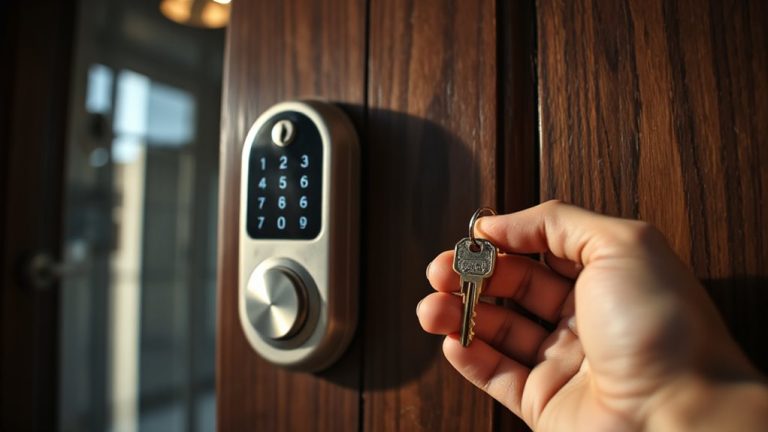
While you’re away on an extended trip or during a move, your home becomes more vulnerable to break-ins, so taking steps to strengthen security beforehand is essential. Installing smart locks lets you remotely control access, monitor entries, and avoid hiding keys. They’re easy to integrate with home systems but require power and internet, so consider backup options. Motion sensors detect unusual activity indoors and outdoors, triggering alarms or alerts. Place them near doors, windows, and dark corners for best results. Models with pet immunity prevent false alarms. Most systems cost $150–$400, depending on features. Pair smart locks and motion sensors with timers on lights to simulate occupancy. Test all devices before leaving. Verify firmware is updated. Avoid default settings. These upgrades don’t guarantee 100% safety, but data shows they reduce burglary risks by up to 60%. Plan installation early and budget for professional help if needed. For reliable options, check out the Best Smart Locks based on expert testing and user reviews.
Secure High-Value Items in a Home Safe
Your home’s security plan isn’t complete without protecting high-value items like passports, jewelry, and important documents in a reliable home safe. Choose a safe with fireproof materials to shield contents from damage during a fire, ideally rated to withstand 30–60 minutes at 1,550°F. Look for models with biometric access for quick, keyless entry using your fingerprint, which reduces the risk of lost keys or forgotten combinations. Biometric safes typically open in under three seconds, offering both convenience and strong security. Mount the safe to a wall or floor to prevent theft. While higher-end models with advanced biometric access and thicker fireproof materials cost more-often $200 to $500-they provide greater protection. Budget options exist but may offer weaker fire resistance or slower access. Prioritize certified products tested by independent labs for both durability and security performance. Best home safes offer a balance of fire resistance, biometric access, and secure mounting capabilities.
List Your Valuables for Protection
An inventory list acts as your first line of defense when protecting valuables during long-term vacations or relocation. You’ll want to conduct a thorough inventory assessment of your belongings, room by room, noting high-value items like electronics, jewelry, and collectibles. This asset documentation should include serial numbers, photos, purchase receipts, and estimated values. Store this list securely-preferably in a cloud-based system or with a trusted contact-not on your property. A clear record can speed up insurance claims and improve recovery chances if theft occurs. Digital spreadsheets or home inventory apps help organize data efficiently. While it takes time upfront, the effort pays off if something goes wrong. Don’t skip low-cost but sentimental items; they matter. Accurate asset documentation strengthens your protection strategy and gives you peace of mind while away.
Pause Deliveries to Hide Signs of Absence
If you’re heading out for an extended trip or moving to a new home, stopping regular deliveries can reduce visible signs that your property is unoccupied. You should set up mail holding through your postal service to prevent piles of letters from signaling your absence. Most national postal providers offer this free for up to 30 days, making it a practical, low-cost solution. Don’t forget package suspension with online retailers-many let you delay deliveries or adjust shipping preferences temporarily. Accumulating packages are obvious red flags, so pausing subscriptions and deliveries is essential. Combine mail holding and package suspension to fully minimize cues of vacancy. While some digital notifications can still occur, you’ll eliminate physical signs that attract unwanted attention. These steps are simple, proven, and effective, taking only minutes to arrange.
Tell Friends, Not Followers, You’re Away
Why risk advertising your empty home to potential intruders when a few thoughtful steps can keep your trip private? You should only share your travel plans with trusted contacts-people you know and can rely on for help while away. Avoid posting about your vacation on social media, even after you return. Social discretion prevents criminals from tracking your absence using public data. Sharing real-time updates lets strangers know your home is unoccupied, increasing burglary risk. Instead, schedule posts for after you’re back, or keep photos private. Let neighbors or a house sitter know your schedule so they can watch for issues. This balance maintains safety without isolation. Sticking to in-person updates protects you far better than online sharing ever could.
Make Sure Your Stuff Is Covered While You’re Away
You’ve already taken steps to keep your travel plans under wraps by limiting who knows you’re away, and now it’s time to make sure your belongings are protected with the right coverage. Review your current insurance coverage to confirm it includes protection for theft, fire, or water damage while you’re gone. Standard homeowner’s or renter’s policies often cover your items, but check for limits on high-value goods like jewelry or electronics. If you’re relocating or staying abroad, consider adding travel protection, which may extend to personal property during transit. Some credit cards offer limited travel protection, but it usually has restrictions. For long absences, a specialized policy could be worth the cost. Compare deductibles, covered perils, and claim processes. Making sure your stuff is covered gives you peace of mind, knowing your valuables are safeguarded no matter how long you’re away.
On a final note
You’ve taken smart steps by securing your home, protecting valuables in a safe, and pausing deliveries to deter theft. Sharing plans only with trusted neighbors boosts safety, while documentation helps with insurance. Most policies cover theft during vacations, but check limits and consider extra coverage for high-value items. These proven strategies reduce risk, save money, and give real peace of mind-so you return to the same secure home you left.