Understanding the Role of Lighting in Deterrence Strategies for Residential Safety
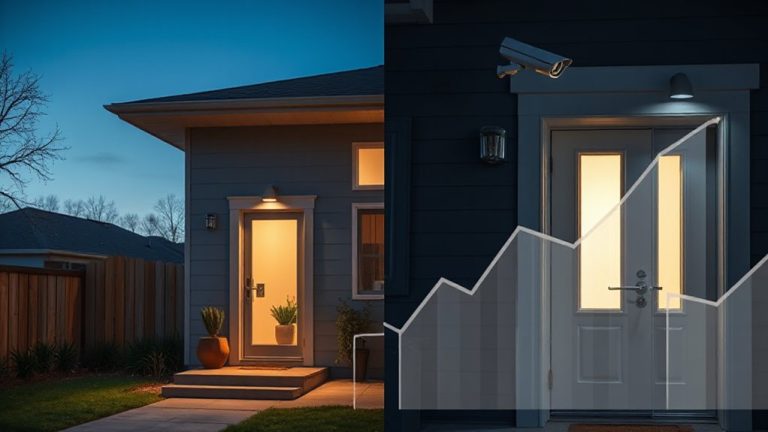
You’re less likely to be targeted when your home uses bright, well-placed lighting that increases visibility and perceived risk. Burglars avoid well-lit areas because they feel exposed and more likely to be identified. Motion-sensor LEDs in key zones-like entry doors and walkways-startle intruders and alert you instantly. Cool white lights (5000K–6500K) enhance clarity, while timers and remote controls simulate occupancy effectively. Strategic, energy-efficient setups combine coverage, timing, and smart features to deter crime-there’s more to optimizing each element than most realize.
Notable Insights
- Bright outdoor lighting increases perceived risk, deterring burglars by reducing concealment and increasing fear of detection.
- Motion-sensor lights startle intruders with sudden illumination and help distinguish threats through smart detection technology.
- Strategic placement around entry points and overlapping coverage eliminates dark zones and potential hiding spots.
- Cool white LED lights (5000K–6500K) enhance visibility and appear more intense, improving threat detection at night.
- Timed or smart lighting systems simulate occupancy, using random patterns and remote control to enhance home security.
Why Lighting Stops Home Burglaries
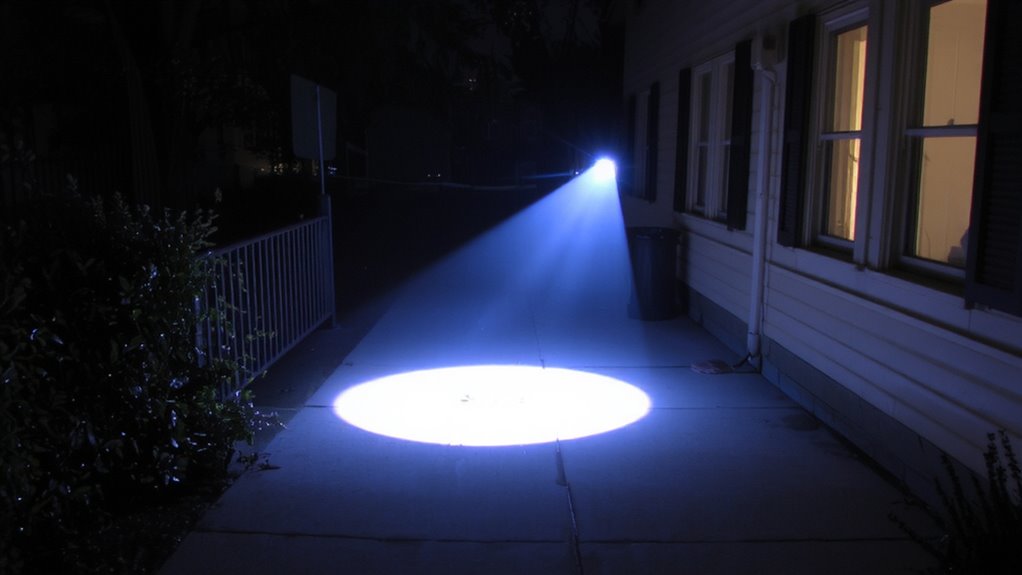
While most burglars prefer to avoid confrontation, they’re far more likely to target homes that appear unoccupied or poorly lit, and that’s where proper lighting makes a difference. You can reduce risk by understanding the psychological impact of visibility-well-lit areas feel riskier to intruders, who fear detection. Exterior lights signal occupancy, even when you’re away. This shapes social perception, making your home seem monitored and less inviting. Studies show consistent outdoor lighting reduces burglary rates, especially when combined with timers or motion sensors. Effective setups include LED floodlights (long life, higher upfront cost) and solar options (eco-friendly, variable in cloudy climates). Install lights near entry points, using warm-white bulbs to avoid glare. Aim for uniform coverage without dark spots. A layered lighting plan enhances security without over-illumination. Top-rated models offer reliable performance and easy installation, with best wireless motion sensor lights leading in user satisfaction and durability.
Why Burglars Avoid Well-Lit Homes
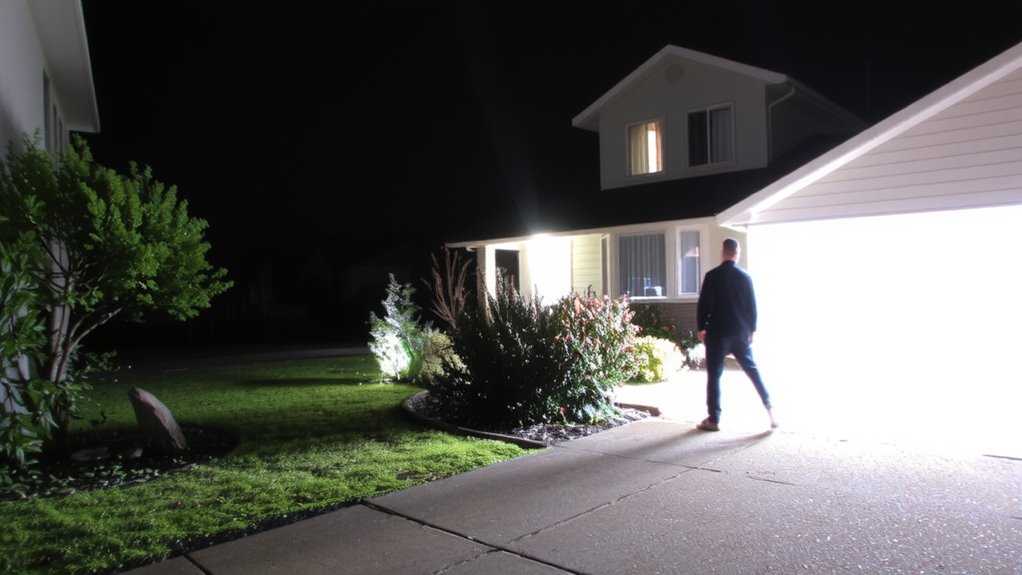
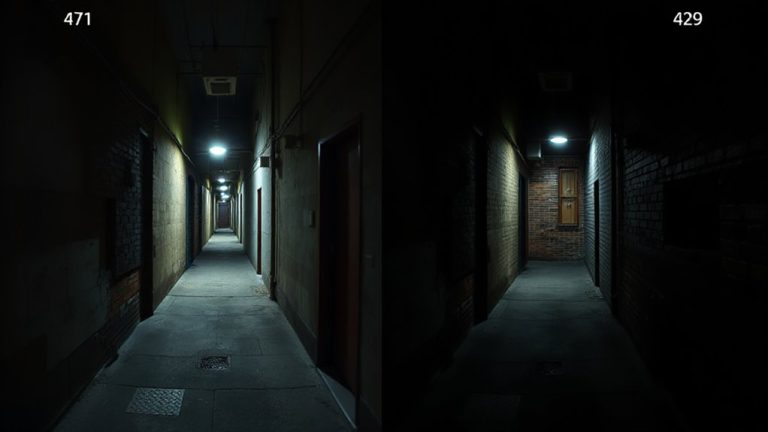
Because visibility increases the chances of being seen, burglars typically skip homes with bright, consistent exterior lighting-knowing that light raises the risk of identification and intervention. You create psychological fear simply by eliminating dark entry points. Criminals fear being watched, and visibility exposure makes them feel vulnerable. They prefer shadows where they can move unseen. A well-lit home signals awareness, increasing the odds they’ll be caught. You don’t need floodlights everywhere-just strategic coverage of entrances, garages, and pathways. Installing motion-activated security lights can further enhance protection by combining sudden illumination with the perception of detection.
| Scenario | Emotion Felt | Likelihood of Attempt |
|---|---|---|
| Dark front door | Safety, confidence | High |
| Motion light triggers | Shock, fear | Low |
| Neighbor sees activity | Panic, escape | Very Low |
| Police notified | Terror, arrest | Zero |
Evidence shows lighting reduces break-ins. You gain protection through simple, smart installation.
Top Security Lighting Types That Deter Intruders
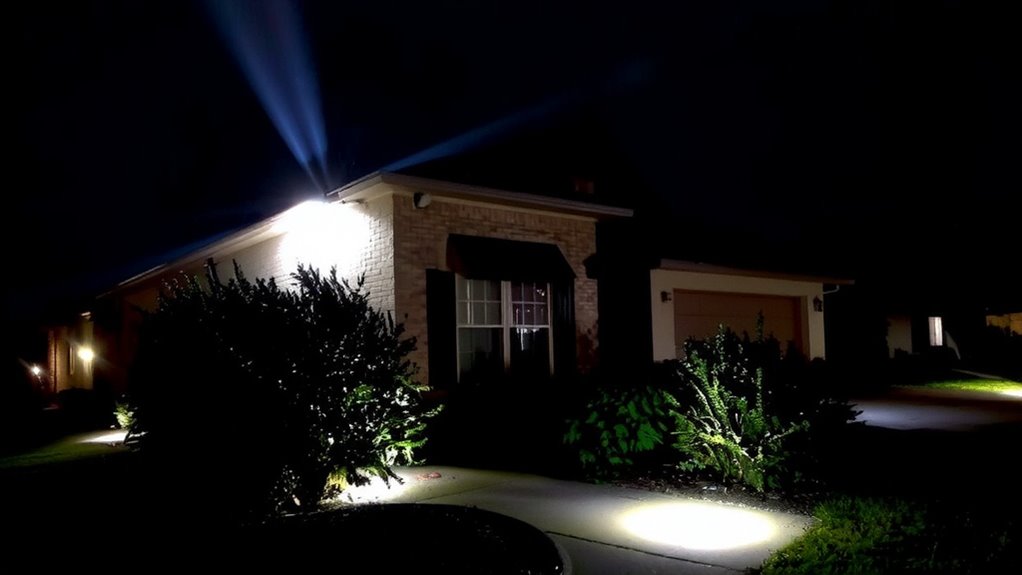
You can substantially boost your home’s security by choosing the right type of outdoor lighting, as not all lights deter intruders equally. Motion-sensor lights are highly effective-you’ll save energy while startling intruders with sudden illumination. Floodlights offer broad coverage, especially when mounted high, and their bright LED output increases visibility. Consider light color: cool white (5000K–6500K) enhances clarity and appears more intense, making it harder for intruders to hide. Warm light (2700K–3000K) is less harsh but may reduce detection ability. Fixture style matters too. Low-profile designs resist tampering, while sturdy housings withstand weather and impact. Solar-powered lights cut wiring costs but depend on sunlight, whereas hardwired options provide consistent output. Timed or smart lights add unpredictability, mimicking occupancy. Choose reliable brands with adjustable sensors and durable materials for long-term performance.
Best Spots for Outdoor Security Lighting
When positioning outdoor security lights, focus on entry points and dark zones where intruders might approach unseen. Proper fixture placement eliminates shadow zones and increases visibility around doors, windows, and pathways. Install lights at entry doors, garage openings, and first-floor windows since these are common attack points. Use uniform lighting along walkways and fences to prevent concealment. Avoid placing fixtures too high or too close together-this creates glare and uneven coverage. Thoughtful placement guarantees dependable illumination when you need it most.
| Risk Level | Lighting Strategy |
|---|---|
| High (doors, windows) | Bright, overlapping coverage |
| Medium (walkways) | Steady, moderate lighting |
| Low (back corners) | Motion-activated to save energy |
Fixture placement directly impacts effectiveness-don’t overlook shadow zones during installation.
Use Motion Sensors and Remote Control to Stop Intruders
While bright outdoor lights deter casual intruders, integrating motion sensors and remote controls adds an active layer of security that responds to real-time threats. You get smart detection that distinguishes between people, animals, and vehicles, reducing false alarms. When motion is detected, the lights activate instantly, startling intruders and giving you time to react. Most systems send instant alerts to your phone, so you’re notified immediately, even when you’re away. Remote access lets you turn lights on or off from anywhere, creating the impression you’re home. These systems are easy to install, often work with existing fixtures, and range from $30 to $150 depending on features. Battery-powered models offer flexibility, while hardwired ones provide constant power. Look for weather-resistant designs and customizable sensitivity settings to suit your property’s layout. For optimal performance, consider selecting one of the best motion sensor flood lights based on reliability, brightness, and smart integration features.
Set Timers to Make Your Home Look Occupied
| Feature | Benefit |
|---|---|
| Programmable schedules | Custom lighting at realistic times |
| Random mode | Prevents predictable patterns |
| Remote access | Adjust from anywhere; boost neighbor trust by syncing with friends’ systems |
Schedule lights in main areas like the living room or kitchen between 6 PM and 11 PM. Manual timers are affordable but limited, while smart devices offer precision. This simple, data-supported strategy reduces burglary risks without high costs. Combine with trusted neighbors checking your property for stronger protection.
Use Efficient Security Lighting That Deters Intruders
Since effective outdoor lighting plays a key role in discouraging unauthorized access, choosing the right security fixtures can greatly reduce the likelihood of a break-in. You’ll want lights that illuminate dark entry points without creating glare or shadows where intruders could hide. Motion-sensor lights are especially effective, as they activate only when someone approaches, drawing attention to unexpected movement. Consider smart lighting systems, which let you control brightness, timing, and alerts remotely through a phone or tablet. These systems often provide energy savings by reducing unnecessary runtime and integrating with other home security devices. LED bulbs are ideal-they use less power, last longer, and work well with motion sensors. While upfront costs may be higher, the long-term energy savings and enhanced protection make them a smart investment. Plan placement carefully to cover driveways, doors, and walkways.
On a final note
You can reduce burglary risk by using well-placed, energy-efficient lighting with motion sensors or timers. Studies show intruders avoid well-lit homes, especially when lights activate unexpectedly. Install security lights at entry points like doors, garages, and dark corners. LED floodlights and smart systems offer reliability and control, though upfront costs are higher. Combine lighting with other measures for best results-consistent illumination makes your home appear occupied and less appealing to criminals.