The Impact of Color Calibration on Video Footage Quality From Security Cameras
Your security camera’s footage likely misrepresents colors, especially in low light or at night, making reds appear brown or blues turn black. Infrared lighting and aging sensors worsen these inaccuracies, risking false identifications or flawed investigations. Color calibration fixes this by aligning camera output with real-world hues using proper white balance, exposure, and color charts. It guarantees reliable evidence and consistent imaging across conditions. You’ll see how just five steps can markedly improve accuracy and trust in your system.
Notable Insights
- Color calibration corrects distortions caused by low light and infrared lighting, preserving true color representation.
- Accurate colors prevent misidentification of objects, clothing, or vehicles in surveillance footage.
- Calibrated cameras reduce false leads by ensuring consistent color across different lighting conditions.
- Proper calibration maintains evidentiary credibility by minimizing claims of tampering or inaccuracy.
- Using color charts during setup aligns camera output with real-world hues for reliable monitoring.
Why Your Security Cameras Get Colors Wrong
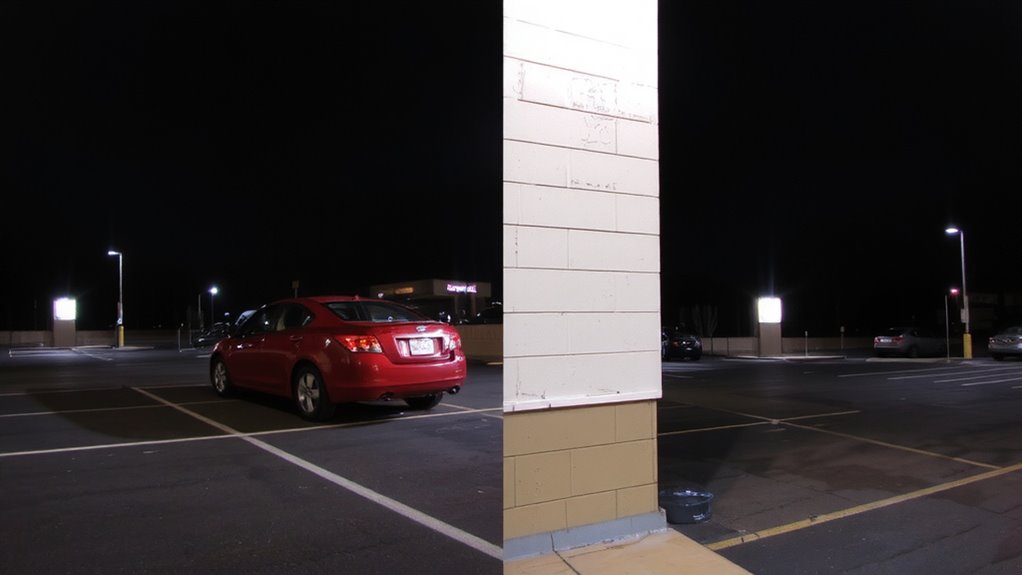
Ever wonder why the red car in your security footage looks orange or your front door appears purple at night? Your camera’s color accuracy depends heavily on lighting conditions, which can shift dramatically from day to night. Low light pushes cameras to amplify signals, distorting true colors. Infrared lighting at night often renders everything in monochrome or strange hues. Plus, over time, sensor degradation weakens color fidelity, making older cameras less reliable. Dust, moisture, and prolonged sun exposure accelerate this wear. Even high-end models can’t fully correct poor lighting or aging hardware. To maintain accuracy, you’ll need regular maintenance and cameras with strong low-light color performance. Look for models with true WDR and auto-white balance. Replace units every 3–5 years to avoid data loss from degraded sensors. Proper setup helps, but hardware limits remain.
How Bad Color Ruins Investigations

How often do you rely on security footage to identify a person or vehicle, only to find the colors are completely off? Bad color distorts what you see, turning a blue shirt into black or a red car into brown. This creates misleading evidence that can send investigations in the wrong direction. When colors aren’t accurate, witness confusion increases-someone might swear a suspect wore green when the footage, due to poor color, shows yellow. That discrepancy damages credibility and weakens legal cases. Even simple tasks like matching a license plate or spotting a unique jacket become unreliable. You might waste time and resources chasing false leads because the camera failed to record true colors. In home security or business monitoring, this flaw reduces the footage’s value when it’s needed most. Without correct color, even high-resolution video can’t be trusted as solid evidence.
How Color Calibration Restores Image Accuracy
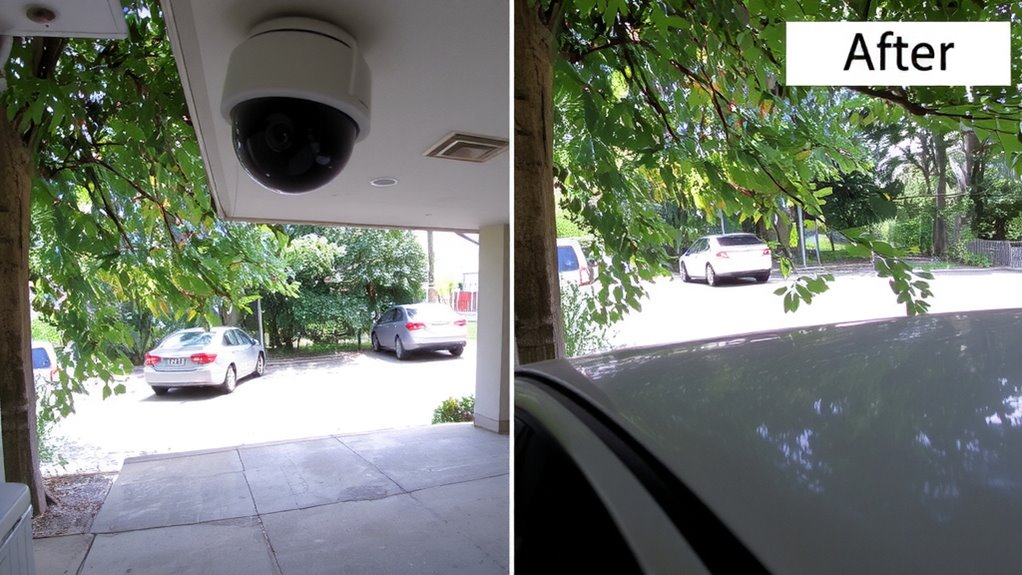
Accurate color starts with proper calibration, a process that aligns your security camera’s image output with real-world colors. You rely on color perception to identify clothing, vehicles, or objects, and calibration guarantees what you see matches reality. Without it, footage can mislead, especially under varying lighting conditions. Proper calibration improves lighting consistency across cameras and times, reducing distortion from artificial or natural light sources. This means a red shirt won’t appear orange at dusk or purple under fluorescent lighting. You’ll get reliable footage day and night, which is critical for accurate monitoring or evidence. While some cameras offer automatic color correction, manual calibration often yields better results. It takes time, but the payoff is consistent, trustworthy visuals. Good calibration supports clear decision-making and strengthens the value of your system without added hardware costs.
How To Calibrate Security Cameras In 5 Steps
You’ve seen how calibration guarantees the colors in your footage match real life, which matters when identifying key details like clothing or vehicle color. To get accurate results, follow these 5 steps for calibrating your security cameras. First, set the white balance to match your lighting environment-indoor, outdoor, or mixed. Second, adjust the exposure settings to avoid over- or underexposed images. Third, use a color chart in the frame under the same light to verify accuracy. Fourth, compare the recorded colors with the real chart. Fifth, fine-tune camera settings until the colors align.
| Step | Setting | Purpose |
|---|---|---|
| 1 | White Balance | Match ambient light |
| 2 | Exposure Settings | Avoid washed-out or dark images |
| 3 | Color Chart Test | Confirm real vs. captured color |
When Color Calibration Caught The Criminal
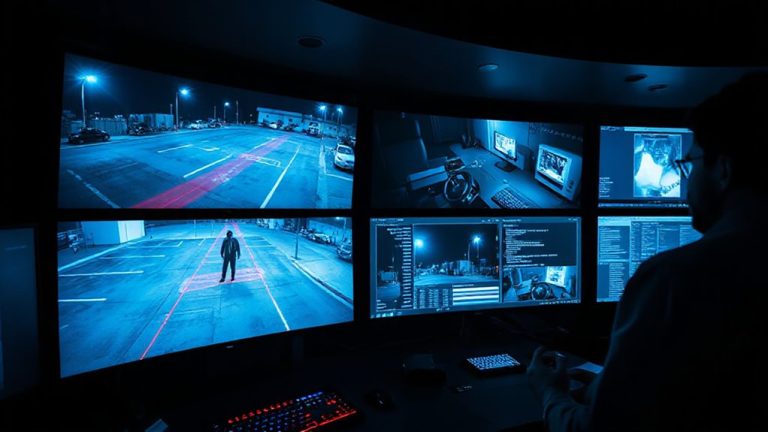
Why do some investigations hinge on a single frame of security footage? Because accurate color calibration guarantees details like clothing or vehicle color are reliable. Without it, false identification becomes more likely-imagine mistaking a blue jacket for black due to poor lighting. Calibrated footage reduces that risk, providing consistent, true-to-life colors investigators can trust. You’ve probably never thought about how sensor settings impact justice, but they do. When colors are off, attackers might claim evidence tampering, even if the footage is real. Proper calibration counters those claims by aligning output with known standards. It’s not just about clarity-it’s about credibility. For home systems, look for cameras with automatic white balance and regular calibration tools. Yes, they cost a bit more, but the payoff in accuracy matters. In one case, calibrated footage revealed a suspect’s red hat that uncalibrated cameras showed as brown-making all the difference.
On a final note
You guarantee accurate color by calibrating your security cameras, which helps identify suspects and objects correctly. Poor color can mislead investigations, while proper calibration improves reliability. Use a test chart, adjust settings in daylight, and check results regularly. It’s low-cost, quick, and boosts footage credibility. For best results, calibrate quarterly and after software updates. Accurate color supports stronger evidence.