Developing a Family Security Communication Plan for Emergency Situations
Start by identifying real risks in your area, like floods or wildfires, using official hazard maps. Choose out-of-state emergency contacts and assign family roles based on ability. Use ham radio-licensed, starting at $100-or signal mirrors when phones fail. Set nearby and distant meeting spots, plus two evacuation routes. Run drills every six months. Update the plan after moves or major life changes to keep it effective and reliable. You’ll find tailored strategies that strengthen your family’s response under pressure.
Notable Insights
- Identify local hazards using official maps to guide emergency preparedness and response strategies.
- Designate out-of-state emergency contacts to ensure reliable communication during regional disruptions.
- Assign family roles based on age and ability to streamline actions during crises.
- Establish multiple communication methods, including ham radio and signal mirrors, for use when phones fail.
- Conduct biannual drills to practice evacuation routes, meeting points, and role-specific tasks under realistic conditions.
Start With a Clear Purpose: Plan for Real Risks
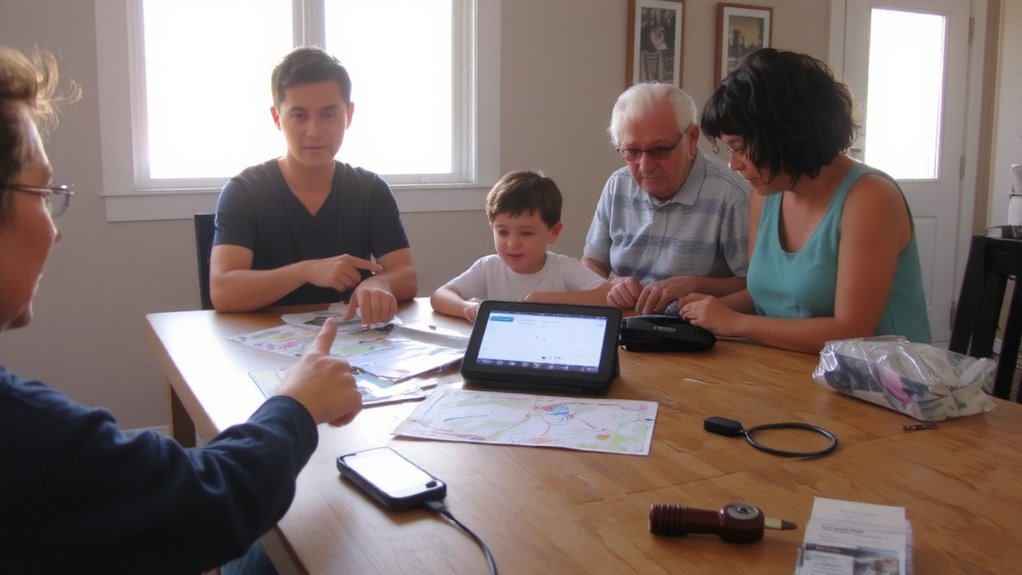
Why plan for emergencies if you don’t know what you’re preparing for? You need to start by identifying the real risks in your area. Check local weather alerts regularly-they give early warnings about storms, floods, or heatwaves that could impact your family. You should also review official hazard zones, which show areas prone to wildfires, earthquakes, or hurricanes. Knowing if your home is in a high-risk zone helps you make informed decisions. For example, if you’re in a flood zone, investing in water barriers or elevated electrical systems makes sense. Relying on data beats guessing. Use government maps and emergency management resources to confirm your risks. Planning around actual threats means your communication strategy will be practical, timely, and effective. This step isn’t just helpful-it’s essential for building a reliable, targeted family security plan.
Choose Your Family’s Emergency Contacts and Roles

Now that you’ve mapped out the specific risks your household could face, the next step is setting up a reliable communication network. Choose trusted emergency contacts outside your immediate area-someone who can relay messages if local lines are down. Each family member should know who to call first, second, and third. Include at least one contact in another state to increase the odds of connection. Make clear role assignments based on age and ability: one person might be responsible for gathering go-bags, another for checking windows and doors. Children can have simple tasks like staying near a parent or carrying their ID card. Write down these emergency contacts and role assignments in a shared document and keep copies in wallets and phones. Revisit and update them every six months to reflect any changes in numbers, responsibilities, or household members.
Pick Communication Methods That Work When Phones Fail
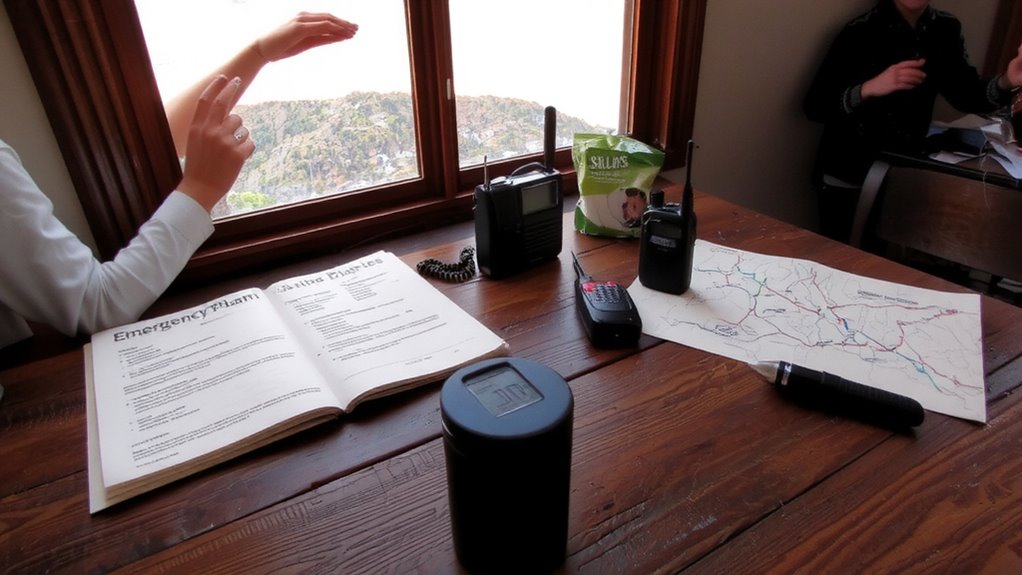
How would your family stay in touch if cell networks go down during an emergency? You’ll need reliable alternatives. Ham radio usage is a proven option-it works without cellular or internet, allowing long-distance communication during disasters. Getting licensed is affordable and straightforward, with equipment ranging from $100 handhelds to more advanced setups. While effective, it requires some training and practice. Signal mirrors are another low-cost, durable tool, ideal for short-range visual signaling, especially in daylight or open areas. They weigh little and work when power or electronics fail. Combine both methods for redundancy: use ham radios to coordinate and signal mirrors for location marking. Neither relies on infrastructure, making them trustworthy when phones fail. Practice using these tools now so you’re ready when seconds count.
Set Up Safe Meeting Spots and Evacuation Routes
Where will you go if you can’t stay in your home during an emergency? Choose clear meeting spots near recognizable neighborhood landmarks so everyone knows where to gather. Pick one spot a short walk away and another farther out in case you must evacuate the area. Plan at least two evacuation routes from your home, factoring in blocked roads or traffic. Make sure each family member knows how to use backup transportation-like bikes or a neighbor’s car-if your main option isn’t available. Practice the routes on foot or by bike to check timing and safety. Include these details in your family’s written plan.
| Location Type | Example | Notes |
|---|---|---|
| Immediate Spot | Oak Tree Park | 5-minute walk, central |
| Evacuation Hub | City Library on 5th | Open 24/7, has water |
| Alternate Route | Back alley to Main Street | Avoids high-traffic area |
Run Realistic Family Drills Every 6 Months
Regularly running family drills every six months helps guarantee everyone knows what to do when an emergency strikes. You should simulate realistic drill scenarios, like fires, power outages, or intruders, so each family member practices responses safely. Use different times of day to test awareness and adaptability. Practice timing how long it takes to reach safe meeting spots or complete evacuation routes-aim to improve speed without sacrificing safety. Keep drills consistent in structure but vary conditions slightly to build flexibility. Assign roles, like who grabs the emergency kit or calls for help, so responsibilities stay clear. Document results to identify gaps in communication or execution. These exercises strengthen coordination, reduce panic, and confirm your plan works under pressure. Drills take little time but offer measurable benefits, making them an essential, low-cost part of family preparedness.
Update Your Plan Regularly as Needs Change
While your family’s needs and routines evolve over time, your security communication plan shouldn’t stay frozen in the past-updating it regularly guarantees it remains effective and relevant. Changes in family dynamics, like a new baby or an elderly relative moving in, mean roles and responsibilities may shift. Schedule changes, such as a parent starting night shifts or kids joining after-school programs, can impact who’s home and when. Review your plan every six months, or after major life events, to reflect these updates. Confirm emergency contacts are still appropriate and that everyone knows how to reach each other. Test communication methods to guarantee they still work. Revising your plan prevents confusion during crises. A current, accurate plan adapts to real life, making your family safer, informed, and better prepared when it matters most.
On a final note
You’ve taken smart steps by identifying real risks and assigning clear roles. Use text, apps, and backup methods like radios, since phones may fail. Practice every six months and update the plan as your family changes. Meeting spots and evacuation routes save time when seconds matter. A well-rehearsed, updated plan improves safety more than equipment alone.