Strengthening Interior Hinges on Outward-Opening Doors Against Lever Attacks
You can strengthen your outward-opening door by upgrading to security hinges with non-removable pins, priced $10–$25 each, to block prying and prevent the door from being lifted. Install 12-gauge steel hinge side armor using long screws into wall studs for added resistance, costing $20–$50. Match hinges to your door type-solid wood needs 4-inch butt hinges, while steel doors may need weld-on versions. Combine with reinforced strike plates for full protection, and explore further upgrades for complete security.
Notable Insights
- Install security hinges with non-removable pins to resist prying and prevent door removal.
- Use reinforced steel hinge plates secured with long screws anchored into wall studs.
- Pair non-removable hinge pins with stainless steel construction to resist tampering and corrosion.
- Add hinge side armor plates to protect the door jamb from leverage attacks.
- Ensure proper door clearance and alignment to maintain security and function of reinforced hinges.
Why Outward-Opening Doors Are Vulnerable to Lever Attacks
Ever wonder why a thief can break into an outward-opening door so quickly? It’s largely due to the door design, which exposes hinges to direct attack methods like prying. When hinges are on the outside, they become easy targets. A crowbar or similar tool can slip under the edge and pop the door open in seconds. This vulnerability exists because standard pins and casing aren’t built to resist forceful leverage. Attack methods often exploit this weak point, especially when the doorframe or strike plate lacks reinforcement. You can’t rely on locks alone if the hinge side fails. Upgrading hinge security improves resistance, but only if done correctly. Consider materials like hardened steel and non-removable pins-small changes that make a measurable difference. Plan for professional installation if needed. Though not foolproof, these steps reduce risk substantially, especially in high-crime areas where forced entry is common.
Install Security Hinges to Prevent Prying
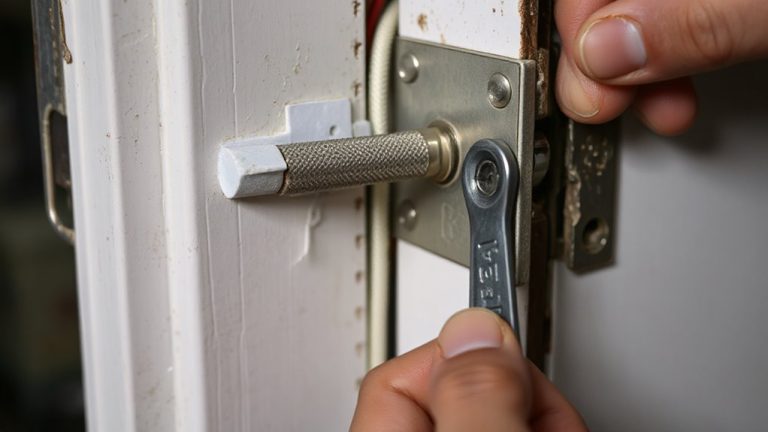
While standard hinges leave outward-opening doors exposed to prying, upgrading to security hinges substantially limits this risk by reinforcing one of the most vulnerable points of entry. These hinges feature reinforced leaf plates and include non-removable components that resist tampering-though pin removal will be covered later. You should guarantee proper hinge alignment during installation, as misaligned hinges can weaken the door’s structural integrity and reduce effectiveness. Check door clearance before installing; insufficient space may prevent the hinge from functioning or cause rubbing. Security hinges typically cost $10–$25 each and require a screwdriver and level for installation. They work best when paired with reinforced strike plates and a solid door frame. While they add strength, they won’t compensate for poor installation or weak framing. Plan to replace all hinges on the door for balanced protection.
Use Non-Removable Hinge Pins for Instant Security
A simple way to boost your outward-opening door’s security is by installing non-removable hinge pins, which block intruders from lifting the door off its frame. These pins are permanently secured, often with a welded stop or set screw, so they can’t be tapped out from below. You’ll want to check pin diameter compatibility-most residential hinges use 3/8-inch or 1/2-inch pins, so measure yours before buying. Non-removable pins are usually made from stainless steel or hardened steel to resist tampering and reduce hinge pin corrosion over time. They cost $5–$15 per pin and take 10–15 minutes to install with basic tools. While they add strong protection, verify your hinge and frame can support the pin’s design. This upgrade is effective, low-cost, and instantly improves resistance to common lever attacks.
Add Steel Protection Plates to the Hinge Side
Securing your outward-opening door with non-removable hinge pins is a solid first step, but that protection can still be compromised if the door jamb or frame is weak. You need extra support where the hinge mounts to prevent the jamb from splintering under pressure. Adding hinge side armor gives the frame the strength it lacks. Install reinforced steel backing behind the hinge mortise to spread impact across a wider area. These steel plates, typically 12-gauge or thicker, resist deformation and block leverage tools from prying the door open. They’re easy to mount with long screws that anchor into wall studs. Proper installation guarantees maximum effectiveness. While basic kits cost $20–$50, professional setup may add labor costs. For most homes, this upgrade offers measurable improvement without complexity. Hinge side armor works quietly, without changing the door’s look, and adds meaningful resistance to forced entry attempts when paired with secure pins.
Choose the Best Upgrade for Your Door Type
Your door’s material and construction determine which hinge upgrades deliver real security. For solid wood doors, upgrade to 4-inch steel butt hinges-they resist twisting and maintain hinge alignment under stress. These hinges also help prevent door warping over time, especially in humid climates. If you have a steel door, weld-on hinges offer superior strength, though installation requires professional tools. Hollow-core or composite doors need reinforced mounting plates behind hinges because they can’t support heavy hinges alone. Always check hinge alignment after installation; misaligned hinges create gaps and weaken resistance. Continuous (piano) hinges work well on outward-opening doors, spreading force across the entire edge and reducing strain points. They’re pricier but cut warping risks. Budget for $25–$75 per hinge depending on type. Choose based on your door’s build, not just cost-long-term security depends on proper matching.
On a final note
You can greatly improve your outward-opening door’s security with simple upgrades. Security hinges and non-removable pins prevent easy prying, while steel plates add durable protection. These fixes are cost-effective, typically under $50, and easy to install. Choose solutions based on your door’s material and frame strength. Together, these steps reduce vulnerability to lever attacks, offering proven, practical defense for most homes.