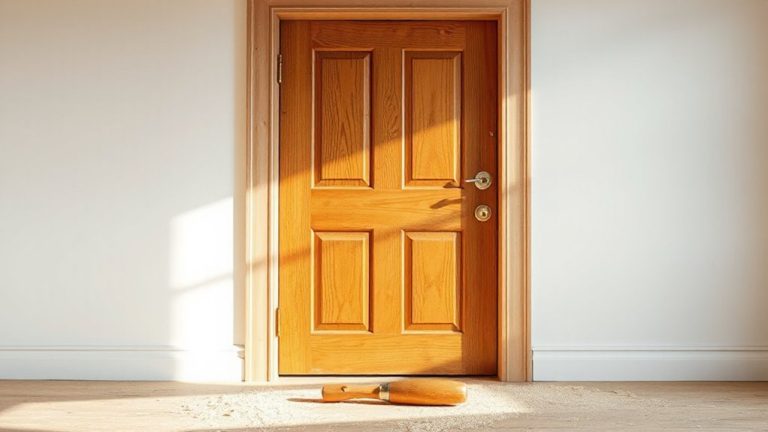
Maximizing Egress Safety While Adding Secondary Bolt Locks on Main Entry Doors
You can add secondary bolt locks to your main door, but choose thumb-turn or push-pull models for fast indoor release-studies show simpler mechanisms cut escape time by up to 10 seconds during fires. Install them between 36 and 48 inches high, favoring rim or vertical bolts made of hardened steel. Prioritize easy operation over extra security, since most break-ins happen elsewhere. Test monthly, lubricate with silicone spray, and practice nighttime drills-smart setup keeps everyone safer.
Notable Insights
- Prioritize thumb-turn or push-pull bolt locks for one-motion release during emergencies.
- Avoid multi-point or complex deadbolts that delay egress under stress or low visibility.
- Install secondary bolts between 36 and 48 inches high for accessible, quick operation.
- Test locks regularly and conduct fire drills to ensure fast, reliable exit performance.
- Lubricate mechanisms monthly and inspect for wear to maintain smooth bolt retraction.
How Bolt Locks Can Trap You in Emergencies
Have you ever considered whether your secondary bolt lock could become a barrier during a home emergency? In fire hazards, every second counts, and complicated locking mechanisms can slow you down. Studies show that many homeowners struggle with multiple locks under stress, especially in panic situations. Secondary bolt locks require extra steps to disengage, increasing egress time-by as much as 5 to 10 seconds-which could be critical. While they add security against break-ins, they may compromise safety when immediate escape is needed. Experts recommend choosing locks that open with a single motion, like thumb-turn bolts, and avoiding multi-point or deadbolt systems near primary exits. Test your exit route regularly, especially with family members who may not be familiar with the lock. Balance security and safety: simpler egress mechanisms reduce risk without sacrificing protection. Prioritize ease of use during emergencies.
Why Emergency Exit Speed Trumps Extra Security
When seconds matter most, how quickly can you get out? In a fire risk scenario, every instant counts. Adding secondary bolt locks may boost security, but they also introduce potential escape delay during emergencies. Studies show that delays of even 5–10 seconds can reduce survival chances markedly. You might secure your home better, but if you can’t open multiple bolts fast in the dark or under stress, safety suffers. Prioritizing rapid egress isn’t about ignoring security-it’s about balancing both. The data supports simpler, faster interior release mechanisms where exit speed outweighs marginal security gains. Consider that most break-ins occur through windows or back doors, not main entries, so over-securing the front door offers limited benefit. Ultimately, your ability to exit swiftly during smoke, panic, or low visibility should shape your lock choices. Speed isn’t just convenient-it’s life-preserving.
Best Bolt Lock Types for Fast Indoor Release
You’ve probably stood at your front door fumbling with multiple locks during a drill or in the dark, realizing how quickly stress can slow you down. For fast indoor release, look for secondary bolt locks with high bolt strength and smooth-action mechanisms. Rim bolts and vertical deadbolts often offer quicker retraction than standard cylindrical models. Choose lock materials like hardened steel or reinforced zinc for durability without sacrificing speed. Avoid complex key-turn or multi-lever systems; instead, opt for thumb-turn or push-pull designs you can operate blindfolded. Locks with minimal internal friction release faster and wear longer. While premium models cost $40–$80, they often provide better bolt strength and refined materials. Test models at hardware stores if possible-speed and ease matter more than sheer mass. Prioritize function over bulk, because in an emergency, every half-second counts.
Best Placement for Security and Fast Exit
Where should you install a secondary bolt lock to balance security and escape speed? Lock positioning plays a key role in both safety and effectiveness. Place the lock between 36 and 48 inches from the floor-this height is easy to reach during emergencies and less vulnerable to forced entry. Avoid mounting too close to hinges or the door edge, as that weakens structural integrity. Guarantee exit clearance by confirming the lock doesn’t interfere with door swing or require complex motions to disengage. Test the mechanism with one hand to simulate stress during a fire or intrusion. Choose models with large levers instead of knobs for faster operation. Always verify local building codes, as they may regulate lock placement for egress. Proper positioning enhances security without slowing escape, giving you reliable protection and peace of mind when every second counts.
Keeping Kids, Seniors, and Renters Safe
A well-chosen secondary bolt lock can make a real difference in protecting vulnerable household members, especially kids, seniors, and renters who may face unique safety challenges. You need secure entry without compromising quick egress. Balancing child supervision and senior awareness means selecting locks that are easy to operate but not child-friendly. Consider models with thumb-turn mechanisms on the inside and keyed access outside. Check local fire codes-some restrict use on primary exits. A reliable option for such needs is the Schlage deadbolt lock, known for durability and ease of use. Here’s a quick comparison:
| Feature | Pros |
|---|---|
| Keyed entry (exterior) | Prevents children from opening easily |
| Thumb-turn release (interior) | Fast exit; supports senior awareness |
| Rental-friendly installation | No permanent damage; removable |
| Reinforced strike plate | Improves security; aids child supervision |
Choose affordable, code-compliant models between $25–$50. Always test operation with all adults.
Safety Drills for Homes With Secondary Bolt Locks
How quickly could everyone in your home open and exit through a bolt-locked door during an emergency? Practicing fire evacuation drills every few months guarantees all household members, including kids and seniors, can open and operate secondary bolt locks under stress. Choose a consistent exit route and time each drill to track improvement. Make sure everyone knows where keys are kept or how to disengage the lock quickly. Poor lock maintenance-like failing to lubricate bolts or check alignment-can delay escape, so test operation regularly. Drills reveal flaws in egress plans, from confusing lock mechanisms to blocked exits. Conducting these exercises during the day and at night increases preparedness. Include guests or renters in drills if applicable, since unfamiliarity increases risk. Safety drills aren’t just routine-they’re essential checks that your security measures don’t compromise survival.
Monthly Checks and Daily Habits to Ensure Fast Exit
Regularly inspecting your secondary bolt locks each month guarantees they function smoothly when seconds count. Monthly inspections help you catch rust, loose screws, or misalignment early, securing the lock retracts fully with minimal effort. Check all hardware, lubricate moving parts with silicone spray, and confirm the door opens freely without sticking. These steps maintain reliability and support safe, fast egress. Pair these checks with daily routines like verifying the lock isn’t accidentally engaged after entering or exiting. Make it a habit to glance at the bolt position whenever passing the door. Consistent daily routines reduce the risk of entrapment during emergencies. While secondary locks boost security, improper use can delay escape. Balance safety and speed by combining structured monthly inspections with mindful daily routines. This proactive approach secures your exit stays quick, predictable, and secure-every single time.
On a final note
You boost security with secondary bolt locks, but safety depends on quick indoor release during emergencies. Choose models with easy-grip levers or thumb turns, installed at wrist height for fastest access. Avoid double-cylinder deadbolts-they slow escape. Test locks monthly, teach all household members the exit routine, and prioritize speed over extra layers. Data shows delayed egress increases risk; balance protection with performance.