Selecting the Most Suitable Door Lock System for Enhanced Home Security Measures
Choose a solid core door with a reinforced frame and ANSI/BHMA Grade 1 deadbolt for best security. Deadbolts resist forcing better than lever locks, while smart locks offer remote access but need power. Balance convenience and safety by picking models with auto-lock and backup keys. Pick stainless steel or marine-grade locks in humid areas. Make certain your door’s thickness and borehole size match the lock. The right fit boosts both security and daily use, and there’s more to reflect on for your ideal setup.
Notable Insights
- Choose solid core doors with reinforced frames and ANSI/BHMA Grade 1 certified locks for maximum durability and forced entry resistance.
- Install a deadbolt that extends at least one inch into a reinforced strike plate to significantly improve door security.
- Opt for smart locks with auto-lock, remote access, and activity logs, but ensure they have backup key entry and power options.
- Ensure lock materials like stainless steel or marine-grade components match environmental conditions to prevent corrosion and failure.
- Verify compatibility with door thickness, borehole size, and backset measurements to guarantee proper installation and function.
Assess Your Entry Point Security Risks
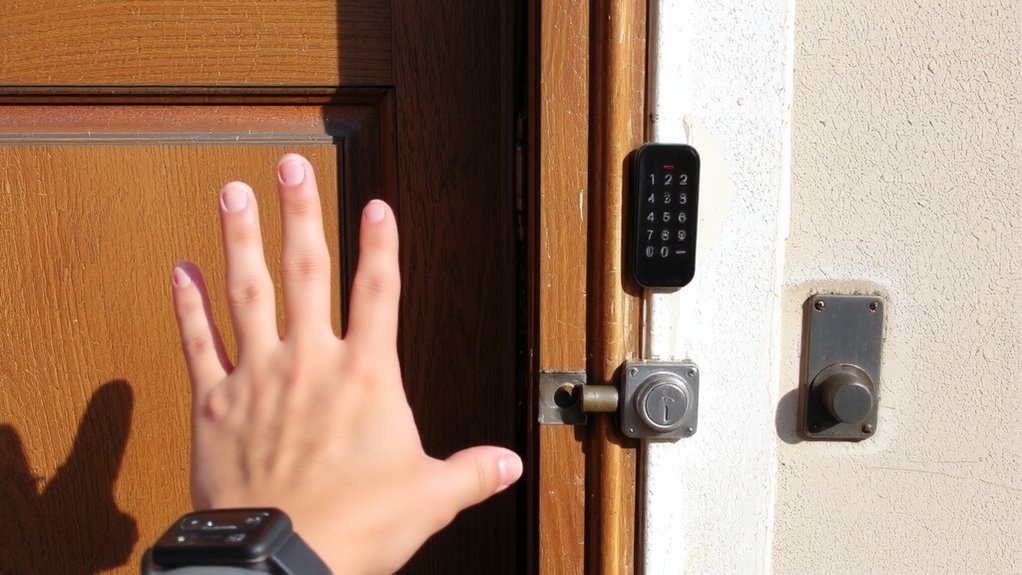
What makes one door more vulnerable than another? It often comes down to entry point vulnerabilities like weak materials, poor frame installation, or lack of reinforcement. You should examine every exterior door, noting hinges, strike plates, and glass proximity-each can be a risk factor. A solid core door with a reinforced frame reduces vulnerability more than hollow or thin models. Consider how well your locks support security system integration; some locks communicate with alarms or smart hubs, alerting you to unauthorized access. This connectivity strengthens monitoring, especially when combined with motion sensors or cameras. Check for compliance with ANSI/BHMA grading-Grade 1 offers the best durability. Also, assess whether existing wiring or Wi-Fi allows easy integration. Planning now avoids costly upgrades later. Prioritize doors with high traffic or concealed locations, as they’re common targets. These steps help you build a coordinated, effective defense. Reputable best door lock brands provide reliable, tested options that meet high security and durability standards.
See How Deadbolts, Lever Locks, and Smart Locks Compare
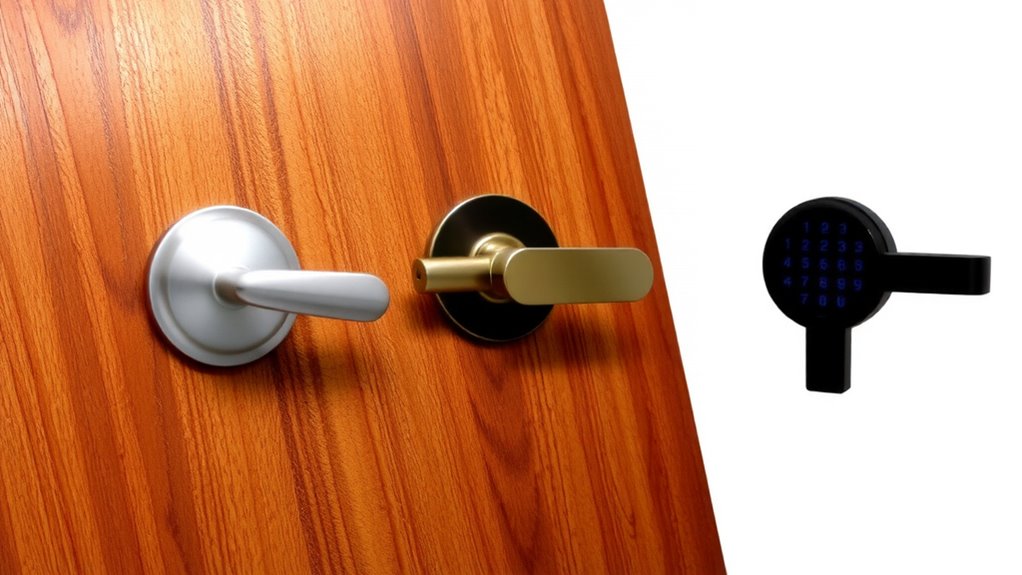
Why do some locks offer better protection than others? It depends on lock durability, design, and access control. Deadbolts resist forced entry better than lever locks, extending at least one inch into the door frame-ideal for front and back doors. They’re mechanically simple, boosting reliability, but key duplication is a risk if keys aren’t tracked. Lever locks are easier to operate, especially for kids or elderly users, but often less durable and more prone to compromise via lock picking or forced manipulation. Smart locks offer advanced features like remote access and activity logs, with strong resistance to physical tampering; however, their electronic components may reduce long-term durability in harsh conditions. They minimize key duplication risks by using codes or apps instead of traditional keys. Choose based on your security priorities, physical environment, and access needs-all while balancing upfront cost and maintenance. Top models include keypad deadbolts known for combining convenience with strong security.
Smart vs Traditional Locks: Which Wins for You?
How do smart locks stack up against traditional models when securing your home? Smart locks offer modern features like biometric access and remote monitoring, giving you real-time updates and the ability to lock or open doors from afar. Traditional locks rely on physical keys, which are simple and reliable but can be lost or copied. Biometric access reduces key dependency and enhances entry speed for trusted users. Remote monitoring lets you see who’s at the door, even when you’re not home. However, smart locks require power and internet, making them vulnerable during outages. Traditional locks don’t need electricity and usually cost less upfront. Smart locks often range from $150 to $300, including installation. For many, the added control justifies the cost. Consider your tech comfort, budget, and home setup when choosing. Top models in the best smart locks category balance security, ease of use, and integration with home automation systems.
Balance Convenience and Security Daily
While convenience matters, you shouldn’t compromise security just to save a few seconds at the door. Key access systems offer familiarity and reliability, especially during power outages or tech failures, but they’re vulnerable if keys are lost or copied. Smart locks improve convenience with codes or apps, yet user habits often weaken their effectiveness-like leaving default codes or disabling alerts. Studies show homes using basic key locks with strong deadbolts have lower break-in rates than those relying solely on poorly managed smart systems. Balance means choosing locks that fit your daily routines without sacrificing core protections. For example, a smart lock with backup key access guarantees entry if batteries die. Review your household’s user habits: do you forget to lock up? Then auto-lock features help. Prioritize models with proven security ratings, moderate pricing ($80–$150), and easy installation. Match the lock to how you live-but never let convenience override proven safeguards.
Pick a Lock That Handles Your Climate
A lock that withstands your local weather isn’t just durable-it’s a critical part of reliable home security. Extreme heat, cold, or moisture can weaken locks without proper weather resistance and rust prevention. Choose materials and finishes designed for your climate to guarantee long-term operation and safety.
| Feature | Benefit |
|---|---|
| Stainless steel | Excellent rust prevention, durable |
| Brass plating | Good weather resistance, affordable |
| Powder coating | Resists chipping, adds moisture barrier |
| Sealed cylinders | Prevent debris and moisture buildup |
| Marine-grade locks | Best for coastal, high-humidity areas |
Always check manufacturer ratings for temperature tolerance and corrosion resistance. In humid or coastal areas, prioritize models with marine-grade certification. For dry, hot climates, UV-resistant finishes prevent warping. Weather resistance isn’t optional-it’s essential for consistent lock function and home protection year-round.
Make Sure the Lock Fits Your Door
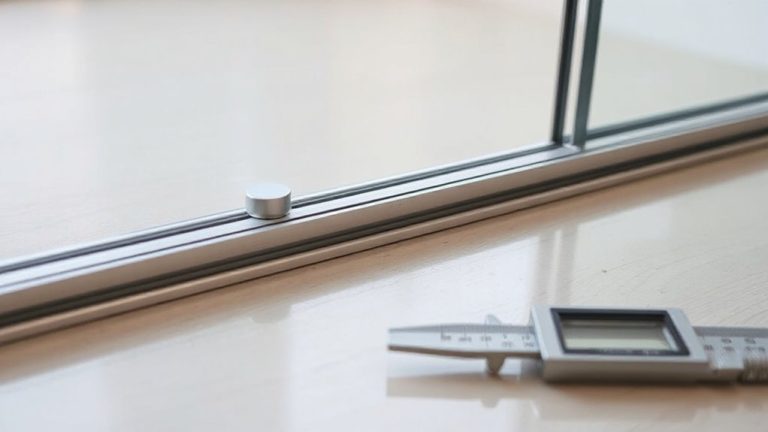
You’ve picked a lock built to handle your climate, but even the most weather-resistant model won’t help if it doesn’t fit your door correctly. Door thickness matters-most interior doors are 1 3/8 inches thick, while exterior ones are usually 1 3/4 inches. If you measure wrong, the latch won’t align, and the lock won’t secure properly. Check your door’s specs before buying. Lock compatibility includes not just thickness but also the borehole size and backset-standard measurements are 2 1/8 inches wide and 2 3/8 or 2 3/4 inches from edge to center. Installing a mismatched lock wastes time and money. Use a tape measure and refer to the manufacturer’s fit guide. Confirm lock compatibility with your door type-solid wood, steel, or glass-to guarantee secure function. Always prioritize correct fit-it’s the foundation of reliable security.
Choose the Best Door Lock System for Your Life and Budget
Because your lifestyle and budget shape your security needs, choosing the right door lock means balancing convenience, protection, and cost. If you’re often on the go, a smart lock offers keyless entry and remote access, though it demands power and Wi-Fi. For renters or budget-conscious buyers, a sturdy deadbolt is affordable and effective, especially Grade 1 models with strong strike plates. Consider lock aesthetics to match your home’s style-modern finishes like matte black or brushed nickel add visual appeal without sacrificing function. Budget longevity matters: spending more upfront on durable, weather-resistant materials like solid brass or steel reduces long-term replacement costs. Mechanical locks last decades with minimal maintenance, while electronic options may need upgrades every 5–7 years. Assess how often you lose keys, your home’s location, and whether you need integration with a security system to make a data-backed, practical decision.
On a final note
You should choose a door lock based on your security needs, climate, door type, and budget. Deadbolts offer strong protection, lever locks are convenient but less secure, and smart locks provide automation with potential tech risks. For most homes, a Grade 1 deadbolt is reliable and cost-effective. Smart locks suit users wanting remote access, though they require power and Wi-Fi. Always install locks properly to guarantee performance.